Journey through Rowan County

Considered part of the Charlotte metropolitan area, Rowan County was formed in 1753 as part of the British Province of North Carolina. It was originally a vast territory with unlimited western boundaries, but its size was reduced to 524 square miles after several counties were formed from Rowan County in the 18th and 19th centuries, as population increased in the region. The county seat, Salisbury, is the oldest continuously populated European-American town in Western North Carolina.

The first Europeans to enter what is now Rowan County were members of the Spanish expedition of Juan Pardo in 1567. They established a fort and a mission in the native village of Guatari, believed to be located near the Yadkin River and inhabited by the Wateree. At the time, the area was ruled by a female chief whom the Spaniards called Guatari Mico (Mico was the Wateree’s term for ‘chief’). The Spaniards called the village Salamanca in honor of the city of Salamanca in western Spain, and established a mission, headed by a secular priest named Sebastián Montero.

English colonial settlement of North Carolina came decades later, starting in the coastal areas, where settlers migrated south from Virginia. Explorers and fur traders were the first to reach the Piedmont, paving the way for eventual settlers. Rowan County was formed in 1753 from the northern part of Anson County. It was named for Matthew Rowan, acting governor of North Carolina from 1753 to 1754.

A house several miles west of present-day Salisbury in “the Irish settlement” served as the first courthouse starting June 15, 1753. Daniel Boone’s father Squire Boone served as one of the first magistrates. By mid-1754 a new courthouse site was selected near “the place where the Old Waggon Road (crosses) over Grant’s Creek.”

As was typical of the time, Rowan County was originally a vast territory with an indefinite western boundary. As the population increased in the region, portions were taken to organize other counties and their seats. In 1770, the eastern portion was combined with the western part of Orange County to form Guilford County. In 1771 the northeastern portion of what was left became Surry County. In 1777 the western part of Rowan County was organized as Burke County.

After the American Revolutionary War, in 1788, the western portion of the now much smaller Rowan County was organized as Iredell County. In 1822, Davidson County was formed from an eastern section. Finally, in 1836, that part of Rowan County north of the South Yadkin River became Davie County, and Rowan County took its present form and size.

Once a center of textile manufacturing in the 19th to late 20th centuries, Rowan County was developed for tobacco, cotton cultivation, and mixed farming in the antebellum period. Many plantation owners and farmers were dependent on enslaved labor. Cotton and tobacco continued as a commodity crop after the war and into the 20th century. The population of Rowan County was 27.1 percent slaves in 1860.

During and following Reconstruction, the state legislature encouraged investment in railways, which had not occurred before. In addition, textile mills were built here and elsewhere in the Piedmont, bringing back cotton processing and manufacturing from centers in New York and New England. Urban populations increased.

At the turn of the 20th century, after losing to Republican-Populist fusionist candidates, then Democrat Party regained power and passed laws erecting barriers to voter registration in order to disenfranchise most Blacks. Together with the passage of Jim Crow laws, which suppressed Blacks socially, these measures ended the progress of African Americans in the state, after Republican men had already been serving in Congress. Six lynchings of African Americans were recorded in Rowan County from the late 19th into the early 20th centuries. This was the second-highest total of killings in the state.
Spencer, NC

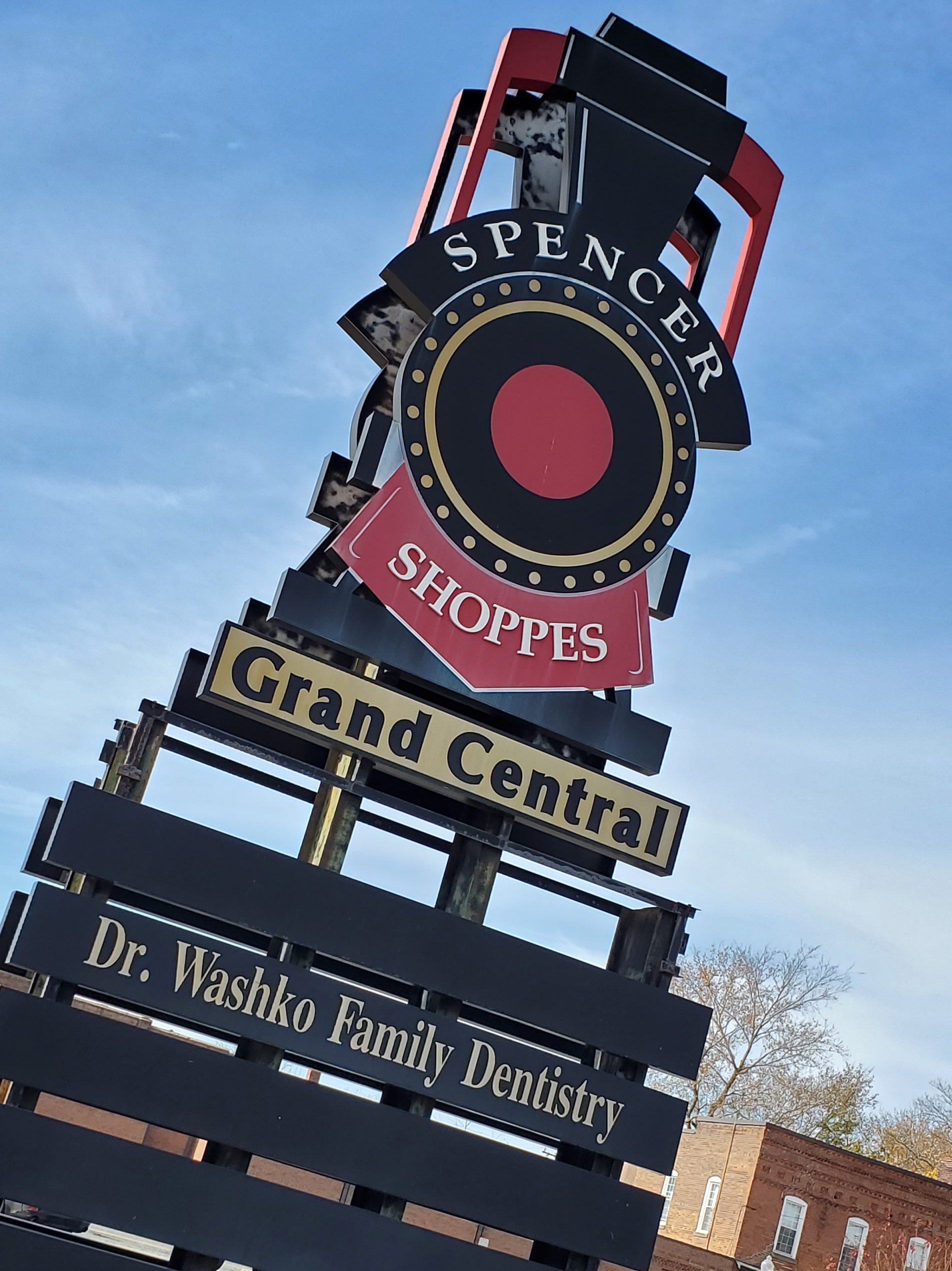
The town of Spencer was named for Samuel Spencer, first president of the Southern Railway, who is credited with establishment of the railroad’s mechanical shops at the site in 1896. The site was approximately the midpoint of the railroad’s mainline between Atlanta, GA, and Washington, DC, and was a key hub in the golden age of rail travel. As shops were built, the Southern Railway developed a town, also named Spencer, alongside the shops for worker housing. Initially, the Southern partitioned 85 acres into 500 lots. Instead of creating a traditional “company” town in which the workers rented houses, Southern sold the lots to workers or businesses for $100 each. The deeds contained restrictive covenants, which maintained that a dwelling costing in excess of $400 and approved by a Southern appointed architect be built within a year. Southern also donated lots for religious institutions and helped establish a YMCA in the town.

The former Spencer Shops were phased out during the 1950s through 1970s and have now become the location of the North Carolina Transportation Museum. The Alexander Long House, Southern Railway’s Spencer Shops, and Spencer Historic District are listed on the National Register of Historic Places.
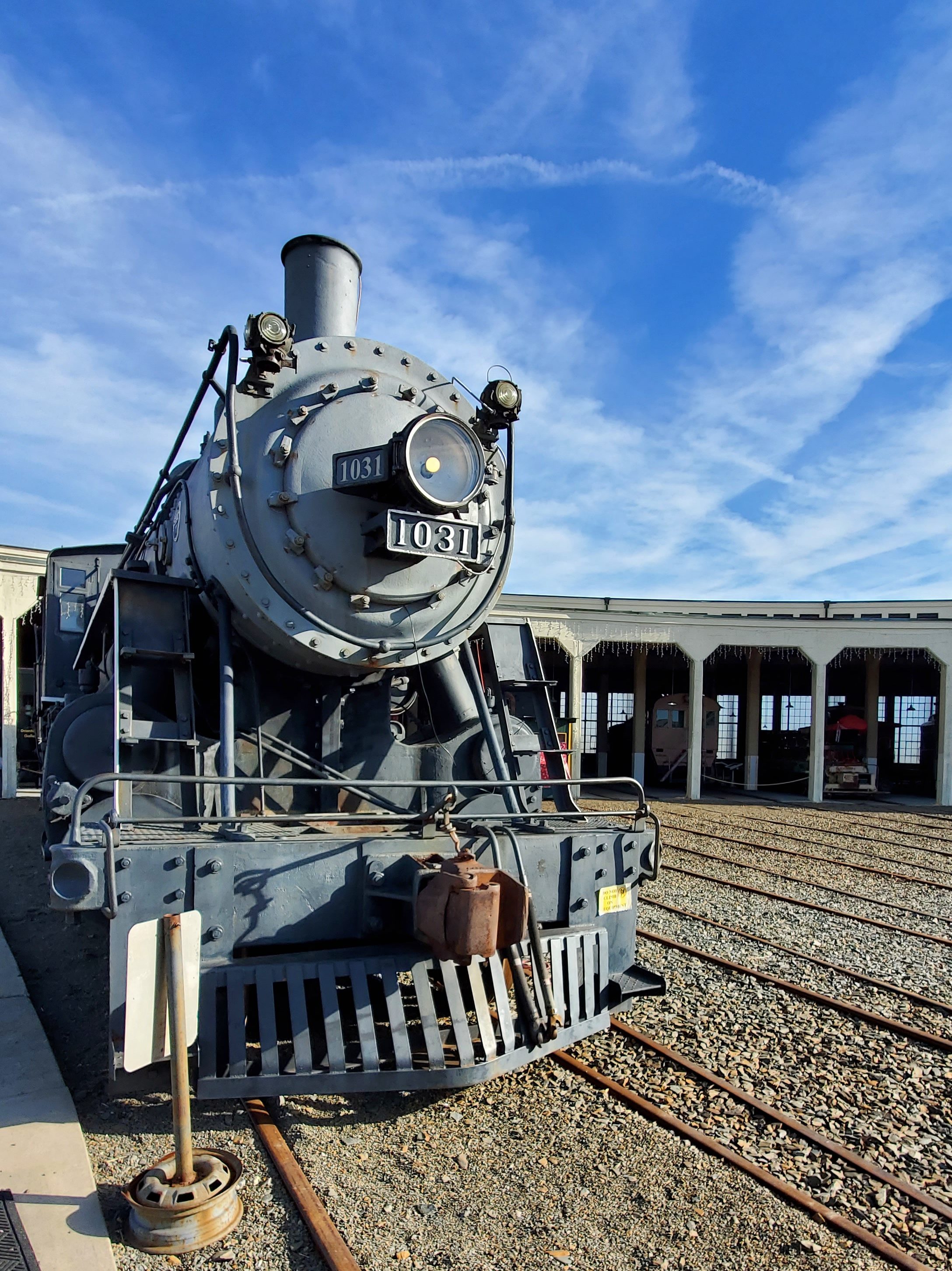
North Carolina Transportation Museum

The day started at the North Carolina Transportation Museum (411 South Salisbury Avenue). Stop at the ticket office then tour the building, grounds, and roundhouse. Discover the people and machines that have moved NC, including rail, aviation, and naval. Here you’ll find several buildings, a 1924 37-stall roundhouse with a 100-foot turntable, and a gift shop. See how train cars can be hauled into the Back Shop on elevated rails that expose the rail cars’ undersides for repair and maintenance. Train rides are available year round. The Museum also holds an annual Polar Express event during the holidays. Memberships and volunteer opportunities are available.
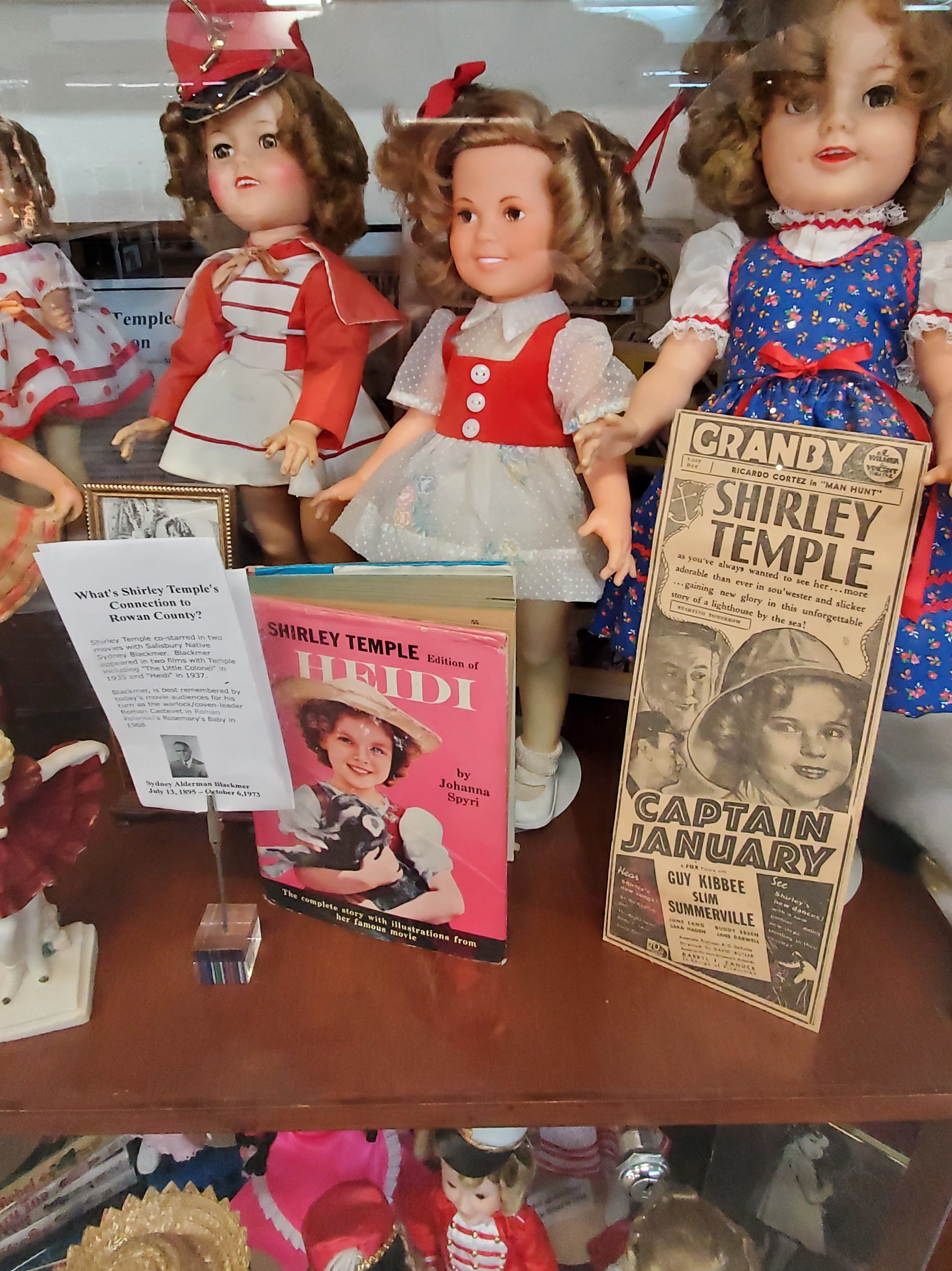
NC Museum of Dolls, Toys & Miniatures

Just around the corner from the NC Transportation Museum, you’ll find the NC Museum of Dolls, Toys & Miniatures (108 4th St.), which includes 4,000 square feet of exhibits, including Shirley Temple dolls, Girl Scout dolls, a large operating model train railroad, model airplanes, the largest Schoenhut collection on the East Coast, and much more. Tours are available as well as school and scout programs.

Salisbury, NC

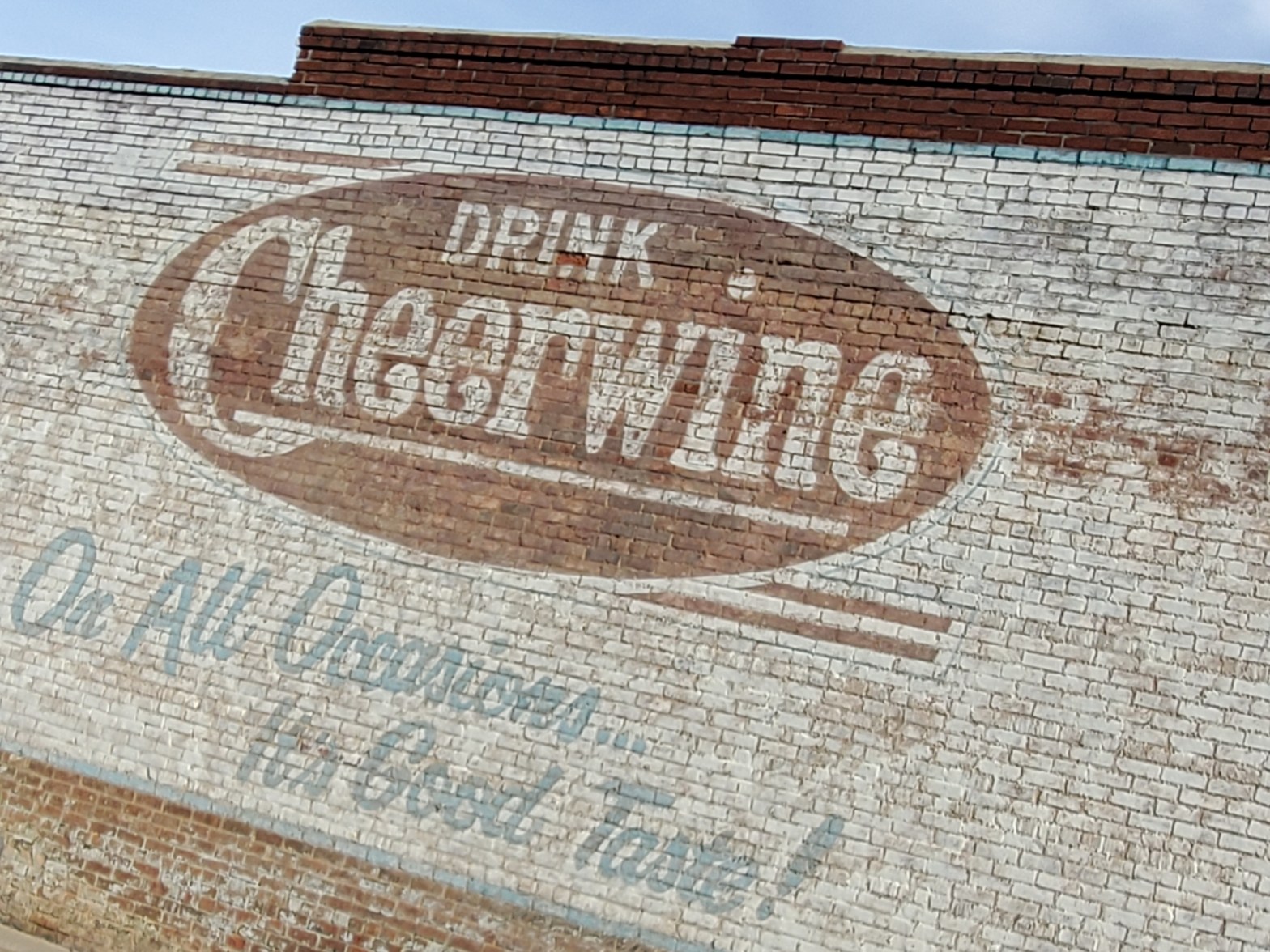
As the county seat of Rowan County since 1753 when its territory extended to the Mississippi River, Salisbury is the oldest continually populated colonial town in the western region of North Carolina. It is noted for its historic preservation, with five Local Historic Districts and 10 National Register Historic Districts, as well as the site of a noted prisoner of war camp during the American Civil War. Soft drink producer Cheerwine and regional supermarket Food Lion are headquartered in Salisbury, and Rack Room Shoes was also founded there. You’ll see Cheerwine in just about every restaurant–and even a few wall murals throughout the city.

The original settlement of Salisbury was built at the intersection of longtime Native American trading routes. It became an economic hub along what was improved as the Great Wagon Road in North Carolina. On June 12, 1792, Salisbury was granted a US Post Office, which has been in continuous operation ever since.

In the antebellum period and after the American Civil War, Salisbury was the trading city of an upland area devoted to cultivation of cotton as a commodity crop. It was also the business and law center of the county. Numerous houses and other structures were built by wealthy planters and merchants in this period. In the late 19th century, the city was served by railroads, becoming a railroad hub as people and freight were transported along the eastern corridor.

In the 20th century, Salisbury’s economy grew into an industrial-based economy. Entrepreneurs developed the textile industry for processing cotton, first, and numerous textile mills operated in the city. Industry owners moved jobs and mills offshore in the late 20th century to areas with cheaper labor costs. This change cost the city and area many jobs.

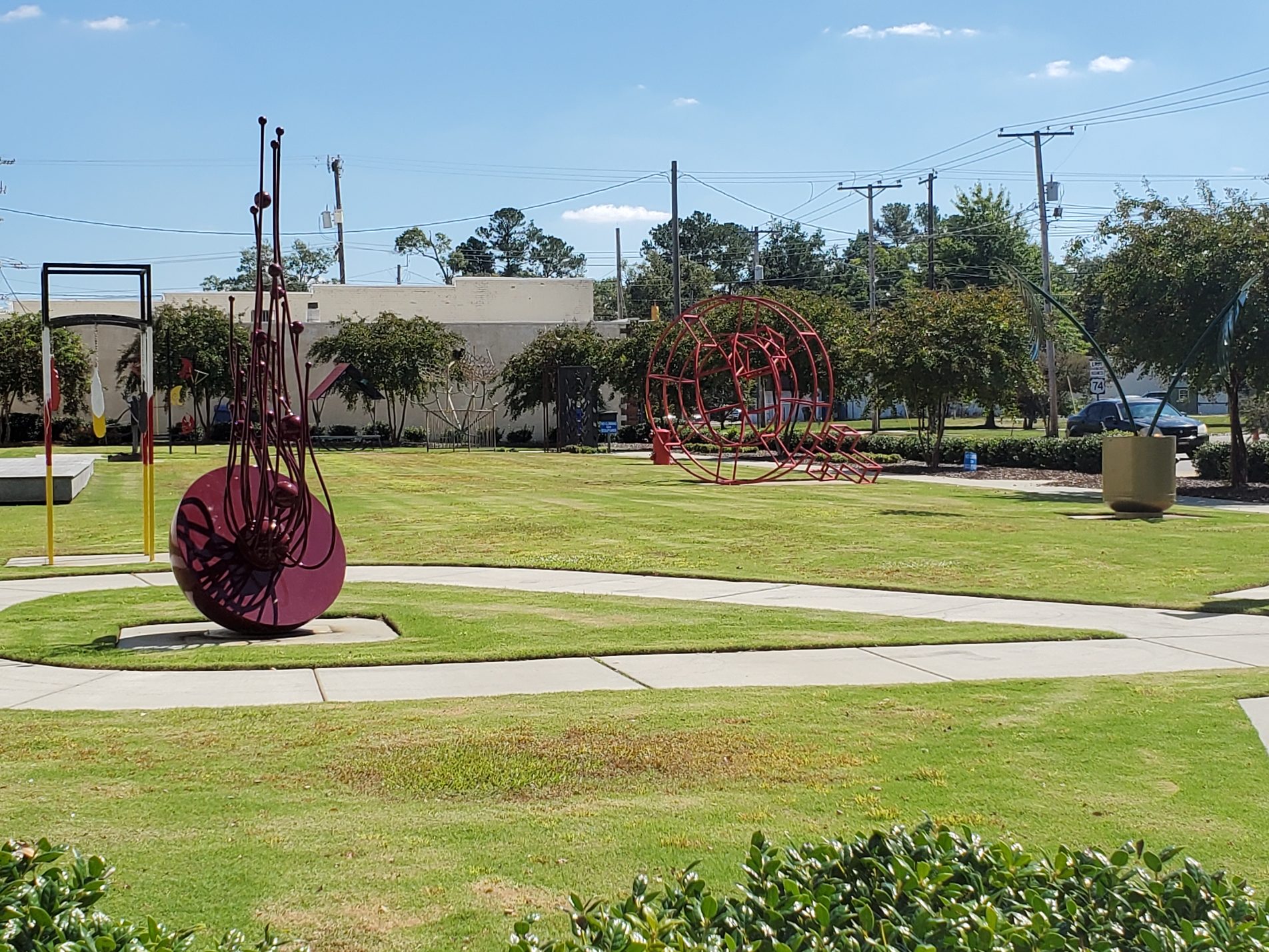
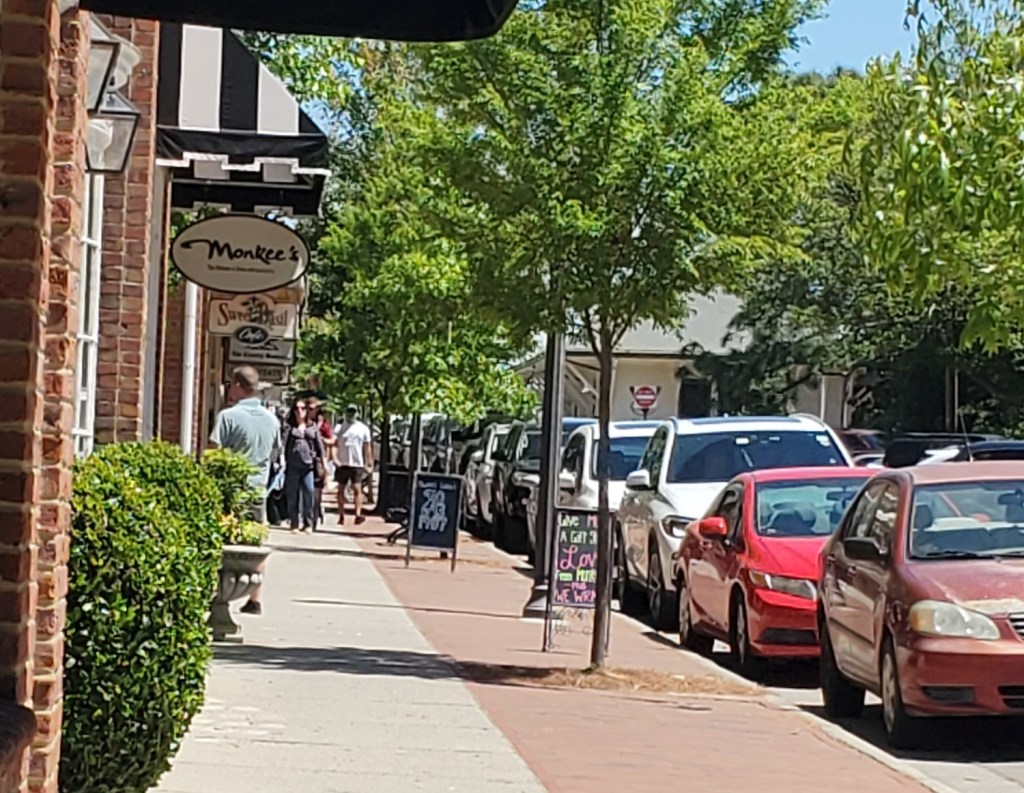
Salisbury is now home to a downtown area that encompasses several blocks near the intersection of Innes Street and Main Street, including unique, locally owned businesses and merchants. Downtown Salisbury provides an array of shops, antique stores, and cultural attractions. Downtown Nights Out, held from time to time throughout the year, provide opportunities for late night shopping, musical entertainment, and fine dining.

A walking tour begins at the Rowan County Convention and Visitor’s Bureau and winds through the history of Salisbury and the state’s Piedmont Region. Structures from the 19th century, as well as artifacts, such as the desk that President Andrew Jackson used when he studied law in Salisbury, are viewable. The Salisbury History and Art Trail is made up of a series of markers throughout the city that incorporate both history and art for self-guided tours.

Salisbury has one sister city, as designated by Sister Cities International: Salisbury, Wiltshire, England, UK, and former President Andrew Jackson is from here. Today, Salisbury is an eclectic combination of new world modern and classic, old-world styles, replete with a bounty of public art sculptures and wall murals located throughout the community.

Grievous Gallery

Perhaps one of the newest and possibly eyebrow raising attractions in Salisbury is the Grievous Gallery (111 W Bank St.), where you can purchase glass and ceramic dishware and bottles, write your grievances on the items, then smash them against a wall. The attraction is only open on a limited scheduled, evenings and nights.

Rowan Museum

A non-profit museum devoted to the preservation and presentation of Rowan County, peruse through North Carolina’s history through educational programs and exhibits (202 North Main St.). The Rowan Museum has exhibits that incorporate the use of three buildings: Salisbury’s 1854 County Courthouse (which survived Stoneman’s Raid), the circa 1815 Utzman–Chambers House Museum (built by cabinet maker Louis Utzman), and the 1820 Josephus Hall House.

Off site properties include the Old Stone House and China Grove Roller Mill (details later).

Railwalk Studios and Gallery

Established in 2006, Railwalk Studios and Gallery (409-413 N Lee St.) is a group of art studios and a shared art gallery in the Railwalk Arts District of historic Salisbury. They are located in a former 6,000 square-foot grocery warehouse built in the early 1900s along an old railroad spur. The artists of Rail Walk Studios & Gallery each lease studio space from building owners, Rowan Investment Company. The artists use their space to create art while preserving the historic and artistic nature of the building. On any given day you can stop in, see artists at work, and purchase art as well.
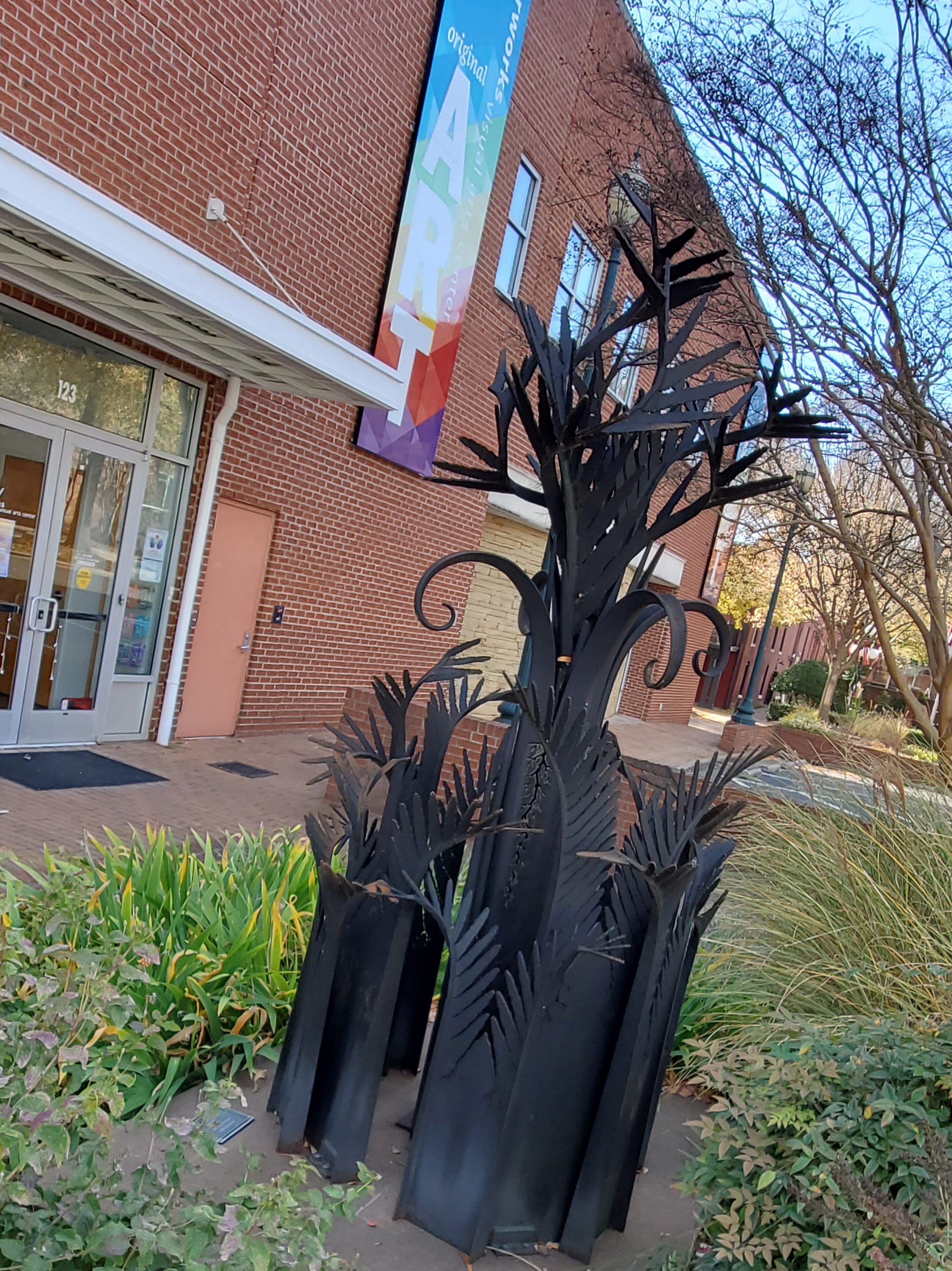
Waterworks Visual Arts Center

Waterworks Visual Arts Center (123 E. Liberty St.) is a non-profit 501(c)3, non-collecting art museum accredited by the American Alliance of Museums and provides diverse opportunities in the arts through exhibitions, education, and outreach programs. It is an exciting place where ideas, issues, and communities converge to expand traditional ways of thinking and explore the complex and unfolding patterns between artistic and cultural spheres. As a unique blend of education, inspiration, creativity, and fun, the Waterworks serves as the anchor organization for Salisbury’s East Square Cultural Arts District and is the only teaching museum within a 40-mile radius of Salisbury.
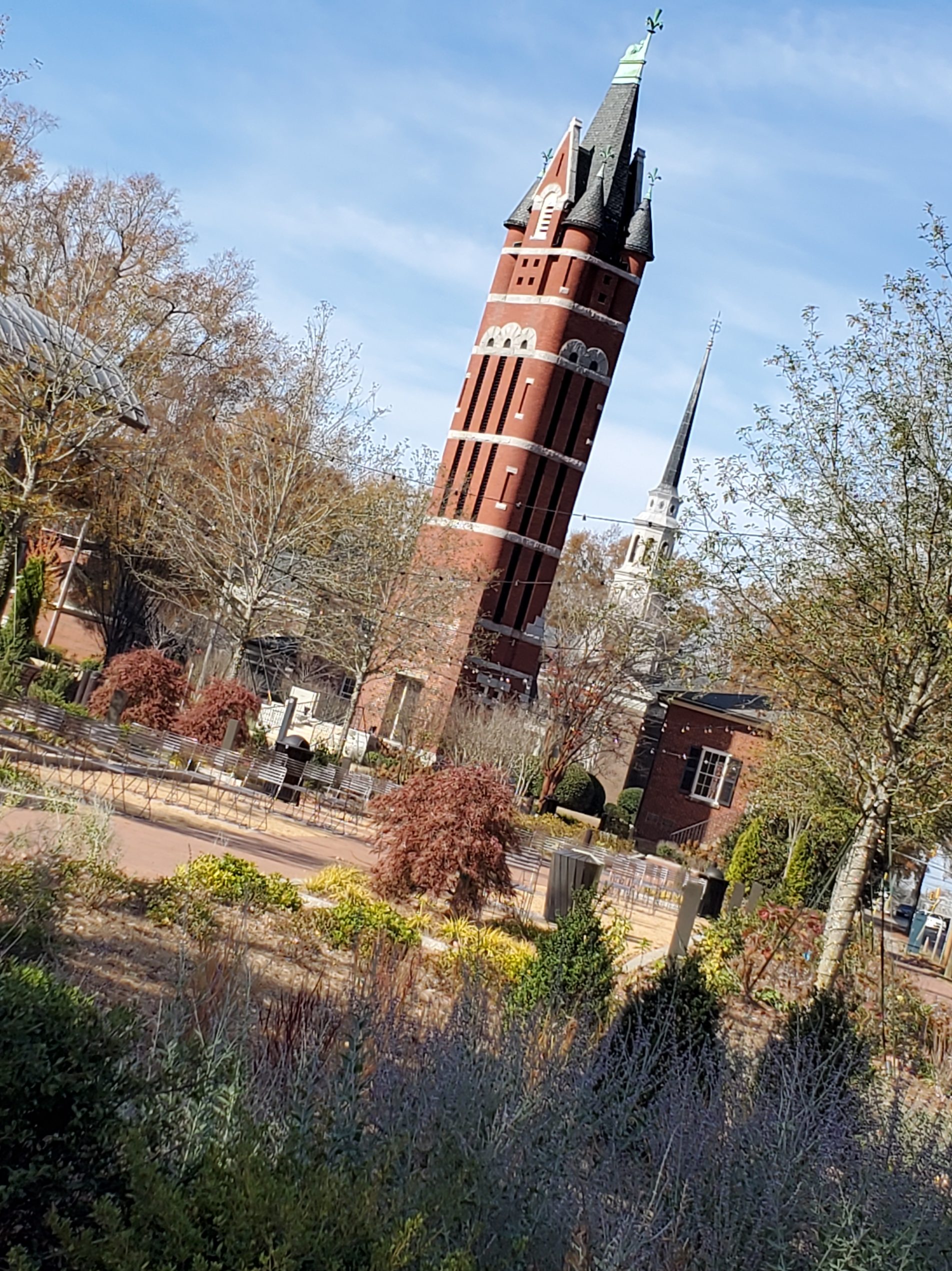
Bell Tower Green

Bell Tower Green at 115 S Jackson St. is a park which takes up most of the block bounded by Innes, Church, Fisher and Jackson Streets and named for the bell tower that was part of the former building of First Presbyterian Church. The green officially opened October 1, 2021 after more than two years of construction, funded primarily with more than $13 million in donations.

Wall Mural – Crossroads: Past Into Present
Found at 115 W. Fisher St., this multi-story wall mural is one of Salisbury and Rowan County’s most famous attractions. This mural painted by Salisbury native Cynvia Arthur Rankin features an original look at turn-of-the-century Downtown Salisbury. Discover more than 100 local citizens dressed in period costumes represented in the mural, which has appeared nationally on NBC and featured numerous times in area newspapers, national publications, magazines, and brochures.

Dan Nicholas Park

Fields, trails, picnic areas, and a petting zoo are the main attractions at this local park. Notably, several years ago the park zoo had a devastating fire, which claimed the lives of most of the treasured animals.
Granite Quarry, NC

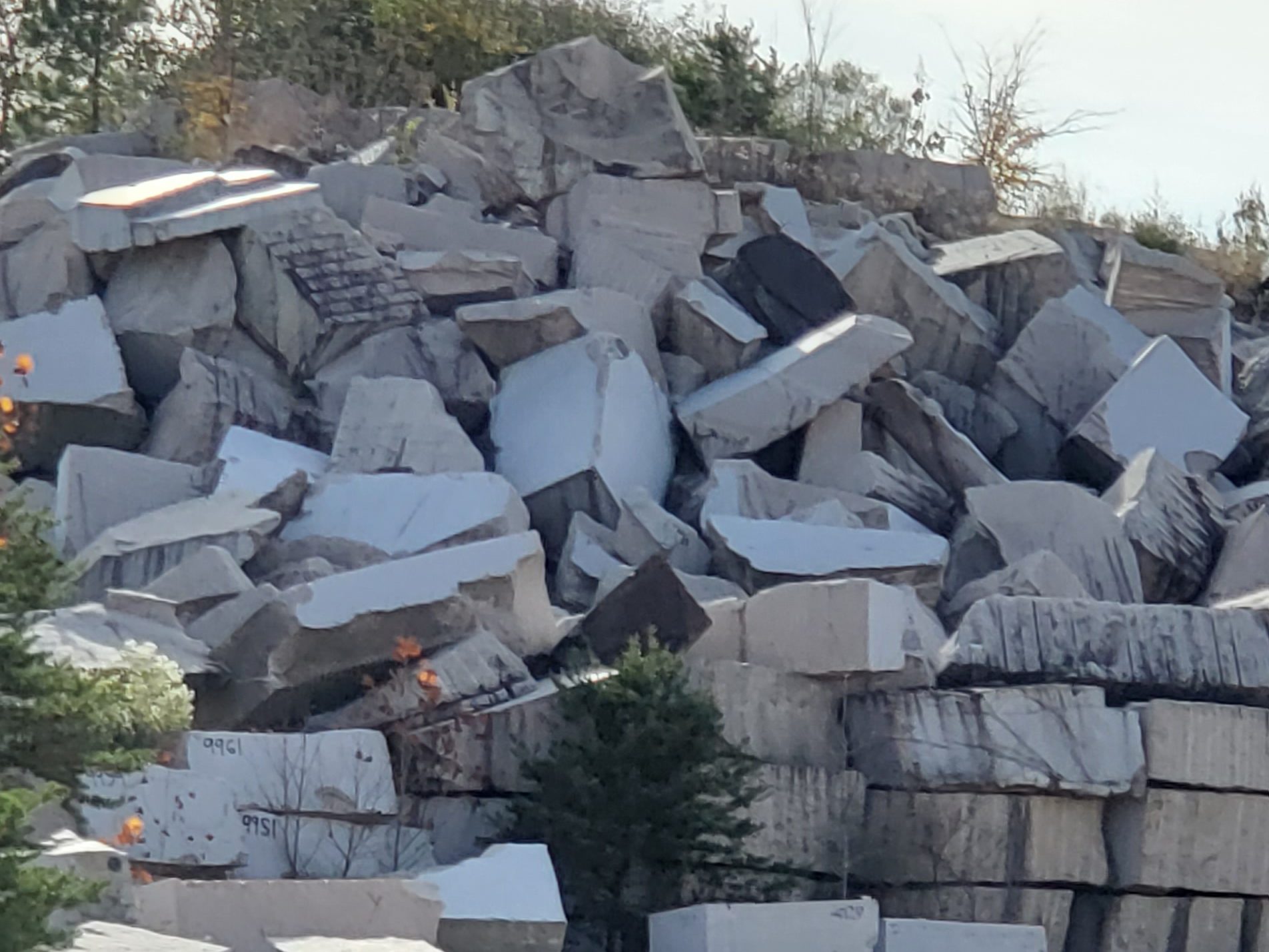
Formerly named Woodsides, problems arose soon after the town’s incorporation with mail delivery, since there was already another town in North Carolina named Woodsides. Because of this, in 1902, the post office changed its name to Granite Quarry, after the stone quarried in the area. But the town’s name was not officially changed until February 5, 1905.

Old Stone House

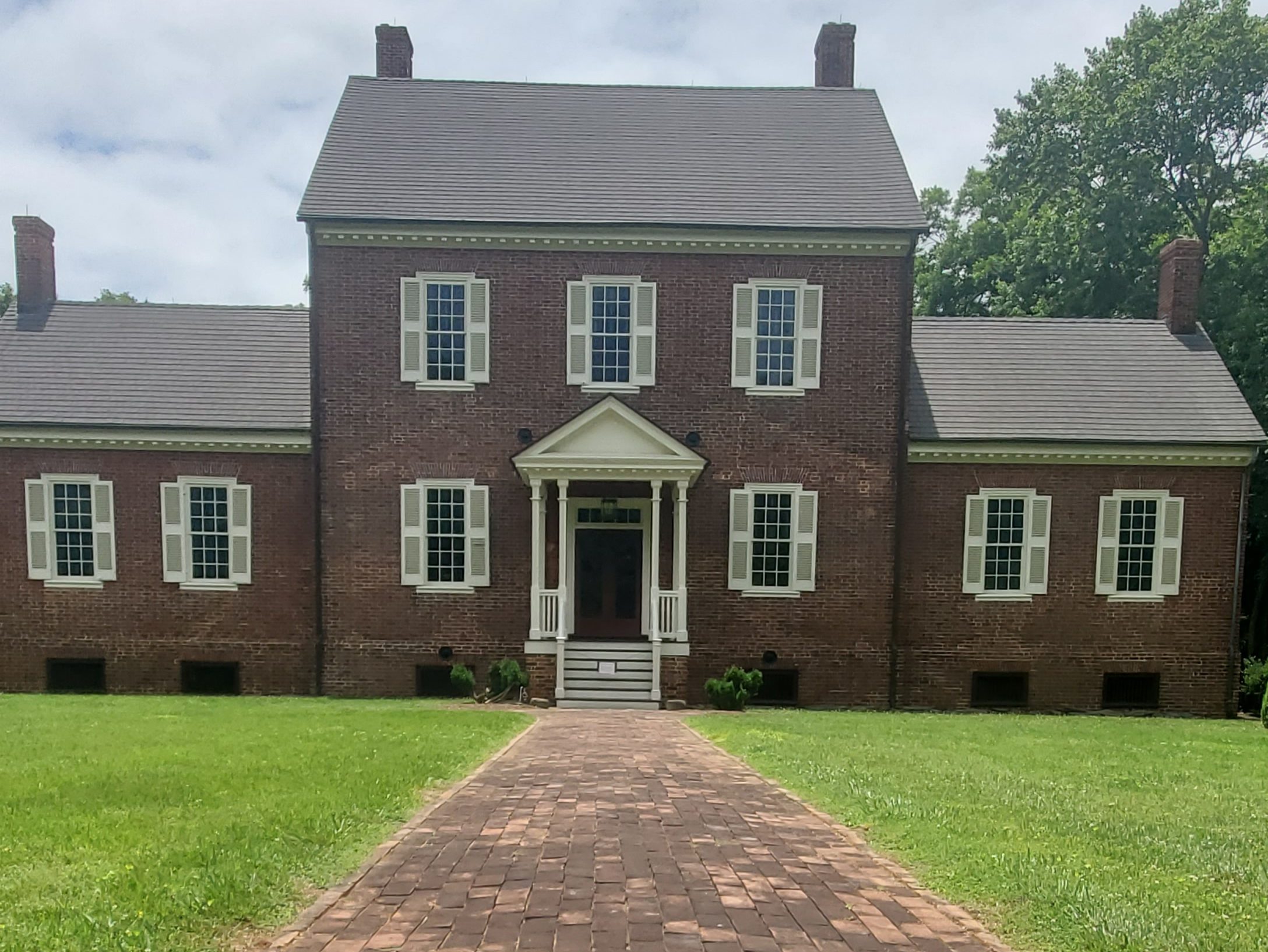
In Granite Quarry, you’ll find the Old Stone House (770 Stone House Rd.), built in 1766 by German immigrant Michael Braun as symbol of his newfound prosperity. This German Colonial/Georgian house has been fully restored and can be toured Saturdays and Sundays from 1-4pm, April-November.

Faith, NC

Since 1946, the town has hosted a Fourth of July celebration that has become notably large for a town of its population – running for several days and drawing visitors from many states. The Faith Fourth achieved national visibility in 1992, when President George H. W. Bush not only made a speech praising small town virtues, but also participated in the traditional Fourth of July softball game and enjoyed Cheerwine with local residents. This annual celebration stretches over several days and is one of the largest Independence Day celebrations in North Carolina.

Local tradition says the town of Faith was named for a comment by newspaper writer John Thomas Wyatt, who settled on a rocky plot of land and opened a quarry. With no experience in the field he said he was building his quarry “on faith.”

Faith Soda Shop

Located just a few miles south of Salisbury (115 N. Main St), Faith Soda Shop is a must-stop while exploring Rowan County’s scenic byways.
Rockwell

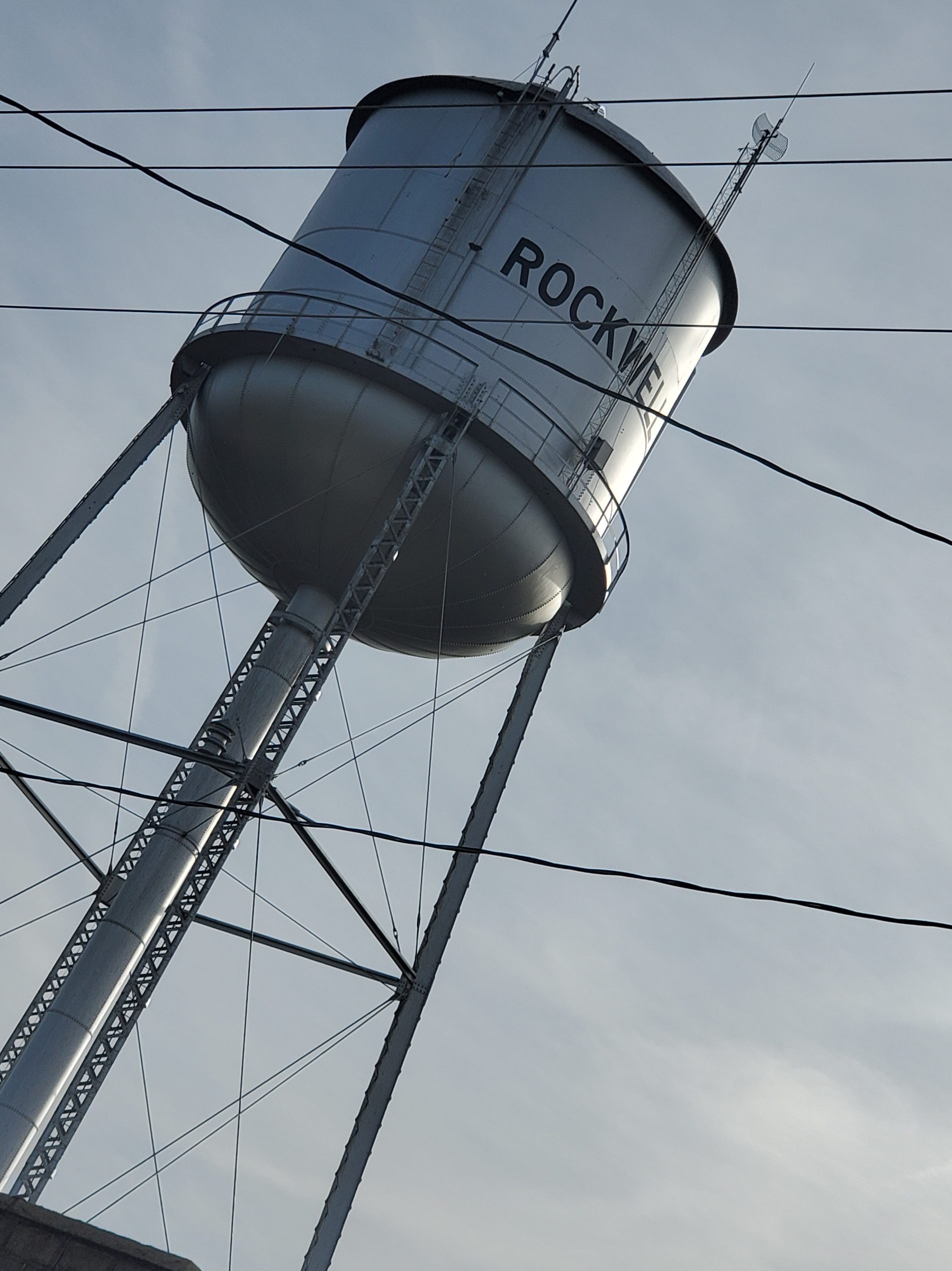
It is thought the town was named for a rock well located at a shady camping spot north of the present town limits at old Peter Miller farm. Travelers who stopped at the well to rest overnight marveled at the sweet water from the rock well. Most wells in the area had lumber curbing instead of rock curbing, and the lumber gave the water a certain taste, they said. There was a post office located at the rock well, and this was later moved to the town of Rockwell. Some historians have written that the town was earlier called Millville but the longtime Rockwell residents say this is incorrect. Millville was a settlement located at Heilig’s Pond near Lowerstone Church.

The railroad, completed in 1890, was a boost to the town, as was the location of the Salisbury-Albemarle Highway (U.S. 52) through town in 1925. J. W. Peeler, became stationmaster two months after the station opened. An ex-slave, Edmont Lindsey, was said to be the first person to board the train at the Rockwell station. He rode to Salisbury for 30 cents.

The town was incorporated in 1911, and George Peeler served as the first mayor. The Grace(Lower Stone) United Church of Christ and Organ Lutheran Church, located just a few miles from town, date to the 1700s and have graveyards adjoining the churches  which have proved to be a treasure-trove of genealogical information. Five miles to the northwest is the Old Stone House built of native, hand-hewn granite by Michael Braun (Brown) from 1758 to 1766.  It is known as the oldest German house in North Carolina and has been a popular tourist attraction since being restored by the Rowan Museum.
Tiger World
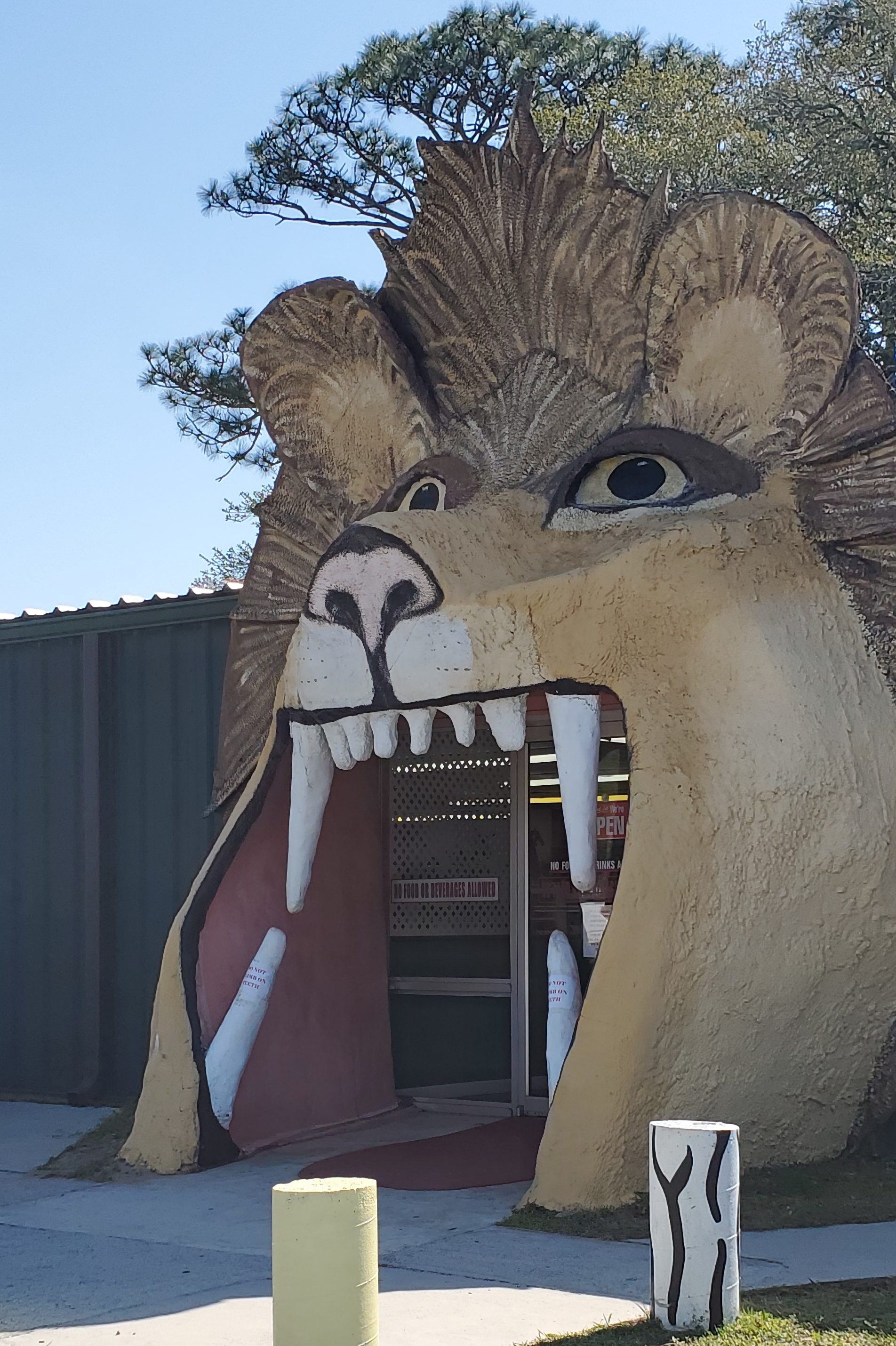
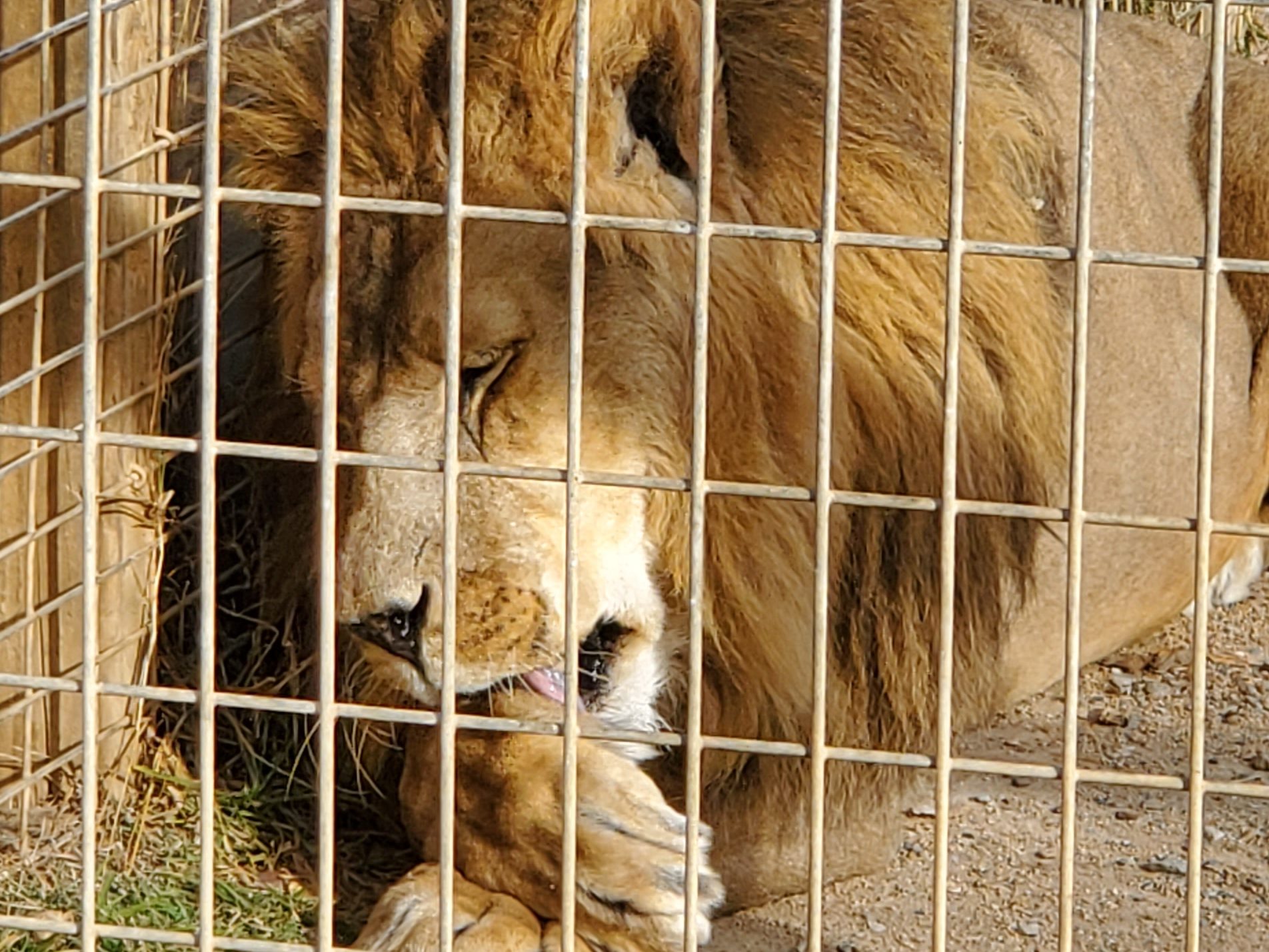
Established in 2008, this endangered wildlife preserve houses more than just tigers. You’ll find a large variety of exotic animals, including a lion, other wild cats, monkeys, kangaroos, exotic birds, wolves, sloths, bears, lemurs, reptiles, a liger, and more. Although the lion enclosures are comprised of two secure, tall chain link fences, I was able to get the closest ever to a live lion. Tiger World (4400 Cook Rd.) is open for touring and holds educational events all year. Admission is $15.

Historic Rockwell Museum
The Historic Rockwell Museum (105 E. Main St.)was organized in 1996 by local citizens who volunteered time, labor, and money to preserve this important historic landmark. This building, which once housed Rockwell’s second Post Office, has been restored as a museum to preserve and display the records, memorabilia, and artifacts of Rockwell’s early years.

Gold Hill

The restored gold mining town of Gold Hill and Gold Hill Mines Historic Park invite visitors to step back in time. Come out and experience the simple life. The wood sidewalks are reminiscent of the Old West; but, in fact, Gold Hill, North Carolina, was a well-established gold mining boom town by the early 1840s. This was almost a decade before the gold strike at Sutter’s Mill in California. Gold Hill had a bustling main street that spanned a mile in its day. The town boasted of at least 16 merchants, 23 saloons, and about six brothels. The town had two hotels, a boarding house and a two-story mining office. It was a town of which, even the mayor of Charlotte, NC, was envious. He made newspaper headlines when he commented that he had hopes that “Charlotte will one day be as big and prosperous as Gold Hill.”

The first discovery of gold at Gold Hill was in 1824. In 1843, the town was incorporated. A formal ‘town’ meeting was held and Col. George Barnhardt, son-in-law of John Reed (Reed Gold Mine, NC State Historic Site), was chosen as the first mayor. Under his management, the Barnhardt Gold Mine at a depth of 435 feet was becoming the largest producer of gold in the South. The Earnhardt/Randolph Gold Mine reached an eventual depth of 850 feet. Between the two mines alone, they produced a wealth of gold valued at $7-9 million dollars prior to the California gold strike. The news of the California strike didn’t stop production of gold on the eastern front. The gold mines in North Carolina continued to prosper and lead the way in gold production until the beginning of the Civil War.

By the 1880s, “The New Gold Hill Ltd. Mining Co.” was established in London, England. The company purchased holdings at Gold Hill and produced equal amounts of gold for another 20 years at considerable profits. The Gold Hill mines ceased production by 1915. Explorations were made again in 1950, but at that time proved to be too costly.

Today, the Barnhardt Gold Mine and the Randolph Gold Mine are two of four gold mines located in the restored gold mining town. They’re located in the 70-acre Gold Hill Mines Historic Park. The Historic Gold Hill and Mines Foundation, Inc., a nonprofit organization, was formed in 1992. The mission was to restore and preserve the mining property as a park for the community. The Gold Hill Rail Trail (the railroad corridor right-of-way through the park, which extends into Cabarrus County) was developed in 2005 as a partnership with Land Trust of Central North Carolina / Three Rivers Land Trust. The trail was added as an additional hiking venture through Gold Hill Mines Historic Park.

The town of Gold Hill today is a small shopping village with a quaint collection of retail shops and a restaurant. Wooden sidewalks connect the shops throughout town. Only two original stores remain standing today. Mauney’s 1840 Store and the E.H. Montgomery General Store, both built around 1840, continue to serve as anchors to history in the community. The Gold Hill Historic Preservation Society, Inc. was formed in 1993. It’s mission is to preserve the original buildings and rescue and restore additional buildings to recreate the town of Gold Hill.
Chilean Ore Mill
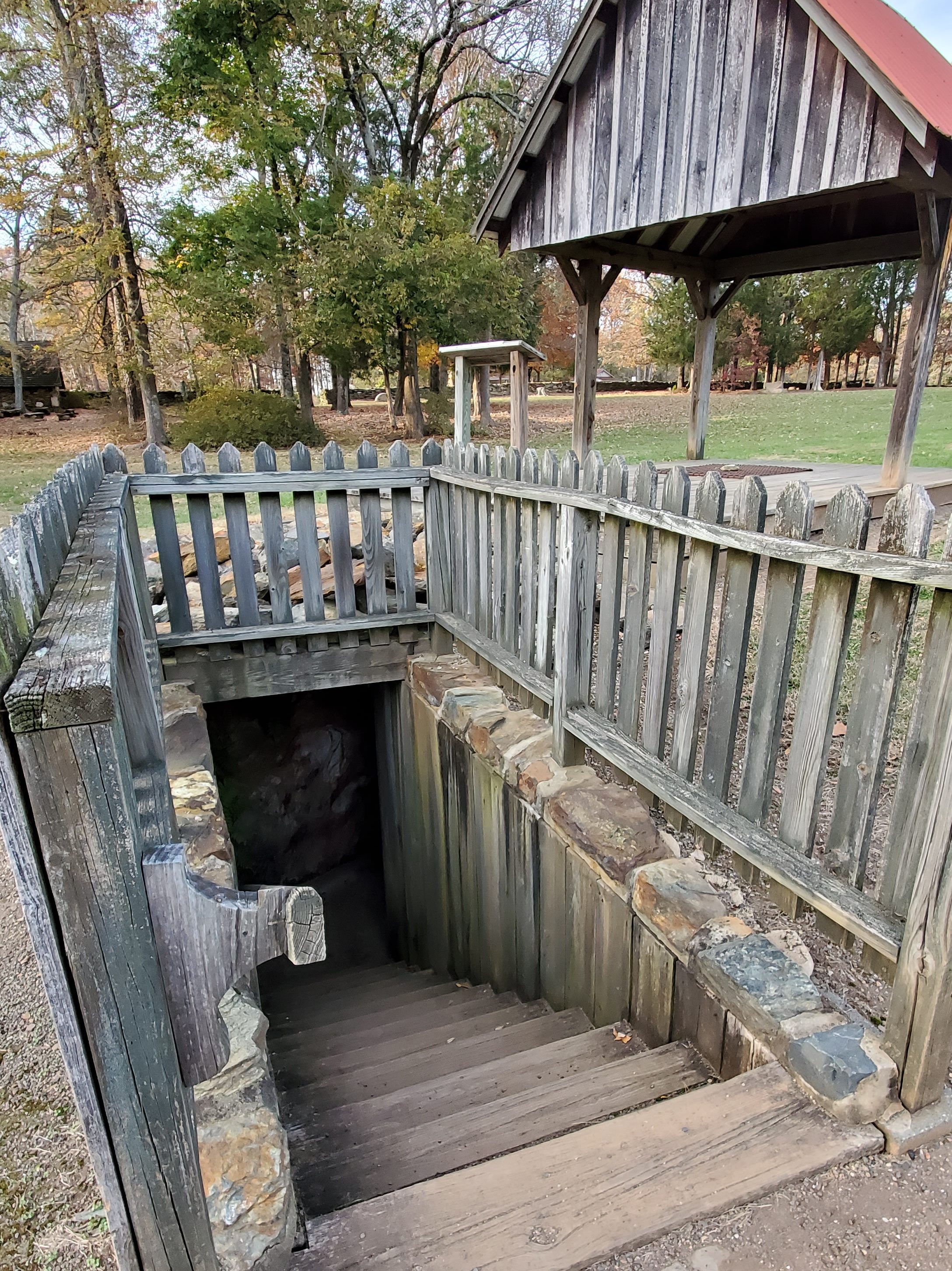
Gold mining on the family farm involved everyone in the family. Women and young girls would often work to separate the gold ore after it had been crushed by the Ore Mill. The nineteenth century Chilean Ore Mill (770 St. Stephens Church Rd.) was used to crush gold bearing ore to aid in gold recovery. It is thought to be the only remaining complete  mill with all original working gears in the U.S. This same mill was in operation in Gold Hill from 1840-1900. Originally owned by the Shafer family of Gold Hill, it was donated to the Historic Gold Hill and Mines Foundation, Inc. and moved to the park in 1992.
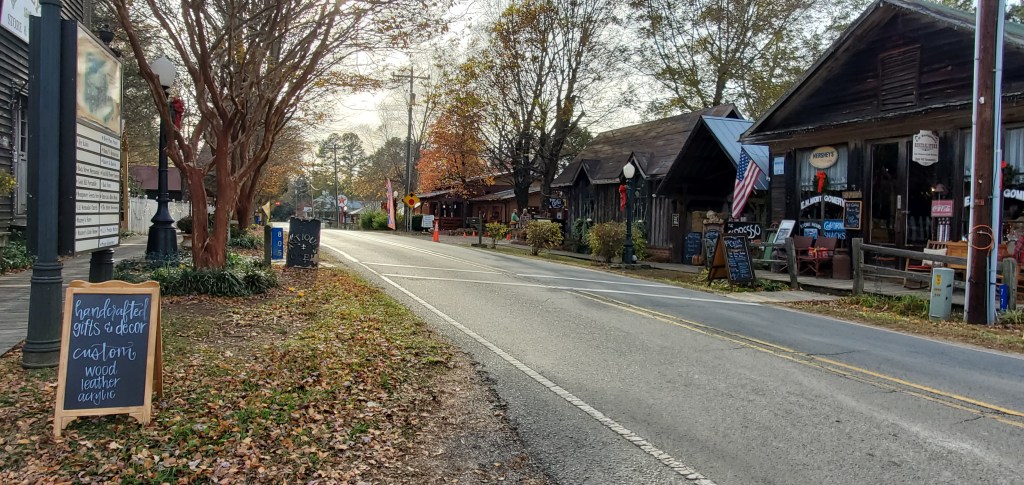
Shopping Village
This shopping village is a must-see North Carolina gem. The grouping of wooden buildings, including some original structures, creates a gloriously quaint shopping village (1035 Back St.). You’ll find rows of street-side buildings along what once was a dirt road, along with a second back row of buildings as well as a restaurant and lodging. Spend a few hours her perusing through the shops for antiques, artisan and jewelry creations, original art, apparel, and more. Chat with the shopkeepers while you’re there, and you’re sure to get a good bit of a history lesson about the area. You can check in at the Montgomery General Store for a trail guide brochure before heading out on the Gold Hill Rail Trail.
China Grove

China Grove’s name is derived from a grove of chinaberry trees that was located next to the old train depot.  The China Grove depot, dismantled in 1974, was located on Harris Street just behind Hanna Park. The grove provided welcomed shade for both travelers and their horses, especially during hot summer days. Until about 1920, there were remnants of this grove, but the few surviving trees died from the traffic that was created by the old depot. The town applied to the North Carolina Legislature for a charter, which was granted on March 11, 1889. It is assumed there was a settlement here in China Grove as early as 1710. The town was first known as Savits Mill. Then, in 1846, the name was changed to Lutherville; but in 1849, it was given the name as we know it now: China Grove.

In 1896, following the initiatives of William L. Wilson, Postmaster General of the United States, North Carolina developed a Rural Free Delivery (RFD) route for mail. Postal service via RFD included the delivery of all postal items, free of charge, to citizens at their homes, eliminating the need to visit the local post office.  Following Mr. Wilson’s proposal and under the direction of Postmaster, J. Bruner Goodnight, China Grove established the first Rural Free Delivery route in North Carolina on October 23, 1896. It was only the second RFD made in the United States. A routine task today, in 1896 Mr. Goodnight was taking part in an experiment which would launch the postal service on the biggest endeavor in its history and help change the life of rural America.

In 2016, the Town of China Grove was honored to be ranked one of the 20 safest cities in the state of North Carolina, according to SafeWise, a security systems company which ranked the top 100 safest cities in the state. Gary Chapman, best-selling author of The Five Love Languages, is from here.

China Grove Roller Mill
Local entrepreneurs built this roller mill (308 North Main St.) in 1903 to mechanize grain grinding. The mill, located directly beside an active railroad track, is open limited hours from April-November.

Next trip… Davie County!


Journey through Surry County

I purposely planned this trip for when Surry County would (hopefully) be in peak fall color season–and this day didn’t disappoint. A nestled Appalachian Mountains and Blue Ridge Mountains foothills community, Surry County is alive with peaks and valleys and untouched lands. It seems every corner you turn, a majestic mountain or valley view awaits you. Surry County is also part of the Yadkin Valley American Viticultural Area. Because of its locale, the area abounds with more than 50 vineyards and wineries–all featured on the Surry County Wine Trail, including wineries and vineyards throughout the county, such as Stony Knoll Vineyards, Adagio Vineyards, Haze Gray Vineyards, Round Peak Vineyards, Herrera Vineyards, and Shelton Vineyards–the largest vineyard in North Carolina.

Surry County was formed in 1771 from part of Rowan County and was named for the county of Surrey in England, the birthplace of William Tryon, Governor of North Carolina from 1765 to 1771. In 1789, the eastern half of Surry County became Stokes County, and in 1790, the county seat was moved to Rockford where it remained for more than 50 years. The town of Dobson was established in 1853 as the new county seat.

Surry County also contains a small portion of the Sauratown Mountains, marking the western end of the range. (You can join the Friends of Sauratown Mountains, which supports Pilot Mountain and Hanging Rock State Parks.)The western third of the county lies within the Blue Ridge Mountains, which dominate the county’s western horizon with amazing vistas. Do be award of high-wind advisories in this area, as mountain range gaps can cause strong winds to build, which can force automobiles and even large 18-wheeler trucks off the highways. The highest point in Surry County is Fisher Peak in the Blue Ridge Mountains, which rises to 3,570 feet above sea level. However, the best-known peak in Surry County is not the highest. That honor goes to Pilot Mountain, an isolated monadnock (meaning ‘isolated mountain’) and a North Carolina landmark. Pilot Mountain sharply rises some 2,421 feet above the surrounding countryside, and can be seen for miles. Heading north on 52, you’ll discover an amazing approach with a scenic overlook pullover as you approach. Surry County also has three recognized major rivers: the Ararat, the Fisher, and the Mitchell. All three flow southward and are tributaries of the Yadkin River, which forms the southern border of Surry County. The Yadkin River is the northern component of the Pee Dee River, which flows to the Atlantic Ocean near Georgetown, South Carolina.

Before you leave Surry County, be sure to order yourself some Sonker, a dessert specific to this region. There are many different variations, ranging from a cobbler-like appearance to a pseudo-biscuit atop a fruit compote, and both restaurants and families hold their recipes close to the vest. You can also travel the county’s Sonker Trail, including eight restaurants in Elkin and Mount Airy that serve the local treat: Anchored Bakery, Miss Angel’s Heavenly Pies, and Prudence McCabe Confections in Mount Airy; Harvest Grill at Shelton Vineyards and Rockford General Store in Dobson; Southern on Main (had my sonker here), Skull Camp Smokehouse & Brewery in Elkin; and The Tilted Ladder in Pilot Mountain.

Pilot Mountain State Park

The day started in Pilot Mountain with a visit to the mountain itself. This morning was heavily overcast with slight precipitation. I was disappointed on the approach because Pilot Mountain was obviously 100 percent in the clouds–so no amazing views from the top today. Visibility at the top of Pilot Mountain was only a hundred feet or less, but it made for an interesting experience: peaceful, quiet, and very few people. Pilot Mountain, a metamorphic quartzite monadnock, is one of the most distinctive natural geological features in North Carolina. A knob-like structure, it is a remnant of the ancient chain of Sauratown Mountains. The Saura Native Americans, the region’s earliest-known inhabitants, called the mountain “Jomeokee”, meaning “great guide” because they used it as a navigation aid.

One billions years ago, Pilot Mountain was part of a shallow sea and the area experienced volcanic activity. Approximately 700 million years ago, magma invaded the layers of sea sediment and cooled to produce granite. The are continued to undergo a long period of violent geological activity, weathering, and erosion, which eventually turned the igneous rock into a quartzite protective cap, which protects the underlying rocks from further erosion.

Pilot Mountain has two distinctive features, named Big and Little Pinnacle. Big Pinnacle (also called “The Knob”) has high and colorful bare rock walls, with a rounded top covered by vegetation, reaching approximately 1,400 feet above the surrounding terrain. Visitors can take a paved road to the park visitor center and campgrounds, then up to a parking lot on the ridge. Trails from there allow access to the main Little Pinnacle Overlook and other viewing stations as well as the Jomeokee Trail (which includes a few rock climbing areas) around the entire base of the knob–though you will need to be sure-footed to traverse it.

Pilot Mountain is part of Pilot Mountain State Park, which extends to the Yadkin River via a corridor of land, and it is associated with nearby Horne Creek Living Historical Farm. The curved depression between the ridge slope to the Little Pinnacle and then to the round knob of the Big Pinnacle gives the entire mountain an even more distinctive shape from a distance. Other interesting rock formations are to the east at privately held Sauratown Mountain, and the higher complex at Hanging Rock State Park (in Stokes County).

You’ll also find picnic areas here and other trails ranging from 0.1 miles to 4.3 miles, including Sassafras trail and Grindstone Trail which connects the popular campground to Ledge Spring Trail. Fans of Pilot Mountain can select a special First in Flight-Pilot Mountain National Landmark state license plate. And you’ll find a few attractions in the town of Pilot Mountain as well…

Pilot Mountain

Discover wine, fun, and friendship at JoLo Vineyards among the locals (219 Jolo Winery Lane). Shop at the Pilot Mountain Country Store (108 West Main St.), check out the Beroth Oil & Gas Memorabilia Museum (100 East Main St.), and enjoy the Pilot Mountain Train Mural (114 West Main St.) by artist Lisa Floyd–all within feet of one another and within perfect viewing distance of Pilot Mountain.

Incidentally, president of Scripps Networks Interactive and creator of Home & Garden Television (HGTV) is from Westfield, just north of Pilot Mountain. Westfield also has ties to Guilford County’s New Garden Friend’s Meeting Quaker establishment.

And be sure to stop into the town of Pilot Mountain, at the foot of the mountain base, where you’ll find some quaint, local country shops, including Mount Pilot Country Store and a community wall mural: Pilot Mountain Train Mural.

Beroth Oil & Gas Memorabilia Museum

This museum may be open to appointments only, but there are many treasures visible through the windows.

Pinnacle

Horne Creek Living Historical Farm

Located here is Horne Creek Living Historical Farm (308 Horne Creek Farm Rd.), is an actual farm and a Piedmont Living History Farm that is operated by turn-of-the-century technology to showcase what life in northwestern North Carolina was like at the time. Here, you can experience what farm life was like in days gone by while touring the property with animals and several buildings, including a tobacco curing barn, cannery site, smokehouse, chicken lot, dry house, farm house, and more. The farm is operated by the state of North Carolina Department of Cultural Resources. Be sure to stop in the gift shop on your way out. Sections of the Pilot Mountain State Park that reach the rapids of the Yadkin River are located in the Shoals community. Admission is free, but donations are welcome.

Mount Airy

Named for a nearby plantation, Mount Airy was settled in the 1750s as a stagecoach stop on the road between Winston-Salem, North Carolina, and Galax, Virginia. Mount Airy was incorporated in 1885 and the City’s official seal was established in 1977, which depicts major industries that are home to Mount Airy, including furniture, textiles, and the granite quarry. In 1994, Mount Airy was named an All-American City.

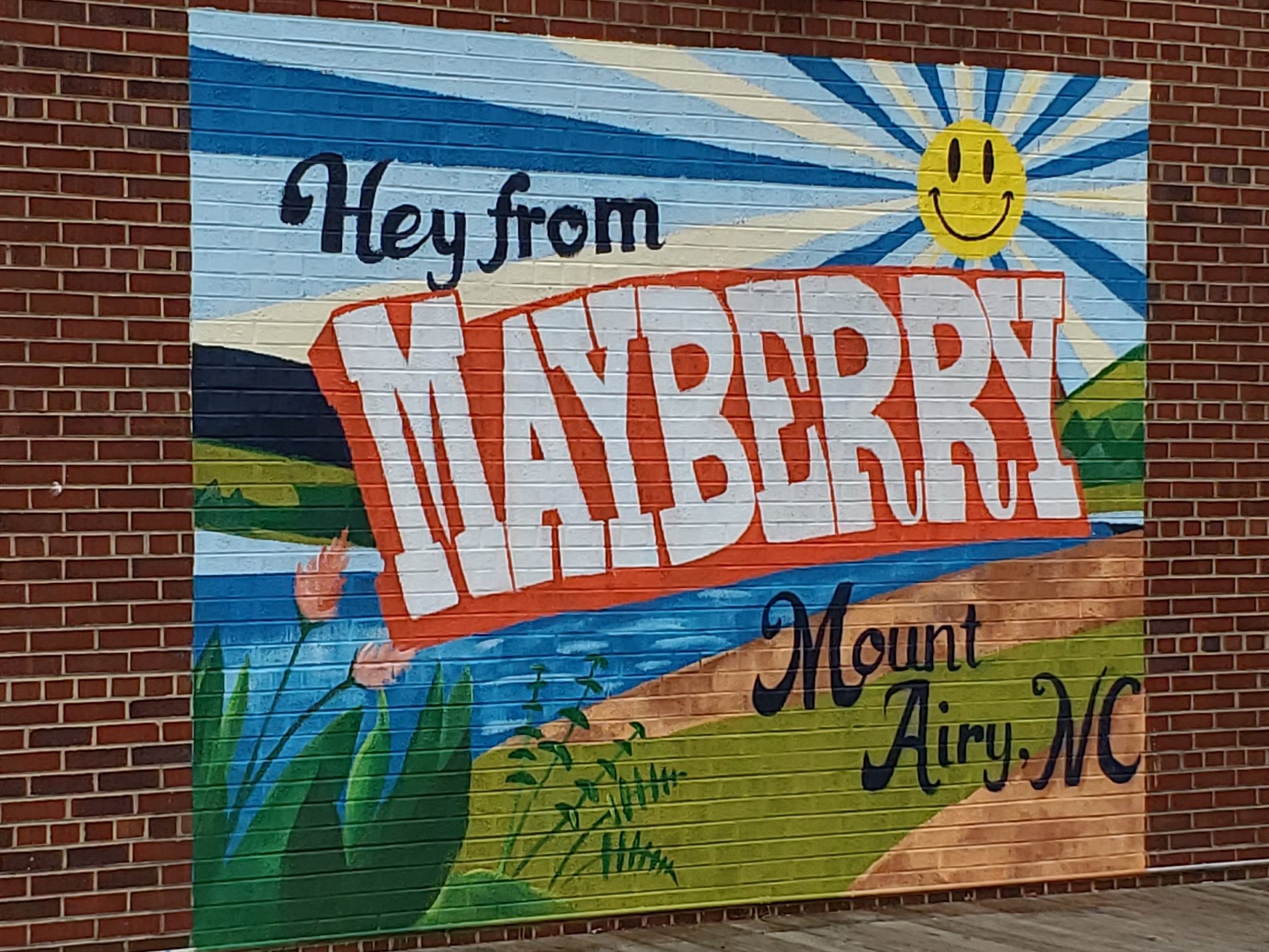
Actor Andy Griffith was born in Mount Airy, and the town is believed to have been the basis for Mayberry, the setting of the TV shows “The Andy Griffith Show” and “Mayberry RFD”. The community holds an annual “Mayberry Days” celebration during the last weekend of September: 30,000 attended in 2009, and 50,000 attended for the show’s 50th anniversary in 2010. The University of North Carolina at Greensboro estimates the town receives $5 million each year as a result of its association with Mayberry tourism. Surviving members of the cast, along with family members of other cast members, often visit. Several Ford Galaxie police cars, painted to resemble those used on the show, give rides to guests via Squad Car Tours (located at Wally’s Service Station, 625 South Main St.). Your visit isn’t complete without a ride in one of these old-timey Barney beauties! Many town establishments pay tribute to their Mayberry heritage, including Floyd’s barber shop, Snappy Lunch, and Aunt Bea’s Room.

The Autumn Leaves Festival is held the second weekend in October, attracting more than 200,000 people to the city during the festival weekend. Vendors sell food and other items, and there is a stage for musicians. The town is also home of old-time music legend Tommy Jarrell, bluegrass gospel legends The Easter Brothers, and country singer Donna Fargo. Mount Airy was also the residence of Chang and Eng Bunker (1811–1874), famous Siamese conjoined twins (originally from Siam) joined by a band of cartilage at the chest (xiphopagus). They are buried at White Plains Baptist Church about 2 miles from Mt Airy Main street. Many of their descendants still live in the Mount Airy area. (See the entry about their gravesite for more.)

Andy Griffith Museum

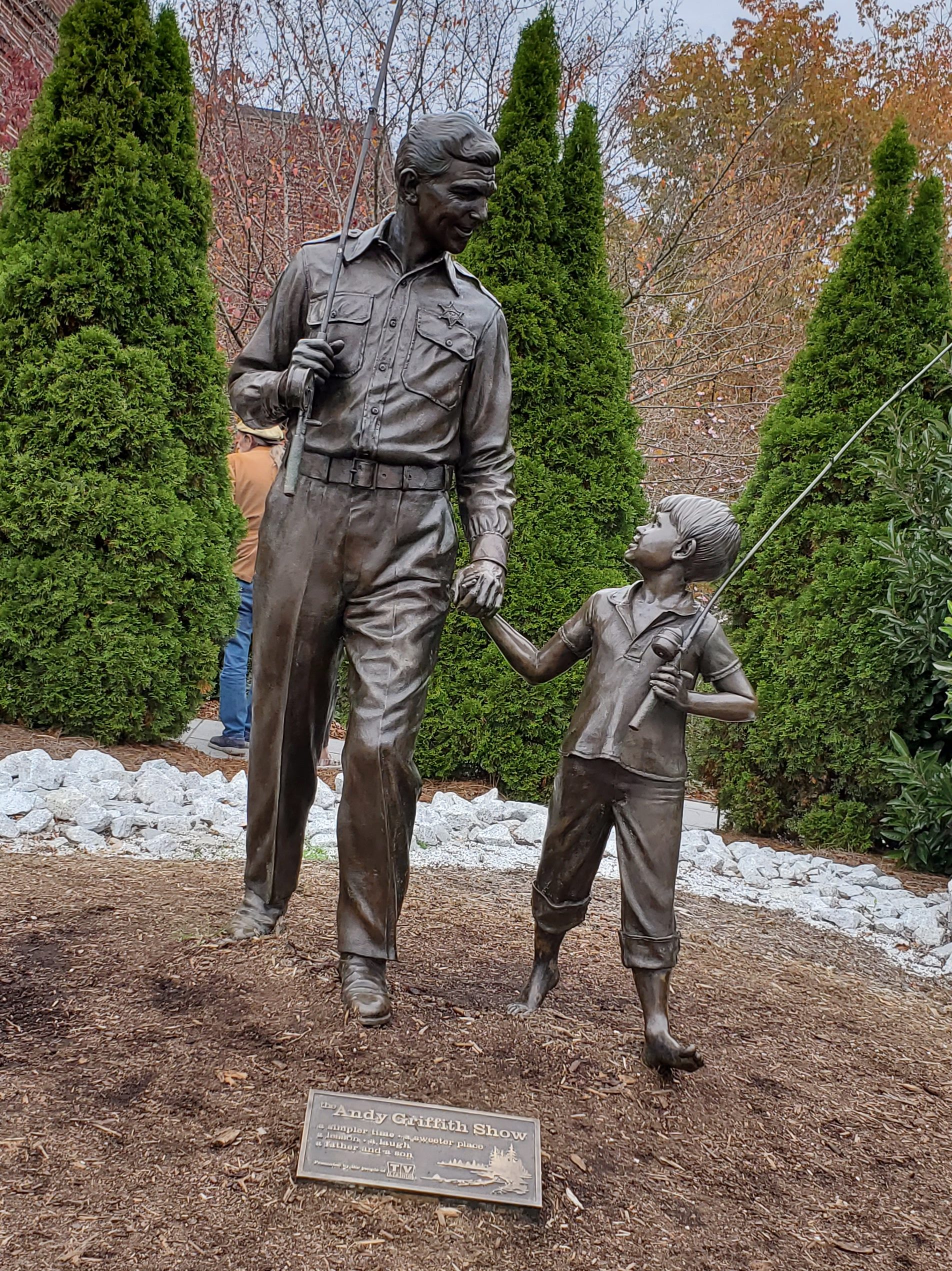
The Andy Griffith Museum (218 Rockford St.), founded in 2009 by Emmett Forrest, is open 7 days a week and attracts 200 visitors a day. The 2,500-square-foot museum, located half a mile from Griffith’s childhood home, houses the world’s largest collection of Andy Griffith memorabilia. Tour the inside museum and view outdoor statuary, including “Andy and Opie Taylor”.

Mount Airy Museum of Regional History

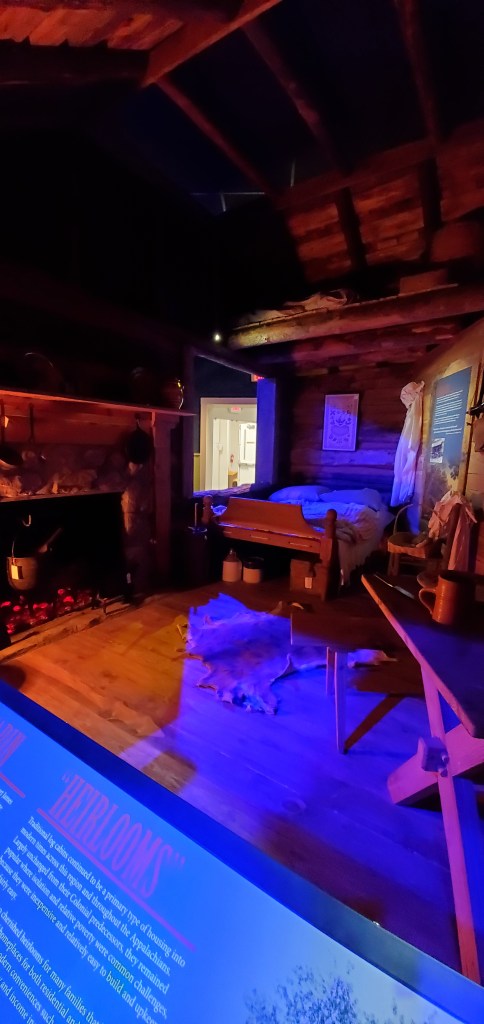
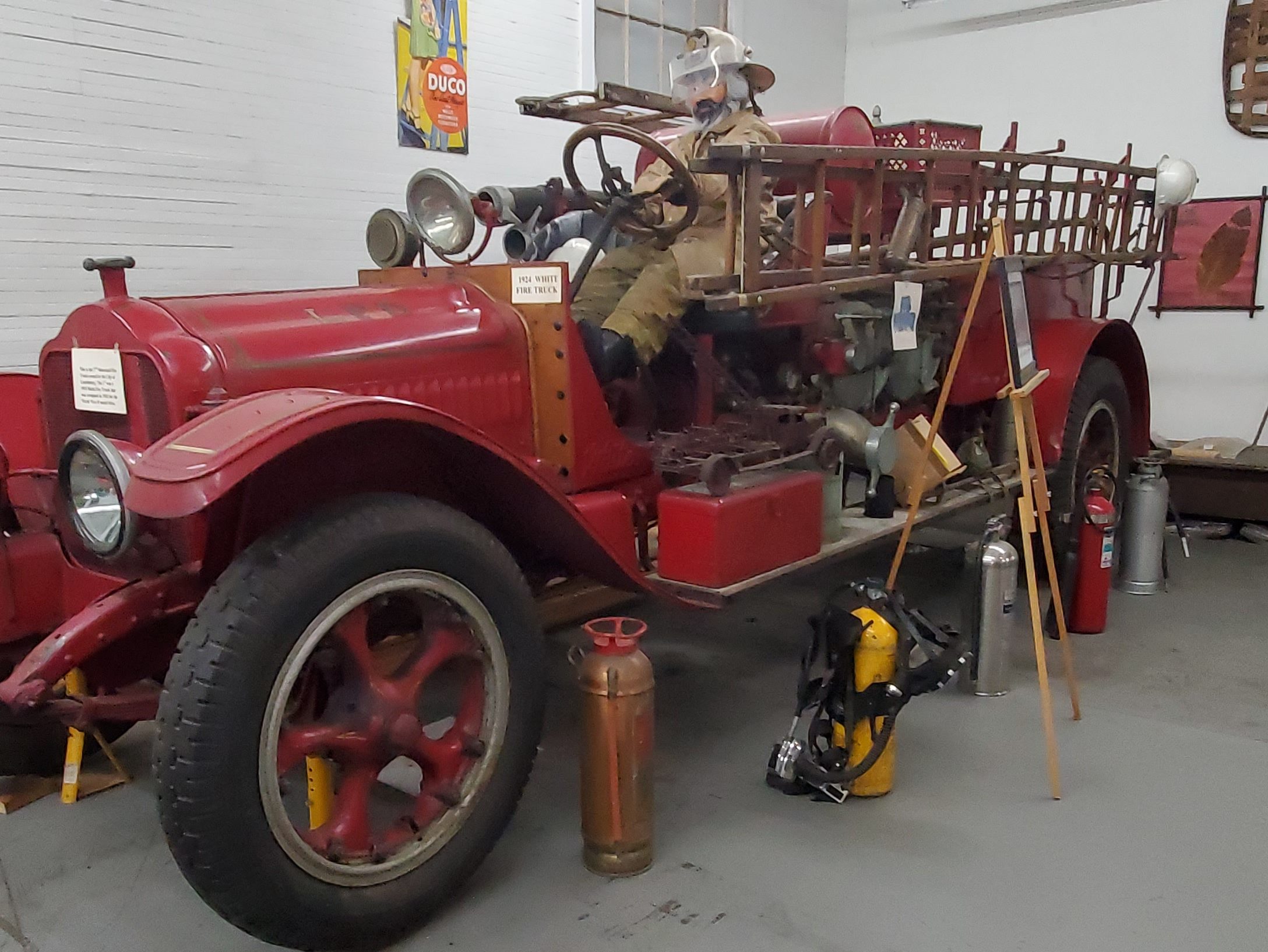
Journey into the past at this hometown heritage museum (301 North Main St.), open 7 days a week, except during winter. Peruse through 35,000 square feet of permanent and regularly changing local, historical, and cultural exhibits, including a children’s gallery and three floors of exhibits, plus a top floor observation deck over the city. The museum recounts the history of this area once known as “The Hollows” because of its saucer-like depression circled by mountains. From early-history conflicts and cabin living to railroad growth and a firetruck exhibit to 1924 Roadsters and an exhibit on Chang and Eng Bunker, local musicians, and more. Support memberships are welcome here.

The Whittling Wall

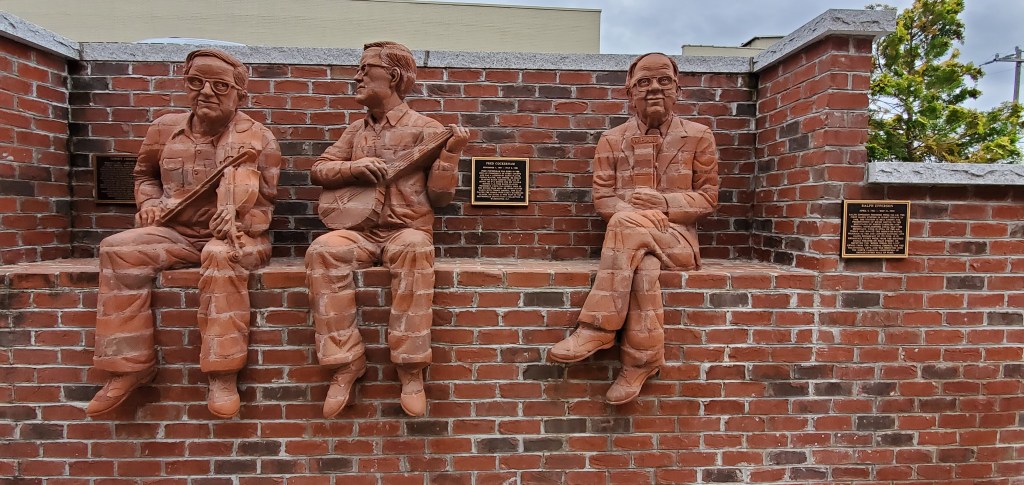
Directly beside the museum, discover The Whittling Wall, created in 2018 by NC artist Brad Spencer to pay homage to the region’s local icons: The Whittler, Tommy Jarrell, Fred Cockerham, Ralph Epperson, Donna Fargo, L.H. Jones, Floyd E. “Flip” Rees, and The Mill Worker.

Toast

There’s nothing major to see here, but the post office called Toast has been in operation since 1929 and has an interesting back story. The name “Toast” was supplied by the Post Office Department. E. P. McLeod, the school principal, supposedly came up with the name while buying groceries at Hutchens Store one evening in 1927.

White Plains

Just down the road from Mt. Airy, you’ll find White Plains and the gravesite of world-famous conjoined twins Chang and Eng Bunker–the original Siamese Twins. Born May 11, 1911, the twins emigrated to the United States from Siam (now Bangkok, Thailand) at the age of 17. The twins quickly became famous as they were featured in circus sideshows around the world. They eventually settled down in North Carolina when their exhibition tour ended. In 1843, they married sisters Sarah and Adelaide Yates and were married for 31 years until the twins’ deaths. Eventually, they had to build two homes for the sisters and their children as the sisters got to fighting a lot. The twins would alternated time between the two homes.

They had a total of 21 children between their two wives (9 boys and 12 girls) and several hundred grandchildren. The twins died on January 17, 1874. Chang had been ill for several months and died during the night. Eng died shortly after. An autopsy revealed that they share a liver and bloodstream. As for their last name, the story goes that when they were applying for American citizenship, officials said that the twins must have a family name. The man behind them, a Mr. Fred Bunker, offered them his name.

At the gravesite behind a nondescript white church (White Plains Baptist Church), you’ll find a supply of brochures describing their history. Their gravesite still gets several visitors a day, and there were two others viewing the gravesite upon my arrival.

Dobson

Dobson was established as the county seat in 1853, replacing Rockford after all land in Surry County south of the Yadkin River was used to form Yadkin County. Tabitha Ann Holton, who became the first licensed female lawyer in the Southern United States in 1878. She practiced law in Dobson from 1878 to 1886. Here, you’ll find Shelton Vineyards, Stony Knoll Vineyards, and Herrera Vineyards. Shelton Vineyards is known as the largest vineyard in the state and holds many events year-round, including live entertainment and concerts, dinners, auto shows, festivals, and the Running the Vines 5K/10K.

Rockford General Store

“Hey, y’all, give us a call!” This is a must-stop local store in Dobson (closed Mondays and Tuesdays). Here, you’ll find a bevy of old-fashioned candies, local fare, and a kitchen serving up a few country treats–including daily Sonker variations.

Mulberry

A small, pass-through community, this area is also interestingly referred to as Jot-Um-Down.

Elkin

The flowing together of the Yadkin River and Big Elkin Creek has drawn people to the area of what is now Elkin, since the coming of the Paleo-Indians 10,000 years ago. The Sioux Indians settled along the Yadkin River as early as 500 BC. The first English colonists came in the mid-eighteenth century along with some colonists from Ireland. Cherokee Indians were also in the area, although the Cherokees had been active in the French and Indian War, they had joined in treaties with the English in 1763, followed by the events of the American Revolution.

Alexander Chatham opened a small woolen mill in 1877 that grew to become Elkin’s largest industry for many decades, The Chatham Manufacturing Company. Along with other mills in the area it has dwindled. The Northwestern North Carolina Railroad arrived in 1890, and the town was ready to take the opportunities the railroad brought for commercial and industrial expansion. Its strategic location near the Yadkin River and the Big Elkin Creek–and as a stop on the railroad–caused prosperity that produced brick stores, many industries, and fine houses.

The beginning of industry with the cotton mill, the Civil War involvement, the coming of the railroad, the town’s coping with the depression of the 1930s, and the two world wars heavily influenced the town’s development. Chatham Manufacturing was famous for making World War II wool blankets for soldiers. And you’ll find a Civil War marker on West Main Street across from the Elkin Library.

The Elkin Municipal Park was the location during the Revolutionary War of a mustering field. Troops gathered to march on the Overmountain Victory Trail towards Wilkesboro then on to Morganton, NC, before they headed south to victory. There is a viewing site along Hwy 268, just west of the Recreeation Center that tells the story on an information panel.

Cedar Point, Downtown Elkin Historic District, Gwyn Avenue-Bridge Street Historic District, and the Hugh Chatham Memorial Hospital are listed on the National Register of Historic Places.

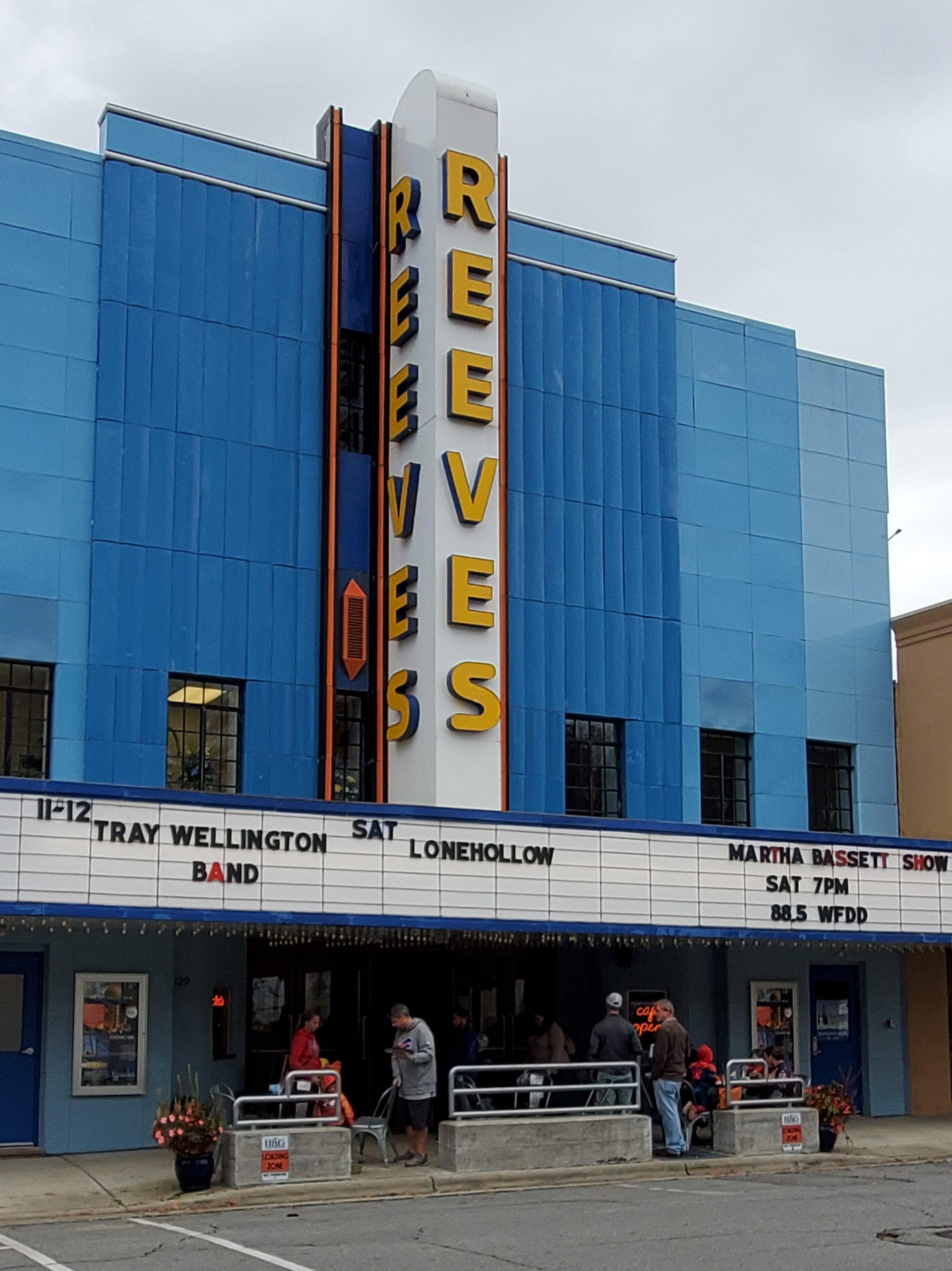
Elkin had the biggest cruising community on the east coast during the 1960s, 1970s, and 1980s. USA Today once featured Elkin and its cruisers on the front page of the national newspaper. However, a crackdown by local police in the late 1990s temporarily ended the once-vibrant weekend cruising scene leaving downtown Elkin deserted on weekend nights until cruising returned to downtown Elkin on Saturday, October 10, 2009 for the first time in almost 20 years. Since 2012, Cruise! events have become a summertime monthly event and continue each year. Cruise events involve parking along Main Street as well as cruising around the downtown streets, including past the Reeves Theater.

Elkin is also famous for the annual festivals and regional events: Yadkin Valley Wine Festival (3rd weekend in May), NC Trails Days (first weekend in June), Elkin Roots Music Fest (mid-late June), Take a Break from the Interstate 100-yard Road Market (last weekend in July), Reevestock Music Fest (first weekend in August), Yadkin Valley Pumpkin Festival on Main Street (4th Saturday in September), including record-breaking pumpkin and watermelon weigh-ins and a car show, quilt show, music, kids play areas, farmers market, and more. Then there’s the Light Up Elkin and holiday parade (first weekend in December).

In Elkin, you’ll find quaint downtown shops and restaurants, the Pirate’s Landing restaurant (161 Interstate Way), plus Adagio Vineyards, Slightly Askew Winery, and Elkin Creek Vineyard.

Crutchfield

This pass-through community is named for Charlie Crutchfield, a worker who died during the construction of a railroad trestle bridge in the area. Crutchfield, who had no relatives, was buried on the Yadkin County side of the river.

Siloam

Another pass-through community, Siloam has some interesting history. Four people were killed and 16 people injured when the one-lane steel span bridge connecting Yadkin and Surry counties in Siloam collapsed on February 23, 1975. The collapse brought national attention to bridge safety and was reported in national magazines, including Reader’s Digest, and on The CBS Evening News.

The Atkinson-Needham Memorial Bridge, which was built at the site of the old bridge, was named in honor of the four victims: Samuel Hugh and Ola Marion Atkinson and Judy Needham and her 3-year-old daughter, Andrea Lee. Among those rescued from the collapse was former Surry County Sheriff Graham Atkinson, who was 10 at the time.

According to a National Transportation Safety Board report, the accident started about 9:25 p.m. when a car struck a timber railing on the bridge, causing the bridge to collapse into the rain-swollen river. In heavy fog, six more vehicles within a 17-minute period drove off the bridge. By the 1970s, state officials had hung a sign on the second-hand bridge that read, “Local Traffic Only.”

The bridge, which had originally been used near High Rock Lake, was reassembled in Siloam in 1938. It was listed as deficient and needing repair or replacement in a 1974 state report. Troy Doby, the state secretary of transportation, said later that “it should have been replaced, but it was a question of money.” Weeks before the collapse, Hugh Atkinson had urged state officials to tear it down. The Atkinson family later found a letter in his coat pocket that he had written to the governor’s office urging action on the bridge.

Next stop… Rowan County!

Journey through Scotland County

Scotland County was founded in 1899 from the southeastern part of Richmond County, which was divided to reduced the travel time for residents to the county seat of Rockingham. The county name documents the strong historic and cultural influence from the early settlers from Scotland. Scotland County is often referred to as the “Soul of the Carolinas,” and prides itself as a top area for retirement.

Festivals include the Scotland County Highland Games (held the first weekend in October), the Storytelling Festival of Carolinas, and the John Blue Cotton Festival (second full weekend in October). Historical sites include the John Blue House (Laurinburg) and the Old Laurel Hill Church. Museums and heritage include the Scotland County Museum, Indian Museum, and Scottish Heritage Center. For a bit of nature or outdoors, discover Cypress Bend Vineyards, St. Andrews Equestrian Center, the Chalk Banks, and the Lumber River.

While traveling through Scotland County, you’ll find small towns and unincorporated communities, such as Old Hundred, Whispering Pines, and Hasty.

Laurinburg

Named a Tree City because of its tall, stately oaks, settlers arrived at the present town site around 1785, which was named for a prominent family, the McLaurins. In 1840, Laurinburg had a saloon, a store, and a few shacks. Laurinburgh High School, a private school, was established in 1852. The settlement prospered in the years following.

A line of the Wilmington, Charlotte and Rutherford Railroad was built through Laurinburg in the 1850s, with the first train reaching Laurinburg in 1861. The railroad’s shops were moved to Laurinburg in 1865 in the hope they would be safer from Union Army attack; however, in March of that year, Union forces reached Laurinburg and burned the railroad depot and temporary shops.

Laurinburg was then incorporated in 1877, and the first courthouse in Scotland County was erected in Laurinburg in 1901. A new courthouse was built in 1964. The Laurinburg Institute, a historically African-American school founded in 1904, is also located in Laurinburg.

Laurinburg, North Carolina, is also a three-time All America City located in the Sandhills region near Fort Bragg, a U.S. Marine base. The large town offers the charm and quiet living of a small southern town with close proximity to larger cities, the mountains, and the coast. Developing from its rich agricultural heritage, Laurinburg is still an agricultural community and it is also the progressive business and cultural center of Scotland County.

During the annual Scotland County Highland Games, you can watch athletes compete in traditional events such as the caber, the hammer throw and the sheaf toss. Plus, witness piping, drumming, dancing and more Tartan glory. The Annual John Blue Cotton Festival held each fall allows you to experience rural life in the South 100 or more years ago, bringing together the old and the new.

Interesting facts: Main Street in Laurinburg was paved in 1914, and actor, dancer, and singer Ben Vereen is from the area.

John Blue House and Heritage Center

The John Blue House (13040 X Way Rd) is currently closed for renovations but the Heritage Village and two museums are open. 

The John Blue House and Heritage Center is the go-to destination for learning more about rural North Carolina’s rich history. Tucked away in a grove of pecan trees, the house is over a century old and is a perfect example of the Steamboat Gothic architecture that dominated the late 19th and early 20th centuries. While at the house, you can marvel at the intricacy of the house’s design and furnishings, which have all been immaculately well-kept over the years. The Heritage Center is a collection of three homesteads, a restored pre-Civil War cotton gin, country store, tobacco barn, and an operational miniature steam locomotive. Together, these structures give us a sneak peak into Scotland County’s past.

The century-old John Blue House provides a glimpse into an important part of Scotland County’s past – the culture of the rural Carolinas – as well as insight into the heart and soul of Mr. John Blue. Constructed 25 years after the end of the Civil War in 1891, John Blue, Sr. (then only 30 years old) – but a successful inventor and manufacturer of farming equipment designed the home after visiting family in Mississippi where he became intrigued by the riverboats. Upon his return, he designed the home to reflect this look – including the “bridge” of the home that served as his favorite sitting area. Also contributing to the riverboat design are the rare double circular porches, as well as the ornaments that decorate the porch and railings — all hand carved by Mr. Blue himself.  The house is built entirely of heart of pine lumber from trees on the grounds.

Inside you’ll find 12 rooms–and 12 exterior doors. The doors display decorative stained glass, a feature of which Mr. Blue was especially proud. Today more than 90% of the original stained glass windows remain intact. One window that Mr. Blue especially enjoyed was the red stained glass window in the front door. This window allowed him to look through it, across the road to his cotton fields. The red tint illuminated the fields and allowed Mr. Blue to see his “rose garden.”

Indian Museum of the Carolinas at the North Carolina Rural Heritage Center

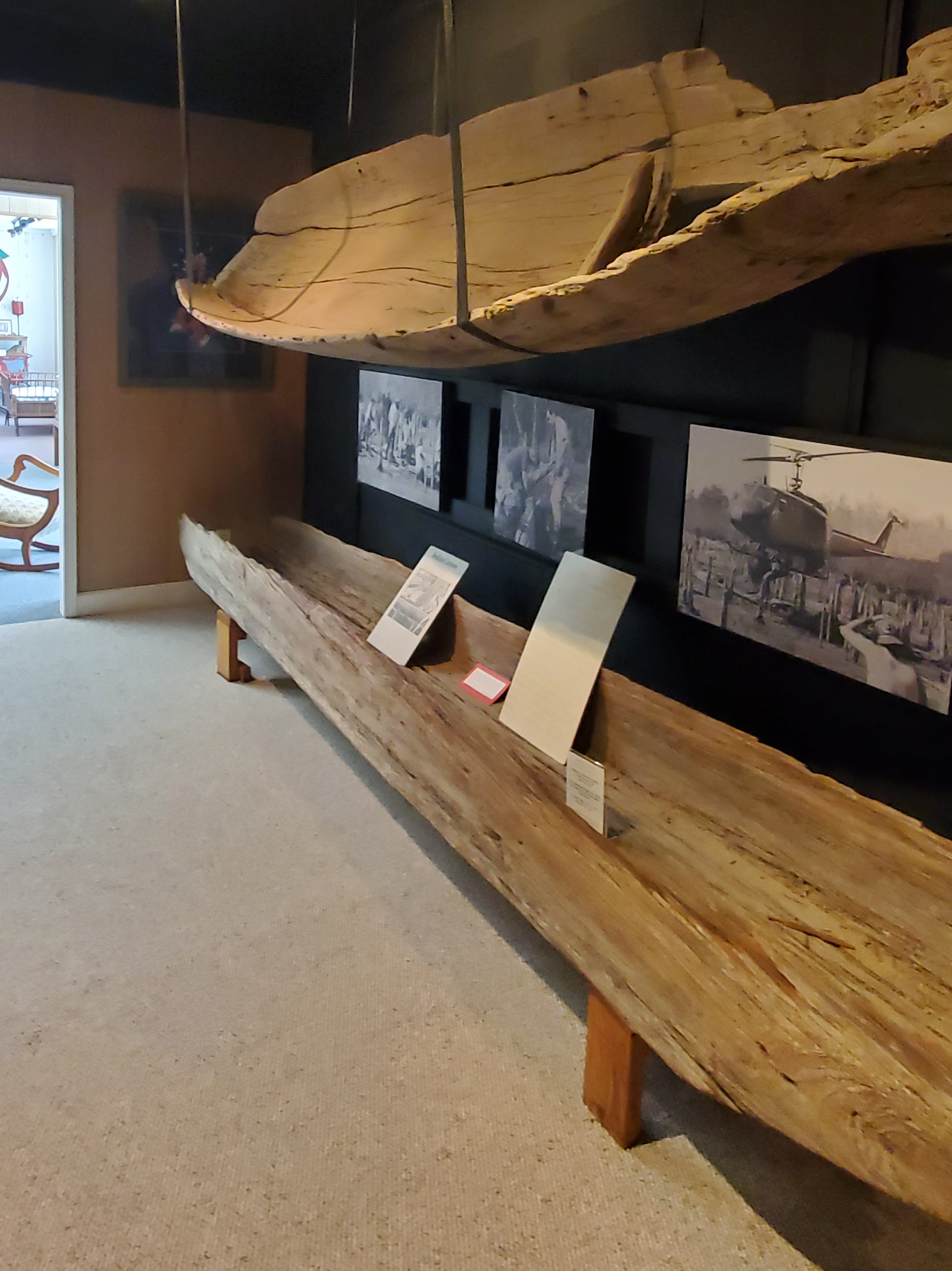
Located near the John Blue House, the Indian Museum of the Carolinas (13043 X Way Rd) is dedicated to educating the public about the history, cultures, and importance of the Native American groups that currently and previously inhabited the Carolinas. The museum includes 40 exhibits on various native groups, including the Cherokee, Coharie, Tuscarora, Waccamaw-Siouan, Catawba, and Lumbee, and features a number of artifacts, pottery, tools, weapons, art, and jewelry, some of which are more than 10,000 years old! Additionally, the exhibits include unique items such as an original canoe and projectile points (arrowheads).

Through the millennia, the region now known as North and South Carolina was home to more than 45 different Native American Indian cultures. Among the descendants today are the Lumbee, Cheraw, Cherokee, Tuscarora, Waccamaw, and Catawba.

Museum of Agriculture and History

Also located at 13043 X Way Rd, you’ll also find this lovely museum, comprised of four primary sections: Inventions of John Blue and other agricultural trend-setters, an exhibit of hit and miss engines and other farming vehicles, a look at household appliances from yesteryear, and one of the most fascinating collection of antique cars you will find in the Southeast. Additionally, the museum boasts a retired locomotive engine, an exhibit on textiles, a local sports hall-of-fame, and an honorary exhibit to the armed forces.

In 1886 John Blue and his father established a business on John’s land. In the shop, the younger Blue repaired cotton gin parts and other farm tools and equipment. The small business grew into a large plant where implements were made. Blue built a foundry—a building that contained equipment to melt iron and cast it into parts he needed and that building burned in 1947. The factory where the equipment was built is the building that now houses the Museum of Agriculture and History.

Heritage Village

And still at the same spot (13043 X Way Rd), nestled in a grove of pecan trees, the John Blue House serves as the centerpiece of a collection of homesteads that tell the story of a different time in the region. Each of these structures was first built elsewhere by settlers and farmers in the areas and moved to the grounds for presentation, including an original cotton gin and tobacco barn. From the structures to the homesteads that occupy the land, the grounds provide a glimpse of the culture of the rural Carolinas of the late 1800s.

Wagram

The town was named for the Battle of Wagram, a Napoleonic battle at Deutsch-Wagram in Austria.

Cypress Bend Vineyards

Cypress Bend Vineyards (21904 Riverton Rd, Wagram, NC) is Scotland County’s local winery. The Vineyard serves Scotland County’s first Muscadine winery, using five grape cultivars that thrive in North Carolina’s unique climate. A trip to Cypress Bend Vineyards will give you the opportunity to sample some of of the area’s finest wines in a beautiful, open environment. The vineyard’s tasting room and retail boutique is open every day. They hold weddings and events as well as private parties. And every fall, they hold the Fall Harvest Festival and Grape Stomp. Be sure to check it out and partake!

Chalk Banks State Park/Lumber River State Park

For a peaceful getaway, stop here for scenic water views, picnicking, fishing, boating, hiking, primitive camping, and more (26040 Raeford Road, US Highway 401). The Lumber River is the only black water river in North Carolina, is designated a National Wild and Scenic River, and is one of the top ten Natural Wonders of NC. The Lumber River meanders through Scotland, Hoke, Robeson, and Columbus Counties and connects with the Little Pee Dee River. The Lumber River State Park is comprised of 9,874 acres and 115 miles of waterway.

Journey through Hoke County

Discover rural life in Hoke County, bordering the low country of South Carolina. Hoke county is dotted with small, unincorporated communities like Ashley Heights, Five Points, Silver City, Arabia, and Rockfish. Raeford is the county seat of Hoke County, and the most populated area of the county. Hoke County is among the smallest counties in North Carolina, with just a few highlights this day.

Raeford, NC

Tucked away in the fabled Sandhills of North Carolina lies the City of Raeford, a ‘typical Scottish town.’ The fragrant Carolina pine forests and expanses of fertile land provide the perfect pastoral setting. Majestic magnolias grace front lawns and springtime flaunts an unrivaled palette of azaleas.

Raeford was named for John McRae and A.A. Williford, who operated a turpentine distillery and general store, respectively. Each took a syllable from his name and created the name Raeford for the post office they established. The McRae family, who lived at the “ford of the creek,” was at one time made up primarily of old Highland Scot families. And the Upper Cape Fear Valley of North Carolina was, in the 18th and 19th centuries, the largest settlement of Gaelic-speaking Highland Scots in North America. Today, many of these old families continue to live in the area. Since World War II, many Lumbee Indian families have moved northward from Robeson County and now constitute a significant element of the population that is otherwise European and African American.

Of note, George Floyd was born near Raeford.

Raeford benefits from the unique city blend of an intimate community, offering a small-town, friendly atmosphere within shouting distance of major metropolitan amenities, but without the “big-city” hustle. Bordering Fort Bragg, Raeford offers easy, everyday access to all areas on post. The are is also ideally situated near some of the world’s renowned golf courses of Pinehurst and the Sandhill region.

Raeford-Hoke Museum

The original McLauchlin-McFadyen House, now the Raeford-Hoke Museum (111 South Highland St.) is a neoclassical revival design with 6,000 square feet of heated space. Located on five acres, the museum also includes The Parker-Ray House, an emergency service museum, doll house, school house, and country store plus a genealogy room.

The Raeford-Hoke Museum, a non-profit organization, began its preservation project in 2002 with the purchase of The McLauchlin-McFadyen House. The mission of the museum is to preserve the history, culture, and artifacts of the local area. The Museum houses many historical artifacts, photographs, and genealogies of Raeford and Hoke County.

The museum is free to tour, but donations are welcome as the museum is a nonprofit supported by volunteers and donations. They also hold annual events, such as Singing on the Grounds, History Day for the Children, Open House at Christmas, a Wine Tasting, and the Leadership-Hoke Tour.

Parker-Ray House

In 1899 Louis and Willa Ray, daughter of Dr. W.G. Ray, one of the first doctors in this area built their home in Cumberland County (an area that become Hoke County in 1911) and remained there the rest of their lives. Times changed, the families moved on, and the house became vacant. The house was eventually donated to the Raeford-Hoke Museum and has been renovated to the style of the early 1900s, completed in Spring 2015.

In 1899, the Hoke County entity did not exist, but the land and people of that area of Cumberland County did and Louis Parker found both attractive. He and five of his brothers and sisters moved to the area. He bought 200 acres on the road to Fayetteville, about four miles northeast of the small town of Raeford. That section of Cumberland became part of Hoke County when Hoke was recognized as a county in 1911.

Willa’s ancestors had been in the area since the 1740s. having been forced out of Scotland by the English King. She and Louis married, cleared the land and used the timber to build a home in which they lived the reminder of their lives. Their children and grandson (Richard Neeley) were born in the upper right bedroom. Over the years their land developed into a thriving farm.

The Parker family moved on, leaving the home vacant. Richard Neely and his niece Suzanne Neely Bridges, descendants of Louis and Willa, donated the house to the museum, including funds to move and restore it.

Mill Prong House
This house is not open to the public, but you’ll find it at 3062 Edinburgh Rd.

In the last half of the 18th century, more than 20,000 Highland Scots, including John Gilchrist and the father of Col. Archibald McEachern, immigrated to the Cape Fear Region of North Carolina, the largest Highland Scot settlement in America. Many left Scotland after 1746, the year the Scots rallied under Prince Charles Stuart only to suffer defeat by the British at the Battle of Culloden.The Scots in the Cape Fear Region were divided in their sympathies during the Revolutionary War and the area around McPhaul’s Mill was a center of Loyalist activity. Many followed the appeal of their heroine, Flora MacDonald, and joined the Loyalists who suffered defeat once again at the Battle of Moore’s Creek near Wilmington.

In 1781, Patriot General Rutherford defeated the local Loyalists in a final battle near Mill Prong. During the last year of the Civil War, General Sherman passed through the area on his way to where the Battle of Bentonville, the largest Civil War Battle in North Carolina, was fought. His troops bashed in the family piano, which once again resides at Mill Prong.

Paraclete XP Indoor Skydiving

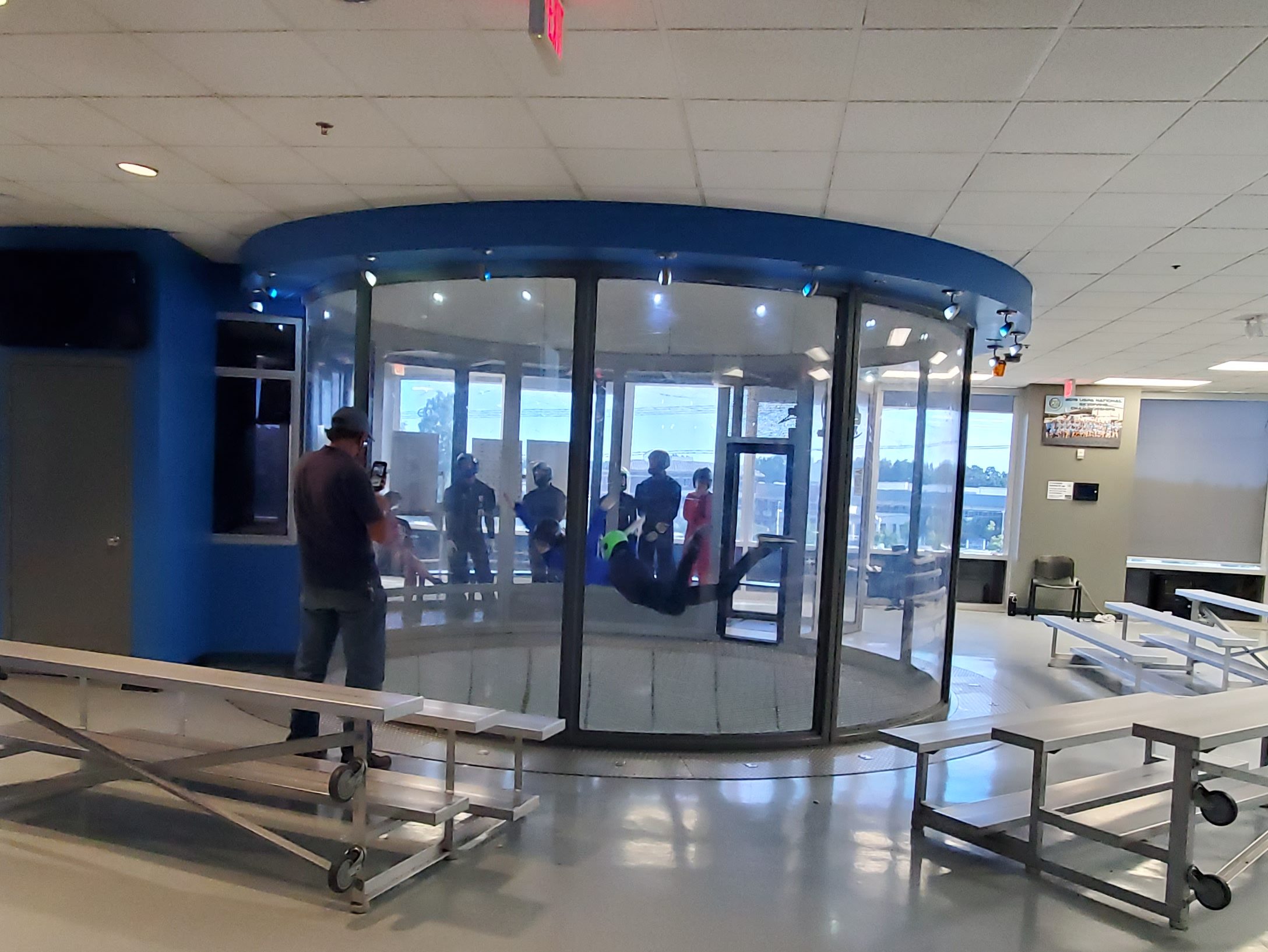
Nervous about skydiving? At Paraclete XP Indoor Skydiving, you can get a sense of skydiving in a controlled environment. You’ll go through a brief training, then suit up. Though they offer 2-minute adventures, which doesn’t sound like much, it really is when you are doing something that’s high adrenaline. Plus, when you think about actual skydiving, it’s about a minute of freefall before you open your chute. You don’t need any previous experience and, in fact, the experience is open to novices and experts alike. You may catch expert aerialists practicing drills here in between novice flights. Be sure to stop downstairs for an a display showing how the vertical wind tunnel operates. It’s an amazing set up and the experience–and the rush–are definitely worth it! You can even purchase a video of your experience. Oh, and there’s plenty of space for spectators to watch. Once you’ve got bitten by the bug, you can go actual sky diving with Paraclete as well.

Next up–Scotland County!

Journey through Harnett County

You’ll find Harnett County filled with Civil War history. And there’s more for you here–even if you’re not a Civil War buff.

Harnett County was formed in 1855 from land given by Cumberland County. It was named for American Revolutionary war soldier Cornelius Harnett, who also served as a delegate to the Continental Congress. The first settlers came to this region in the mid-1720s, and were followed by Highland Scots immigrants. The Scots settled in the foothills, where land was more affordable, rather than in the rich coastal plain.

During the American Revolutionary War, many of the Scots were Loyalists. In their defeat in Scotland, it is surmised that they had been forced to take ironclad vows that prohibited taking up arms against the British. Thus, some Rebels considered them traitors to the cause of Independence. Public executions of suspected spies occurred. One site near Lillington may have been the scene of a mass execution of “Scots Traitors.”

Though Harnett County was not a site of warfare during the Civil War, one of the last battles took place near Averasborough, which was once the third most populated town in North Carolina but is now no longer in existence. During the Carolinas Campaign, the Left Wing of General William Sherman’s army under the command of Maj. General Henry W. Slocum defeated the army of General William Hardee in the Battle of Averasborough and proceeded eastward. A centennial celebration of the event was held in 1965 at the site of the battlefield.

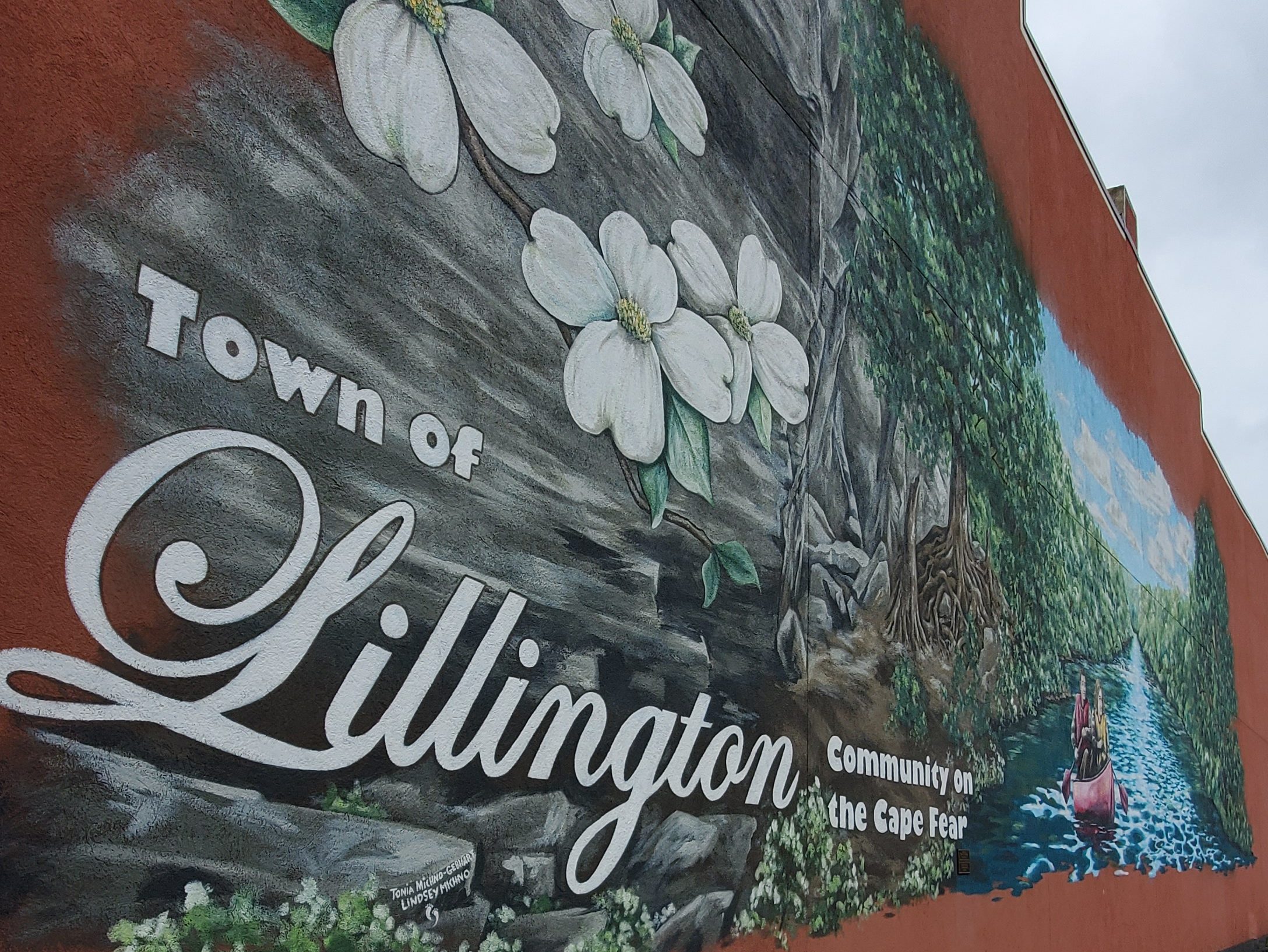
Lillington

The town of Lillington is named for John Alexander Lillington (c. 1725–1786), aka Alexander John Lillington, who was a Patriot officer from North Carolina in the American Revolutionary War, notably fighting in the Battle of Moore’s Creek Bridge in 1776 and serving as brigadier general in the state militia. The Summer Villa and the McKay-Salmon House and Summerville Presbyterian Church and Cemetery are listed on the National Register of Historic Places.

East Coast Classic Cars

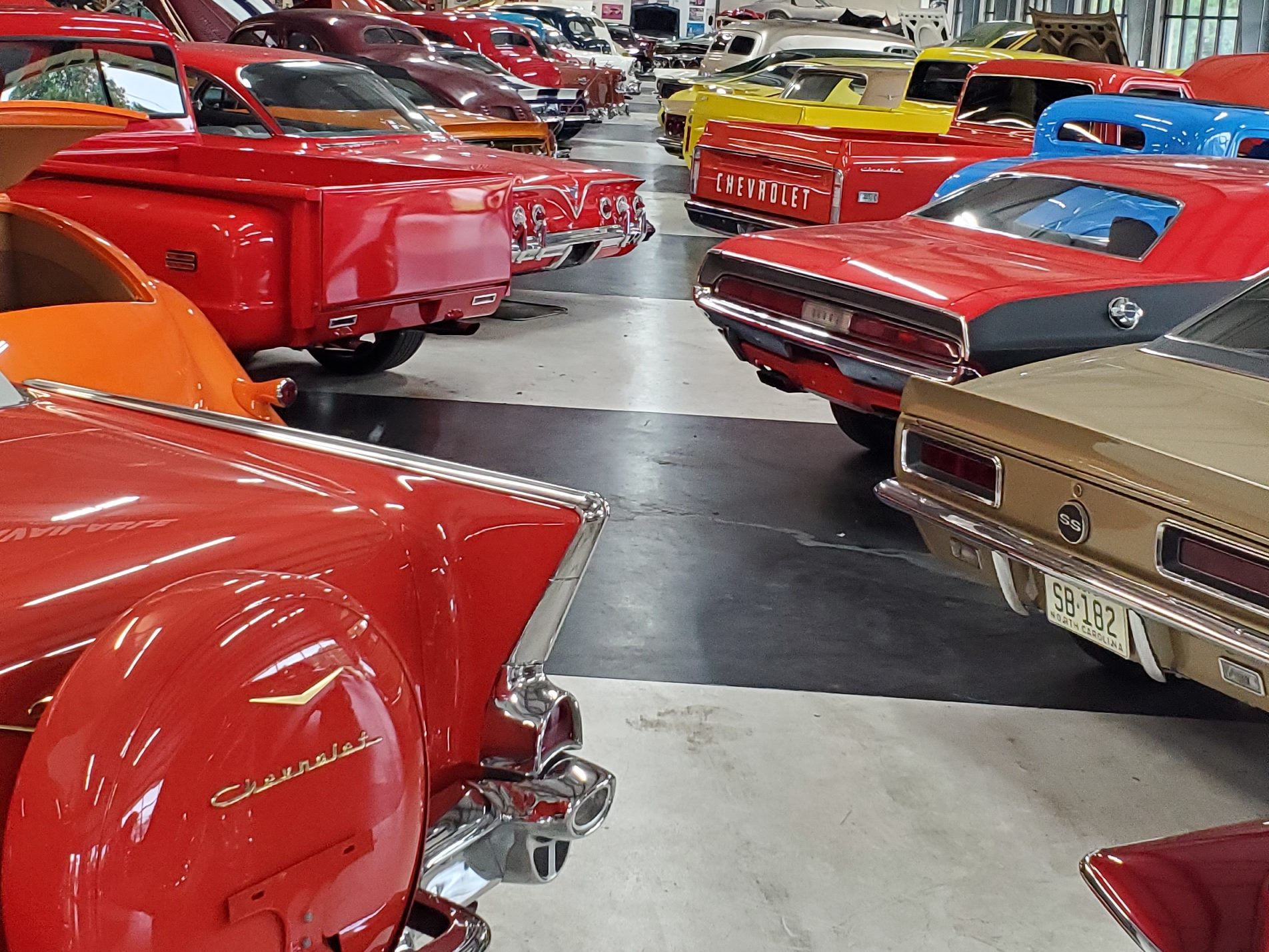
The day started here with this fantastic collection of 100+ classic, antique, and muscle cars cars in a 35,000-square-foot showroom. It may seem like a museum, but most of these vehicles are actually for sale. This collection is really a must-see! (325 E. Cornelius Harnett Blvd, Hwy 421)

Harnett County Veterans Memorial

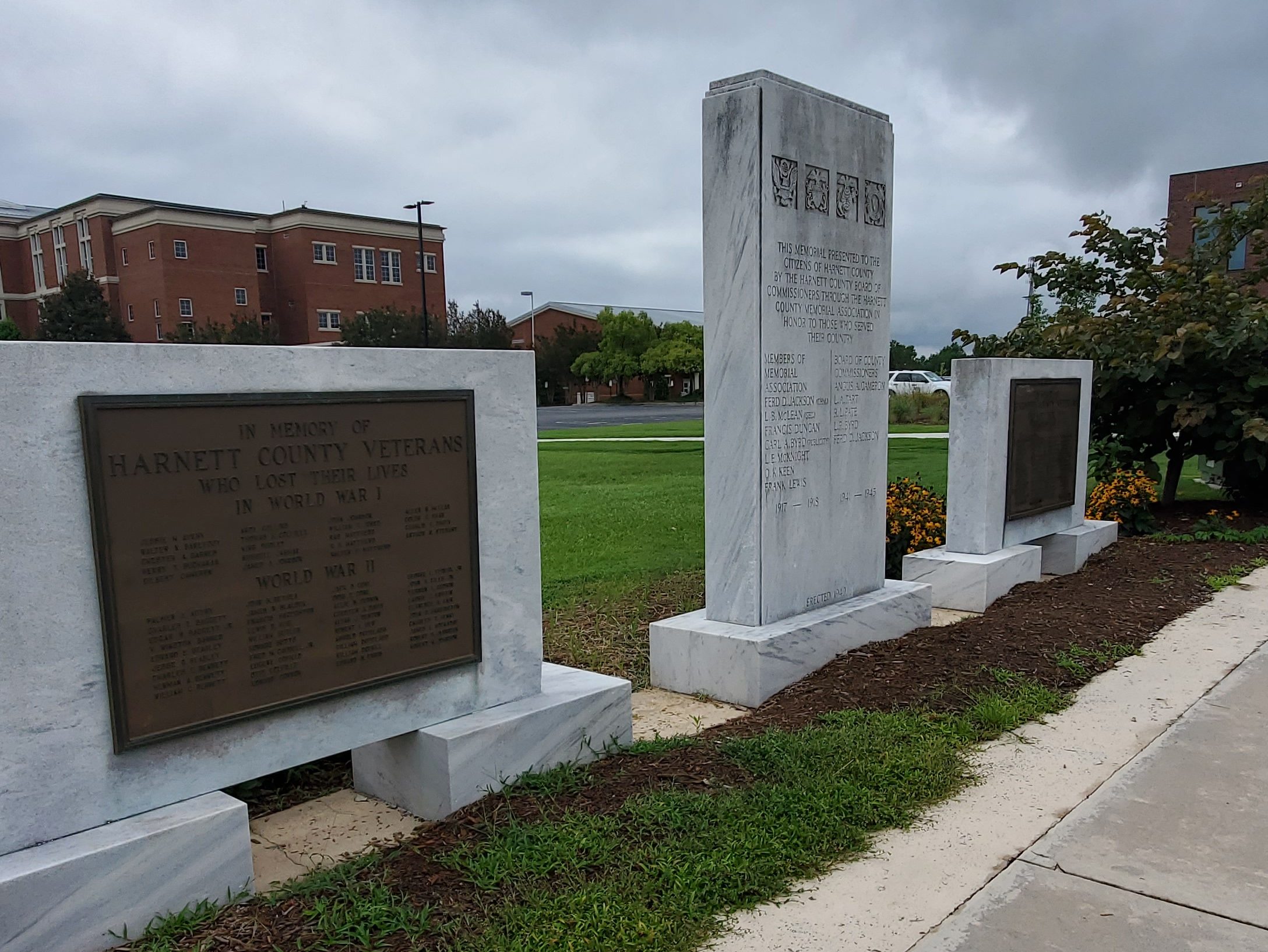
Not far from East Coast Classic Cars, you’ll find this memorial in Courthouse Square, located to the right of the Harnett County Courthouse. The memorial consists of three granite panels. Two smaller horizontal panels on either side have bronze plaques with the names of veterans who sacrificed their lives in the Spanish American War, World War I, World War II, and the Vietnam War.

Raven Rock State Park

Nine miles west of Lillington, discover the natural beauty of Raven Rock State Park (3009 Raven Rock Rd.). The Raven Rock Loop Trail is the showcase of the park, featuring a 150-foot crystalline structure that stretches for more than a mile along the Cape Fear River. The Raven Rock Loop Trail is a 2.6 mile easy loop trail (the longest of the walking trails) that drops you off at the Raven Rock as well as an incredible panoramic overlook high above the Cape Fear River–definitely worth the hike! The park also has bridle trails (on the other side of the Cape Fear River), mountain bike trails, and other walking trails too as well as campgrounds and picnic shelters.

Dunn

An All-American City and the largest city in Harnett County, originally called “Lucknow,” was renamed “Dunn” in 1873. The city of Dunn was incorporated on February 12, 1887, when it was mostly a logging town and a turpentine distilling center. The city’s name honors Bennett Dunn, who supervised the construction of the railway line between Wilson and Fayetteville. The Dunn Commercial Historic District, among several other historic homes and buildings, is listed on the National Register of Historic Places and comprises a number of quaint and eclectic downtown shops. The city also hosts an annual Cotton Festival.

Averasboro Battlefield and Museum
When in Dunn, make a quick visit to The Averasboro Battlefield and Museum (3300 NC-82), dedicated to the Battle of Averasborough, a Civil War battle fought on March 15-16, 1865. The Confederate soldiers delayed the advance of General William T. Sherman’s Union Army for two days. More than 1,200 were wounded and at least 350 soldiers were killed. 56 Confederate soldiers are buried in the cemetery, though only two names are known.

The museum, founded in 1994 by the Averasboro Battlefield Commission, Inc., is located on the battlefield and is part of the NC Civil War Trails. The Battlefield attained National Register Historic District status in May 2001.  Also on the battlefield and considered to be part of the museum is the restored Chicora Civil Cemetery.  Here you’ll find a small museum displaying an array of artifacts, souvenirs, and monuments along with a Civil War-era cabin and gift shop. Admission to the museum, grounds, and cemetery is free.

General William C. Lee Airborne Museum
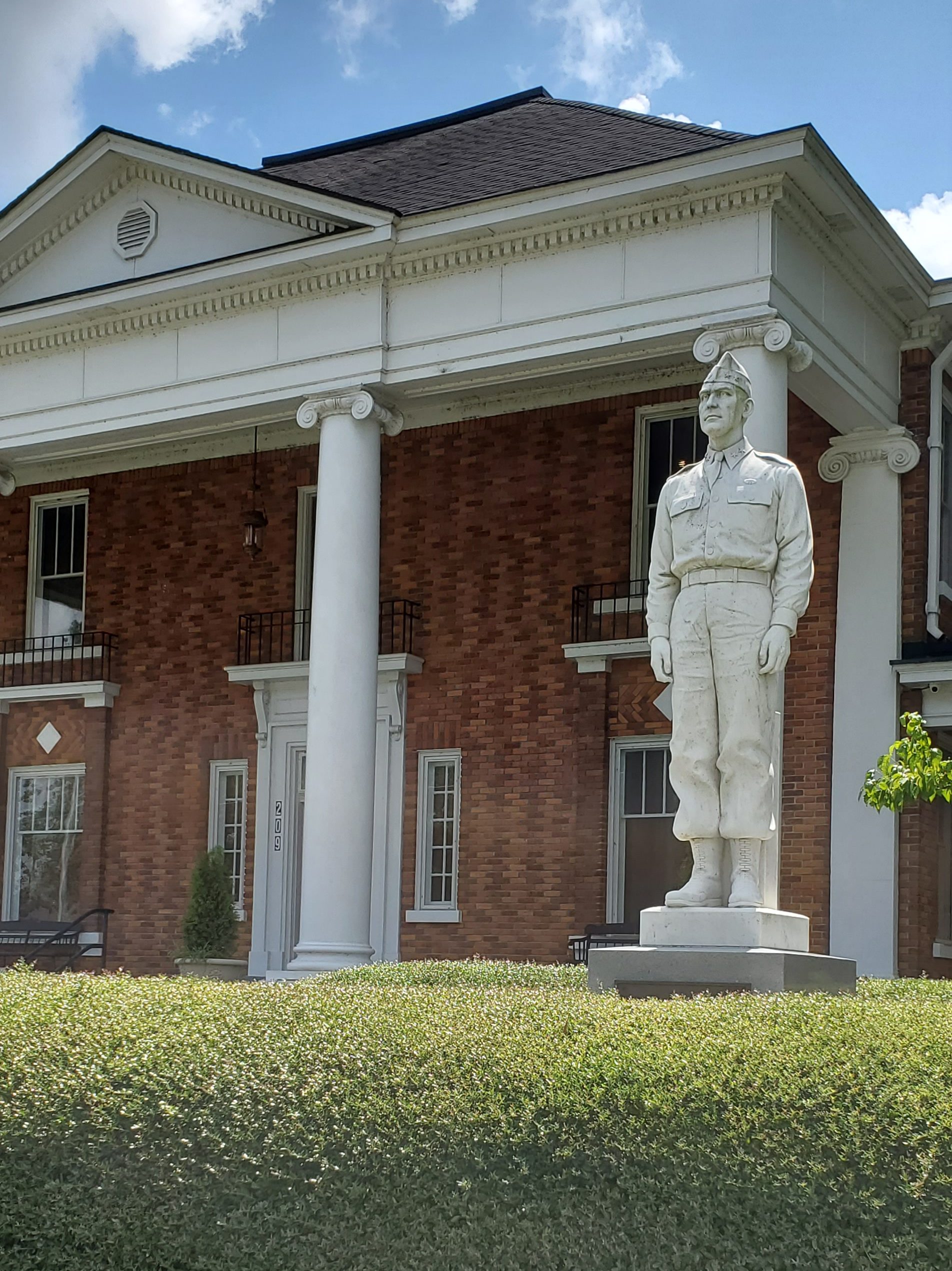
The museum today is an early 20th century neoclassical three-story revival house built in 1903. The museum was once the home of Dunn native Maj. General William C. Lee, known as the “Father of the Airborne.” Maj. Lee brought to life the idea of an allied airborne invasion of Europe. The museum (209 West Divine St.) tells of General Lee’s life history, the early years of the US Army Airborne and the use of glider planes during WWII. Admission is free.

Dunn Area History Museum

Peruse through this museum for a variety of local historical influences in this part of North Carolina, including clowns, quilts, toys, telephones, scouts, baseball, music, and more.

Angier

Angier annually hosts the “Crepe Myrtle Festival” in September, which attracts approximately 20,000 visitors. The town calls itself “The Town of Crepe Myrtles,” and there are definitely plenty of these beautiful summer-blooming trees here. Each summer, Angier draws a crowd of motorcyclists and bike enthusiasts from across the region to downtown Angier to enjoy the sights, sounds, and tastes of its annual Bike Fest event. The family-friendly event features live music, a bike show, a poker-run fund-raiser, exhibits, and fun for people of all ages. Angier lies along the “Art Road and Farm Trail” through Bladen, Cumberland, Harnett, Johnston, and Robeson counties.

Angier Town Museum

Located beside the town’s historic depot, stop here (by appointment) to learn about the rich history of the “Town of Crepe Myrtles.” Be sure to stop at the train depot next door (19 W Depot St.), the newly dedicated mural (on August 17, 2021) across the street beside the intersection, and several eclectic downtown shops.

Gourd Museum

You’ll find the Gourd Museum (28 North Raleigh St) located in the Angier Municipal Building/Angier Library, though you’ll have to check this out during the week as the library isn’t open on weekends. The Gourd Museum was established in 1964 by Marvin and Mary Johnson on their homestead just off of NC Highway 55 between Fuquay-Varina and Angier in the Kennebec Community just opposite of the Fuquay-Angier Airport.  Marvin, long-time president of the North Carolina Gourd Society, founded the museum. Nephew Mark Johnson, who lived next door, owned and operated the museum for many years inside the small white building. You discover hundreds of gourd crafts here from all over the world.

Coats

Coats Museum

The town of Coats, North Carolina, was chartered in 1905. The Coats Museum (109 South McKinley St.) is located in the beautiful Coats Heritage Square and invites visitors to learn more about the town and surrounding area. Their website extends an invitation for you to enjoy a walk through their community’s history as well as a Seed-to-Product Cotton Exhibit.

Animal Ed.ventures Sanctuary at Noah’s Landing
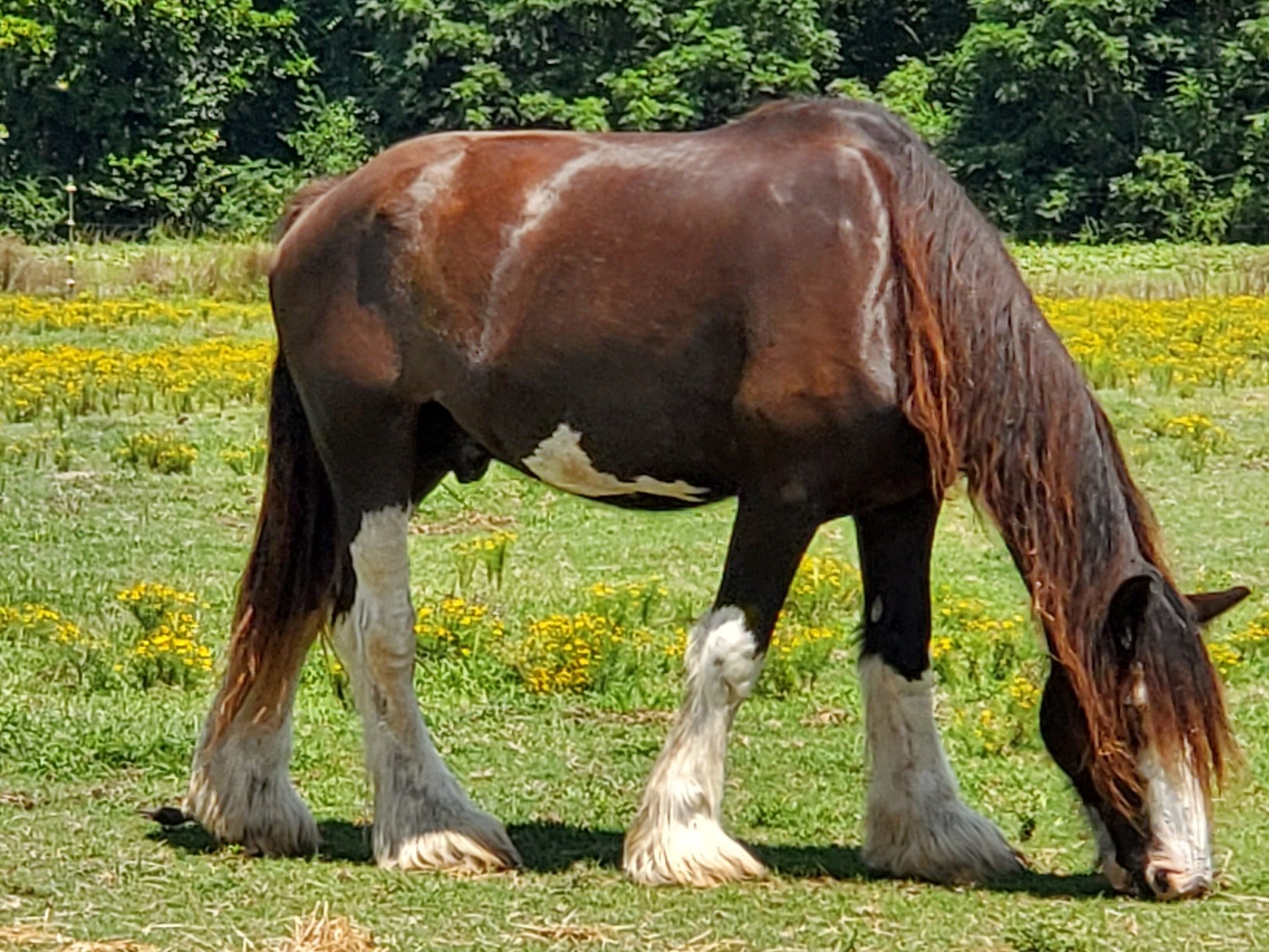
While in the area, take a stroll through 12 acres of Animal Edventures (1489 Live Oak Rd), a collection of rescued exotic and domestic animals, including camels and Clydesdale horses. They offer onsite and off-site programs.

Other Harnett County Sites

Hawk Manor Falconry – Enjoy an amazing experience with birds of prey here. You’ll even have the opportunity to have one perched on your arm. Be sure to make reservations in advance! (587 Joe Collins Rd)

Journey through Catawba County

Wow! Catawba County was chockful of little discoveries! This county is well worth the trip.

Catawba County, name after the Catawba River, was formed in 1842 from Lincoln County. The word “catawba” is rooted in the Choctaw sound kat’a pa, loosely translated as “to divide or separate, to break.” However, scholars are fairly certain that this word was imposed from outside. The Native Americans known as the Catawba people, a tribe of indigenous people who once inhabited the region, were considered one of the most powerful Southeastern Siouan-speaking tribes in the Carolina Piedmont. They now live along the border of North Carolina near the city of Rock Hill, South Carolina. German and Scots-Irish colonial immigrants first settled in the Catawba River valley in the mid-18th century. The town of Maiden is home to the Apple iCloud data center and is the largest privately owned solar farm in the United States (operated by Apple).

P.S. If you’re a fan, you might want to check out the Catawba Valley Ale Trail.

Lookout Shoals Dam

We started our day at Lookout Shoals Dam on Lookout Shoals Rd. The story’s been told that during construction of the Lookout Shoals Dam in 1914, single young ladies from the area would stop at the site to check out the men working on the crews. One such worker, Walter Sipes, met his future bride when she visited, which began four generations of Sipes family members with connections to the now 107-year-old dam. Today, Lookout Shoals has three generating units with a capacity of 26 megawatts. It is one of 13 hydroelectric plants and 11 reservoirs operated by Duke Energy along the Catawba-Wateree River in the Carolinas.

Bunker Hill Covered Bridge – Claremont, NC

Located at 4180 E US Hwy 70, the Bunker Hill Covered Bridge at Connor Park is just a short walk from the parking lot along the Lyle’s Creek stream bed. One of a few covered bridges left in North Carolina, it is the only remaining wooden bridges in the United States with Haupt truss construction–and one of only two original covered bridges left in North Carolina. (See the future Randolph County blog for the Pisgah Covered Bridge and Lee County Blog for another covered bridge, though not original.) This covered bridge was built in 1895 by Andrew Loretz Ramsour in Claremont, North Carolina, and crosses Lyle Creek. The bridge is a National Civil Engineering Landmark and is listed on the National Register of Historic Places. The bridge was constructed as an open span and was covered in 1900 by a 91-foot wood shingle roof, later replaced in 1921 with a tin roof. The bridge was then repaired in 1994. In a historical note, 531 British prisoners of war crossed at the Bunker Hill Ford on Lyle’s Creek following the Battle of Cowpens in 1781 during the Revolutionary War.

Claremont, itself, was originally known as Charlotte Crossing, and later as Setzer Depot. Claremont began using its current name in 1892, after Clare Sigmon, the daughter of an early settler, and was incorporated in 1893. Rock Barn Farm is also listed on the National Register of Historic Places.

Settlers came to the part of Catawba County known now as Claremont in the early 1800s. It has been reported that land sold for fifty cents an acre. The Settlement was first called “Charlotte Crossing”. The Federal Post Office Department did not approve of the similarity with the Town of Charlotte, so the villages name was shortened to just “Crossing”. Some people called the village “Setzer’s Depot.” The Southern Railroad urged the people of the village to give their village a name.

So, the men agreed and took the name of “Clare” and added, “mount” to it. The “mount” was added because the village from the old Catawba Road side looked high as a mountain. On August 8, 1892, the town was officially called Claremont and listed this way by the United States Post Office Department and also by Southern Railroad.

Newton, NC

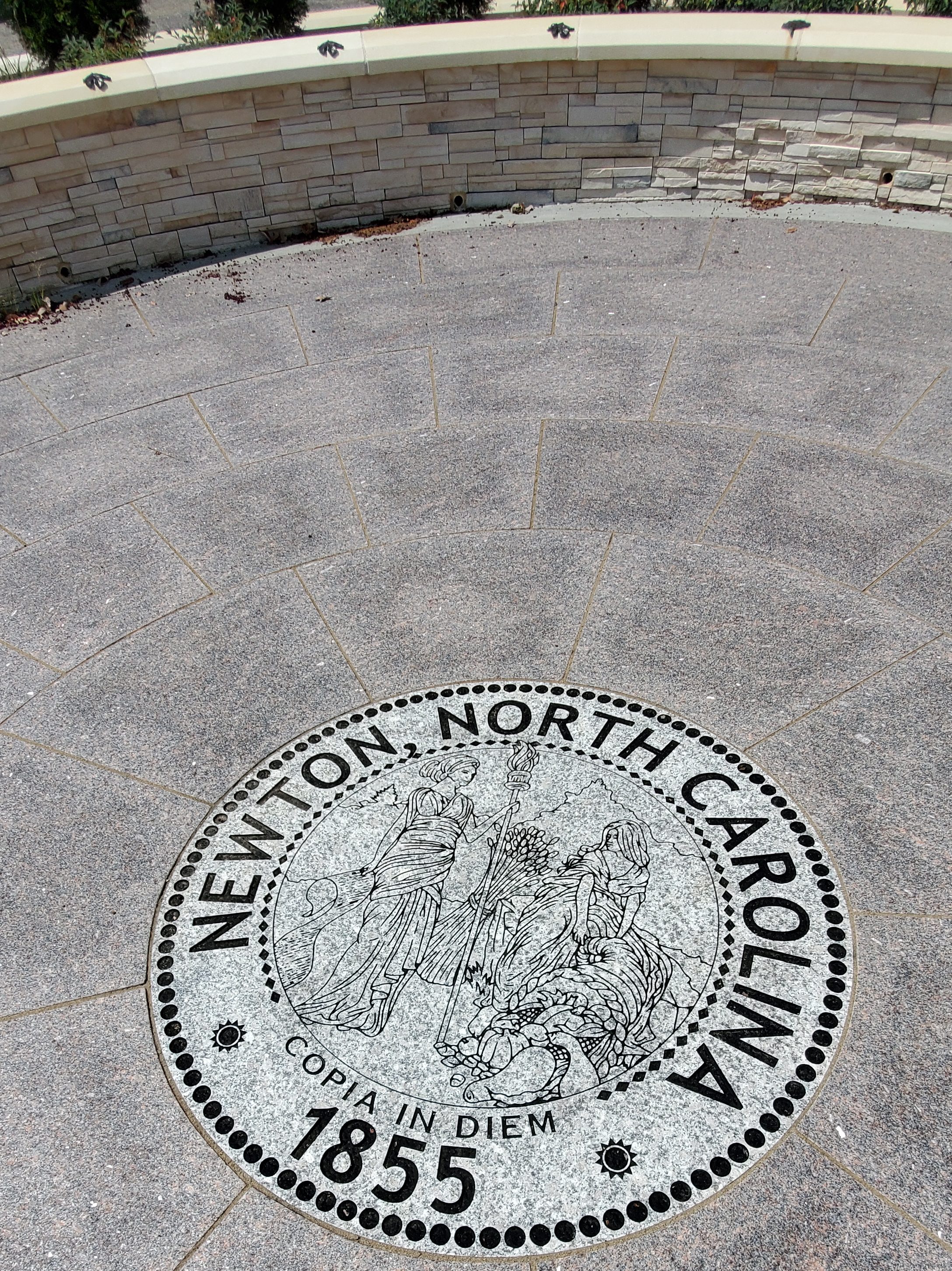
Newton, named for Isaac Newton Wilson, a state legislator who had introduced the bill creating Catawba County, was established in 1845 and incorporated in 1855.

Cherie Berry (of Maiden?) Dennis Setzer, former NASCAR driver, Paulette Washington, Actress and wife of Denzel Washington are from here. (Some longtime North Carolinians may recall Cherie Berry’s name from being posted in every inspection form in every elevator in the state.)

INC Magazine has twice named the region as one of the top entrepreneurial areas in America in both traditional and high-tech industries. Business North Carolina magazine also ranked the region as having the second-best business environment of the state’s 50th largest communities. Newton is also home to the annual Soldiers Reunion, featuring almost a week of patriotic and entertaining activities for area residents, including a parade in downtown. The event is the oldest patriotic celebration in the nation that is not based on a holiday. (P.S. The oldest Fourth of July parade in the country takes place in Bristol, RI. Instead of solid yellow lines, the center lines along the parade route are painted red, white, and blue.)

Harper House
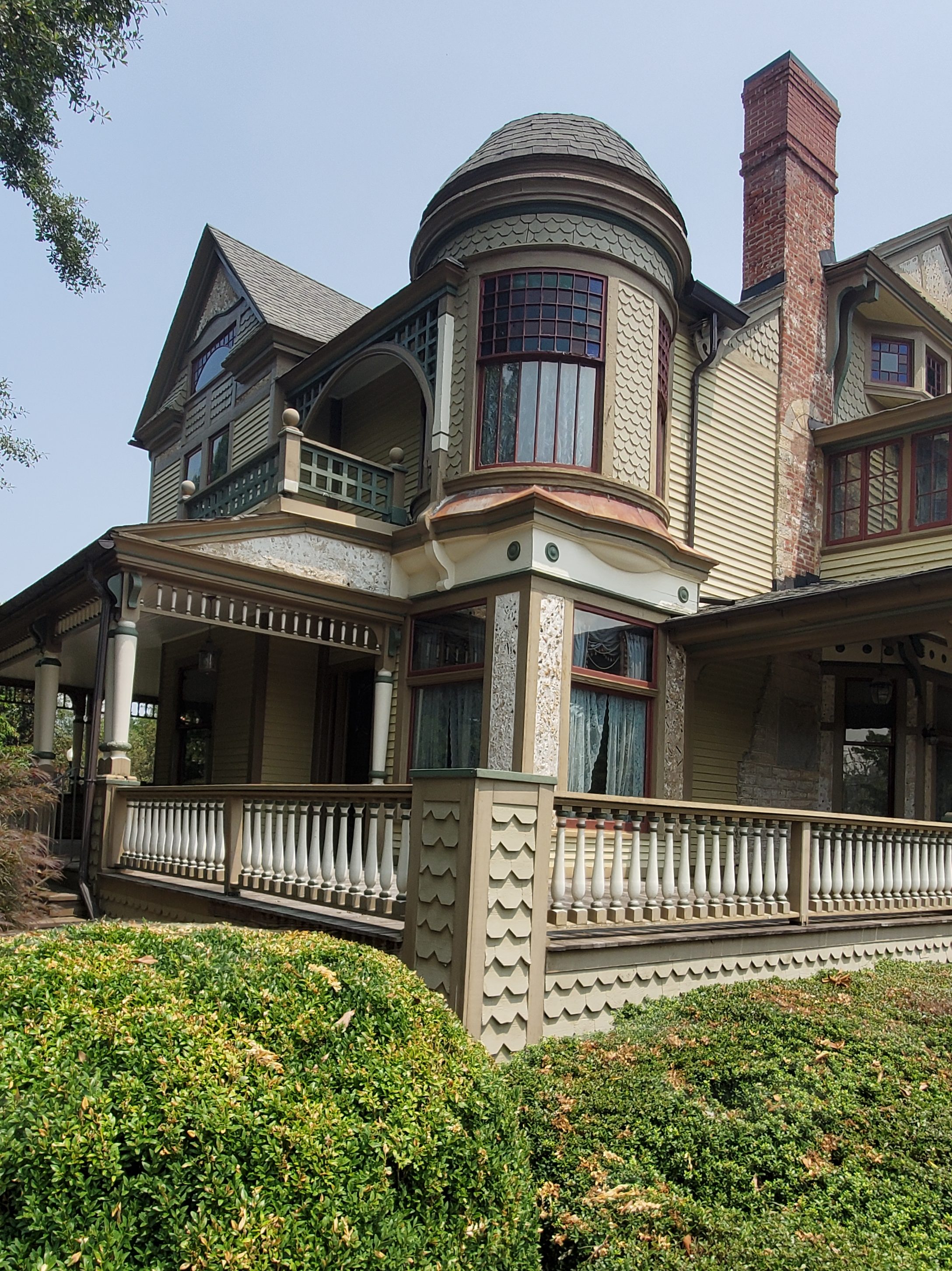
Despite stopping here on two separate days (weekend and weekday), the Harper House (310 N. Center Street) was not open for guests, so I was only able to take photos outside. Although, I was told be the owner of the Hart Square Village that each room has different wallpaper and it’s really quite a beautiful period home to tour. You may want to call in advance to try to schedule a tour.

History Museum of Catawba County
This museum (30 N. College Avenue) is located inside of the courthouse, but due to COVID, they didn’t have enough staff for operation. So, sadly, no pictures to show here as well.

Hickory Motor Speedway

Hickory Motor Speedway is one of stock car racing’s most storied venues, and it’s often referred to as the “World’s Most Famous Short Track” and the “Birthplace of the NASCAR Stars.”

The track first opened in 1951 as a 12-mile dirt track. Gwyn Staley won the first race at the speedway and later became the first track champion. Drivers such as Junior Johnson, Ned Jarrett (Dale Jarret’s father), and Ralph Earnhardt (Dale Earnhardt Senior’s father) also became track champions in the 1950s, with Earnhardt winning five of them.

In 1953, NASCAR’s Grand National Series (later the NASCAR Cup Series) visited the track for the first time. Tim Flock won the first race at the speedway, which became a regular part of the Grand National schedule. After winning his track championship in 1952, Junior Johnson became the most successful Grand National driver at Hickory, winning there seven times.

The track has been re-configured three times in its history. The track became a 0.4-mile dirt track in 1955, which was paved for the first time during the 1967 season. In 1970, the Hickory track was shortened to a length of 0.363 miles.

Hickory was dropped from the Grand National schedule after the 1971 season when R. J. Reynolds began sponsoring the newly christened NASCAR Winston Cup Series and dropped all races under 250 miles from the schedule. It remained in use as a popular NASCAR Late Model Sportsman Series venue. As more tracks began hosting Busch Series races, Hickory’s involvement was progressively reduced to two races a year by 1987, and then just the Easter weekend by 1995. By 1998, the Busch Grand National Series began adding more races at Winston Cup Series tracks, and Hickory was dropped from the schedule after 17 years.

Hickory is still used as a venue for NASCAR’s club racing division, the Whelen All-American Series, Pro All Stars Series South Super Late Models and the CARS Tour featuring late model and super late model touring series cars.

So, if you want a taste of something with real Southern roots, stop by the Hickory Motor Speedway for a good old-fashioned, short track car race. You can hear the cars burning around the track when you’re passing by, and the sound of the cars seems to call you in. So, grab your seat cushion, get a ticket, and head into the stands for a few hours of racin’ and snackin’.

Southeastern Narrow Gauge & Shortline Museum
If you’re train lover–and even if you’re not–make a stop at the Southeastern Narrow Gauge & Shortline Museum (1123 North Main Ave.) that was restored from 1997-2005. You’ll discover indoor and outdoor attractions, including historic railroad artifacts and a museum gift shop. And be sure to stop at the Railroad Center at the building next door (same parking lot) while you’re there to see nine operating model railroads–fun for adults and kids alike.

The Vineyard & Winery at Catawba Farms
This vineyard/winery/brewery/B&B/market and animal farm (Yes!) is a must-see in Catawba County–definitely a destination here (1670 Southwest Blvd.). Grab your glass of wine and head outside to stroll among the horses, goats, peacocks, pigs, and more. On the weekends, you’re likely to find a food truck and musical entertainment in the barn venue outdoors. You may even want to stay at the attached The Peacock Inn at Catawba Farms during your Catawba County visit/ they boast superlative B&B accommodations. Savor the charm of the farm!

Conover, NC

The City of Conover began to develop in the mid-1800s as a “Y” intersection of the railroad traversing North Carolina. Although originally called Wye Town, legend says the name “Canova” was adopted, but transposed to Conover over several years. The City of Conover was chartered in 1876 and incorporated in 1877. The Bolick Historic District and George Huffman Farm here are both listed on the National Register of Historic Places. Conover is also home to NASCAR’s Morgan Shepherd and the Jarrett (Ned and Dale) family.

Hickory, NC

Hickory is a city located primarily in Catawba County, with formal boundaries extending into Burke and Caldwell counties.

The origins of Hickory’s name stems from a tavern made of logs beneath a hickory tree during the 1850s. The spot was known as “Hickory Tavern.” In 1870, Hickory Tavern was established as a town. Three years later in 1873, the name was changed to the Town of Hickory, and in 1889 to the City of Hickory.

The first train operated in the area of Hickory Tavern in 1859, and the first lot was sold to Henry Link for $45 in 1858. His house is now known as “The 1859 Cafe,” a restaurant (closed in 2011). Hickory was one of the first towns to install electric lights in 1888 and a complete sewerage system in 1904. And in 1891, Lenoir–Rhyne University (then Highland Academy) was founded by four Lutheran pastors with 12 initial students.

Hickory is home to one of the oldest furniture manufacturers in the United States, still located and operated on the original site. Hickory White, formerly known as Hickory Manufacturing Company, was built in 1902 and has been in continuous operation ever since. During World War II, the factory made ammunition boxes for the U.S. military instead of furniture.

.Hckory was known in the years after World War II for the “Miracle of Hickory”. In 1944, the area around Hickory (the Catawba Valley) became the center of one of the worst outbreaks of polio ever recorded. Residents who were then children recall summers of not being allowed to play outside or visit friends for fear of contracting the disease. Since local facilities were inadequate to treat the victims, the citizens of Hickory and the March of Dimes decided to build a hospital to care for the children of the region. From the time the decision was made until equipment, doctors, and patients were in a new facility, took less than 54 hours. Several more buildings were quickly added. A Red Cross official on the scene praised the project “as the most outstanding example of cooperative effort he has ever seen.”

Hickory has one sister city: Germany Altenburger Land, Germany. Notable people from Hickory include Chris Hughes, co-founder of Facebook; Eric Church, country music singer and songwriter; and Dale Jarrett, former NASCAR Cup Series champion.

Hickory has been named an “All-America City” three times. The All-America City Award is given annually to ten cities in the United States. It is an award that represents a community’s ability to work together and achieve critical local issues. Hickory won this award in 2007, as well as 1967 and 1987. The Hickory metro area has been named the 10th best place to live and raise a family in the United States. In 2014, Smart Growth America identified the Hickory MSA as being the country’s most sprawling metro area.

Early industries such as wagon-making know-how, proximity to expansive forests, and excellent transportation via two intersecting railroads provided fertile ground for the emergence of the furniture industry. Today, 40% of the world’s fiber optic cable is made in the Hickory area. And it is estimated that 60% of the nation’s furniture used to be produced within a 200-mile radius of Hickory.

Hickory Museum of Art
Browse through three floors of open art galleries, including pottery, modern sculpture, paintings, statement and children’s exhibits, and more. Established in 1944, the Hickory Art Museum (243 3rd Ave NE) has been creating artistic visions in Catawba County for more than 75 years. Founding director Paul Whitener vowed to make Hickory and art center in NC. The museum’s focus is on American art, celebrating artists across NC and the US. Membership here is reciprocal in 250 museum nationwide (ROA) plus 150 museums in the Southeast (SERM).

Catawba County Firefighter’s Museum
Sadly, this was another missed opportunity as the museum was closed early on the day of our visit due to a funeral. But we did get some photos outside and one at the front door. (3957 Herman Sipe Rd.)

Long View, NC

Originally known as “Penelope,” Long View incorporated in 1907. The legend is that the Town of Long View was thought to have been named by Sam D. Campbell a prominent contractor and real estate dealer who helped build the old Piedmont Wagon Company factory building in Hickory. The story goes that one day while standing at his former home where the Pepsi Cola Bottling Company building is today, Mr. Campbell gazed down the Southern Railway track toward Hickory and remarked, “It’s a long view.” The name stuck.

There has been some confusion as to whether Long View is one or two words. “Longview” one word, is commonly used today in connection with the town. However, as of March 8, 1907, Section 1 of Chapter 430 of the original charter ratified by the North Carolina General Assembly in an act to incorporate the Town of Long View in Catawba County states: “That the Town of Long View, in Catawba County, is hereby incorporated by the name of Long View, and said town shall be subject to all the provisions of law now existing in reference to incorporated towns.” According to original charter, Long View when dealing with the town name is two words.

Vale, NC

Hart Square Village
Hart Square Village (5055 Hope Rd) boasts the world’s largest collection of historic log structures–surrounding a large, picturesque pond complete with a very large community of geese, that seem to be year-round residents. Hart Square Foundation preserves the log structures, trades, and culture housed at Hart Square Village. Through preservation and sharing, the foundation inspires the ingenuity, resourcefulness, and resilience of our pioneer ancestors.

There is so much amazing history on this property–and every building has a story to tell. From the old Post Office with a hidden space under the house for the family to hide, as the property was frequently robbed to the jail, or “calaboose,” with an actual whipping post (found about 2 miles from its current location) to an actual cotton gin (invented by Eli Whitney) to St. Mark Chapel with a stained glass window and working organ (which the owner will gladly play for you) to a doggie treadmill/butter churner–Yes, I gave that one away.

Peruse through this landscape of historic log buildings all picked up from their original locations throughout the state then moved here and reconstructed. The property’s owner was an avid pilot, so he maintained a landing strip on the backside of the property for landings and takeoffs. In fact, during his many flights, he would keep an eye out for log structures from the air, make a note of where they were, then seek out the owners to purchase the buildings and bring them here to Vale. In all, Hart Square Village has XX structures on property. (The landing strip is used today for large event parking.)

English language lovers can revel in the historic origins of phrases such as “keep your nose to the grindstone,” while visiting the grist mill (originally located on Miller’s Creek) and more.

Plus, the owners recently built an amazingly fabulous event hall to host weddings, corporate events, family reunions, and more on the property. They even offer co-working spaces to local business entrepreneurs. Stop by for several annual festivals: the annual Hart Square Village festival where you can see 500 pounds of cotton being baled throughout the day with the still-running cotton gin. Hart Square Village also hosts an annual Sunflower festival in the fall where you can pick your own sunflowers and a Christmas Festival in December at night complete with lighted pathways and a beautifully lit covered bridge. This village is truly an amazing find–and so worth the tour.

Maiden, NC

Maiden was the first public high school in the state with an observatory and is currently home to an Apple iCloud Data Center, covering 500,000 square feet. “The Biggest Little Football Town in the World,” as it has long called itself, was incorporated on March 7, 1883 as a cotton mill site and a trading center. The name “Maiden” most likely is Native American in origin. Historians claim that the town was named after the native-grown “Maidencane” grass, which is found throughout the township to this day.

Sherrills Ford, NC

Sherrills Ford is named due being the site of the fording of the Catawba River from east to west by Adam Sherrill et al. ca. 1747. The apostrophe in “Sherrill’s Ford” was inadvertently dropped. The Sherrills, of English ancestry, had come from northeast Maryland, most probably trekking through modern Pennsylvania, West Virginia, and Virginia. Many Sherrill descendants still reside in Sherrills Ford.

Long Island, NC

Previously a milling town, the area was flooded when a dam was built on the Catawba River to create Lake Norman in 1959. John J. Shuford and Avery M. Powell built Long Island Mill in the early 1850s. Brothers Columbus and Wilfred Turner bought the mill in 1881. It was located “on a mile-long stretch of island in one of the river’s wider spots.” Columbus Turner built a house nearby which he called Mont Beaux, which the mill workers pronounced Monbo. Eventually, the Turners called their company Monbo Mill Company. In the late 1880s, they sold Long Island Mill to English businessman Jim Brown and focused on Monbo Mill.

The idea for a dam on the Catawba River dated back to before 1900. Buck and Benjamin Duke saw dams on the Catawba as a way to help industry.Duke Power had planned for a dam in this area since the early 1920s, when the company bought Long Island Mill, Monbo Mill and other properties to prepare for the building of a new lake.

Catawba, NC

Catawba, which was selected as an early railroad station, is one of the oldest towns between Salisbury and Asheville, NC.  Trains ran to the town before the War Between the States, beginning around 1859.

Murray’s Mill Historic District

In Newton, you’ll find this quaint little picturesque mill and surrounding landscape (1489 Murray’s Mill Rd.) along side a 28-foot waterwheel dam beside a restful pond on the banks of Balls Creek, complete with geese and a trickling waterfall. You can park in a field just up the hill, then head down to shop in the 1890’s Murray & Minges General Store, visit with a few local crafters outside, picnic alongside the waterwheel and mill dam (closed in 1967), and even hike on a nature path and part of the Carolina Thread Trail. Tour the 1913 grist mill and 1880s Wheathouse as well as the 1913 John Murray House and numerous outbuildings run by three generations of the Murray family. Grab a soda from the old-timey Coca-Cola refrigerator at the general store and shop for some country goods and snacks, candy, toys, and gifts. When in operation, the mill ground corn with the original one-ton French millstones and wheat to make flour with roller mills. Today, the Annual Harvest Farmers Market is held each year on the last Saturday of September.

Historical Museum, Veterans Garden
You’ll find these two right across the street from one another (101 First St SW). The Veterans Garden is a lovely tribute to Catawba County residents, men and women, who have perished while serving their country. Take a few minutes to pay your respects, then head across the street to the Historical Museum. If it’s not open, you can at least peer through the windows.

Established in 1986 in response to the naming of the Catawba Historic District to the National Register of Historic Places, TCHA, Inc. adopted the restoration of the oldest brick building, Dr. Q. M. Little House ca. 1873, to showcase local history.

The Museum opened to the public in 2003. The Federal-style building contains five rooms of unique local history and a room dedicated to the National Little Family Archives. The structure itself is quite remarkable as well, featuring a two-tier porch, exterior stairway, six front doors and vintage handmade brick construction.

Next blog… Harnett County!

Journey through Chapel Hill, NC

You’ll find Chapel Hill to be a little bit urbanist and a little bit village. The town of Carrboro runs right into Chapel Hill, so it may seem difficult to determine where one begins and the other ends. Hailed as one of America’s Foodiest Small Towns by Bon Appétit, Chapel Hill is rapidly becoming a hot spot for pop American cuisine. World-famous musician James Taylor (of whom this writer is a huge fan) hails from this city, and his probably Chapel Hill’s most famous native son.  Chapel Hill has been the birthplace of many other artists as well.

Chapel Hill, founded in 1793, saddles both Orange and Durham counties, is the 15th-largest city in North Carolina, and is one of the corners of the Research Triangle (RTP) area. Chapel Hill was named for the New Hope Chapel, which stood at the crossing of the town’s two primary roads–and is now the site of The Carolina Inn. The town is centered on Franklin Street, named for Benjamin Franklin, and contains several districts and buildings listed on the National Register of Historic Places. Originally developed along a hill, Chapel Hill has established itself surrounding The University of North Carolina at Chapel Hill, which has a very large presence here. In 1819, the town was actually founded to serve the University of North Carolina.

In 1969, a year after the city fully integrated its schools, Chapel Hill elected Howard Lee as mayor. It was the first majority-white municipality in the South to elect an African-American mayor. Serving from 1969 to 1975, Lee helped establish Chapel Hill Transit, the town’s bus system. Some 30 years later, in 2002, the state passed legislation to provide free service to all riders on local buses. The bus operations are funded through Chapel Hill and Carrboro town taxes, federal grants, and UNC student tuition. The change has resulted in a large increase in ridership, taking many cars off the roads. Several hybrid and articulated buses have been added recently. All buses carry GPS transmitters to report their location in real-time to a tracking web site. Buses can also transport bicycles and have wheelchair lifts.

In 1993, the town celebrated its bicentennial and founded the Chapel Hill Museum. This cultural community resource “exhibiting the character and characters of Chapel Hill, North Carolina” includes among its permanent exhibits Alexander Julian, History of the Chapel Hill Fire Department, Chapel Hill’s 1914 Fire Truck, The James Taylor Story, Farmer/James Pottery, and The Paul Green Legacy.

For more than 30 years, Chapel Hill has sponsored the annual street fair, Festifall, in October. The fair offers booths to artists, crafters, nonprofits, and food vendors. Performance space is also available for musicians, martial artists, and other groups. The fair is attended by tens of thousands each year. Several free walking tours and guided tours are available.

Chapel Hill’s sister city is Ecuador Puerto Baquerizo Moreno, San Cristóbal (Galápagos, Ecuador).

Won Buddhist Temple

Before you head into Chapel Hill proper, stop by the Won Buddhist Temple for a little peace in your life. Beside the beautiful Far Eastern architecture building, you’ll find a meditation garden. Take some time to peacefully sit and contemplate amongst the beautiful plants, paths, and water features. And if they are having a service while you’re there, you may be welcome to attend. Just be sure to remove your shoes upon entering the building and refrain from speaking or only communicate in a quite whisper. They have YouTube livestreams and Zoom gatherings as well as early morning indoor meditations plus other workshops, retreats, and outdoor meditations. Everyone is welcome!

P.S. The temple is right down the road from Hartleyhenge in Calvander (both are on the same side of the street). Both structures were built by John Hartley. See the Orange County blog for more details.

UNC-Chapel Hill

Chapel Hill, NC, is all about Carolina Blue! Chartered by the North Carolina General Assembly on December 11, 1789, the University of North Carolina’s cornerstone was laid on October 12, 1793, near the ruins of a chapel, chosen due to its central location within the state. Beginning instruction of undergraduates in 1795, UNC is the oldest public/state university in the United States and the only one to award degrees in the 18th century.

Influences of the university are seen throughout the town, even in the fire departments. Each fire station in Chapel Hill has a fire engine (numbers 31, 32, 33, 34, and 35) that is Carolina blue. These engines are also decorated with different UNC decals, including a firefighter Rameses, which is the school mascot. The Old Well is UNC’s most recognized–and most photographed–landmark.

Morehead Planetarium

Be sure to stop by The Morehead Planetarium at UNC (250 E. Franklin St.), opened in 1949, which is one of only a handful of planetariums in the nation, and it has remained an important town landmark for Chapel Hill. During the Mercury, Gemini, and Apollo programs, astronauts were trained here!

The Morehead Planetarium was the first planetarium built on a U.S. college campus and continues to show in their Fulldome Theater. When it opened in 1949, it was one of six planetariums in the nation and has remained an important town landmark. One of the town’s hallmark features is the giant sundial, located in the rose gardens in front of the planetarium on Franklin Street.

Chapel Hill is also a treasure trove of public art wall murals, many of them painted by UNC alumnus and artist Michael Brown.

Greetings from Chapel Hill

One of the most photographed pieces in Chapel Hill, this public art wall mural might be a little hard to find. The “Greetings from Chapel Hill” mural is located on the back side of He’s Not Here, along Rosemary Street. Depicting a 1941 postcard by German illustrator Curt Teich, this mural was created by Scott Nurkin, who graduated from UNC with a Bachelor of Fine Arts in painting and was once Michael Brown’s intern. While facing the mural, turn around and looking diagonally in the opposite direction and you’ll see the Sea Turtles mural.

Sea Turtles

Considered one of Michael Brown’s best known and most popular murals is “Sea Turtles,” painted on the corner of Columbia Street and East Rosemary Streets. The mural was originally painted in 1993 and was restored in 2011 with the help of funds raised by Sadie Rapp.

Dogwoods

Be sure to stop and admire this work of art before or after you head to the Visitors Bureau at 501 West Franklin Street. It’s located in their back parking lot. This is another one of Michael Brown’s more recent murals, finished in 2011.
P.S. There’s another cute little mural across the adjacent parking lot, so this visit is a two-fer.

The Blue Mural

This was Michael Brown’s first painted mural, completed in 1989 and the first one restored by the Painted Walls Project in 2009. Michael had so many volunteers to help paint this mural that he gave everyone paintbrushes of the same size, and “The Blue Mural” was painted in the pointillist style (dots) so that the mural would have a uniform look. You can find it at 109 East Franklin Street, visible from the parking lot on the corner of Columbia Street and Rosemary Street. When facing The Blue Mural, look directly to your left and you’ll see the next mural.

Walking Up the Wall

Painted in 1996, “Walking Up the Wall” is a wonderful optical illusion. The number of people painted into the mural at 100 East Rosemary Street relates to every donation that was received to bring this piece of art to completion. (It was difficult to get a good photo of this mural due to the construction happening in front of it at the time.)

Paint By Numbers

Located on the side of Pantana Bob’s on Rosemary Street, this was the last mural Michael Brown painted during the 18 years of the Mural Project. He painted figures that represent the many student volunteers that Michael had worked with over the years. He designed the mural, which kind of looks like a work in progress, to show the “paint-by-numbers” process he used for many of his pieces.

Sutton’s Drug Store

Suttons Drug Store is a local icon that’s been around for decades, since 1923. It’s a Chapel Hill tradition. While dining, you can view all the photos on the walls and hanging from the ceilings. While the pharmacy is no longer in operation to the public (since the local CVS came along), you can still find all of the old fashioned staples and hot off the grill eats that attract new Tar Heels and keep customers coming back year after year, plus flavored sodas and milkshakes. (I was told, however, that there is a pharmacist that still comes in once a week to service employees.)

Carolina Coffee Shop

Another local icon, you’ll find the markings Est. 1922 on the front of the Carolina Coffee Shop. It’s even older than Sutton’s and holds the title of the oldest continually running restaurant in North Carolina. It’s easy to find, just look for the Parade of Humanity mural at Port Hole Alley on East Franklin Street. Don’t let the year distort your idea of the menu – they serve modern southern cuisine, a full bar of cocktails, and weekend brunch.

Top of the Hill Restaurant

Top of the Hill Restaurant and Brewery (or TOPO), aka the social crossroads of Chapel Hill, is the place to be during basketball season; particularly a UNC vs. Duke game or better yet, a championship game where you’ll find a trail of people camping out the night before just for a seat in the outdoor patio. It’s a perfect view of the thousands and thousands of people that rush to the intersection of Franklin and Columbia after a Tar Heel victory. And if you’re into craft brews, you’ll be interested to know they use locally sources ingredients and are the eighth oldest surviving brewery in the state and developer of over eighty different acclaimed varieties since 1996 and many award-winning beers.

You can get a bird’s-eye, panoramic view of Chapel Hill at this hot spot, must-eat-at restaurant in Chapel Hill that overlooks the city streets. Eat inside or on the outdoor patio with a beautiful view below.

Coker Arboretum

Peruse through five acres of luxuriously landscaped gardens on UNC’s campus showcasing more than 500 flora and fauna specimens since 1903. The garden’s prominent features include a cascading stream and a 300-foot native vine arbor. It is free to walk through, and free guided tours are offered on the third Saturday at 11am, March-November.

Gimghoul Castle

This is the second castle in NC that this travel blogger has visited. (See the Person County blog for details on Castle Mont Rouge in Rougemont, NC.) The legend of Gimghoul Castle has long been a source of mystery, rumor, and curiosity for students and locals alike. Located at 705 Gimghoul Road in Chapel Hill, Gimghoul Castle was formerly known as Hippol Castle. Castle construction was accomplished at an exorbitant cost of $50,000 and took more than five years. The castle is thought to be haunted by the ghost of Peter Dromgoole, who died in a duel over his love for a local girl named Fanny. The castle has also been associated with a secret society known as the Order of the Gimghoul, which was founded in 1889 by noted UNC alumni.

Morehead-Patterson Bell Tower

Amidst well-kept hedges and a grassy lawn, the Morehead-Patterson Bell Tower is a 172-foot-tall functioning bell tower located on UNC-Chapel Hill’s campus. The tower boasts an observation tower at the top (though not available for viewing), a conical spire structure, and a Roman numeral clock on each of the four sides of the tower. The surrounding grounds were designed by University botany professor William Chambers Coker, who also designed the Coker Arboretum on campus (see below). The tower is one of the most visible landmarks on campus.

The belfry originally began with 12 manually operated bells in 1931 and is currently equipped with 14 mechanized bells with the addition of 2 bells in 1998. The names of prominent figures in the University history, Governor John Motley Morehead and William Lenoir, are inscribed on the two largest bells. The bells ring every 15 minutes, chiming on the hour. In addition, the bells play other songs or the alma mater as part of University celebrations or holidays.

The idea of erecting a bell tower on the University of North Carolina campus was originally suggested by John Motley Morehead III in the 1920s, but it was denied several times by the University because of conflicts regarding the location. When the idea was finally approved, construction began with the funding of two sponsors: Morehead and Rufus Lenoir Patterson II. It shares a resemblance to the North Carolina State University (NC State) bell tower that was initially built to commemorate the NC State alumni that fell during World War I.

Head football coach Mack Brown started the tradition of lighting the bell tower blue after every Tar Heel victory.

Merritt’s Store & Grill

Do you love bacon? Who doesn’t??? Merritt’s has the hands-down reputation for the most delicious BLTs–and BBBLTs—and other bacon-related food fare–all loaded up with bacon and the freshest lettuce and tomatoes. Yum! This bacon lover couldn’t wait to eat there. There is a small amount of indoor seating for non-pandemic days. But most everyone eats out front under the umbrellas or out back surrounded by bamboo. But be careful… it comes up quick around a curve with fast-moving traffic that goes by. If you miss it, just turn around… and don’t run over the median.

P.S. You can call your order in ahead of time, but their service is pretty quick.

NC Botanical Garden

On your way out of Chapel Hill, head South on 15-501 from University Place to 100 Old Mason Farm Rd. to see one of the largest native plant botanical gardens in the Southeast. The scenery and native landscapes of The North Carolina Botanical Garden creates a stunning stage for art in media ranging from steel to ceramic to glass. Each year, the Garden hosts a show of local artists, around 30, that showcase their pieces, around 50, magnificently curated throughout the garden. Free guided tours are available at 10am on the first Saturday of each month.

Lavender Oaks Farm

“Fragrant fields in a timeless setting, far away in a nearby place.” Owned by Robert and Karen Macdonald (yes, the Macdonalds), Lavender Oaks Farm (3833 Millard Whitley Rd.) is an isle of quiet tranquility not far outside of bustling Chapel Hill. Stop here to pick your own lavender from rows and rows of 15 varietals. You’ll also love the adorable gift shop with loads of lavender gifts: lotions, sachets, candles, soaps, and much more. They do host weddings and events here. And they are gearing up for 2022 with a big musical and entertainment event. Follow them on Facebook and Instagram for updates.

Maple View Ice Cream & Country Store

Top off your day with a few scoops! On the outskirts of Chapel Hill, Maple View Ice Cream & Country Store, with its wrap around porch, rocking chairs, and farm acreage views has the most delicious, creamy, award winning ice cream. The flavors change with the season and are as wholesome as the Holstein milking cows across the street at Maple View Farm. No worries if you’re a true chocolate, vanilla and strawberry kind of person, they serve those flavors plus favorites like butter pecan, and cookies and cream all year ‘round.

Next up… Catawba County!

Journey through Orange County

Orange County was formed in 1752 from parts of Bladen, Granville, and Johnston Counties, and was named for the infant William V of Orange, whose mother Anne, daughter of King George II of Great Britain, was then regent of the Dutch Republic. In 1771, the western portion of Orange County was combined with the eastern part of Rowan County to form Guilford County. Another part was combined with parts of Cumberland and Johnston Counties to form Wake County. The southern portion of what remained became Chatham County. In 1777, the northern half of what was left of Orange County became Caswell County. In 1849, the western county became Alamance County. Finally, in 1881, the eastern half of the county’s remaining territory was combined with part of Wake County to form Durham County. English Quakers were among some of Orange County’s first settlers along the Haw and Eno Rivers.

Eno River State Park

The Eno River State Park is part of the 237,000-acre North Carolina State Parks system, including 35 parks, four recreation areas, three staffed natural areas, four rivers, seven lakes, nine trails, and 600 miles of trails. While at NC state parks you can find activities such as hang gliding at Jockey’s Ridge, four-wheeling at Fort Fisher, and rock climbing at many of the parks.

Eno River State Park consists of 4,319 acres, 31 miles of trails, five accesses, and, of course, the Eno River, which stretches 33 miles through Orange and Durham Counties. You can canoe, camp, hike, picnic, fish, discover flora and fauna as well as historic structures and animal life, and more.

I entered the park at 6101 Cole Mill Road. Take the Buckquarter Creek Trail (1.5 mile loop) on the left side of the building. Once at the Eno River’s edge (just a short hike), you can head left to a calm swimming hole and trek down the river. Or you can head right, trekking down the other end of the river and experience the wooden staircase that overlooks the short rapids. This trail also connects to the Holden Mill Loop and Ridge Trail.

Hillsborough, NC

Originally inhabited by the Occaneechi Native American Indian tribe, the town of Hillsborough was established in 1754 as the seat of Orange County. In fact, the Great Indian Trading Path crossed the nearby Eno River more than 250 years ago. The area now know as Hillsborough was first owned, surveyed, and mapped by William Churton (a surveyor for Earl Granville). Originally to be named Orange, it was named Corbin Town (for Francis Corbin, a member of the governor’s council and one of Granville’s land agents), and renamed Childsburgh (in honor of Thomas Child, the attorney general for North Carolina from 1751 to 1760 and another one of Granville’s land agents) in 1759. In 1766, it was named Hillsborough, after Wills Hill, then the Earl of Hillsborough, the British secretary of state for the colonies, and a relative of royal Governor William Tryon.

Hillsborough served as a military base by British General Charles Cornwallis in late February 1781. The United States Constitution drafted in 1787 was controversial in North Carolina. Delegate meetings at Hillsboro in July 1788 initially voted to reject it for antifederalist reasons. They were persuaded to change their minds partly by the strenuous efforts of James Iredell and William Davie and partly by the prospect of a Bill of Rights. The Constitution was later ratified by North Carolina at a convention in Fayetteville.

William Hooper, a signer of the Declaration of Independence, was buried in the Presbyterian Church cemetery in October 1790. However, his remains were later reinterred at Guilford Courthouse Military Battlefield. His original gravestone remains in the town cemetery.

Hillsborough was the scene of some pre-Revolutionary War tensions. In the late 1760s, tensions between Piedmont farmers and county officers welled up in the Regulator movement, or as it was also known, the War of the Regulation, which had its epicenter in Hillsborough. Majority, working-class North Carolinians, including farmers (95% of the population), were dissatisfied with the wealthy North Carolina officials (5% of the population), who regularly cheated them our of their hard-earned money by doubling taxes, intentionally removing tax collection records, seizing property, or even kept collected taxes for personal gain–and maintained nearly total governmental control.

Governor William Tryon’s conspicuous consumption in the construction of a new governor’s mansion at New Bern fueled more resentment. Frustrated farmers took arms and closed the court in Hillsborough, dragged those they saw as corrupt officials through the streets and cracked the church bell. Tryon sent troops from his militia to the region, and defeated the Regulators at the Battle of Alamance in May 1771. Several trials were held after the war, resulting in the hanging of six Regulators at Hillsborough on June 19, 1771.

Hillsborough also served briefly as the state capital when the then-capital of New Bern was held by the British.

Downtown Hillsborough of today has managed to maintain much of its 18th-century charm, with more than 100 historic structures, the clock tower, and the courthouse still standing. That being said, you’ll also find Hillsborough’s downtown filled with many quaint shops, art galleries, breweries, and restaurants — generally clustered along North and South Churton Streets, North and South Cameron Streets, East and West Tryon Streets, East and West King Streets, and East and West Margaret Lanes.

River Walk and Occoneechee Speedway Trail

On your way into Hillsborough, you may want to stop first at River Park and the River Walk, which features a replica Historic Occoneechee village. And at the end of that trail, cross Cameron Street to discover the Historic Occoneechee Speedway Trail, an old dirt track now converted into a wooded oval trail, featuring the old flag stand and a few antique race cars on the front stretch. And before you hit the old speedway trail, you’ll pass by the old ticket booth and grandstands as well.

Occoneechee Speedway was one of the first two NASCAR tracks to open, and is the only track remaining from that inaugural 1949 season. Bill France and the early founders of NASCAR bought land to build a one-mile oval track at Hillsborough, but opposition from local religious leaders prevented the track from being built in the town and NASCAR officials instead built the Talladega Superspeedway in Talladega, Alabama.

Ayr Mount

Ayr Mount (376 St. Marys Rd.) is a Federal-era plantation house, located off of the Old Indian Trading Path, built in 1815 (post War of 1812) in Hillsborough, North Carolina by William Kirkland, born in Ayr, Scotland. Ayr Mount, the first major residence in the area built of brick, and its grand interior has been restored to its original splendor (though it was still closed due to the coronavirus pandemic). Visitors on guided tours will find 14-foot ceilings, which are unusual for the period, along with ornate woodwork and plasterwork, as well as the grounds and Poet’s Walk.

Burwell School Historic Site

The Burwell School Historic Site (319 N. Churton St.) preserves the setting for one of the state’s earliest schools for girls, The Burwell Academy for Young Ladies. Today, the site’s two-acre property encompasses the Burwell residence (ca. 1821, 1848), the original brick classroom building of Robert and Margaret Anna Burwell’s school (ca.1837–1857), a rare brick “necessary house” (ca. 1837), and formal gardens.

From 1835–1841 the Burwell household was also home to Elizabeth Hobbs, a Burwell family slave sent from Virginia with Robert and Anna Burwell to work for them in Hillsborough. Elizabeth was a talented seamstress, who later married, bought her freedom,  and became a successful businesswoman and the confidante and seamstress of First Lady Mary Todd Lincoln.

Another interesting tidbit I discovered on tour… one of famed singer and musician James Taylor’s great-great or great-great-great aunts attended the school. More on JT in the Chapel Hill Blog coming soon.

Orange County Historical Museum

Located on the site of the 1788 Constitutional Convention, you can explore Orange County’s history at the Orange County Historical Museum (201 N. Churton St.). The museum features the only complete set of weights and measures in the U.S. Admission is free, and you can peruse through portraits of notable Hillsborough figures, and Colonial, Antebellum, Civil War, and Industrialization-era artifacts–over 2,000 altogether.

Carrboro, NC

Carrboro, originally known as West End, was named after North Carolina industrialist Julian Shakespeare Carr (who actually never lived in Carrboro). Settlement in West End increased after 1898 when Thomas F. Lloyd of Chapel Hill built a steam-powered grist mill near the depot. This would become the Alberta Cotton Mill and, in 1900, the town briefly called itself Lloydville in his honor.

Durham businessman Julian Shakespeare Carr bought the mill and other nearby buildings in 1909, adding them to the chain of mills that became Durham Hosiery Mills. In 1911, West End was incorporated and named Venable in honor of chemistry professor and University of North Carolina president Francis Preston Venable. Two years later, the town was renamed Carrboro after Carr, who provided electric power for the community and expanded the mill.

A 1920s building boom in Carrboro sparked by a fire in the downtown business district ended as Durham Hosiery Mills business declined toward the end of the decade. The Great Depression took an economic toll. Train passenger service ended in 1936. And, in 1938, Durham Hosiery Mills ceased operations.

Robert ‘Bob’ Drakeford, the town’s first and only black mayor who was elected in 1977, recalled when Carrboro was a sundown town, where people of color knew not to be out after dark.

The town is known for its free, two-day Carrboro Music Festival in the fall. Carrboro is also home to the annual West End Poetry Festival, which draws in a great selection of local poets. In November, Carrboro hosts the annual, two-day Carrboro Film Festival to promote local area shorts films that are 20 minutes or less.

The town is located directly beside Chapel Hill. And, in fact, the two towns merely melt into one another. Carrboro was the first municipality in North Carolina to elect an openly gay mayor (Mike Nelson in 1995) and the first municipality in the state to grant domestic-partner benefits to same-sex couples.

Weaver Street Market

This bustling indoor and outdoor market area is the center of the town’s activities. Weaver Street Market was part of Durham Hosiery Mills. After World War II, Pacific Mills bought mills No. 4 and 7 and operated them as Carrboro Woolen Mills but closed for good in the mid-1960s. The mill remained abandoned for nearly a decade and changed hands several times. In 1975 the owner intended to have it demolished but a community petition and fund-raising effort provided for its restoration as Carr Mill Mall. It has since grown into a bustling hub of activity, hosting many businesses such as Weaver Street Market.

Millennium Fountain

This beautiful fountain is located outside the Arts Center and across from the Weaver Street Market. I haven’t been able to find any information on this fountain, so if you have any insight, please let me know.

Honey Bee Mural

Matthew Willey painted the “Honey Bee Mural” in 2016 on the right-facing side of Fire Station #1 (301 West Main St.) in Carrboro, right beside the Farmer’s Market. It’s part of The Good of the Hive Initiative, his vow to paint 50,000 honey bees across America in order to bring attention to the struggles of the honey bee. In October 2014, Carrboro was declared a Bee City USA.

Elizabeth Cotten Mural

One of the most recent of Scott Nurkin’s murals located on the Carrboro-Chapel Hill line is part of a project that pays tribute to North Carolina Musicians and features large-scale murals in the hometowns of famous North Carolina musicians. Elizabeth Cotten, born in Carrboro, NC, is a legendary folk-blues musician best known for her song “Freight Train” and playing her guitar upside down to accommodate her left-handedness.

Calvander, NC

Right down the street from Won Buddhism Temple (see Chapel Hill blog), you’ll discover a Druid-looking arrangement of rocks and monolithic slabs stands in a grassy field (259 John’s Woods Rd.). You can park on the shoulder of the road to visit the site, which is officially named “Stone Knoll.” But locals call it Hartleyhenge for its builder, the late John Hartley, who also built the Buddhist temple. He trucked in the stones from a quarry in Tennessee and didn’t mind if people climbed on them. Hartley also built subdivisions for a living, and often set aside spaces for labyrinths and other consciousness-expanding rock arrangements. He placed the mysterious Hartleyhenge stones in a spiral, oriented the monoliths on the points of the compass, and bolted bronze plaques to the rocks featuring animal symbols and poems, some written by himself. Hartleyhenge was Hartley’s biggest foray into neolithic rock architecture. He died in 2011, never revealing what it truly meant.

Next edition: Chapel Hill, NC

Journey through Wilmington, NC

Wilmington is one of the most beautiful cities by the sea (situated between a river and an ocean), boasting a large historic district that encompasses nearly 300 blocks along the Cape Fear River, which empties into the Atlantic Ocean. A short drive (30 minutes or less) from several local beaches (Wrightsville Beach, Carolina Beach, Kure Beach, and Fort Fisher), the port city’s historic downtown includes a 1.75-mile Riverwalk, ranked as the “Best American Riverfront” by USA Today readers. The city also hosts the North Carolina Azalea Festival each year and features numerous historic landmarks, museums, art galleries, and more.

Towards the end of the 19th century, Wilmington was a majority-black, racially integrated prosperous city, and the largest city in North Carolina. In the Wilmington Massacre of 1898, white supremacists launched a coup that overthrew the legitimately elected local government. They expelled opposition black and white political leaders from the city, destroyed the property and businesses of black citizens built up since the Civil War, including the only black newspaper in the city, and killed an estimated 60 to more than 300 people.

The World War II battleship USS North Carolina is maintained as a war memorial. Moored on the Cape Fear River and easily visible across from the downtown port area, the ship is open to public tours. The city contains many more historical and entertainment attractions.

Wilmington is also the home of EUE/Screen Gems Studios, the largest domestic television and movie production facility outside California. “Dream Stage 10,” the facility’s newest sound stage, is the third largest in the United States. It houses the largest special-effects water tank in North America. After the studio’s opening in 1984, Wilmington became a major center of American film and television production. Numerous movies in a range of genres and several television series have been produced here, including Iron Man 3The ConjuringWe’re the Millers, Fox’s Sleepy HollowOne Tree HillDawson’s Creek, and NBC’s Revolution.

Due to Wilmington’s commercial importance as a major port, it had a critical role in opposition to the British in the years leading up to the Revolution. When the British Parliament passed the Stamp Act the following year, designed to raise revenue for the Crown with a kind of tax on shipping, Wilmington was the site of an elaborate demonstration against it. On October 19, 1765, several hundred townspeople gathered in protest of the new law, burned an effigy of one town resident who favored the act, and toasted to “Liberty, Property, and No Stamp Duty.”

In the 1830s, citizens of Wilmington became eager to take advantage of railroad transportation. Plans were developed to build a railroad line from the capital, Raleigh, to Wilmington. The Wilmington Gas Light Company was established in 1854. Soon after, street lights were powered by gas made from lightwood and rosin, replacing the old street oil lamps. During the Civil War, the port was the major base for Confederate and privately owned blockade runners, which delivered badly needed supplies from England. The Union mounted a blockade to reduce the goods received by the South. The city was captured by Union forces in the Battle of Wilmington in February 1865, approximately one month after the fall of Fort Fisher had closed the port. As nearly all the military action took place some distance from the city, numerous antebellum houses and other buildings survived the war years.

During World War II, Wilmington was the home of the North Carolina Shipbuilding Company. The shipyard was created as part of the U.S. government’s Emergency Shipbuilding Program. Workers built 243 ships in Wilmington during the five years the company operated.

Three prisoner-of-war (POW) camps operated in the city from February 1944 through April 1946. At their peak, the camps held 550 German prisoners. The first camp was located on the corner of Shipyard Boulevard and Carolina Beach Road; it was moved downtown to Ann Street, between 8th and 10th avenues, when it outgrew the original location. A smaller contingent of prisoners was assigned to a third site, working in the officers’ mess and doing grounds keeping at Bluethenthal Army Air Base, which is now Wilmington International Airport.

River Walk

You can’t visit Wilmington without experiencing River Walk, stretching from the Cape Fear Memorial Bridge to the Isabel Holmes Bridge. Constructed with brick-lined streets, cobblestones, gooseneck lighting, granite, open railings, timber and brick structures, and benches along the Cape Fear River, stop in a variety of local, eclectic shops along Market and Front Streets and on many of the area side streets as well. Take a horse-drawn trolley ride or a short river cruise on a Cape Fear Riverboat or other Wilmington water tours while you’re there. Peer at the USS North Carolina across the river, shop to your heart’s content (including at The Cotton Exchange, transformed in the 1970s to accommodate 30+ locally owned shops and restaurants), visit several local museums and historic homes, take a walking tour or haunted ghost walk, and eat at numerous trendy restaurants and cafes. The area also hosts numerous festivals and events year-round.

Museum of the Bizarre

Tucked away toward one end of the River Walk shops, you’ll stumble upon the Museum of the Bizarre (201 S. Water St.). It only costs a few dollars to enter–and no photos allowed–but you’re sure to experience something offbeat, unusual, or even creepy while you’re here. You just have to experience it for yourself. You can even lie inside a coffin for a few minutes… or seconds.

Airlee Gardens

Tucked away on a street that meanders Wilmington’s jagged coastline near Wrightsville Beach, you’ll find the expansive 67-acre Airlee Gardens (300 Airlee Rd.). This exquisitely maintained public gardens has attracted people since its inception in 1901 for public parties, weddings, and entertainment as well as an afternoon stroll on the grounds.

Just two miles west of Wrightsville Beach, Airlee Gardens features walking paths, a freshwater lake, and formal gardens that showcase seasonal blooms, towering live oaks, historic structures, and contemporary sculpture. You may find a bit of wildlife, birdlife, and butterflies as you peruse the landscape. Check their schedule for their summer concert series, annual art exhibit, low country oyster roast, and Christmas light displays. Other site features include a bottle chapel, mystery grave, Bradley Creek pier, pergola garden, and more. On-site, formal photography is permitted with reservations and hourly rates. The gardens are operated as a nonprofit, and membership is available. Be sure to stop by the gift shop for a memento from your visit here!

Cameron Art Museum

Peruse through rotating exhibits of acclaimed local, national, and international artists at the Cameron Art Museum, established in 1962 (3201 S. 17th St.). Take a walk through on your own or a guided tour for a more in-depth experience. Plus, catch events happening both indoors and outdoors throughout the year–or rent the facility for your own event. Hungry while you’re there? Stay for a bite at their delightful CAM cafe, with art-inspired dining right beside the gift shop at the museum entrance.

Stanley Rehder Carnivorous Garden

Just around the corner from the Cameron Art Museum, you’ll find another hidden NC Gem: the Stanley Rehder Carnivorous Garden (3800 Canterbury Rd.). Slip into the small parking lot and take a short hike down the trail that empties into an observation deck and a myriad of trails for an up-close view of the area’s indigenous carnivorous plants, including pitcher plants and Venus fly traps. In fact, did you know this fun bit of trivia… the Venus fly trap is indigenous ONLY to the Wilmington and surrounding areas–and nowhere else in the world It’s true!

USS North Carolina Battleship and Museum

You can’t miss this big beauty, which has been part of Wilmington’s character for decades. The USS North Carolina (1 Battleship Rd. NE) is the most decorated battleship after taking part in every major naval offensive. The ship was actually torpedoed in September 1942, causing a 32 x 18 foot torpedo hole. The water caused the ship to list. The crew quickly righted the ship by intentionally flooding compartments on the opposite side. Five men were killed and 23 were wounded. The battleship has since been authentically restored, serves as a memorial for the 11,000 North Carolinians who gave their lives in World War II, and is open for tours. Step back in time and let history come alive through the crews’ stories. You can explore all nine levels of this battleship, including the barracks, mess hall, and other areas plus an on-site gift shop.

Wilmington Railroad Museum

Stop in the Wilmington Railroad Museum (505 Nutt St.) for lots of kid and family fun all related to Wilmington’s rail history. Take your picture beside a scale-model rail car and full-size steam engine, and marvel at the huge room filled with model trains running the tracks. And their red caboose is available for party rentals.

A 3-Pack of Historic Homes: Bellamy Mansion, Latimer House, and Burgwin-Wright House & Gardens

Located at opposite ends of adjacent city blocks on South Third Street, you can enjoy back-to-back (on the hour tours) of the Latimer House and Burgwin-Wright House and Gardens. The tours are approximately 45 minutes, and designed so that you can visit one house and go straight to the next, though you may want to plan your gift shop stop before one of the tours or head back after your second tour. Be sure to ask for the Triple Ticket at your first stop for a discounted rate to tour all three homes. (It’s not required that you tour all three in one day.)

Latimer House

The Latimer house (126 S. Third St.) is a fully furnished 1852 Italian mansion. Three generations of the upper-class Latimer family lived here along with both free and enslaved help. Meander through the 11 rooms and more than 600 period objects and ornate furnishings on a guided tour (on the hour). The historic home also hosts events and houses an archive, library, and gift shop. Plus, they host the Annual Old Wilmington by Candlelight Tour.

Burgwin-Wright House and Gardens

Just a few minutes away on foot is the deceptive property in the middle of downtown. Aside from the historic residence of Georgian architecture at 224 Market St. (built in 1770-1771), you’ll discover 2/3 acre of luxurious, manicured gardens that dwarf the home’s footprint. It is the only structure in Wilmington from the colonial era open to the public. Walk the brick footpaths and spy unique plant, shrub, and tree specimens sprinkled throughout. Inside, discover another Wilmington treasure and take a guided tour on the property’s many levels, which include the lower level which was once the city’s first jail, built in 1744. The House also hosts a myriad of events, including weddings, Fourth Friday, Paint-Out, and an annual Christmas Stroll.

Bellamy Mansion

Surrounded by majestic magnolias, the Bellamy Mansion (503 Market Street) was built between 1859 and 1861, and is located just a few blocks away from the Latimer and Burgwin-Wright Houses–and just down the street from River Walk. Take a guided (on the hour) or self-guided tour through the grand entrance, airy parlors under the glow of brass gasoliers, and one of the few remaining urban slave quarters in the U.S. that is open to the public. They also host numerous art and musical events and fundraisers throughout the year. Don’t forget to stop in the museum store before you leave.

New Hanover County Extension Service Arboretum

Not far from UNC-Wilmington, enjoy a walk through the seven acres of beautiful gardens, statuary, and treasures at the North Hanover County Arboretum (6206 Oleander Dr.). These gardens opened in 1989 after a fire destroyed the Bradley Creek School on the site in 1982. In February 1984, New Hanover County commissioners appropriated $200,000 to turn the school’s site into the gardens you see today. The arboretum is open daily (8am-5pm) free of charge.

Tregembo Animal Park

On your way toward Pleasure Island (Carolina Beach, Kure Beach, and Fort Fisher) you’ll encounter the Tregembo Animal Park (5811 Carolina Beach Rd.), in operation since 1952. You can’t miss it for the entrance through a lion’s giant jaws that invite you to encounter more than 100 animal species. It is also Southern NC’s oldest zoo. This wild animal park of rescued animals is larger than you think–and houses a lion, tiger, giraffe, zebras and zedonks (which this travel blogger had never seen before!), ringtail lemurs (think Madagascar), numerous monkey species, and more. For a few extra dollars, you can purchase some feed and interact a little more with the animals during your visit.

Next edition… Orange County!
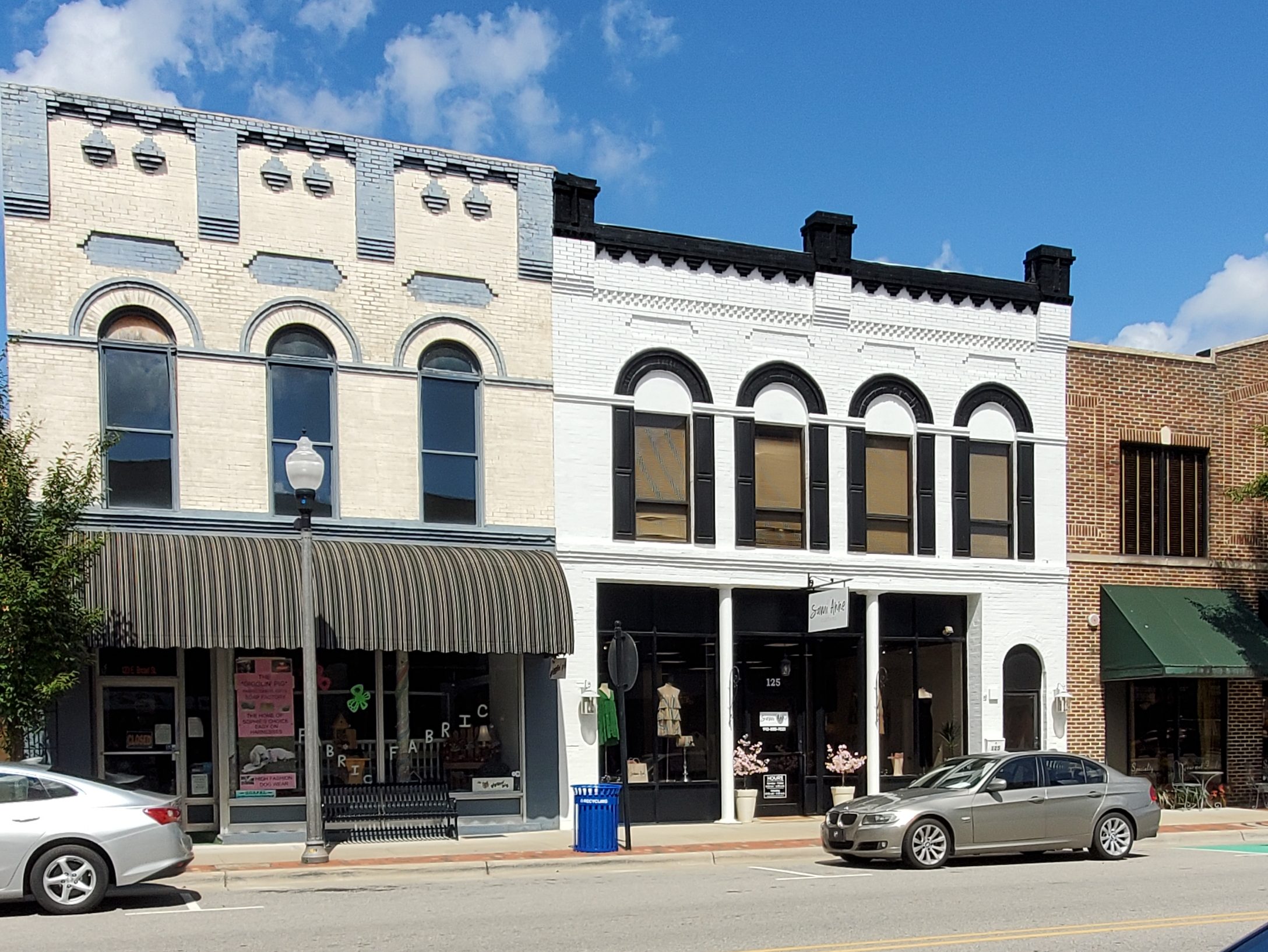
Journey through Moore County

Moore County, named after Alfred Moore (an officer in the American Revolutionary War and associate justice of the Supreme Court of the United States), is home of Southern Pines and part of the Sandhills region of North Carolina, and a border county between the Piedmont and the Atlantic Coastal Plain. This area is packed with pine tree forests on just about every road you travel. And still hours from the beach, the soil has a high sand content; hence the name. In the days of early settlement, North Carolina’s greatest trade commodity was the longleaf pine, which provided pine wood, pitch, and tar. This is why NC is nicknamed the Tarheel State.

Indigenous peoples occupied this area, with varying cultures over thousands of years. In the historic period that included European encounter, tribes included Algonquian speakers in the coastal area, with Siouan-speaking tribes in the border and Piedmont, and the Iroquoian-speaking Cherokee in the western mountains. This area was eventually settled by Highland Scots and descendants, who had migrated through the backcountry of Pennsylvania and Virginia. The county was formed in 1785, shortly after the American Revolutionary War, from part of Cumberland County. In 1907, parts of Moore and Chatham counties were combined to form Lee County.

Throughout the southern section of Moore County, you’ll find numerous golf courses and resorts in the Southern Pines/Pinehurst area as well as throughout Whispering Pines and Seven Lakes areas. The region hosted the 1996, 2001, 2007, and 2014 Women’s U.S. Opens as well as the 1999, 2005, and 2014 Men’s U.S. Opens. 2014 was the first time in U.S. Open history that a single region consecutively hosted both the Women’s and Men’s Opens in the same year.

Celebrities who frequent or have private homes in the area include athletes Michael Jordan, Tiger Woods, and Jack Nicklaus, and British actor Sean Connery. Past residents of the area have included Annie Oakley, Harvey Firestone, General George C. Marshall, and John D. Rockefeller.

High Falls, NC

Starting in the northwest corner of the county, you’ll find the town of High Falls, originally known as The Great Falls or The Big Falls in homage to a 15-foot waterfall in the Deep River at the site. In 1780, William England established a grist mill at the location. In 1904, Thomas Woody built a spinning mill, a cotton mill, and a grist mill, incorporating them as the High Falls Manufacturing Company. In the late 19th century, a small, single-room school was built for the community, which was later replaced by a larger structure. Later in the 19th century, the High Falls Dam on the Deep River was also constructed and modified in the 1920s to generate hydroelectricity for Hydrodyne Industries. Here you’ll find the darling High Falls Post Office (1368 NC-22).

Glendon, NC

Just a short drive from High Falls, you’ll find Glendon, originally known as Fair Haven. Residents of the community changed its name to Glendon in honor of the Glenn family, which owned a significant amount of land in the area. Since the 2015, the community has hosted a biannual music festival called Glendonfest, held twice yearly and gathering of musicians and music lovers at a rural and rustic 21-acre farm deep in the heart of Moore County. Hosted on a historical property once owned by a multi-generational family of country doctors, the grounds contain a fully preserved doctor’s office (built circa 1820 and filled with trinkets and tools), a beautiful landscape, a charming farmhouse, a remodeled horse barn, and a fishing pond.

House in the Horseshoe

In Glendon, you can also visit House in the Horseshoe (324 Alston House Rd.), named for the nearby horseshoe bend in the river which surrounds the 400+ acres of now mostly farmland and woodland. The closest point in the river is about 3/4 mile away. The house was built in 1772 as part of a cotton farm and still bears the scars and bullet holes from a July 29, 1781 four-hour Revolutionary War militia skirmish on the property at dawn, in which Mrs. Alston surrendered the house. It was said that she hid under the bed with her six-month old while she placed a bench or small table for the other children to stand on inside the chimney as protection from the bullets. Three musket holes are evident over the bed still today. The house is open for free tours Tuesdays-Fridays, though a donation is appreciated. Enjoy period furnishings as well as the property surrounded by fields of winter wheat and corn, depending on the season.

Cameron, NC

The one-square mile town of Cameron was incorporated in 1876, and was located at the end of the Raleigh-August Railroad, making it the perfect place for entrepreneurs to establish a business. The Town of Cameron was once known as the “Dewberry Capital of the World” because of the large-scale cultivation of dewberries in this farming community. Today Cameron is the antiques capital of the Sandhills with a variety of antique stores along the main road through town, Carthage Street.  The antiques experience here has been featured in Southern Living magazine and voted “Best Antique Shopping” by the readers of Our State magazine.

If you love antiquing, National Register historic Cameron is a must-stop. Discover The Old Hardware Antiques, the Antique Shops of Cameron (consisting of 6 antique shops) just down the street filled with country furniture and vintage accessories and treasures. Amble through the wood and brick cobble floors of The Old Hardware Antiques, then follow the smell of breakfast cooking all the way downstairs in the local eatery. The area holds an Antique Street Fair the first Friday and Saturday in May and October each year, attracting antique dealers and lovers alike.

Oh, and just around the corner be sure to stop for a gaze at the local water tower (247 Carter St.).

Aloha Safari Zoo

The Aloha Safari Zoo in Cameron is a family-run zoo featuring a wide array of animals, most of which have been rescued. The zoo’s mission is to create a loving home for unwanted, mistreated, and injured animals. One of their animals’ favorite enrichment activities is painting – using non-toxic, water-based tempera paint, of course. You can see and feed Titus the giraffe and animals such as bison, zebra, ostriches, antelope, donkeys, llamas, water buffalo, camels — and even some animals you’ve never heard of!

Vass, NC

Originally named Bynum and later Winder, the town of Vass was established in 1892 and incorporated in 1907, honoring Major William Worrell Vass, who was at that time paymaster for the Seaboard Railroad. Vass originated as a stop on the Seaboard Railway as a station called Bynum.

Restored Merchantile Building in Vass

Located on Main Street in Vass, this 1900s-era building was expanded several times and housed many businesses through the decades, with 7,000 square feet of street-level retail area and 4,000 square feet of apartment space on the second floor.  Enchanted with the building’s history, Beth Dent and husband Daniel jumped at the chance to purchase the property.

More than a renovation, the Dents wanted to honor the building’s historical character. Punched tin was installed over new fire safety ceilings, and exposed brick was left in place, where possible. The centerpiece of their project is Main Street Commons, a 2,600-square-foot social venue space for weddings, rehearsals, and other special events. Built in the former mercantile, the room is rustic and elegant, with Victorian chandeliers alongside industrial accents and reclaimed wood furniture.  The main room has an area for a DJ or live band, with a seated dinner capacity for 120 people.

The space has now attracted several local, eclectic businesses: Buggy Town Coffee, Main Street Sweets, ARTWorks Vass, Make It Happy. Visit ARTWorks Vass to shop the art of numerous local and other NC artists. You may even be able to spy on one of their artists working in the studio in back.

Balloons Over America – Hot Air Balloon Rides

If you want an adventure of a different kind, stop in at Balloons Over America for a hot air balloon ride or a tethered balloon ride. They get booked pretty quickly on the weekends, so book your ride well in advance.

Dunrovin Country Store

Just down the road in Vass, you’ll find a country store like none other. Enter through the side and peruse through room after room after room of local country goods, seasonal decor, outdoor decor, treats, and even shoes–and more. The store seems to go on and on forever. But after you exit the store, you’re not done yet. Meander to the backside of the building and you’ll find yourself in an entirely different world. Are you at a country store? A zoo? What is this place? I don’t want to say too much here. You just have to go and see it for yourself. Suffice it to say, that as of our visit, they had at least 172 various rescue birds and a myriad of other animals to discover.

Southern Pines, NC

Founded as a winter health resort for Northerners, Southern Pines is now a large golfing community with a quaint downtown shopping district. The town owes much of its prosperity to the activities of the Boyd family, who resided in the town since the beginning of the 20th century. In fact, the younger James Boyd began his life in Southern Pines by building what would become known as the Weymouth House. In his new home, James wrote his first and most well-known novel, Drums (1925). During his time there, the Weymouth House became a social center for other great writers, including F. Scott Fitzgerald, Thomas Wolfe, and Paul Green, beginning a literary tradition in Southern Pines that remains a core aspect of the town’s heritage today.

Spend the day or spend a few hours perusing through unique array of boutique shops, bookstores, coffee shops, and more–including the flagship location of R.Riverter (as seen on CNBC’s Shark Tank). Be sure to stop in the Christian Bookstore to see the Taxidermy Museum in back.

Among the areas historic homes are The James Boyd House and Shaw House. You’ll even find a home built by P.T. Barnum himself at 285 N. Bethesda Road, though it is very much a private residence now. Other areas of interest include The Campbell House, Weymouth Center for the Arts and Humanities, and the downtown train station.

Weymouth Woods

The Weymouth Center is also the gateway to the Boyd Round Timber Tract and its extensive trails which are located just beyond the house and gardens. The trails are part of the Weymouth Woods Sandhills Nature Preserve. Of note, in the Boyd Tract (off of E. Connecticut Ave.) of land in Weymouth Woods, which has largely never been timbered, you will find the oldest living longleaf pine in NC, at 473 years old, which dates back to 1548! Hike just a bit further and you will see the states largest longleaf pine tree as well. All said, it is about a 1-mile circular hike to see both trees. (Note: The trees are not marked, so you may want to stop in at the visitor center [N. Fort Bragg Rd.] to get specific directions to find both trees.)
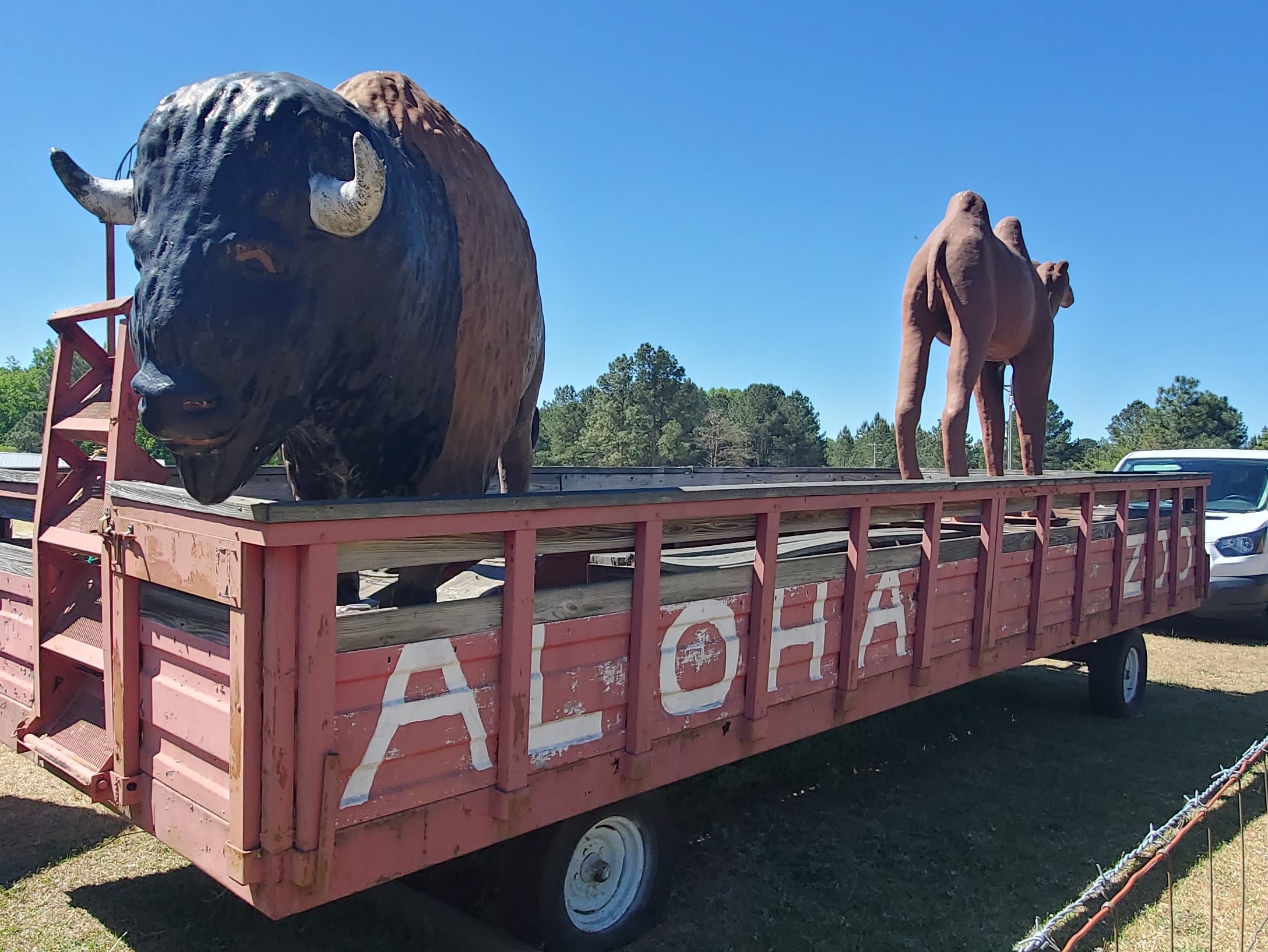
West End, NC

West End was once prosperous when Stanley Furniture employed hundreds in the area. By the mid-2000s, it had left the area, leaving a big real estate hole. In West End, you can stop in the Sand Hills Winery (1057 Seven Lakes Dr.) and the Log Cabin Country Store (4993 NC 211 Hwy) for plants, produce, and garden statuary.

Taylortown, NC

Not much to tell here, but stop in at Scrollicious (211 Central Park Ave. Suite G) for some scrolled ice cream. It’s an amazing and labor-intensive process to watch. Each person’s ice cream is made individually, on the spot, and from scratch.

Pinehurst, NC

Pinehurst is the home of the historic golf resort, Pinehurst Resort, and was originally established with the vision of building a “health resort for people of modest means.” It was also named one of the 2020 Safest Cities in NC.

While in Pinehurst, stop by the Native Pollinator Gardens and the Sandhills Horticultural Gardens (3395 Airport Road…free)–absolutely beautiful. Plan on spending at least an hour here as you stroll through the paved paths that travel deeper and deeper into the property. Discover English gardens, a desert garden, various flowering plants and trees, and bronze sculptures throughout the gardens.

Carthage, NC

Carthage was the home of the Tyson & Jones Buggy Company, a predominant cart and buggy manufacturer in the late 1800s. The town has an annual event in spring called the Buggy Festival, usually the second Saturday in May. This event is used to showcase the history of the town and feature music, hot rods, old tractors, old buggies made by the Tyson Buggy Company, and crafts from potteries in the surrounding areas. This event is held in the town square around the Old Court House, recognized as an historic landmark.

In the downtown area, you’ll find several wall murals commemorating the history of the city, including the Tyson and Hones Buggy Company and James Rogers McConnell . I’m including this part because it is interesting history for the period… Tyson & Jones buggy factory partner, William T. Jones was born the son of a slave and her white owner in 1833. By the time of his death in 1910, William T. Jones was one of the prominent business owners in Carthage. He rubbed elbows with the elite, white, upper class in Moore County during the 1880s, dined with them, threw elaborate holiday parties where most of the guests were white, and even attended church with them. Both of his wives, Sophia Isabella McLean and Florence Dockery were white. Dockery was the daughter of a well-to-do Apex family.

James Rogers McConnell, a resident of Carthage (14 March 1887 – 19 March 1917) flew as an aviator during World War I in the Lafayette Escadrille and authored Flying for France. He was the first of sixty-four University of Virginia students to die in battle during that War. McConnell was flying in the area of St. Quentin when two German planes shot him down on March 19, 1917. He was the last American pilot of the squadron to die under French colors before America entered the war in April 1917. Both the plane and his body were found by the French, and he was buried at the site of his death at the edge of the village of Jussy, and was later reinterred at the Lafayette Escadrille memorial near Paris upon his father’s wishes. McConnell was commemorated with a plaque by the French Government and a statue by Gutzon Borglum at the University of Virginia, as well as an obelisk on the court square of his home town of Carthage.

Black Rock Vineyards
While in Carthage, stop by Black Rock Vineyards (6652 US Highway 15-501). Watch closely, as it is up on a hill beside the road and comes up fast.

Robbins, NC

Misty Morning Ranch
Before leaving the county, you’ll want to hit this one last stop… Misty Morning Ranch ostrich farm (2812 Plank Rd.), a 60-acre, family-owned operation in Robbins. The Ostrich meat produced on the ranch is a red meat that is low in fat and can be used in any traditional red meat recipes to produce great tasting dishes. Even though Ostrich meat tastes like beef, the Ostrich does not have fat marbling in the meat like beef. The ranch also produces Ostrich leather goods like wallets and belts, along with cosmetics and raw pet food.

Next stop… Orange County!