
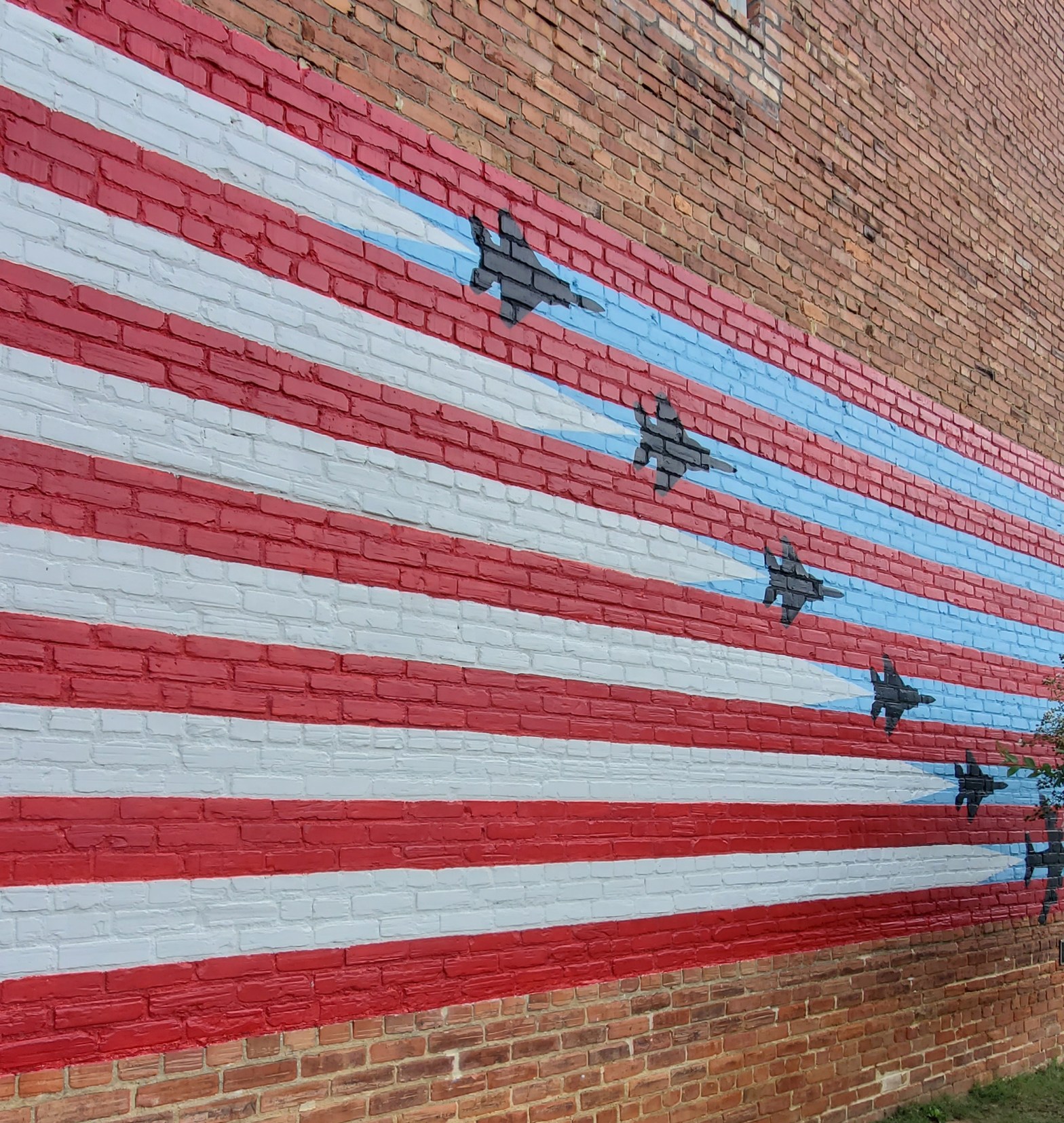


Wayne County, North Carolina was founded in 1779 and named for the Revolutionary War hero from Pennsylvania, General Anthony Wayne. Prior to 1730, Indians and wild animals were the only known occupants of the territory. Settlers trickled into the territory, but there was no general movement of immigration until after 1750.
During the Revolutionary War, the County of Wayne was carved from Dobbs County and established on November 2, 1779. The County is named for General George Washington’s most trusted soldier, General Anthony Wayne, who was nicknamed “Mad Anthony Wayne” for his courage and valor. In 1855, parts of Wayne, Edgecombe, Johnston, and Nash Counties were combined to form Wilson County.
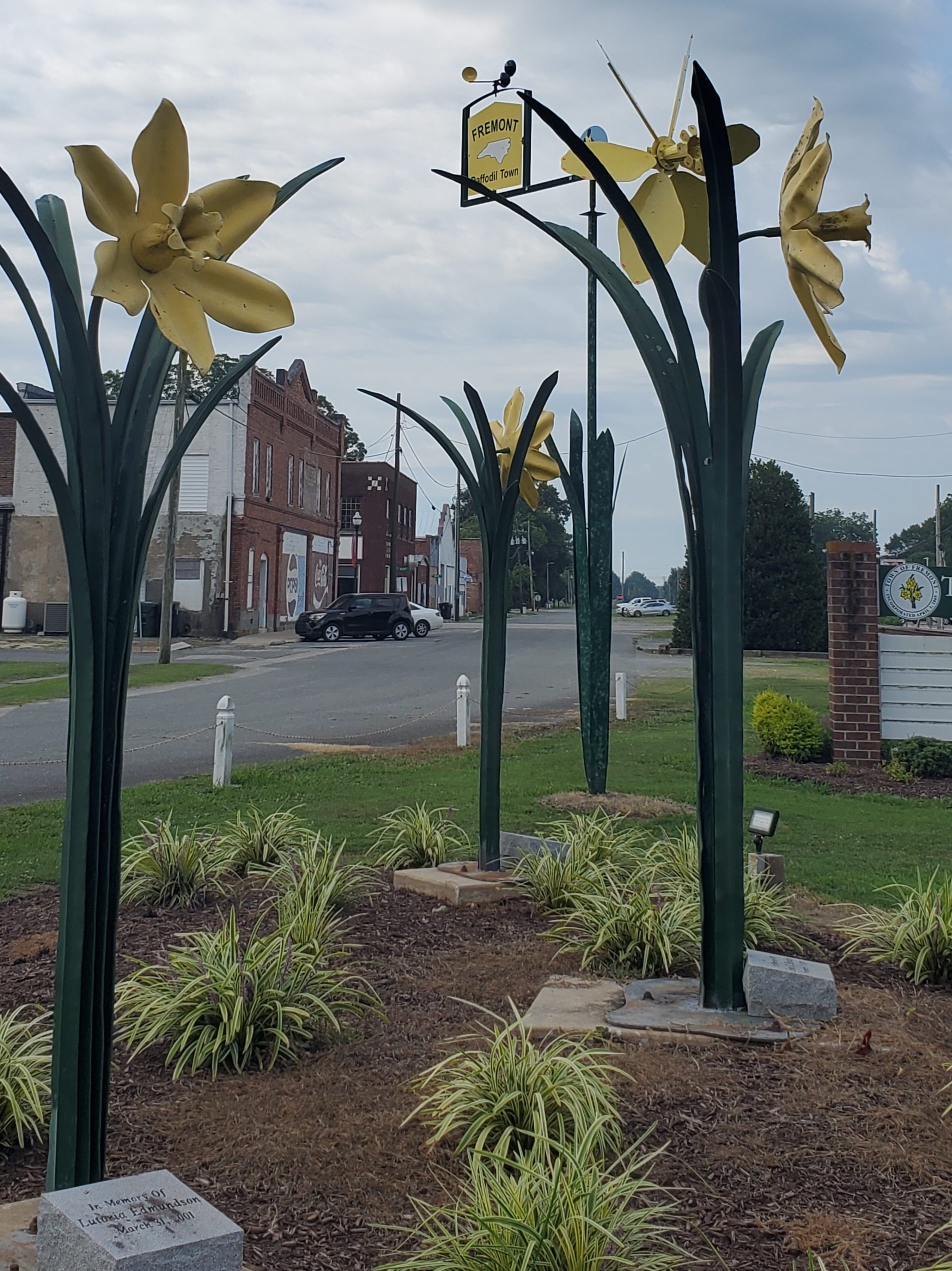
Fremont
Originally named Nahunta, the town was renamed Fremont in 1869 after Col. Sewall Lawrence Fremont, a former U.S. Army artilleryman and chief engineer of the Wilmington and Wheldon Railroad from 1854 to 1871. (Nahunta is generally accepted to be a name from the Tuscarora Nation that inhabited the area.) Over time a few homes began to pop-up but growth remained slow. Residents took advantage of the fertile lands and found forestry and agriculture to be the foundation of their earnings. Unfortunately, since the roads were made of dirt, shipping was quite a difficult process until the Wilmington and Weldon Railroad was completed in 1840. This line, which at the time was the longest railroad in the world, ran through town providing a much better transportation option resulting in increased trade.
Fremont reached it’s peak population of 1,800 in 1980, and over the last 30 years it has seen a steady decline to its current resident count of 1,430. Today, Fremont remains a small town with a little bit of public art and a few downtown businesses as well as vacant storefronts.
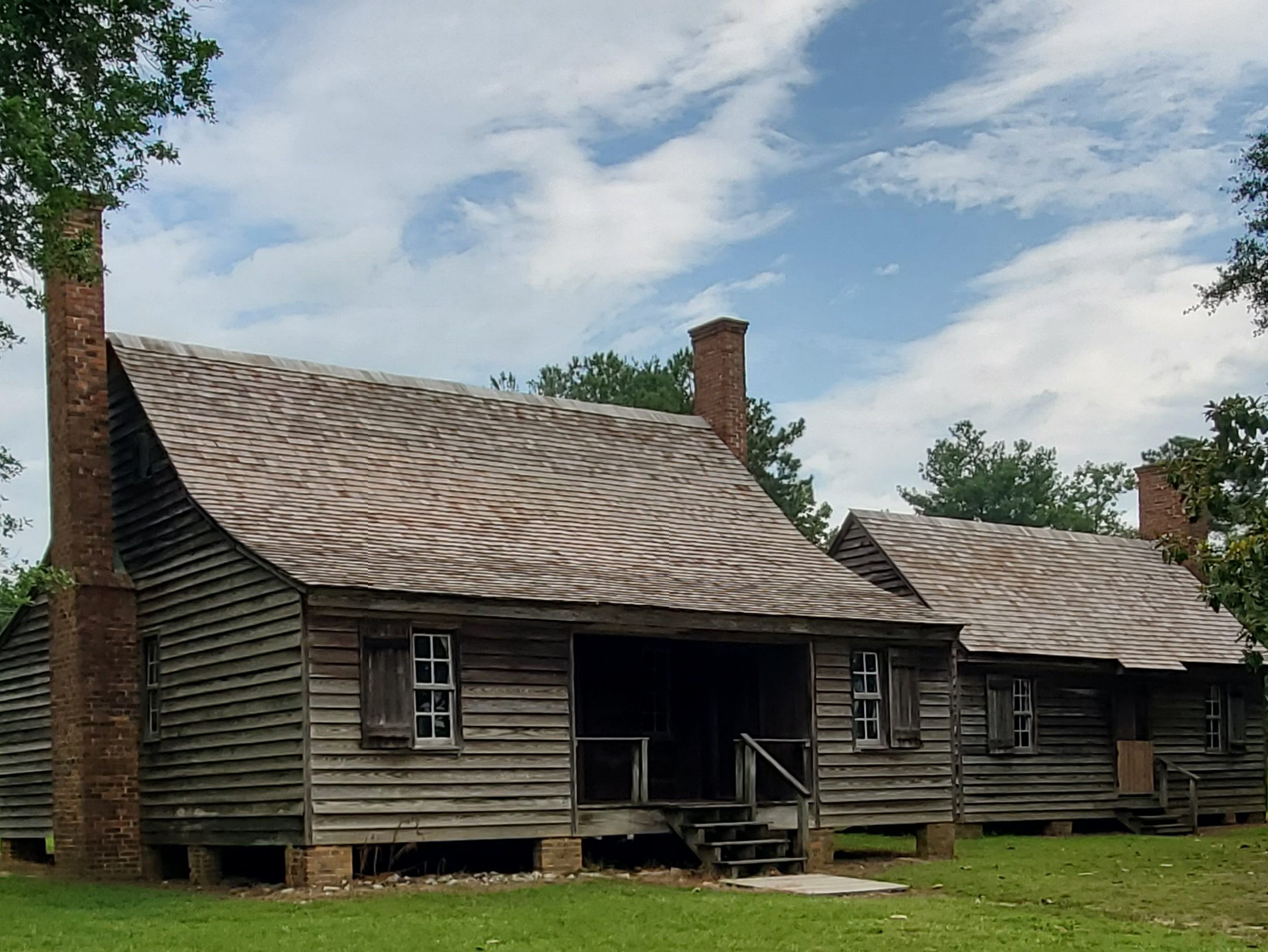
Governor Charles B. Aycock Birthplace
This 19th-century farm (264 Governor Aycock Rd.),consists of a museum exhibit building plus several restored homeplaces, including an original 1893 one-rooms schoolhouse and a mid-19th century farmstead. The property is Aycock’s birthplace and boyhood home. Tours and hands-on activities are available to school and scout groups.
Faro
In Faro—12 miles north of Seymour Johnson Air Force Base—two 3.8-megaton hydrogen bombs dropped accidentally during the 1961 Goldsboro B-52 crash as the aircraft broke up in flight. The two Mark 39 weapons were released after the crew abandoned a B-52 bomber, which had suffered mid-flight structural failure. Both bombs went through several steps in the arming sequence, but neither detonated. One bomb was recovered.
The crazy history is that we nearly nuked ourselves. Of the 4 switches that controlled the bombs at the time, three were activated during the crash. In 2013, it was revealed that three safety mechanisms on one bomb had failed, leaving just one low-voltage switch preventing detonation.
The crash site is 1.5 miles southwest of Faro on Big Daddy’s Road. The North Carolina Highway Historical Marker Program erected a historical marker about the accident at nearby Eureka in July 2012. It stands at the intersection of Main and Church Streets in Eureka, just three miles northwest of the impact site.
Although much of the second bomb was also recovered, a missing piece containing uranium was believed to have sunk deep into the swampy earth and could not be recovered. To this day, the uranium piece sits about 80 feet underground and is considered too unstable to dig up and diffuse. The Air Force has purchased the property to prevent any land use or digging, and it is protected and guarded should any curiosity seekers wander near.
Pikeville
Before the Pikeville we know came into existence, the Torhunta, a large Native American farming community, lived in this area. The community was destroyed by settlers and the rest of the Torhunta community returned to New York and joined the Iriquois. After they left, the settlers, mostly Society of Friends/Quakers, settled into this land. Pikeville has been in a state of development for over 260 years. When the Society of Friends settled, Nathan Pike owned and operated a large tavern inn, stables, shops, and trading posts. During this time, Pikeville was known as Pike’s Junction.
Samuel Pike moved to the area and settled on the south side of Nahunta Swamp, which had been granted by King George II of Great Britain in 1763. This grant of land included between 2,500 and 3,000 acres. In 1785, Pike deeded most of this land to his only son, Nathan. It was this Nathan Pike for whom the township, the Post Office, and later the town was named. Nathan Pike owned and operated a large tavern, shop, trading post, and hotel. It was then known as Pike’s Junction. In 1856, the first post office opened. During the period of 1793 to 1835, Pike sold around 2,000 acres of his land to other families who came here to settle.
During General Sherman’s Carolinas Campaign in 1865, Pikeville suffered the same fate of many southern towns. Union soldiers destroyed the hotel and tavern Nathan Pike had built, and many buildings and homes were damaged or destroyed. Some of General Sherman’s forces camped in areas east of Pikeville during this time. In 1960, Charles B. Aycock High School was opened in Pikeville in honor of the state governor who was an advocate for quality education.
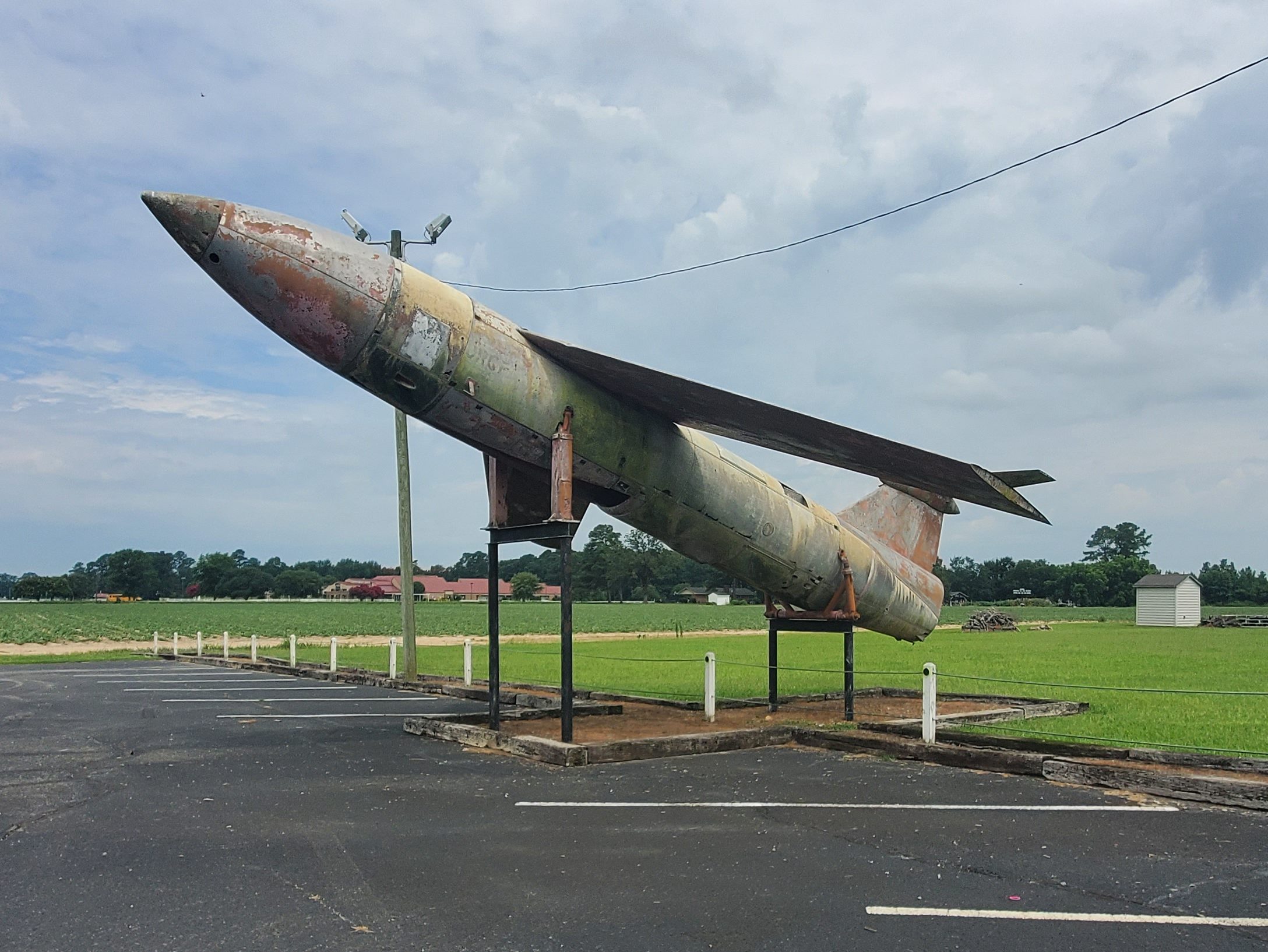
TM-61C Matador Cruise Missile
Oddly located in a church parking lot at 2089 Big Daddy’s Rd., you’ll find this relic TM-61C matador cruise missile on display.
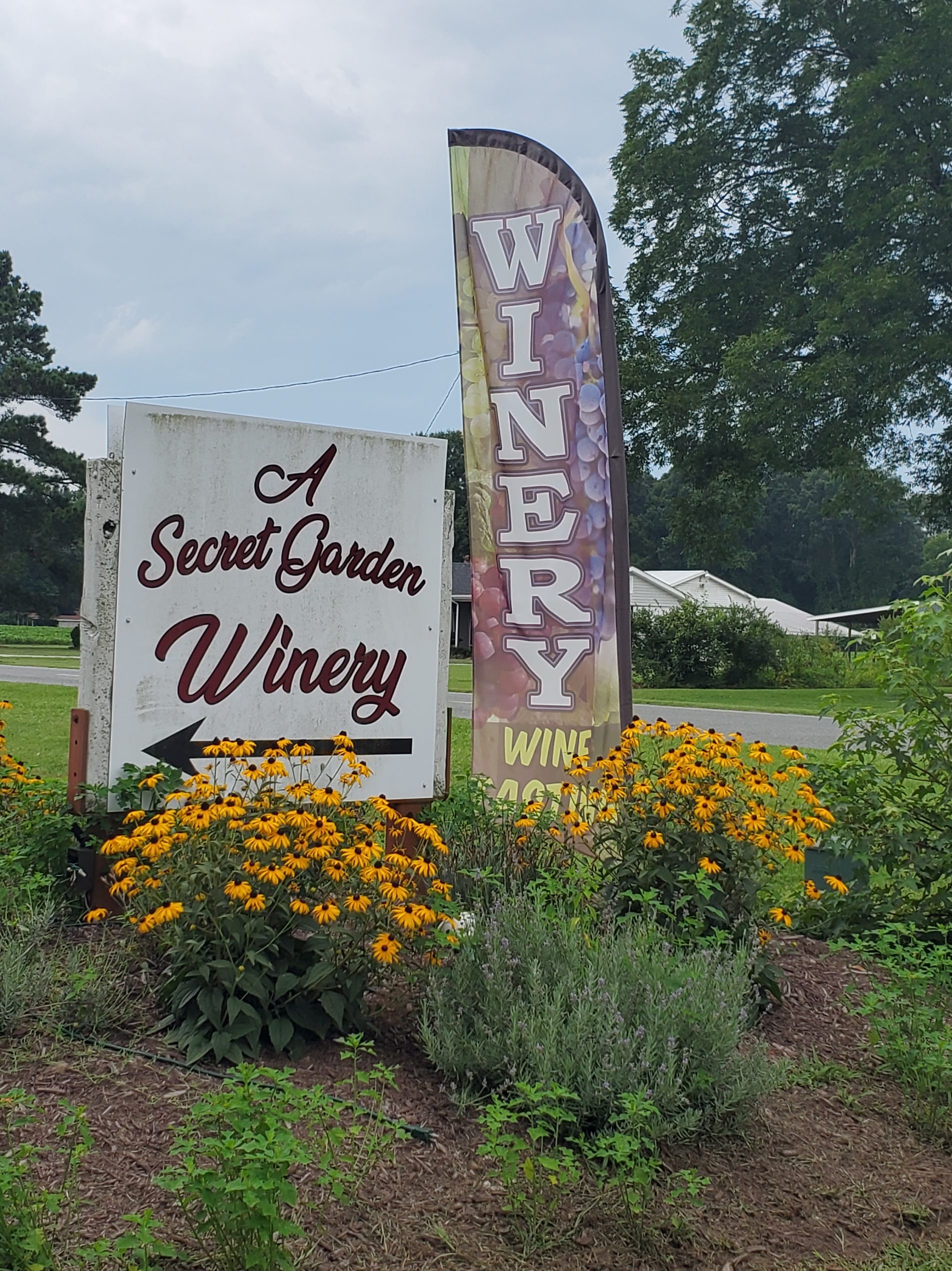
A Secret Garden Winery
Stop by the only winery in the county, A Secret Garden Winery (1008 Airport Rd NE) for a taste of traditional North Carolina varietals, such as muscadine. Their wines are all chemical free and exactly as they would have been made hundreds of years ago!

Goldsboro
Around 1787, when Wayne County was formed, a town named Waynesborough grew around the county’s courthouse. More and more citizens relocated from Waynesborough to this growing village, named eventually “Goldsborough’s Junction” after Major Matthew T. Goldsborough, an Assistant Chief Engineer with the railroad line. Later this was shortened simply to Goldsborough. In 1847, the town was incorporated and became the new Wayne County seat. Local legend has it the Goldsborough supporters put moonshine in the town’s well to encourage people to vote for Goldsborough.
In the following decades, Goldsborough’s growth continued in part by new railroad connections to Charlotte and Beaufort. By 1861, the town’s population was estimated to be 1,500. It was the trading center of a rural area that started with yeoman farmers. By this time, it had been developed as large cotton plantations dependent on the labor of enslaved African Americans, as the invention of the cotton gin had enabled profitable cultivation of short-staple cotton in the up-counties.
Because of its importance as railroad junction, Goldsborough played a significant role in the Civil War, both for stationing Confederate troops and for transporting their supplies. The town also provided hospitals for soldiers wounded in nearby battles.
In December 1862, the Battle of Goldsborough Bridge was waged, in which both sides fought for possession of the strategically significant Wilmington and Weldon Railroad Bridge. Union General John Foster arrived with his troops on December 17, aiming to destroy this bridge in order to put an end to the vital supply chain from the port of Wilmington. He succeeded on that same day, his troops overpowering the small number of defending Confederate soldiers and burning down the bridge. On their way back to New Bern, Foster’s men were attacked again by Confederate troops, but they survived with fewer casualties than the enemy. The important bridge at Goldsborough was rebuilt in a matter of weeks.
Goldsborough was the scene of another Union offensive in 1865, during Union General Sherman’s Carolinas Campaign. After the battles of Bentonville and Wyse Fork, Sherman’s forces met with the armies of Schofield, their troops taking over the city in March. During the following three weeks, Goldsborough was occupied by over 100,000 Union soldiers. After the war was over, some of these troops continued to stay in the city.
In 1869, the spelling of the city was officially changed to Goldsboro. Wayne County was part of North Carolina’s 2nd congressional district following the Civil War, when it was known as the “Black Second”, for its majority-black population. This district elected four Republican African Americans to Congress in the 19th century, three of them after the Reconstruction era. The attorney George Henry White was the last to serve, being elected in 1894 and serving two terms.
During World War II the North Carolina Congressional delegation was successful in gaining the present-day Seymour Johnson Air Force Base, which opened on the outskirts of Goldsboro in April 1942 as a U.S. Army Air Forces installation named Seymour Johnson Field. From this point on, the city’s population and businesses increased as a result of the federal defense installation. The base’s name was changed to Seymour Johnson AFB in 1947 following the establishment of the U.S. Air Force as an independent service.
The city is also home to Goldsboro Milling Company, the 10th largest producer of hogs in the U.S., and also a major producer of turkeys.
Andy Griffith, actor, lived in Goldsboro, teaching English, drama, and music at Goldsboro High School. Doris Jackson, née Doris Coley, founding member of the Shirelles, also lived in Goldsboro.
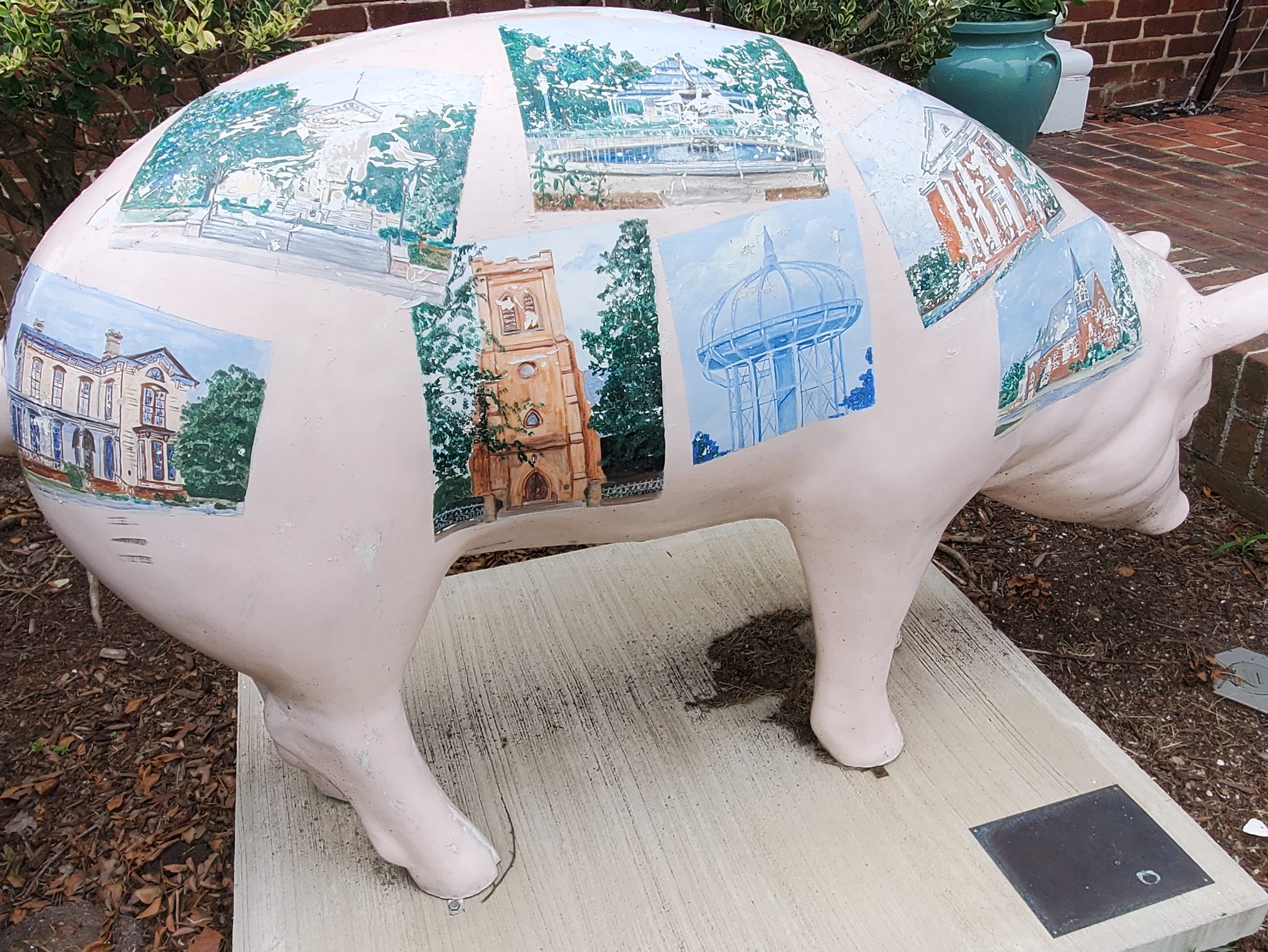
Wayne County Museum
The Wayne County Museum (116 N William St.) resides in a Jeffersonian revival-style building, constructed in 1927 by the Goldsboro’s Women’s Club, an uncommon occurrence of the day (for women to own property). The women offered the building to the USO during World War II. Opened since 1988, the museum holds numerous exhibits and holds several special exhibits throughout the year. The museum is part of the North Carolina Civil War Trails and also houses the original 1916 Lady in the Park Statue from Henry Park. (See below.)
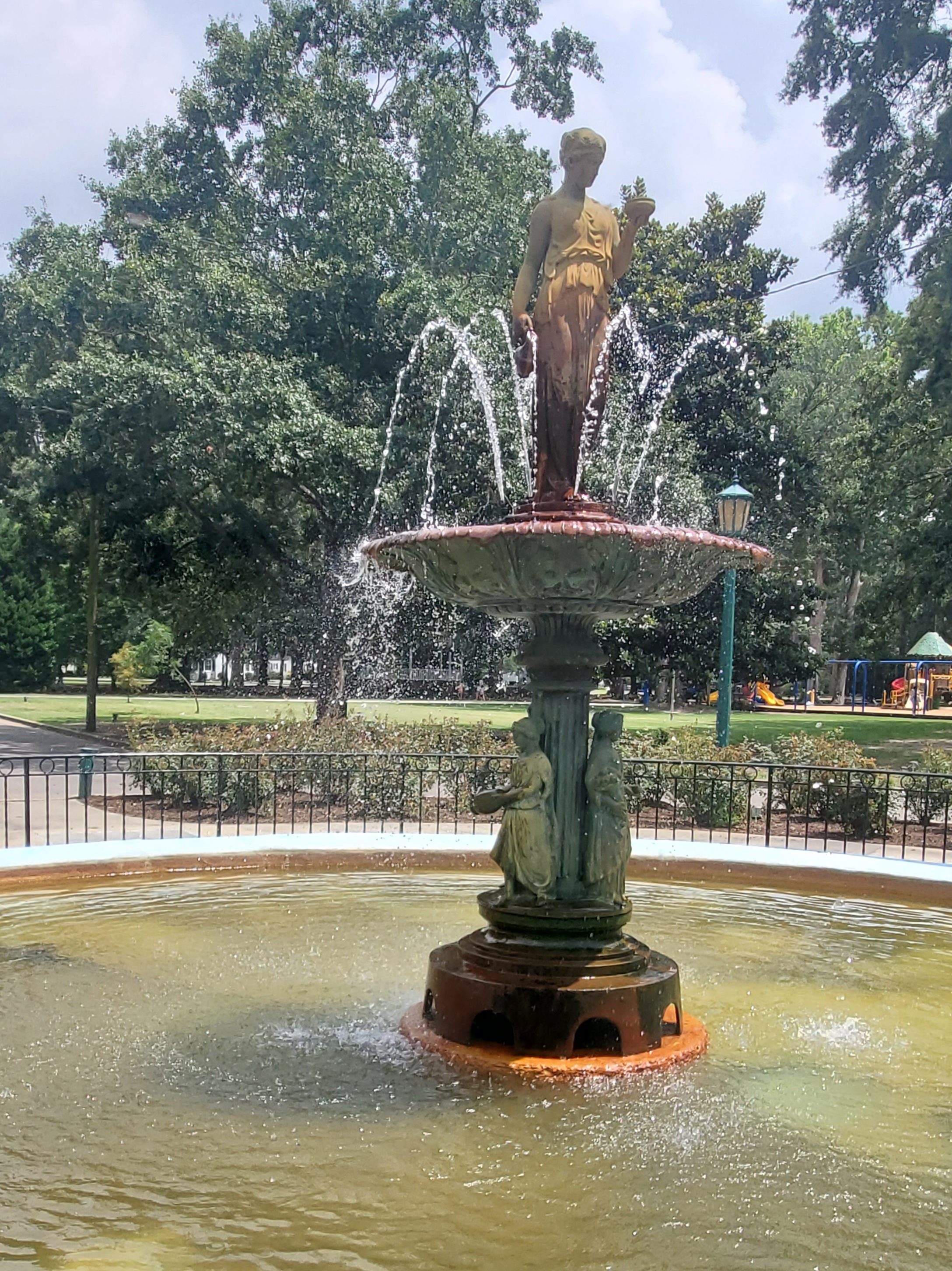
Herman Park
Herman Park (900 Park Ave.) is Goldsboro’s oldest park. It includes a recreational center, miniature train (in operation since 1955), tennis courts, picnic shelters, a turn-of-the-century park house, gazebo, goldfish pond, fountain (sculpted by a Danish artist in 1916), and children’s playground. The kids can spend a few hours playing or you can walk the park–and get tickets for the train ride. It’s really peaceful and a pretty location to enjoy–even on a hot day.

Waynesborough Historical Village
Step into the 19th century at the Waynesborough Historical Village (801 US Hwy 117 S), a reconstructed “village” located near the original site of the town of Waynesborough. It is home to several historical Wayne County buildings ranging from various periods of time. These buildings include a family home, a medical office, a one-room school, a law office, a gerneral store, and a Quaker Meeting House.
In the 1980s, the Old Waynesborough Commission was formed to create, operate, and maintain a village near the original site to represent Waynesborough. This group solicits buildings dating from the antebellum period to the early 1900s. These structures were moved to the park, renovated, and opened to visitors as a project of living history. None of the buildings are original to the town of Waynesborough, but each is representative of a period in Wayne County history. In addition to the tranquil historical village, the Commission also operates a Visitors Center and over 4.5 miles of hiking and nature trails.
Seven Springs
Though there’s really not anything to see here, there is some interesting history regarding Seven Springs. The town was incorporated as Whitehall in 1855, named in homage to the 1741 home of planter William Whitefield. In December 1862, during the American Civil War, a battle was fought near the town. In 1881, the community was reincorporated as White Hall. That year, a hotel and resort opened to bring customers to seven mineral springs in the town’s vicinity, but the resort closed in 1944. In 1951, the town was renamed Seven Springs. Seven Springs’ population peaked in 1960 with 207 residents. In 1999, the Neuse River flooded during Hurricane Floyd, causing major flooding in the area. Half of the town’s population left the area. Then after Hurricane Matthew in 2016 and Hurricane Florence in 2018, the town suffered further population decline. By 2020, the town had only 55 residents, and many of the businesses on the main street have been abandoned.

Cliffs of Neuse State Park
Located in Wayne County 15 miles southeast of Goldsboro, Cliffs of the Neuse State Park (240 Park Entrance Rd.) sits on 90-foot bluffs overlooking the Neuse River–and about 600 yards wide. Layers of sand, clay, seashells, shale, and gravel create a spectrum of colors on the face of the cliff. However don’t expect to get a very good view of the cliffs as you’ll be standing at the top of the cliffs, rather than across from them. From the parking lot, the overlook is directly in front of you. Toward the right is a short path with a small overlook area.
The cliffs were formed millions of years ago when a fault in the earth’s crust shifted. The Neuse River follows this fault line. Completing the landscape are longleaf pine restoration areas and creeks that were once used to make moonshine and cornmeal. An 11-acre lake complements the river in providing opportunities for water recreation. The park, which has a very helpful staff and park ranger, covers 751 acres along the southern banks of the Neuse River. It has a swimming area, several hiking trails, fishing areas, a nature museum, and picnic areas. Organized groups can also canoe on the river or get a guided tour (with reservations). (Beware of the big black ants–they can be aggressive and they bite!)
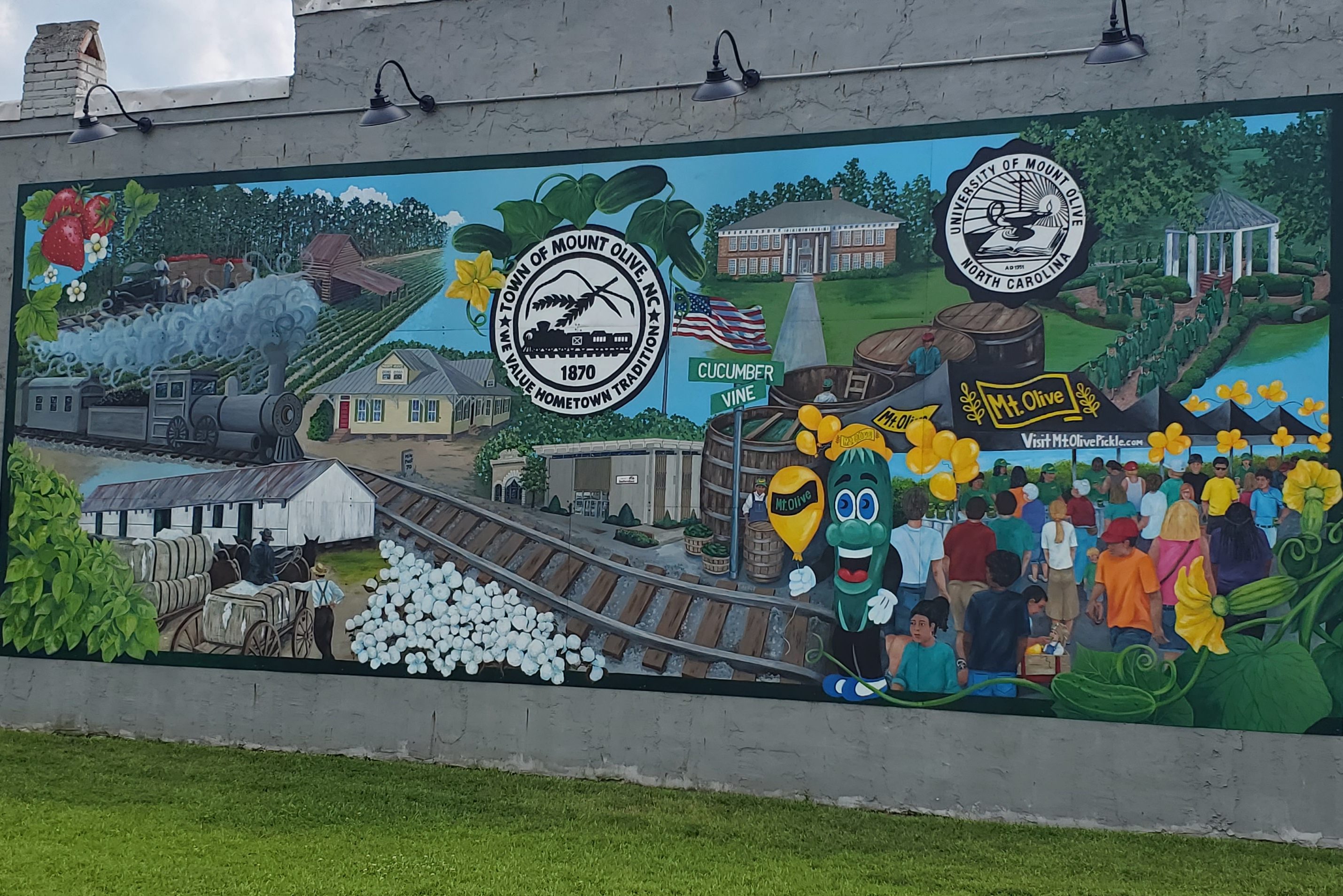
Mt. Olive
Mount Olive was formed as a village before the Civil War, it was occupied by Union soldiers in December 1862 and incorporated as a town in 1870.
The wolrd-famous Mt. Olive Pickle Company, established in 1926, is located on the corner of Cucumber and Vine streets–and a gift shop with pickle swag open to the public during the week is located at 1 Cucumber Blvd–within the plant gate. (You can drive through and park in the interior parking lot. Just tell them you’re going to the gift shop.)
The North Carolina Pickle Festival is held the last full weekend of April each year. The annual celebration is put on by both the community of Mount Olive and the Mt. Olive Pickle Company. On New Year’s Eve, the Mt. Olive Pickle Company celebrates in unusual fashion by dropping a three-foot pickle down a flagpole into a pickle tank. However, instead of midnight local time, the drop takes place at 7 pm. The event first took place on New Year’s Eve 1999.
Next stop… Sampson County!
 Portable NC
Amazing. I love to know all the history behind the pictures.
Astrid Mesa Astrid’s Detailed Cleaning 203 Boyce Avenue Jamestown NC 27282 Astridsdetailedcleaning.com Ph: 336-456-4046
LikeLike
North Carolina has so much rich–and cool–history! It’s truly amazing sometimes.
LikeLike