Journey through New Hanover County

If you love coastal communities, New Hanover County has the idyllic combination of seaside village beaches plus the city perks of nearby Wilmington–all rolled into the second-smallest county in North Carolina (by land area, behind only Chowan County).  New Hanover County totals 328 square mmiles, of which 191.37 square miles of land area and 136.67 square miles of water area, which consists of inlets, intracoastal waterways, marshes, and the Cape Fear River and its tributaries. You can’t go far without a view of the water.

Named for the House of Hanover, a German royal family that ruled Great Britain at the time, New Hanover County was created in 1729 as New Hanover Precinct of Bath County and became a county in 1739. Eventually parts of New Hannover County were broken off into other counties: Duplin, Onslow, Bladen, Brunswick, and Pender. The county was originally developed as plantations, mostly to cultivate tobacco and other crops by enslaved African-Americans. And by 1860, the majority population was black.

New Hanover County played a tremendous role in Civil War battles, including the second battle of Fort Fisher (the last coastal stronghold of the Confederacy) and the Battle of Wilmington. New Hanover County’s history also holds the Wilmington Insurrection of 1898 (planned by a group of 9 conspirators), in which a duly elected bi-racial government was overthrown. Mobs then rioted and attacked the city’s black neighborhoods and businesses. Altogether between 60 to 300 African-Americans were estimated to have been killed.

The most notable people hailing from this New Hanover County are basketball players Michael Jordan (Chicago Bulls and Washington Wizards) and Meadowlark Lemon of the entertaining Harlem Globetrotters.

Castle Hayne, NC

Castle Hayne takes its name from the large house of Captain Roger Haynes, which was located in the area. Naval stores and lumber were the greatest source of revenue in this region. In fact, North Carolina’s greatest commodity was the longleaf pine, which provided pine, tar, and pitch for trade and sale. Hence, NC became the Tarheel State. During the Revolutionary War, the British maintained a garrison at Fort Johnson near Wilmington. After crippling losses at Guilford Courthouse (in Guilford County), British troops withdrew back to Fort Johnson and abandoned plans to occupy the state.

The General Store at River Bluffs

I loved happening upon this little treasured stop in Castle Hayne. You’ll find The General Store at River Bluffs nestled in the quiet River Bluffs community, but they do allow outsiders to stop in for a treat and a rest. You’ll find baked goods, locally sourced produce, locally roasted coffee, NC gourmet items, ice cream, candy, beer, wine, and more. Treat yourself to an ice cream cone or a bacon-topped donut while you’re there!

South and east of Castle Hayne, you’ll find a number of small towns: Skippers Corner, Wrightsboro, Hightsville, Ogden, Kings Grant, Murrayville, Kirkland (also known as Porters Neck), and Bayshore.
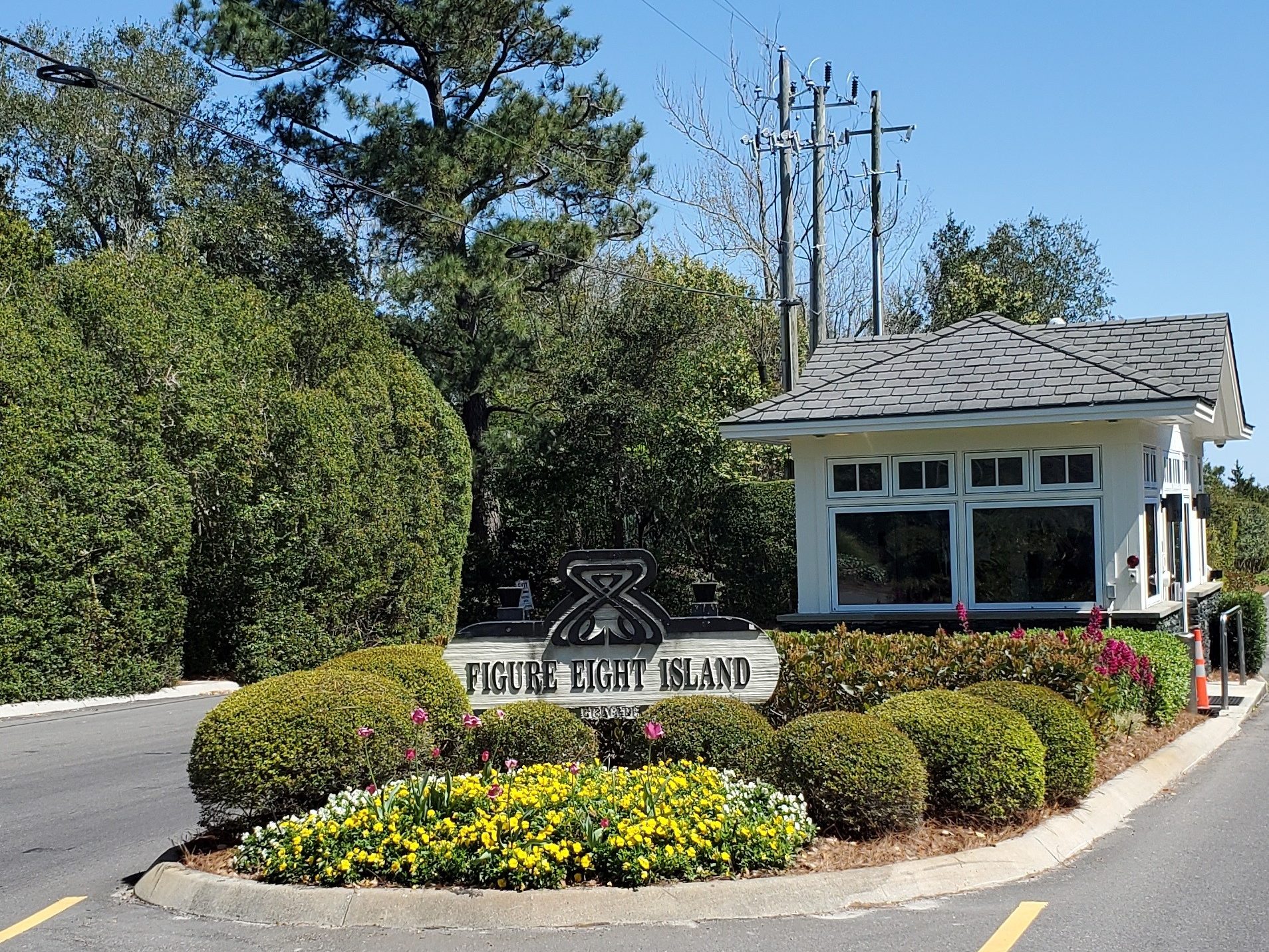
Figure Eight Island guard shack

Figure Eight Island

I hate to disappoint you, but this entire island is an affluent, private, gated community. And you can’t cross the bridge unless you are a resident, have been invited or have rented a home on the island. Figure Eight Island is a barrier island just north of Wrightsville Beach. The island itself is 100% residential (about 475 homes) with nary a business. About 90% are second homes and fewer than 100 are rentals. Here’s a little synopsis of this island’s interesting history:

Figure Eight Island was originally part of a royal tract of land given to James Moore in 1762, then passed to Cornelius Harnett (a signer of the Declaration of Independence) in 1775, on the eve of the American Revolution. Harnett held the property for 20 years before selling it at auction to the Foy family, who owned it for the next approximately 160 years.

After Hurricane Hazel in 1954, brothers, Dan (mayor of Wilmington) and Bruce Cameron purchased the island from the Hutaff and Foy families for just $100,000 to create a private vacation destination. The island remained dormant for about 10 years. Then a $150,000 bridge was built on top of a government surplus landing ship tank, which was eventually replaced with today’s $1.5 million bridge in 1980 (actually second-hand from Port Royal, Virginia).

The island garnered attention in the 1980s and 1990s, when celebrities flocked to the destination for private vacations. The island has hosted the likes of Dustin Hoffman, Gene Hackman, Debra Winger, Nick Nolte, Kim Basinger, Alec Baldwin, Al and Tipper Gore, and many more. The first lots on the island sold for as little as $5,000. Today, the average home on the island fetches $2 million.

Another interesting historical fact: In August 1974, a smuggling ring of 15 people on the island (operated by an attorney who had rented two homes on the island) was indicted for smuggling 14,000 pounds of marijuana from Columbia to Figure Eight Island.
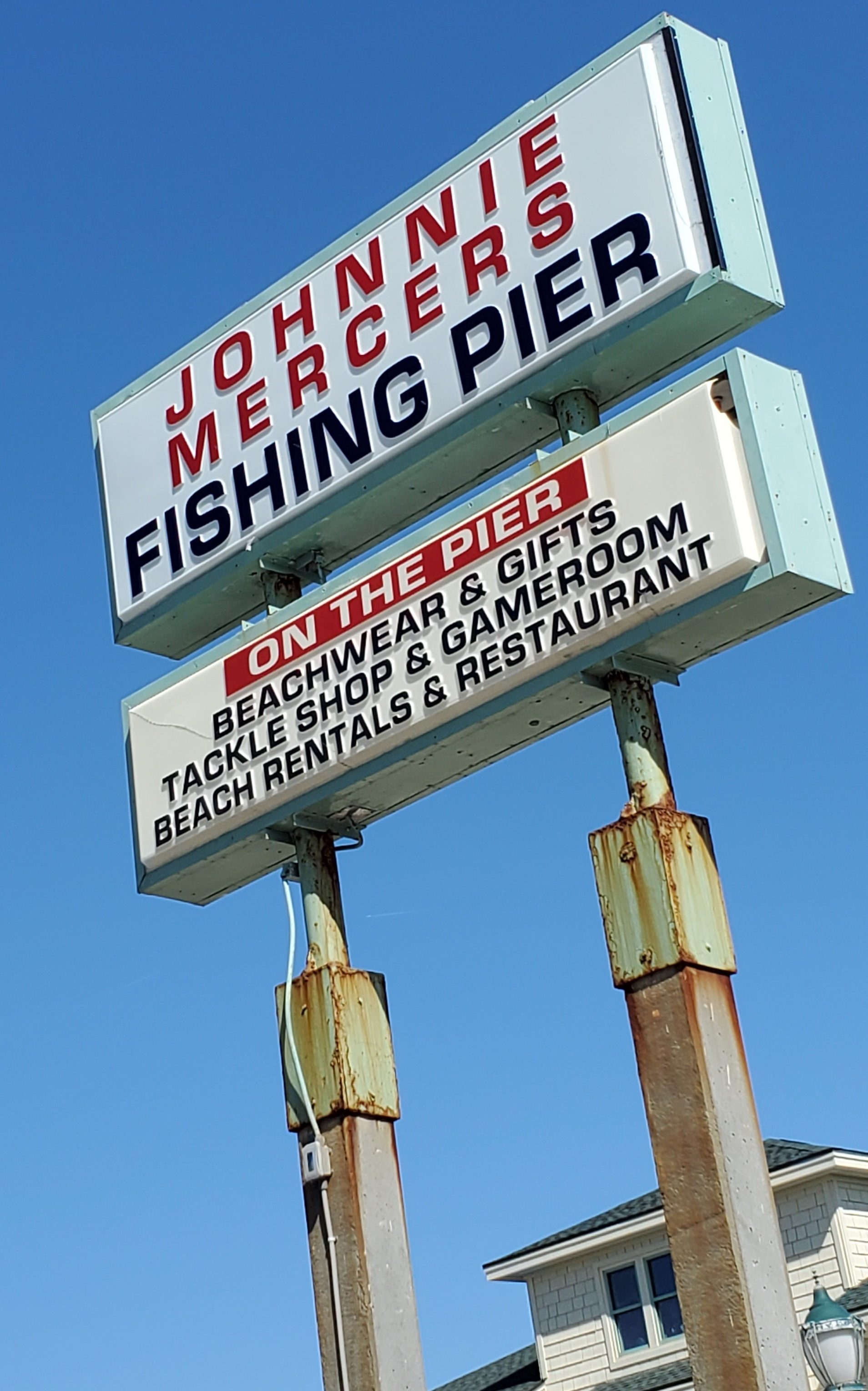
Johnnie Mercers Pier, Wrightsville Beach

Wrightsville Beach

Incorporated in 1899, Wrightsville Beach was named for local realtor Joshua G. Wright and the Wright family of Wilmington. Here, you’ll find the Carolina Yacht club, the second oldest in America, founded by seven local men. Among the deep history of this area were the areas original streetcars and the Lumina Pavilion (no longer standing) that attracted the well-to-do from far inland points of North Carolina and beyond for food, dancing, socializing, games, and entertainment, including the Big Bands of the 1930s and 1940s. It was said that the 6,000 exterior lights on the Lumina Pavilion were so bright that ships at sea would use it as a guidepost. In 1913, they added a movie screen in the surf for silent films. After its heyday, the building later became a skating alley and a bar before it closed in 1972, then condemned and torn down in 1973.

In 1937, North Carolina’s third pier was built here and named the Ocean View Pier. Two years later, Johnnie Mercer bought the pier and it was renamed for him as Johnnie Mercer’s Pier. Battered by numerous hurricanes throughout the decades, it was deemed beyond repair and closed from 1996-2002, when it reopened as the bridge we know today with reinforced concrete piers. A second pier was built in 1938 named the Mira Mar Fishing Pier, constructed on top a Confederate blockade runner that ran aground during the Civil War, creating a natural reef. Today, it houses the beach’s most famous restaurant, The Oceanic.

Hurricanes have ravaged the island over the years causing extensive damage, wiping some cottages off the beach, and destroying the Carolina Yacht Club in 1899 when it had to be completely rebuilt.

At Wrightsville Beach, you can enjoy a day at the beach and seaside shopping. Stay at a rental cottage or at the popular Blockade Runner Resort. Inland, you’ll find delightful shopping at the Lumina Pavilion, water views Wrightsville Beach Park, and a little coastal education at the Wrightsville Beach Museum of History (See the circa 1910 scale model of Wrightsville Beach.) and the Fred and Alice Stanback Coastal Education Center. Both have limited weekday hours.

Pleasure Island

Pleasure Island is comprised of three island communities: Carolina Beach, Kure Beach, and Fort Fisher.
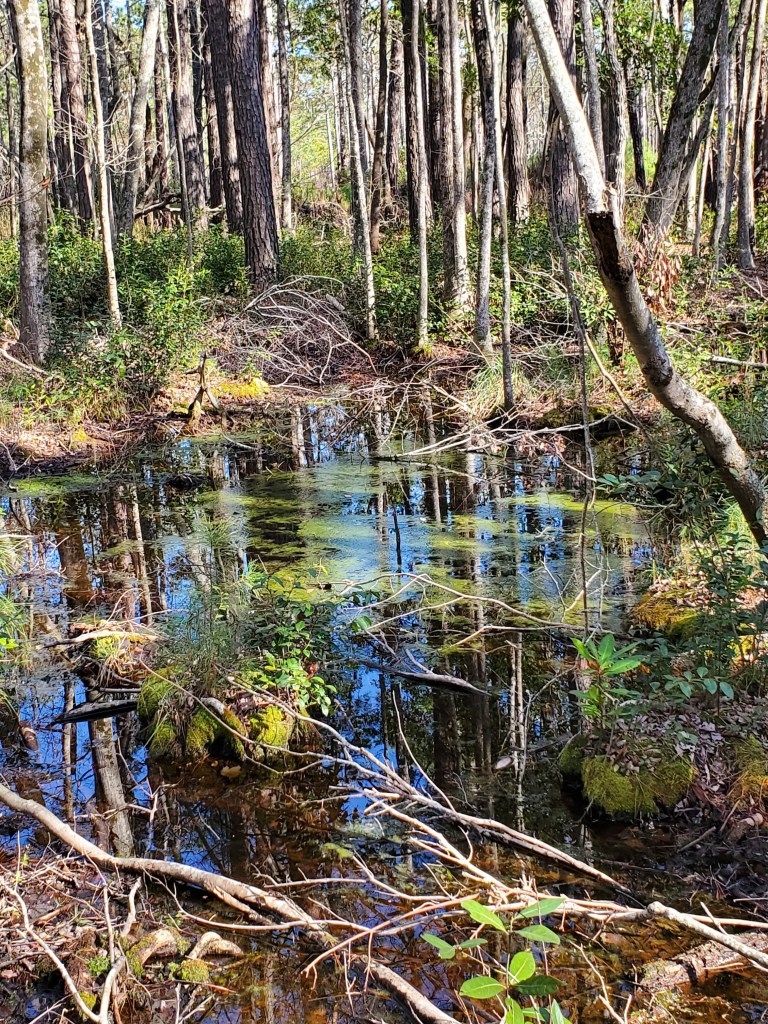
Carolina Beach State Park

Carolina Beach

On the way to Carolina Beach, you’ll drive through coastal communities of Silver Lake, Myrtle Grove, Monkey Junction, and Sea Breeze. Carolina Beach may best be described as the perfect combination of seaside living plus entertainment and recreation, with only two smaller-scale, high-rise hotels on the island. The town was virtually wiped off the map by Hurricane Hazel in 1954, which destroyed 362 buildings.

Carolina Beach’s Boardwalk is central to the daytime and nighttime activity. Walk around the local shops, enjoy nightly seasonal entertainment, carnival rides and games by day and night, and fireworks on Thursday nights in the summer. Be sure to stop by for some famous Britt’s Donuts and milk. (Don’t get spooked by the line. It moves very quickly–and the donuts are soooo worth it.) On Saturday mornings, you’ll find a local artisan and produce market set up at Carolina Beach Lake on Lake Park Blvd.

Some other local spots to hit include Havana’s Restaurant, Deck House, The Nikki’s Gourmet Sushi, Kate’s Pancake House, The Fork ‘n Cork–Carolina Beach (The Wilmington location was featured in Diners, Drive-ins & Dives.), Soul Flavor, Michelangelo’s Pizza, Wake ‘n Bake (gourmet donuts), and many other island favorites. You’ll also want to stop at the Veggie Wagon for fresh produce, natural foods, North Carolina gourmet items, and more. The Celtic Creamery is an ice cream hot spot on the island, which also includes a gift shop.

The low-lying north end of the island is sandwiched tightly between the ocean and the intracoastal. Here you’ll find a few popular island restaurants such as the SeaWitch Cafe & Tiki Bar and Stoked as well as Hamilton Park, a drive-on beach.

While at Carolina Beach, you can take surf lessons with Tony Silvagni’s Surf School (legendary, North American champion and top world-ranked longboard surfer) as well as learn to or rent a paddleboard, kayak out to Shark’s Tooth Island (shark teeth aplenty to be found here… bring a baggie to collect them) and Zeke’s Island. You can also rent beach chairs and umbrellas and fat tire bikes to ride around the island. Just over Snow’s Cut bridge, you’ll find North End Jet Ski Rental to jet ski on the Intracoastal waterway/Snow’s Cut.

While here, take some time to hike through Carolina Beach State Park, where you will find trails (including Flytrap Trail with native Venus fly traps), camping, and a boat dock at the water’s end of the park. You can also walk, run or bike the new Carolina Beach Greenway.

Kure Beach

Kure Beach

Past Carolina Beach, you’ll drive through quieter Kure Beach, named for a family of settlers, with lots of nestled communities and a small handful of businesses and restaurants. Drive past Rainbow Row, a row of colorful seaside 3-story rentals. Kure Beach has a pier as well as a weekend (just Saturdays?) crafter’s fair at the Ocean Front Park & Pavilion. Built in 1923, the Kure Beach Fishing Pier is one of the oldest on the Atlantic Coast. It’s been rebuilt and restored several times due to storms and wear and tear.

Fort Fisher

Fort Fisher

Just a little further down the road, you will hit Fort Fisher, noted for it’s majestic live oaks, seaside brush, rocky knolls at Fort Fisher State Park (less-trafficked beaches), Fort Fisher Aquarium, and Fort Fisher Historic State Sight. No restaurants or shops down at this end. Fort Fisher was a Confederate fort during the American Civil War that protected the vital trading routes of the port of Wilmington from 1861 until its capture by the Union in 1865. The fort is located on one of Cape Fear River’s two outlets to the Atlantic Ocean on what was then known as Federal Point or Confederate Point and today is known as Pleasure Island. The battle of Fort Fisher was the most decisive battle of the Civil War fought in North Carolina.

Ride all the way to the island to see an outlook toward Zeke’s Island, a former Civil War battery and now a great place to kayak. From Fort Fisher, you can also take the Fort Fisher-Southport Ferry to Southport, NC, in Brunswick County. It’s a delightful and quick 30-minute ferry ride where you may spot a pod of dolphins along the way. Once moving, you can exit your car and walk about the boat or pass the time in the air-conditioned upstairs cabin. Once in Southport, you can spend the day perusing this quaint area with many local shops and eateries, including Fishy Fishy and Frying Pan Shoals (named for the famous Fryin Pan Shoals tower) that sits about 30 miles offshore with a live camera often viewed to see the effects of Hurricanes coming ashore.

And from Southport, you can take another short (walk-on) ferry ride out to Bald Head Island and do some exploring there.

Look for the city of Wilmington featured in a separate post.

Next county: Moore County!

Journey through Lincoln County

Just northwest of Charlotte and Mecklenburg County, you’ll find the lovely country atmosphere of Lincoln County, with eastern parts of the county bordering manmade Lake Norman.

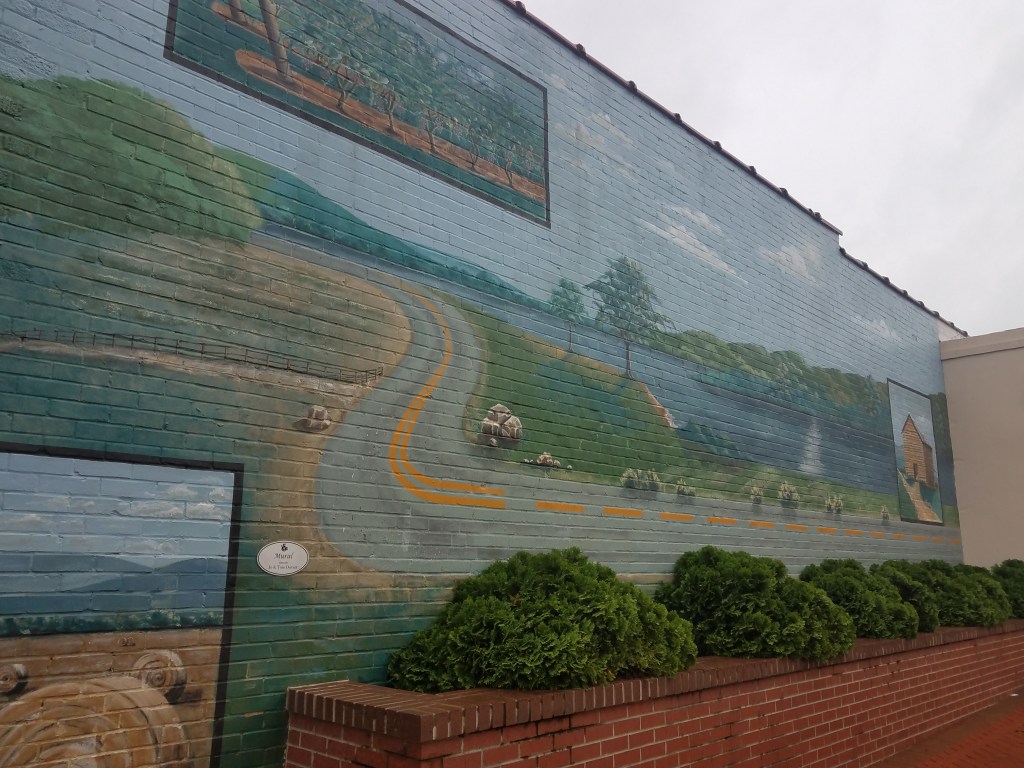
The county was formed in 1779 from the eastern part of Tryon County, which had been settled by Europeans in the mid-18th Century. The county was named for Benjamin Lincoln, a general in the American Revolutionary War. During the American Revolution, the Battle of Ramsour’s Mill occurred near a grist mill in Lincolnton. And you’ll see the mill commemorated in a beautiful town mural near Lincolnton’s center (to the left of the county courthouse).

In 1782, the southeastern part of Burke County was annexed to Lincoln County. In 1841, parts of Lincoln and Rutherford Counties were combined to form Cleveland County. In 1842, the northern third of Lincoln County became Catawba County. And in 1846, the southern half of what was left of Lincoln County became Gaston County.

The day begins with a leisurely ride along the shores of Lake Norman. Then we head to Denver, NC — know as the Denver of the East and formerly known as Dry Pond. In 1873, in an attempt to attract a railroad spur and thinking that the moniker “Dry Pond” didn’t present a nice enough image for the railroad planners, headmaster of the local Rock Springs Academy, D. Matt Thompson, led the effort to have Dry Pond renamed for the capital of Colorado, which was just then petitioning for statehood.

For a brief period during the 1890s–1910s, Denver was home to small-scale gold prospecting, particularly in the area near the former Triangle School and the community now known as Westport. Having failed to elect a local government for many years, Denver lost its official incorporated status in 1971 by vote of the state legislature.

Ironton/Iron Station

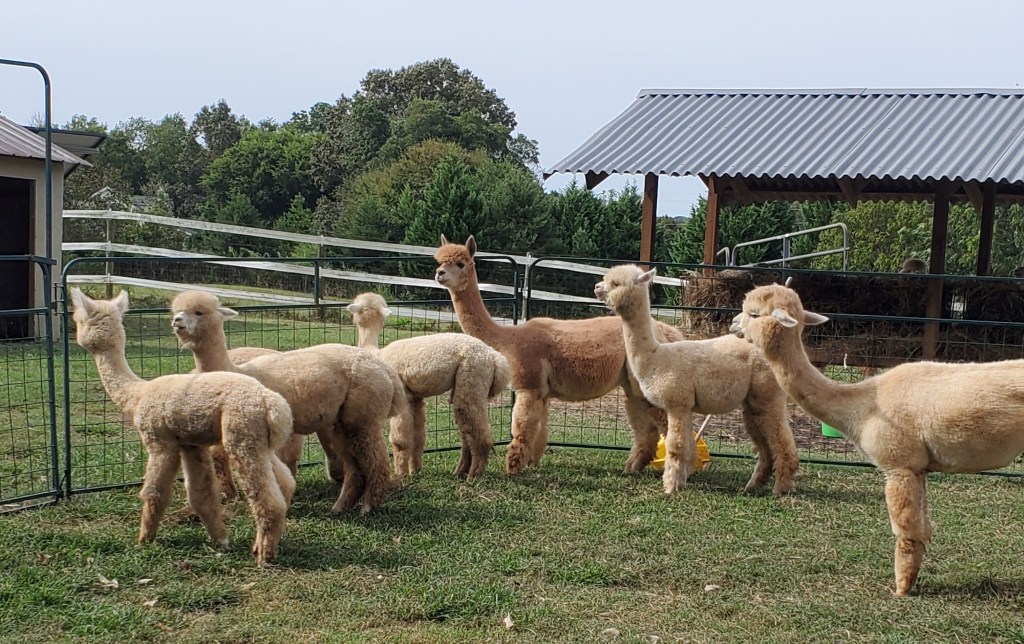
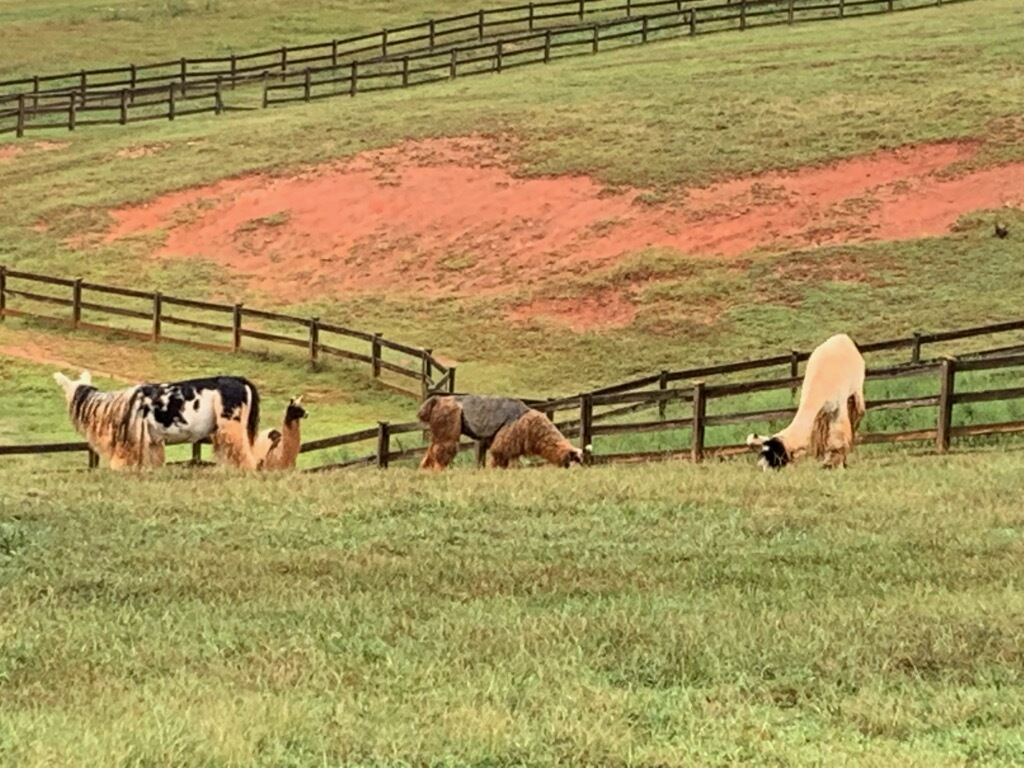
Good Karma Ranch Alpacas

Iron Station, near Lincolnton, was named for its history as an iron mining town with a train station. Here, you’ll find a quiet community that includes an alpaca farm Good Karma Ranch (1041 Brevard Place Rd, Iron Station, NC) offering school and farm tours and a variety of events: group and private Alpaca Yoga classes and barn quilt classes plus an on-site gift shop full of apparel and other items made from ultra-soft alpaca fiber.

You may be asking yourself, What’s the difference between a llama and an alpaca. They get asked that a lot. The short story is that both are part of the same animal family. However, llamas are used more as a work animal (able to transport heavier loads) while alpacas are bred for their soooo soft fur, which is way softer than sheep’s wool.

Lincolnton

At the center of Lincoln County is the county seat of Lincolnton, the only legally incorporated municipality wholly within the rural county. Lincolnton consists of the Lincoln County Courthouse surrounded by a circular road and several businesses, retail shops, and restaurants. It’s a quaint area to spend an afternoon perusing through quaint downtown area, local antiquity and craft shops and stopping for a cup of coffee or a bite to eat at one of the area restaurants (like The Meating Place, known for its meats).

As the county seat and center of the textile industry, city residents prospered on the returns from cotton cultivation for many years. The city has numerous properties, including churches, which have been listed on the National Register of Historic Places since the late 20th century. It has three recognized historic districts: Lincolnton Commercial Historic District, South Aspen Street Historic District, and West Main Street Historic District. These were centers of the earliest businesses and retail activities. There was much activity around the Lincoln County Courthouse on court days, when farmers typically came to town to trade and sell their goods.

Residences, churches, and other notable buildings marked the development of the city, including residential areas expanding outward from the city’s center. In 1986, Lincolnton expanded by annexing the nearby town of Boger City.

***Be sure to stop by for the Apple Festival always held the third Saturday every September in Downtown Lincolnton. It’s free–and fun–to attend.

South Fork Trail
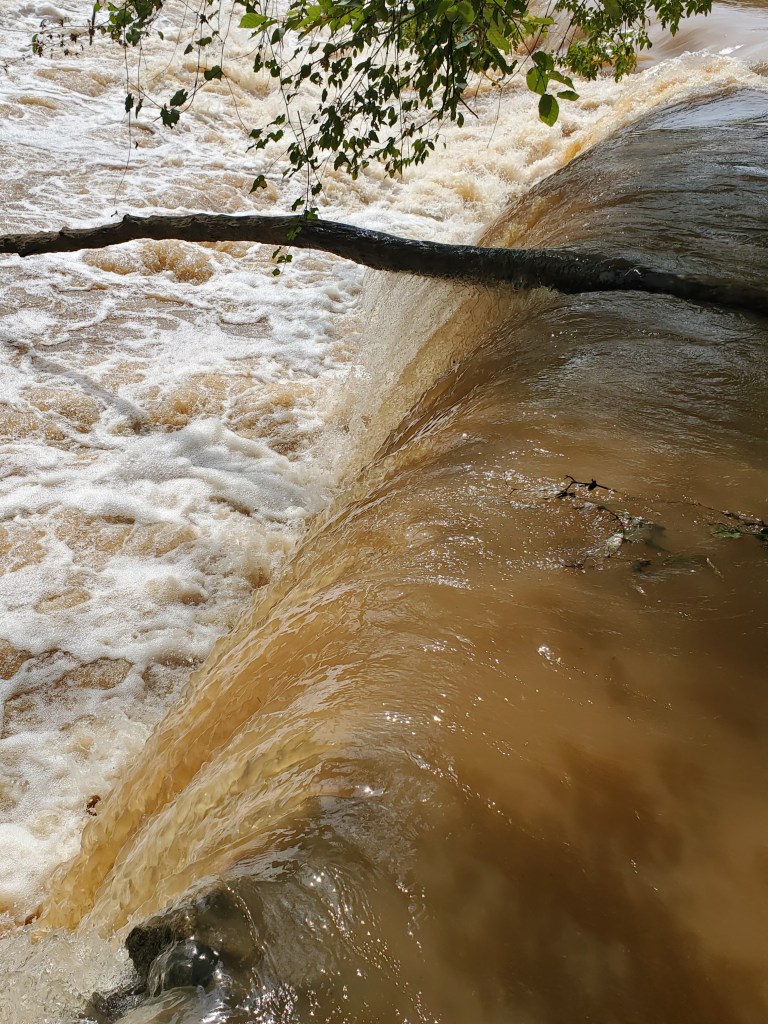
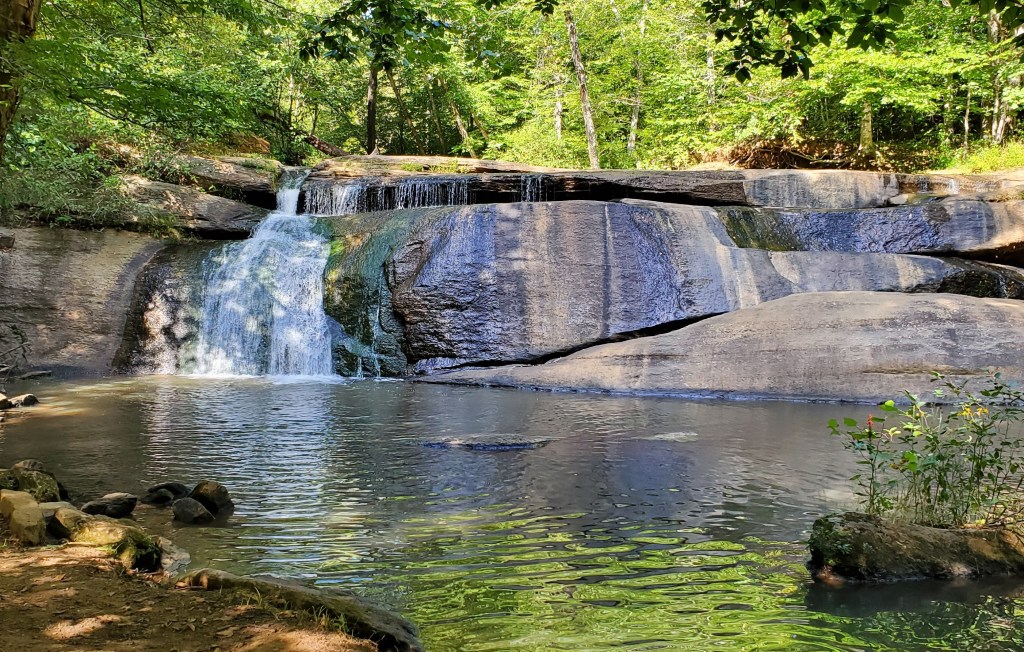
While visiting Lincolnton, be sure to trek down the South Fork Trail (2648 Laboratory Rd). Not too far down the trail, you’ll come upon a large waterfall on the right. (You’ll hear it before you see it.) And this waterfall comes with a bonus… a very short trail to the right will lead you to the top of the falls for a super close-up experience.

The South Fork Rail Trail is a combination of natural surface and crushed gravel trail, providing nice terraced views of the South Fork of the Catawba River. Enjoy biking or hiking along the 2 miles of trail located on the the 324-acre Rhyne Preserve and protected by the Catawba Lands Conservancy.

Visitors to the trail can experience one of Lincoln County’s finest natural areas, including mature floodplain forests along the South Fork Catawba River, a bald cypress swamp, rock outcrops, and lovely wildflowers.  The preserve also provides important habitat for migratory songbirds and other wildlife species. 

You can see the historic Laboratory Mill across the South Fork River which is now an event venue. This site was known as Lincolnton Cotton Factory 1819-1863.

South Fork Rail Trail is a part of the Butterfly Highway. The Butterfly Highway is a statewide conservation restoration initiative that aims to restore native pollinator habitats to areas impacted by urbanization, land use change, and agriculture across North Carolina. From backyard Pollinator Pitstops to large-scale roadside habitat restoration, the project is creating a network of native flowering plants to support butterflies, bees, birds and other pollen and nectar dependent wildlife.

Marcia H. Cloninger Rail Trail
Lincolnton boasts its own rail-trail conversion. This 1.6 mile-long trail converts an old rail line into a walking and biking path meandering through downtown Lincolnton. The paved trail is lined with trees, flowers, and benches (from East Pine St to Motz Ave) and includes several public art murals paying homage to the former rail line. The former rail station has been converted into a grassy play area and public bathrooms.

The Marcia H. Cloninger Rail-Trail, known locally as the Lincolnton Rail-Trail, is a 1.6-mile paved trail, is especially popular with walkers, joggers, bikers, and parents pushing baby strollers. Benches line the route, inviting you to pause and take in this enchanting town and trail.

The trail offers a chance to search the heart of this small Southern town, highlighted by a stately courthouse, model Main Street, thriving arts scene, and nearby lakes and mountains. Once an eyesore covered in kudzu and debris, the former Norfolk Southern Railroad corridor is now the pride and joy of “Lovable Lincolnton.”

Marcia H. Cloninger was influential in the early Lincolnton Rail to Trail movement. Mrs. Cloninger served on the Lincolnton City Council and worked tirelessly to make the rail trail a reality. In 1999, it was recommended that the rail trail officially be named the Marcia H. Cloninger Rail Trail.

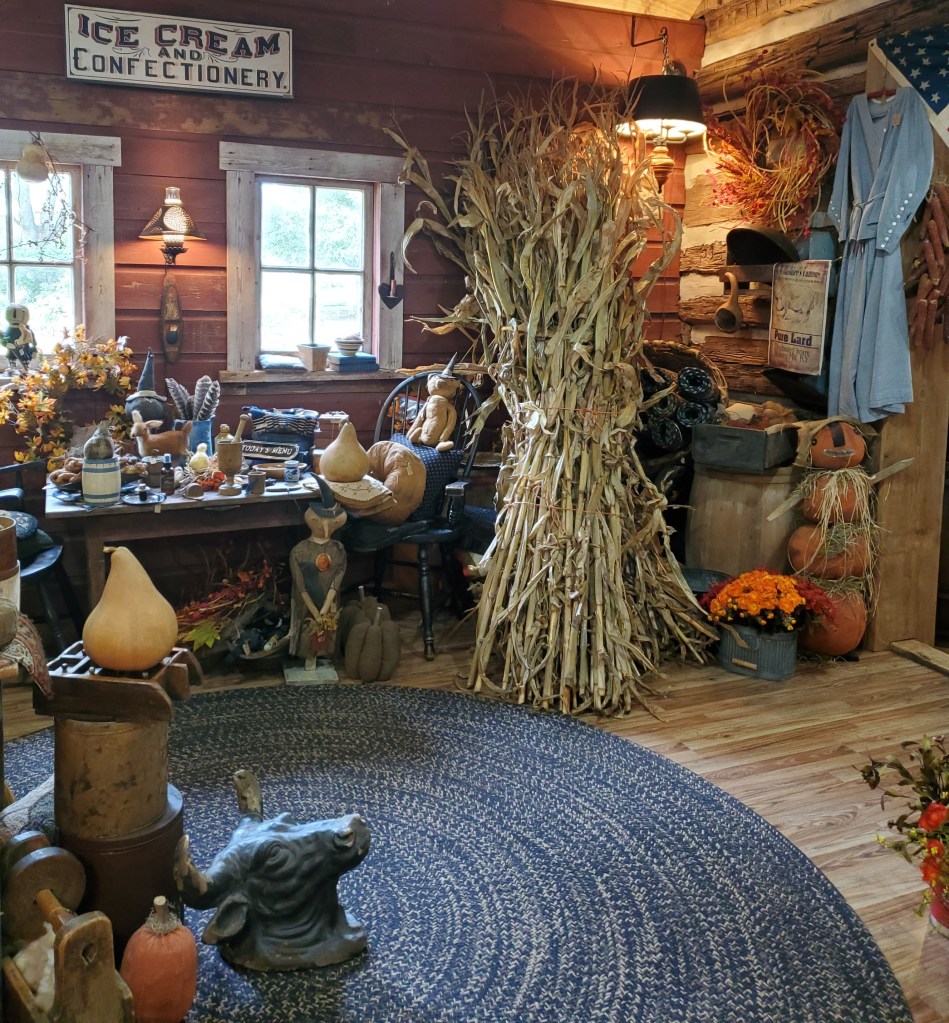
Burton Farms General Store
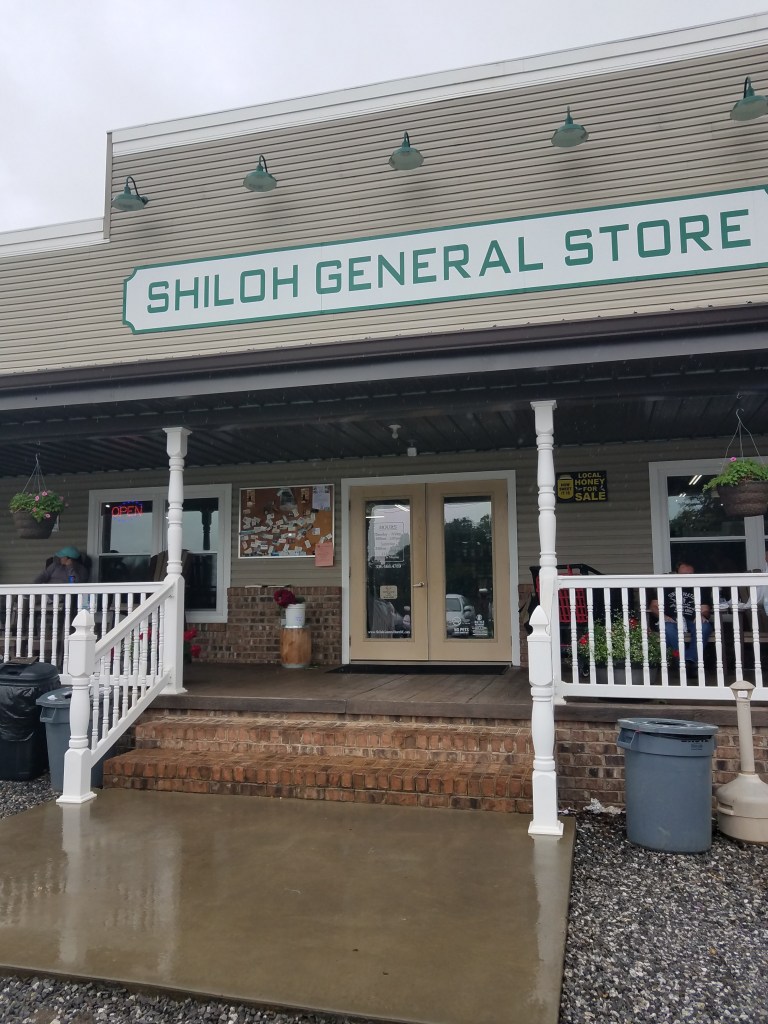
Burton Farms General Store (317 W Main St) is a must-stop in Lincolnton. They are a family-owned business. While providing fresh and local produce, they also offer many locally sourced items, including jams/jellies, honey, meats, cheese, and artisan/craft items. We were there in early fall, so the outside area was filled with tons of pumpkins, gourds, corn stalks, hay bales, Indian corn, yard decor, and more.

While downtown, be sure to also stop at Rising Sun Pottery (209 South Academy St), Southern Charm Winery (235-D East Main St), and the Lincoln County Museum of History/ Lincoln Cultural Center (403 E Main St), which was still closed at the time due to COVID.

The Lincoln Cultural Center is the center of arts and history in Lincoln County. The former Baptist Church, built in 1923, now provides a performance venue for theatrical productions by the resident Lincoln Theatre Guild, concerts presented by the Lincoln Community Concert Association. and other local and national acts.

The Cultural Center is also home to the Arts Council of Lincoln County, featuring rotating visual art exhibits and public community art classes. The Lincoln County Historical Association operates the Lincoln County Museum of History, housed in the center along with its archival libraries, donated collections, research areas, and offices.

NanBrook Farm Primitives & Antiques
If you like crafty, country goods, NanBrook Farm Primitives & Antiques (1580 Andy Logan Rd) is your place. It’s just slightly outside of Lincolnton, and is chockful of gift items and home decor.

P.S. They close down around Thanksgiving for about a week every year to transform the entire store for Christmas.

Vale

Vale was the destination of 50 African American families during the Great Migration. Most migrated from Half Acre Township in Putnam County, Georgia. They established three migration churches and three black elementary schools. They moved out of Vale by 1978 and were replaced by Mexican laborers.

Vale is now home to the annual Cat Square Christmas Parade, started in 1974, known as the “Best Little Christmas Parade in the Country.” The parade festivities included electing the Mayor of Cat Square. (The mayor is strictly a figurehead, with his or her only duty being to ride in the parade.)

The Reinhardt-Craig House, Kiln and Pottery Shop was listed on the National Register of Historic Places in 2008.

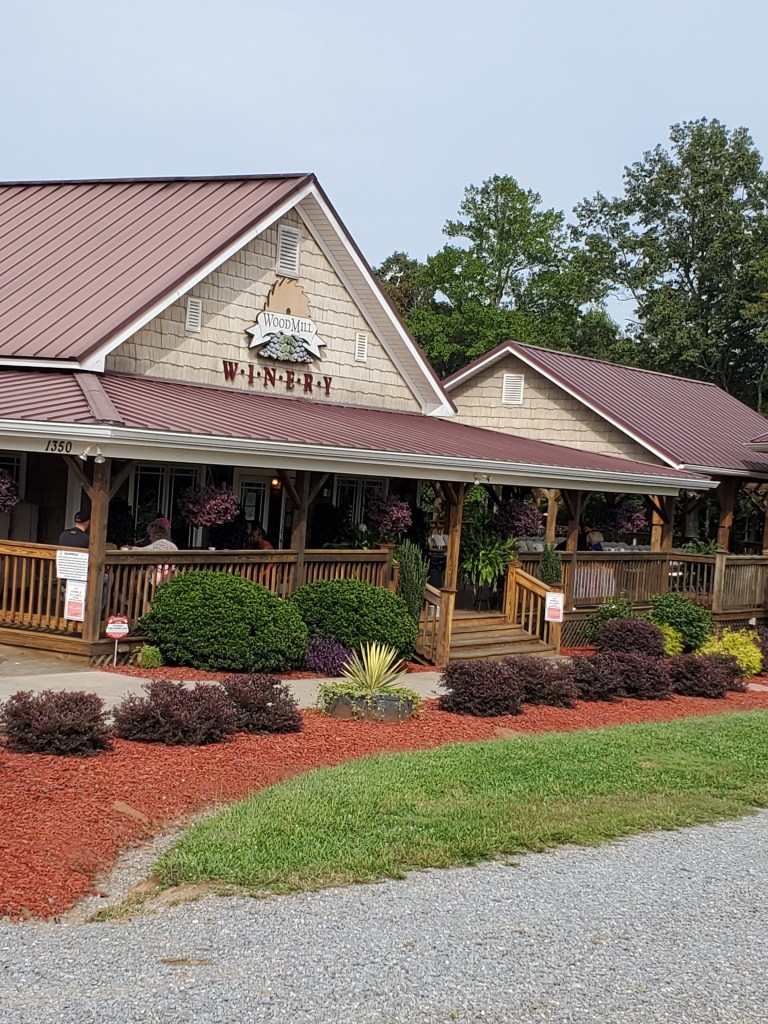
Woodmill Winery

While visiting Vale, stop by Woodmill Winery (1350 Woodmill Winery Lane) for a wine tasting and wine slushies. Relax indoors, on the wrap-around porch outside or peruse the grounds with your glass of wine. You can watch the process of muscadine wine being made from the five acres of vines to the bottling area and wine cellar in the winery’s basement.

Next stop—Surry County!

Journey through Wilson County

Wilson County is the shining epitome of small-town, southern life and days gone by. A leisurely drive throughout the county will spotlight small towns (many are railroad communities) with 1920s- and 1930s-style downtown building facades and water towers. You’ll discover this tucked-away county about halfway between New York and Florida, just east of I-95.

Wilson County and the county seat of Wilson were named for the prominent 19th century Eastern North Carolina legislator, Colonel Louis D. Wilson. It is said that he died of fever while on leave from the State senate during the Mexican–American War of 1848.

Wilson, NC

In the early 21st century, Wilson was ranked as 18th in size among North Carolina’s 500-plus municipalities. From 1990 to 2010, the city population increased by more than 40%, primarily due to construction of new subdivisions that attracted many new residents. This has been accompanied by new retail and shopping construction, primarily in the northwestern parts of the city.

Once a center of tobacco cultivation, the city of Wilson was widely known as “The World’s Greatest Tobacco Market” in the 19th century. In the 21st century, Wilson enjoys a diverse economy based on agriculture, manufacturing, commercial, and service businesses.

The history of the city of Wilson began with a community that formed around Toisnot Primitive Baptist Church, built in the early 1800s. The community was originally called Toisnot. In 1836, the Wilmington and Raleigh Railroad Co. began building a Wilmington-to-Weldon line. The railway reached the community in 1839, and by 1840 Toisnot had both north and south service, which stimulated community growth at the time.

Of fame from the county is Julius Peppers, nicknamed “The Freak Of Nature,” an American football outside linebacker/defensive end for the Carolina Panthers of the National Football League. He was born in Wilson, North Carolina, and raised in nearby Bailey, NC. He played both college football and basketball for the University of North Carolina and was recognized as a football All-American. He has also played professionally for the Carolina Panthers, Green Bay Packers, and Chicago Bears.

Stroll through the downtown streets and note the historic architecture and building murals.

Vollis Simpson Whirligig Park — Wilson, NC

Vollis Simpson Whirligig Park

In Wilson, you can’t help but marvel at the amazing Vollis Simpson Whirligig Park (301 Goldsboro St.), celebrated with the annual Whirligig Festival the first full weekend of November each year. The small city of Wilson boasts the largest collection of whirligigs anywhere in the world. And they can credit the entire collection to the crafty hands of Wilson County native Vollis Simpson (from Lucama). There is ample parking surrounding the park, which is free to peruse–and you may see local crafters exhibiting their works for sale on any given weekend. (Bring cash, as some exhibitors may not have credit card capabilities.)

In addition to the 2-acre Whirligig Park, you’ll also find more of Vollis Simpson’s whirligigs at the Wilson Rose Garden, Wilson Visitors Center, Wilson Botanical Gardens, and throughout several downtown areas as well as museums across the United States and the globe, including Raleigh, Atlanta, Baltimore, New York, and California plus Russia, London, and Canada.

Wilson Botanical Gardens — Wilson, NC

Wilson Botanical Gardens

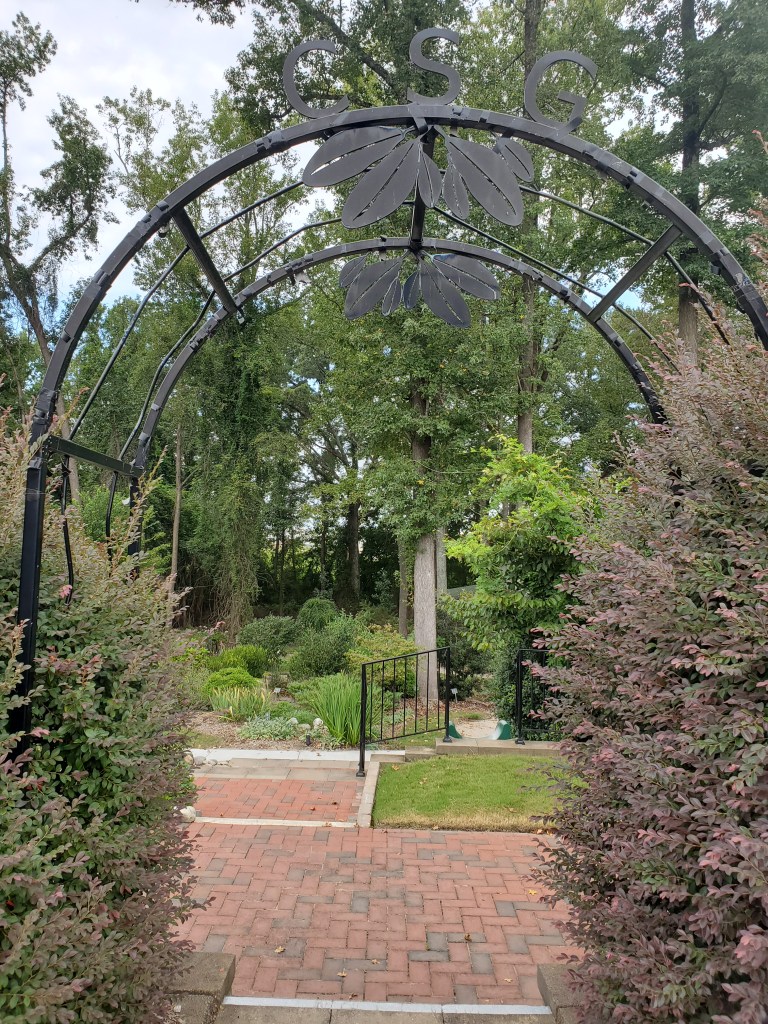
Travel down the road to the Wilson Botanical Gardens (1806 SW Goldsboro St.). Peruse through the garden’s paths and tunnels year-round to view the changing environment with each season. You’ll find culinary and medicinal herb gardens, tropical and carnivorous plants, and native and heritage plants dotted with children’s play areas, a STEM learning garden, and garden art throughout the property. Admission is free, and feel free to picnic here.

Memberships are welcome, which support the garden’s upkeep and maintenance as well as grant special access to events and plant sales throughout the year plus local nursery discounts.

Freeman Round House — Wilson, NC

Freeman Round House & African-American Museum

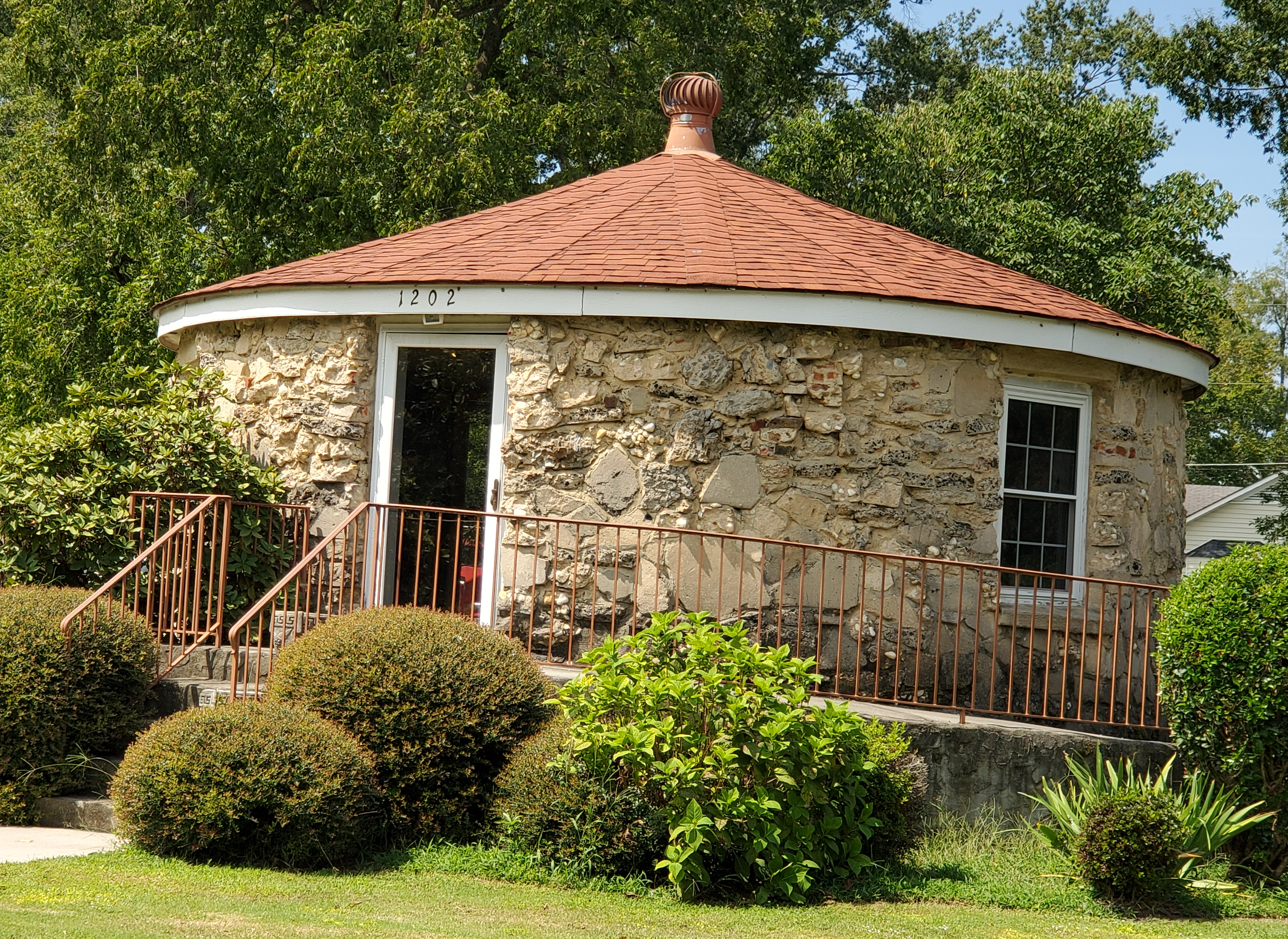
Don’t leave Wilson without touring this lovely property (1202 E. Nash Street), an amazing contribution to Wilson’s native architecture. The site was opened as a museum on September 30, 2001. The Oliver Nestus Freeman Round House is a house and museum featuring the artifacts and culture of African-American history in the Wilson area.

The house was built in 1946 by Freeman (born in 1882) using whatever he could get his hands on, including bottles and tree saplings–even string! Born the son of a former slave, he was educated at the Tuskegee Normal School in Alabama before returning to the area to help construct homes for soldiers returning from World War II.

You’ll find stone benches, bronze bear sculptures (Freeman loved his bears.), and even a dinosaur sculpture on the property as well as an on-site museum building with more artifacts and African-American history. Admission is free. Check for hours, as they are listed differently in different publications.

Wilson Rose Garden — Wilson, NC

Wilson Rose Garden

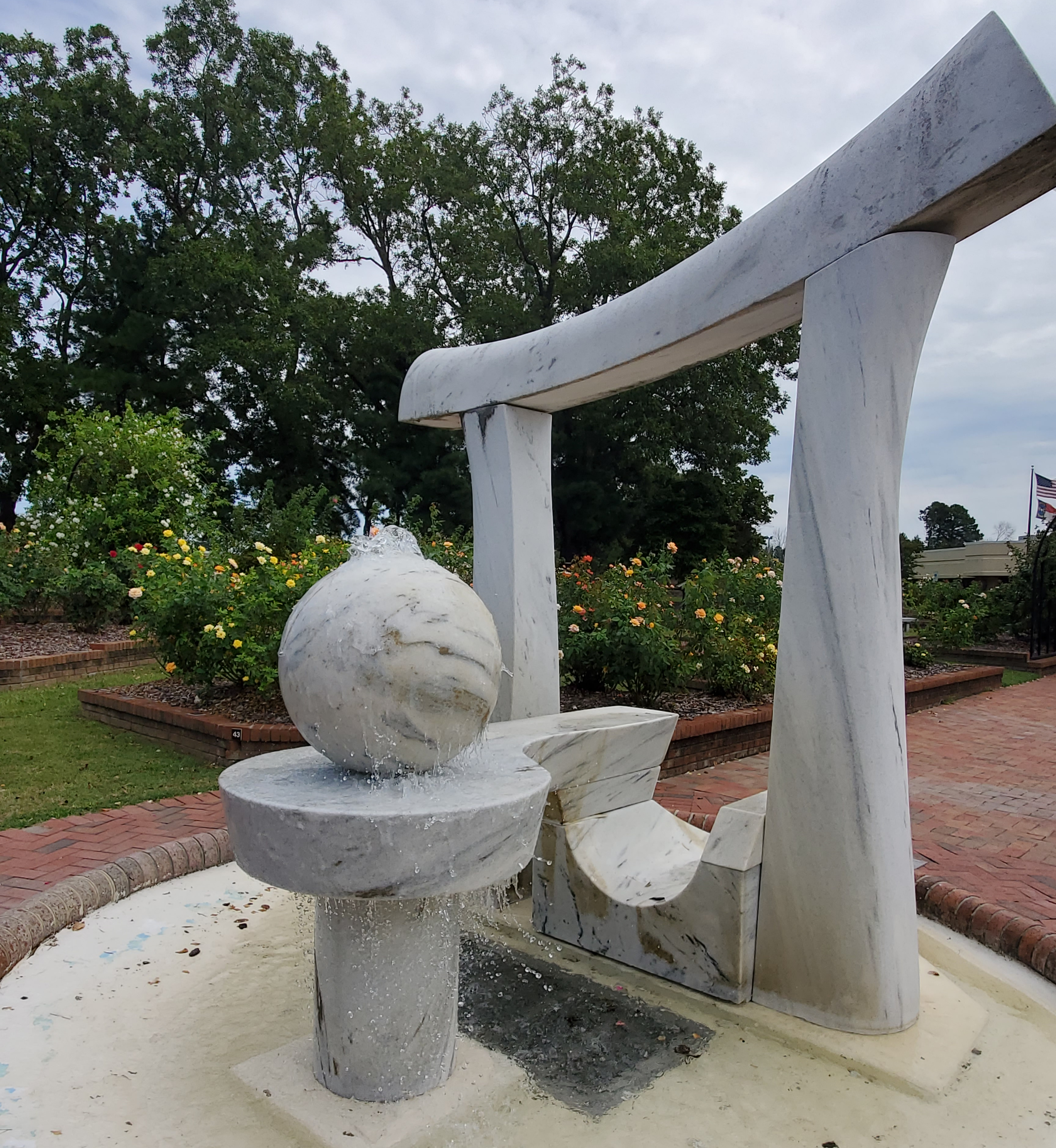
Not far from downtown Wilson, the Wilson Rose Garden (1800 Herring Ave.) offers more than 1,200 rose bushes and more than 100 varieties. New varieties are added each year. Take time to stroll through the gardens and sculptures, including another whirligig, and snap a photo of the nearby Rose Garden water tower. Plan a picnic if you like, or use the space for a wedding or reception. You can purchase an engraved brick to honor someone for a $100 contribution. Admission is free.

Other sites of interest while in Wilson, NC:

City of Wilson Fleming Stadium (seats about 4,000 fans) and NC Baseball Museum (300 Stadium St.)

Imagination Station (224 Nash St. NE, the former Federal Post Office and Courthouse building built in 1927 of limestone veneer on brick in the Beaux Art architectural style)

NC Museum of Coastal Plain (top floor of Imagination Station building)

The Kennedy Theatre at Barton College (800 Vance St. NE)

Boone’s Antiques (2014 US-301)

Parker’s Barbecue (2514 US-301) — Good old-fashioned Southern BBQ and chicken (Dine in or get in the take-out line on the back side. Call-in your order ahead of time for faster pickup.)

Rock Ridge

Boyette Brothers Sweet Potatoes Farm

Stop by this farm for a tour and a few sweet potatoes to bring home (when in season).

Lucama

This small community outside of Wilson was home to Vollis Simpson, creator of the whirligigs in Wilson’s central park. Wilson created and installed all of the whirligigs on his property. The city of Wilson eventually bought the collection from him and created the community display you see today.

By the way, the story of the naming of this community surrounds three women (Lucy, Carrie, and Mary), honored by Josephus Daniels, who named the town in 1883 after the three women, who may have been his romantic interests or simply friends.

Kenly

Tobacco Farm Life Museum — Wilson, NC

Tobacco Farm Life Museum

In this small town bordering Wilson and Johnston Counties, you’ll find the quaint Tobacco Farm Life Museum (709 N. Church St.) complete with a guided tour and time-honored gift shop.

Next tour… Lincoln County!

Journey through Person County

It’s Better in Person! At least, that’s the name of the website. And, perhaps, it is better in Person County once you discover the hidden treasures and gems here, including the Person County Quilt Trail that began in 2015 and consists of 29 barn quilts so far.

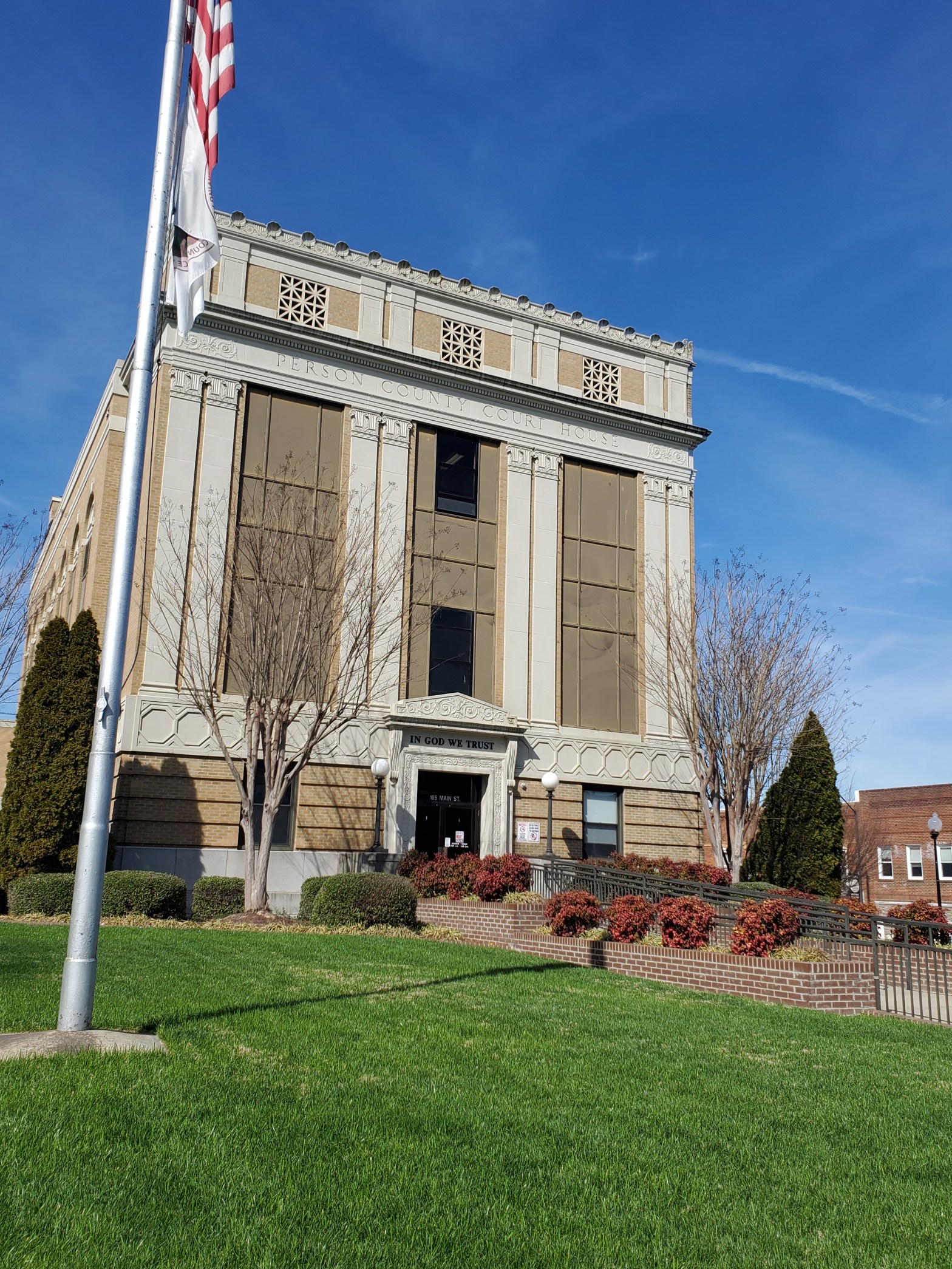
On the west side of Hyco Lake, you’ll find Person County, which was once a part of four counties. The county was named for Brigadier General Thomas Person, who was a Revolutionary War patriot that made significant contributions to the area. Person county is said to have been inhabited by Native Americans for as many as 12,000 years. (That’s a staggering number.) Settlement began in the mid-17th to 19th centuries by the English, French, Scots, Scots-Irish, German, and more. Lieutenant Colonel Stephen Moore, another Revolutionary War hero, purchased property in the south of the county in 1778 and called his plantation Mt. Tirzah. He had proclaimed the county a “Lost Eden.” During the Civil War, Person County supplied between 800 and 1,000 soldiers to the Confederate Army. A granite monument at the Courthouse in Roxboro honors E. Fletcher Satterfield, who carried the Confederate flag at Gettysburg.

The northern part of the county is mostly rural and full of beautiful scenery and bucolic pastures. Be sure to take a drive through and enjoy. You’ll also discover many of the stops on the Person County Heritage Trail, which was established in 2015 to recognize and commemorate the many farms, churches, homes, businesses, and other structures which date back 100+ years and have played a role in the areas heritage.

Hesters Store is an unincorporated part of the county named for a country story that stood near the intersection of Gordonton Road, Hesters Store Road, and Wilson Road for more than 100 years. The site is now the Hesters Store station of the Hurdle Mills Volunteer Fire Department.

Castle Mont Rouge

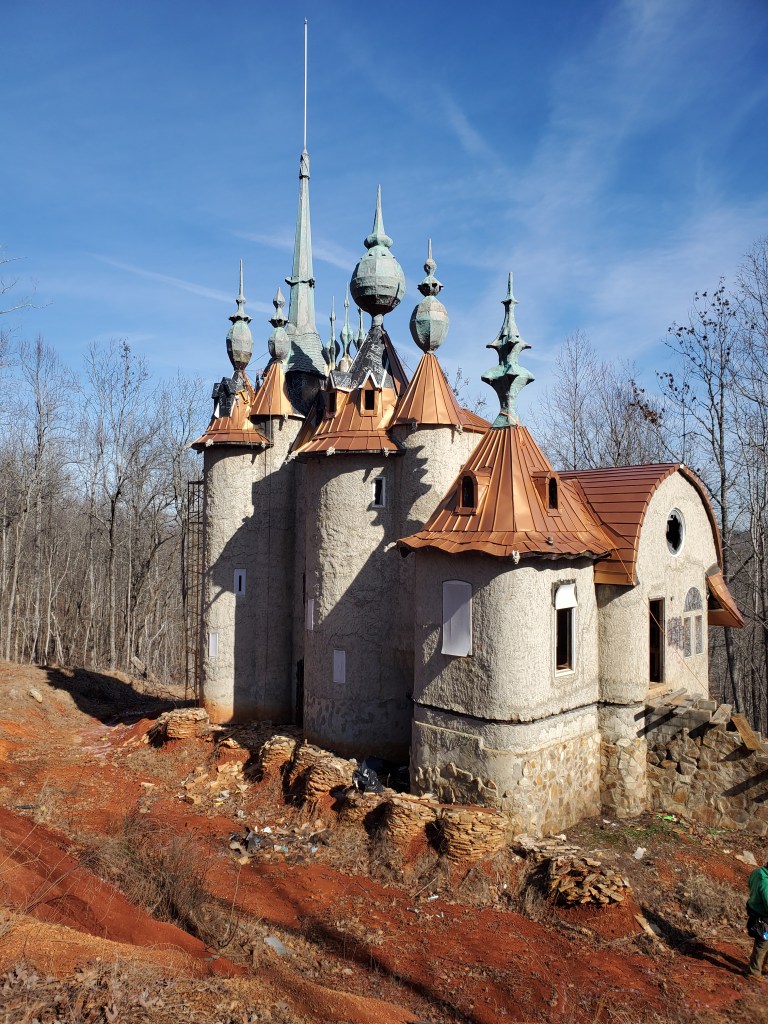
We started the day visiting an unusual site, not only for Person County but for North Carolina itself–an actual, bona fide castle! Built by sculptor and local art teacher Robert Mihaly on Red Mountain on the border of Person and Durham counties (not far from the Orange County Speedway), this castle is one man’s lifelong dream. He had built it years ago (construction started in 2005) and even lived in it for a few years, then abandoned it for 14 years. Mihaly is now in the process of restoring the castle, which has suffered from its years of abandonment and vandals. Mihlay plans to turn into a wedding venue as well as a bed and breakfast establishment. He has purchased the lot across from the castle to use for parking.

Be warned, in Mihaly’s own words, the drive up the mountain road is “not for the faint of heart.” In addition, it is private property. So, permission is needed before visiting. I was able to get permission from Mihaly in advance, and I had a great meeting with him while there on the property. Our visit was in February, so I am sure the property looks much different in summer. (P.S. Neighbors are very wary of trespassers and vandals, so I don’t suggest heading there on your own.)

Roxboro

From the castle, it was just a short drive to Roxboro, the county seat and named for the Scottish town of Roxburgh (yet pronounced the same). Interestingly, prior to adopting the name, this community was known as “Moccasin Gap”. Roxboro was incorporated on January 9, 1855 and is the only municipality in the county.

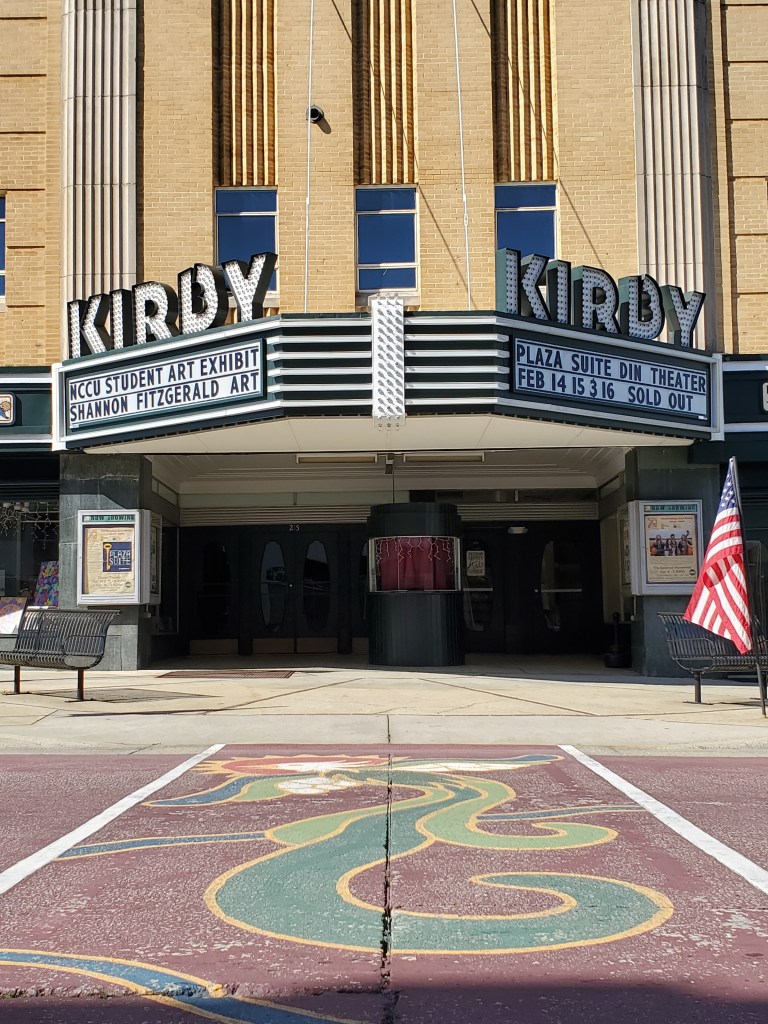
We visited a few small shops downtown at The Shops at Hall’s Way (44 West Gordon St.), then enjoyed an impromptu private tour of The Kirby Civic Auditorium/Gallery. The Kirby Cultural Arts Complex (213 North Main St.) houses a classic theater/performing arts center, two art galleries with changing exhibits, studios, and event spaces.

In Uptown Roxboro, you will also find shops, restaurants, a quaint and historic downtown with beautiful architecture (yes, look up), and the Person County Museum of History (309 North Main St.), featuring six buildings. There you will find historic artifacts surrounding the railroad’s introduction, baseball, dolls, china, Native Americans, and the local military history. The museum was scheduled to be open on the day of our visit, but was closed for an unknown reason. So, we were only able to walk around outside and peek in the windows. I will try to stop by another time when passing through. Admission is free, and donations are accepted.

Sunset Ridge Buffalo Farm

Just outside or Roxboro proper, you’ll discover Sunset Ridge Buffalo Farm (465 Yarbrough Rd., Roxboro) among the rolling hills. The working farm is run by Jake and Sandy Pleasant, and they are as nice as their name. The 260 acres of former tobacco land has been in Jake’s mother’s family since 1797! And originally, it was 640 acres! All of the land is still in the family, except for 5 acres. Jake and Sandy together currently raise about 75 buffalo on the farm. They’ve had as many as 130. In 1728, buffalo were actually living around Hyco Creek, so they were native to the area. Jake started the farm with the purchase of 8 calves in 2001.

Jake drove us throughout the property and we were able to catch one heard of buffalo–and buy some bison meat while we were there! Be sure to ask about the difference between buffalo and bison.

Aside from raising and caring for buffalo, they also rent out their facility for weddings, parties, and events for up to 200 people with a 33-foot pond-side gazebo and 900-square-foot adjacent deck, plus large tents, modern bathrooms, and outdoor kitchen, and more. And they are open for tours ($9) and meat sales by appointment, or you can catch them at the local farmer’s market on Saturday mornings selling their high-quality, nutritional bison meat.

Rock of Ages Winery & Vineyard

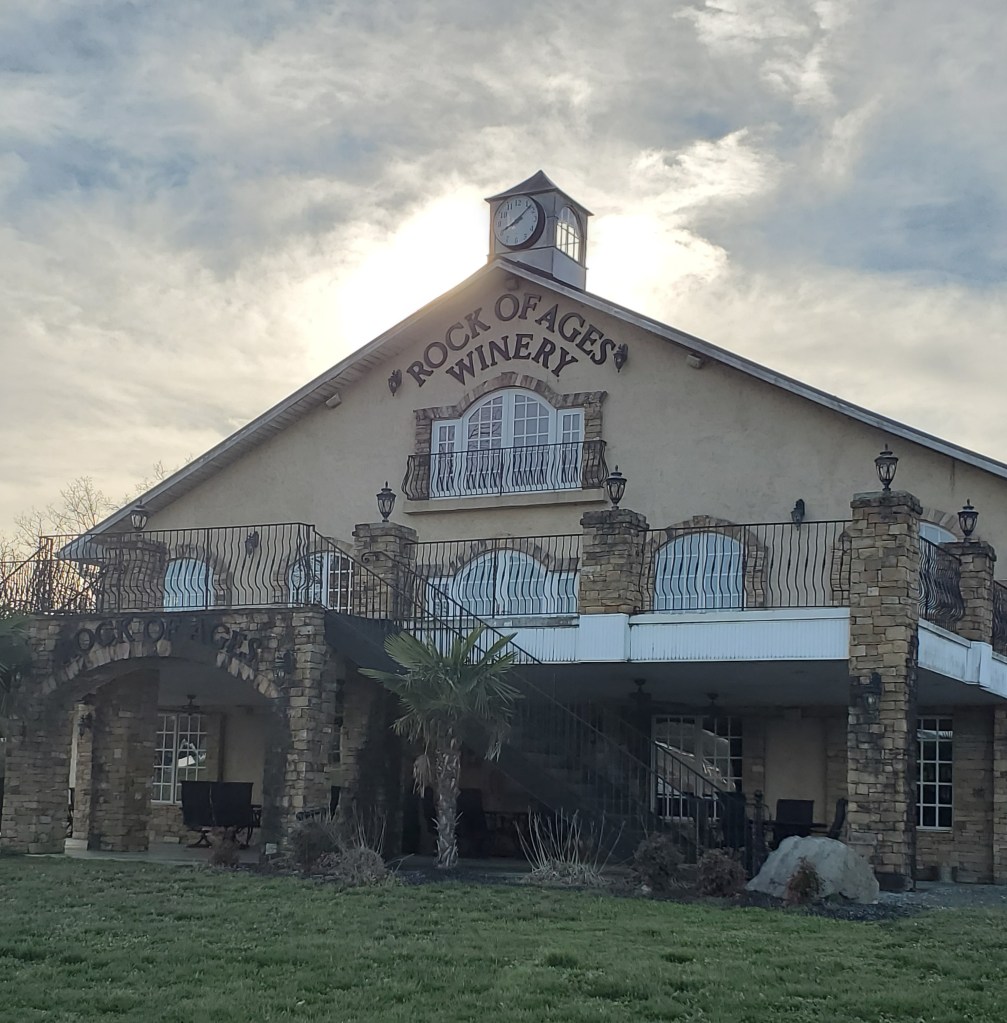
The last stop of the day was at the Rock of Ages Winery & Vineyard (1890 Charlie Long Rd.) in the Hurdle Mills community. This winery was also built on a former tobacco farm with Italian/ English/old western influences overlooking 26 acres of grapes. They’ve won more than 40 awards and also host weddings and events at their venue. Stop in for a tasting and peruse through their gift shop. (You’ll also find Tunnel Creek Vineyards in Roxboro).

Coming in March… Wilson County!

Journey through Caswell County

On the west side of Hyco Lake, you’ll find Caswell County, an area dotted with tobacco farms and small towns that boast the joys of rural living in North Carolina at its best. Caswell County was formed from a northern portion of Orange County in 1777 and was named for Richard Caswell, who was a governor of North Carolina from 1776 to 1780. The original county seat sat in Leasburg, but was later moved to more centrally located Yanceyville after a portion of the original eastern side of the county became Person County. (See next month’s blog.) The region’s original wealth stemmed from the tobacco industry.

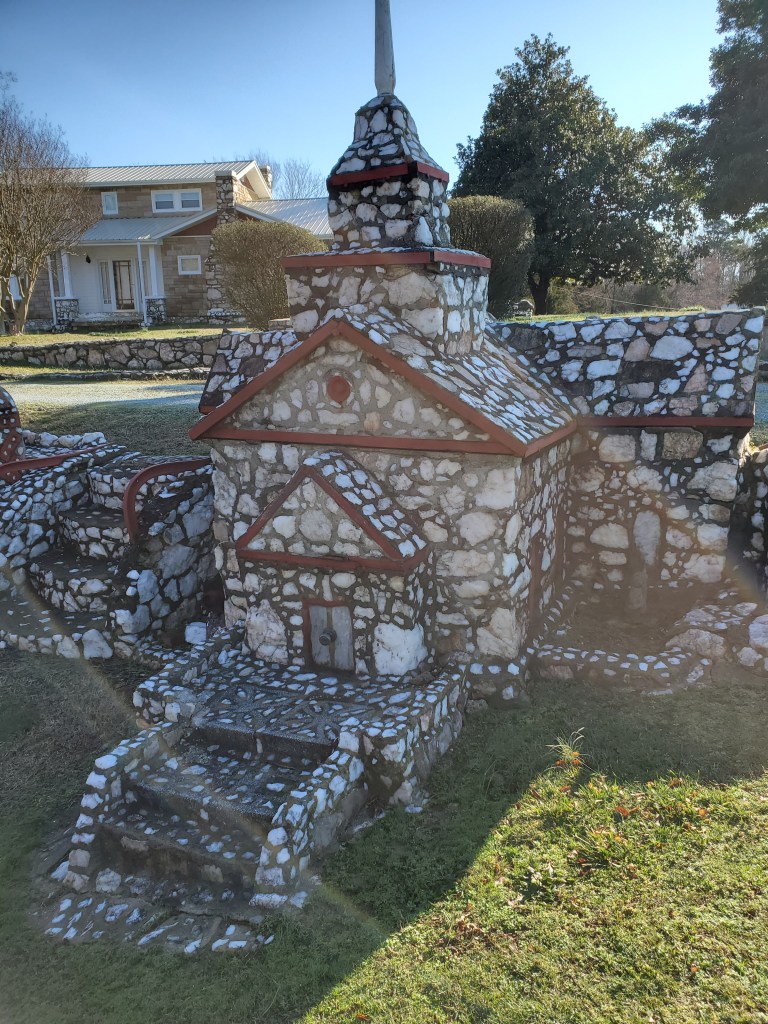
Shangri-La Stone Village

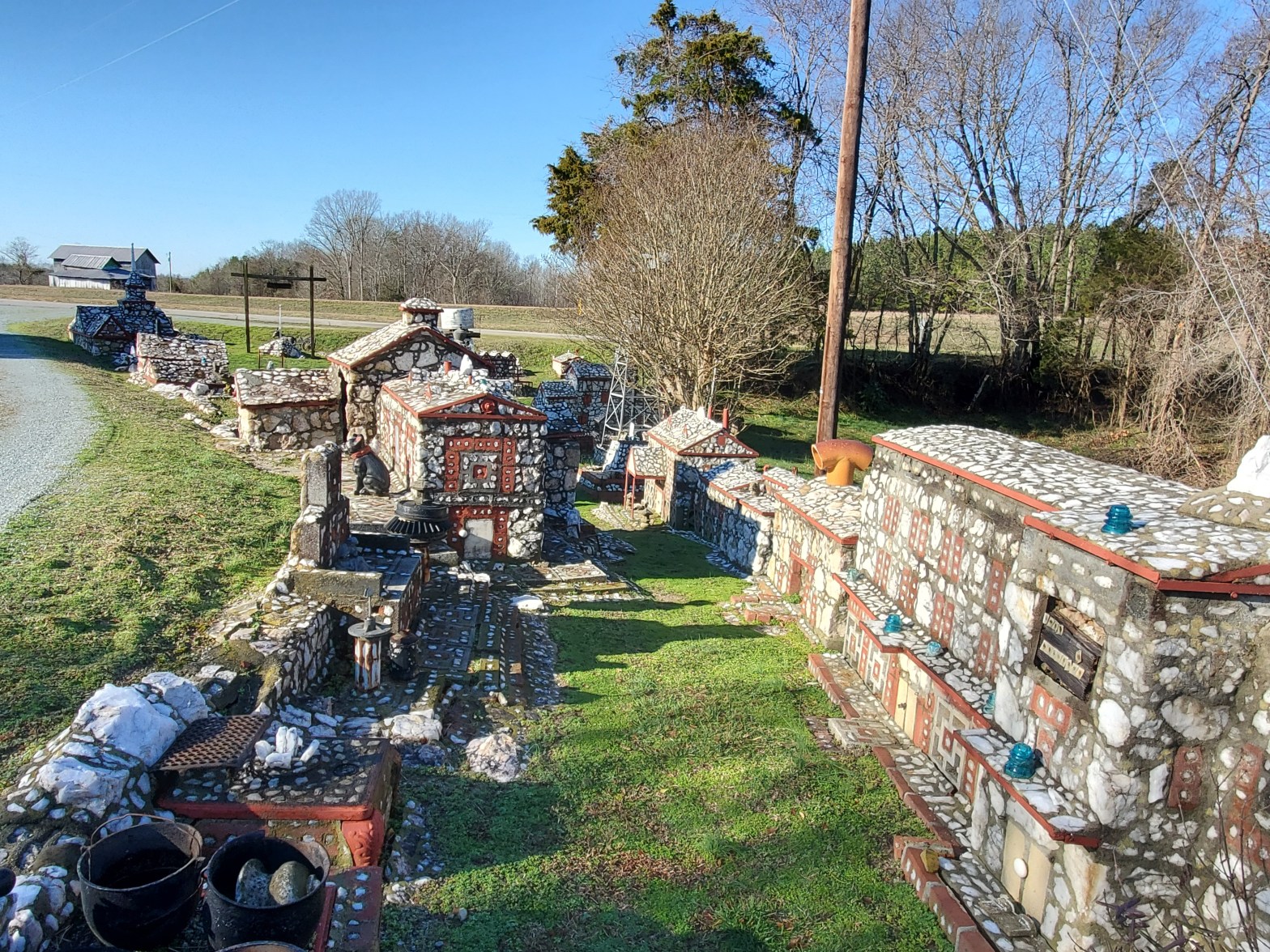
My first stop was a place I’ve been excited to see since I first heard about it–the Shangri-La Stone Village in Prospect Hill, NC. This little gnome-sized village was built by retired tobacco farmer Henry Warren in the last years off his life, from 1968-1977. In all, he built 27 unique stone structures in his side yard, and it has been a visitor attraction since. They’ll often get several visitors per day!

Peruse through a lovely display of village building made with brick and cement plus rock, quartz, and stone and he blasted from his own property: a bank, library, gas station, church, gym, theater, hotel, jail, silo, windmill, town hall, a dog house, and more. He’d work from dawn to dusk incorporating more than 11,000 arrowheads into walkways. Ironically, Henry Warren died while working on the Shangri-La’s hospital. Look close and you’ll see animal figurines, doorknobs, and more unusual pieces worked into the display.

It’s wonderful to see this creation living on after Mr. Warren and the joy it brings to others. You’ll find Shangri-La right on Highway 86 going through Prospect Hill beside the fire station. Be sure to sign the guest book while you’re there!

P.S. Not far down the road, you’ll find Hillside Sales. You can’t miss it with all of the colorful metal sculpture outside. Be sure to stop in for a look, shop among the antiques, and chat with the owner (15080 NC Highway 86 South, Prospect Hill), open Tuesday-Saturday, 9am-6pm.

Yanceyville

Take a drive through Hightowers, Frogsboro, and Leasburg in your way to Yanceyville, the county seat for Caswell County. The name Yanceyville perhaps came from one of the Yancey brothers, James or Bartlett, or the entire Yancey family.

Step back in time in Yanceyville’s town center. There is much to appreciate here like the gorgeous antebellum courthouse, old-timey drug store, Richmond-Miles History Museum (not open on weekends), and the historic town square. Walk among the old buildings, then head out behind the courthouse for a peak at the Poteat Schoolhouse, the old Caswell County Jail, and Arboretum. Stop by in May for the Heritage Festival, based on 1800s living: weaving, quilting, gunsmiths, blacksmiths, hoop rolling, horseshoes, hay bale tossing, and even tobacco spitting.

Semora

Not much further, in the northwestern corner of Caswell County, is the town of Semora–known worldwide for Jibtopia Wake Park (15748 NC 119) for exceptional wakeboard riding and water skiing lessons. Semora is also home to one of the oldest churches in North Carolina: the Red House Presbyterian Church, listed on the National Register of Historic Places (NC 119 N). The current building was constructed in 1913, but the original church dates back to 1755!

Milton

Another highlight of the day was a walk through historic Milton, right at the Virginia border. The missed railroad line has kept this town a rural treasure, as it was named for its beginnings as a mill town. You can park beside Aunt Millie’s Pizza or at the Milton Tire and Grill, grab some lunch and spend a few hours imagining yourself in an earlier time period as you peruse through the quaint shops and historic buildings and homes in the Broad Street area: Milton General Store, Union Tavern, and more. In its heyday, Milton was supported by four large tobacco houses, four newspapers, cabinet makers, silversmiths, blacksmiths, saddlers, coachmakers, tinsmiths, a militia, cotton mills, waterwheels, steam engines, grist mills, a hotel, taverns, and more–all in the midst of tree-lined streets and dozens of wagons traveling through each day.

Thomas Day, a “free person of color” at the time (1801-1861), was well-respected in the area and made a name for himself as a furniture artisan and cabinet maker. The NC Museum of History owns the largest collection of Thomas Day furniture. Thomas Day built the walnut pews in the Milton Presbyterian Church, which are still used today.

You’ll notice the steps leading up to the local shops–the old stagecoach stepping stones–are a bit higher than you may be used to. Stop by the Museum of Milton, housed in the 1860 Old Milton State Bank and residence, And don’t miss the Milton mural, which recalls the town’s rich history, its 19th century commercial district, and prominence as a river community bordered on two sides by the Dan River. Be sure to take a peak into the old bank vault for a surprise. And arrange a tour in advance to include the old Thomas Day House across the street.

Then take a drive through the rest of the county for more discovery. Providence, NC (also known as Hell’s Half Acre) hosts a Spring Fling each year in late April or early May. Pass through Purley, then Casville (perhaps best know for he Paschal family’s Christmas light show each year with 1,040,000 lights–look for the Christmas lights sign). The couple appreciates donations to help pay for their $10,000 electric bill in December. You can also pass through Locust Hill, Stamp’s Quarter, and Rose Hill (Bedford Brown House, a historic plantation).

Next month—Person County, NC!

Journey through Gaston County

Gaston County is a wonderful area to visit during the holiday season. I chose this county to visit during December specifically to see McAdensville (Christmas Town USA) and the Daniel Stowe Botanical Gardens (DSBG). More on both of these attractions later.

Gaston County is a community of rolling hills combined with quaint, walkable downtown areas. The charming small-town vibe is quite attractive. From Belmont to Cherryville and Gaston to Brevard, there is something for everyone here–all wrapped up in a lovely NC ribbon. In its heyday, Gaston County contained the largest concentration of combed yarn mills in the U.S. And the recipe for the South’s Sun Drop soda was first scribbled on a piece of paper by a beverage salesman who was traveling through Gaston County in 1928. And the rest is history!

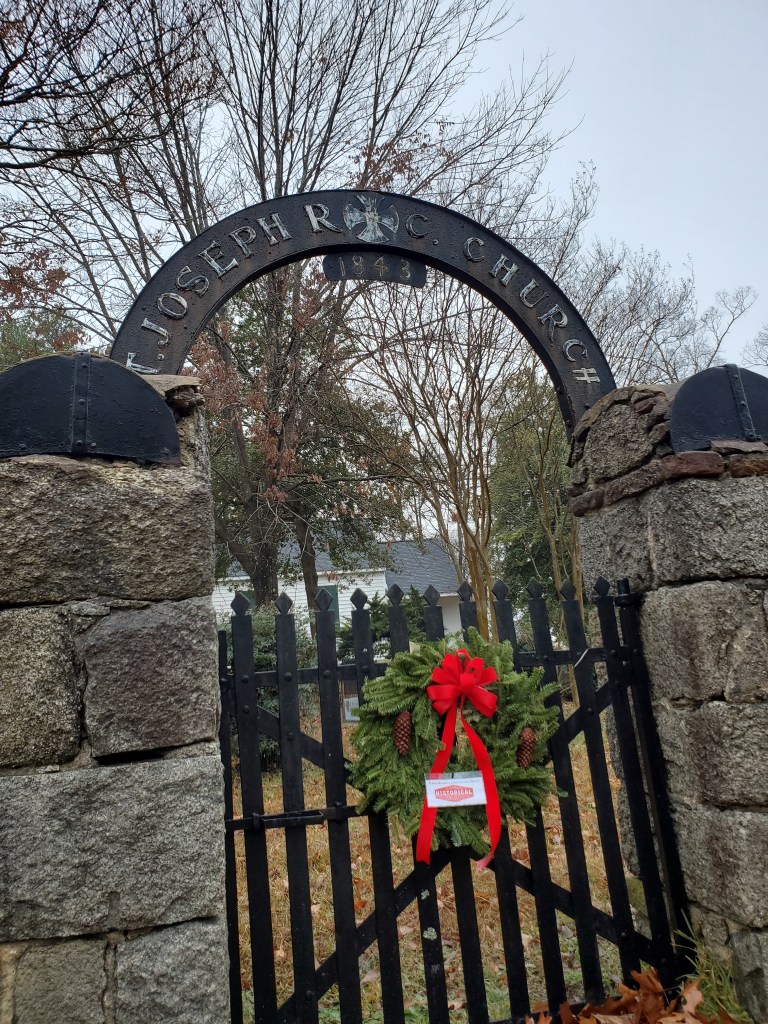
St. Joseph’s Chapel

Stop one was St. Joseph’s Chapel in Mountain Island, NC, the oldest Catholic chapel still standing in NC. You’ll find it off of NC-273 near Main St. on your way to Mt. Holly. It’s the fourth Catholic Church built in NC, the first west of Raleigh, and the first in today’s Charlotte diocese. This church was originally built to serve the area’s Irish miners, and underwent a long period of neglect until restoration efforts began in the mid-20th century.

I can imagine families gathering hear for both happy, small community celebrations and mournful gatherings in the adjacent cemetery. Take a few moments to notice the beautiful architecture as well as the wrought iron cemetery gates. I found it to be serenely peaceful and quiet.

Gastonia, NC

This county seat of Gaston County has two international sister cities: Gotha, Thuringia, Germany and Santiago de Surco, Lima, Peru. Gastonia, the second largest satellite city of Charlotte (behind Concord) was named for NC Supreme Court member William Gaston. The historic downtown area boasts a small urban park, various shops, many homes and buildings listed on the National Register of Historic Places, and even some public art displays.

Perhaps the largest historical happening of the area surrounded the Loray Mill strike of 1929, which caused a big stir but collapsed after the death of the town’s police chief and a murderer trial of several of its organizers. Although the strike never gained much ground in achieving improved working conditions and wages, it was the setting for several novels in the 1930s.

Belmont Abbey

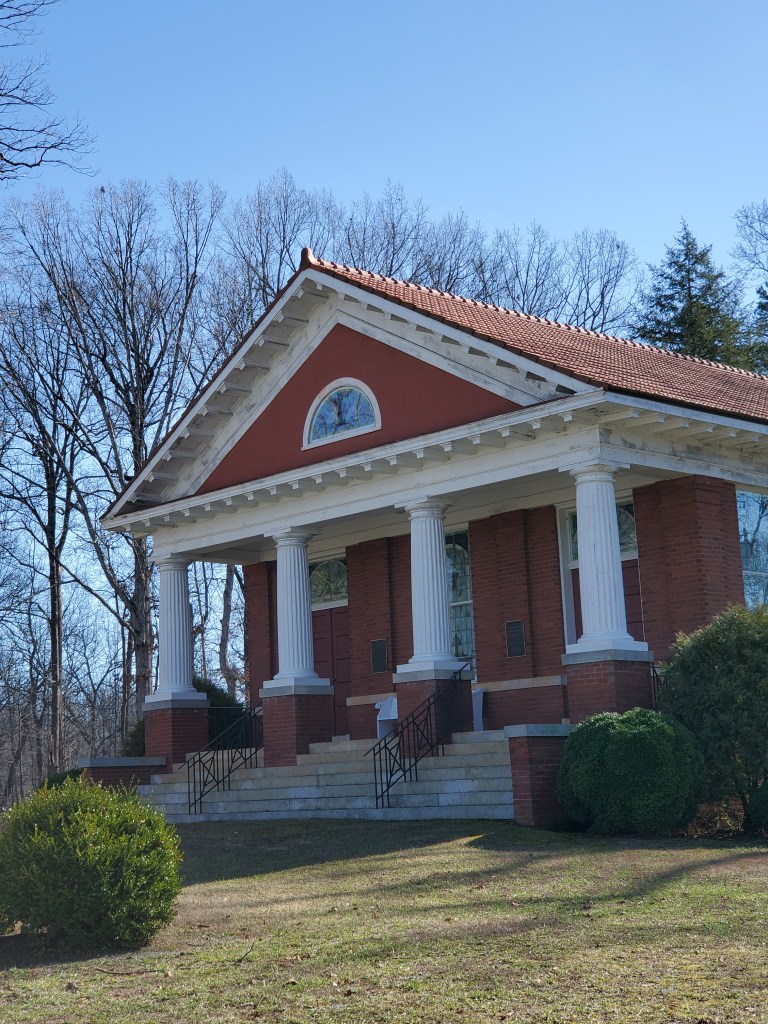
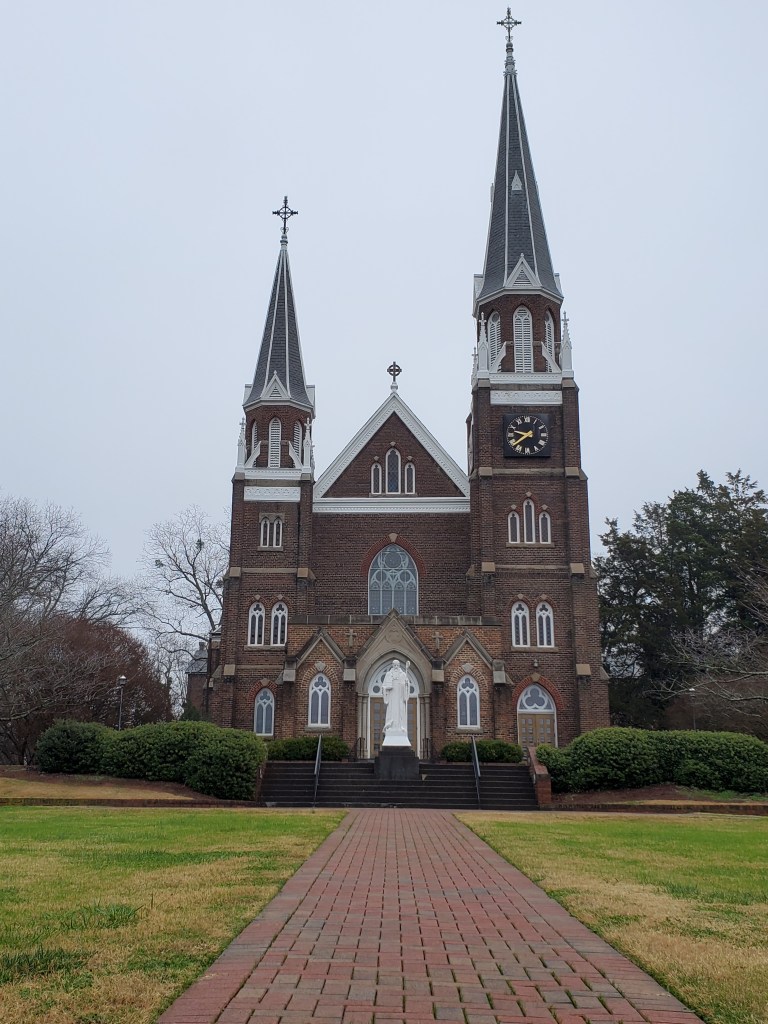
Just outside of Mount Holly (home to a lantern parade every August), in Belmont, you’ll find the historic Belmont Abbey (100 Belmont-Mt. Holly Rd. in Belmont). If you’re coming by highway, it is directly in front of you at exit 26. Completed in 1893, it was once the only Abbey Cathedral in the nation. The cathedral is located on the campus of Belmont Abbey College, a liberal arts college. Take a drive around campus (It is a horseshoe-like drive, so you’ll need to turn around and go back.) You can schedule a tour of the basilica or just quietly stop in to enjoy the beautiful painted-glass windows, which won four gold medals at the 1892 World’s Fair, as well as a baptismal font of historical significance.

Schiele Museum

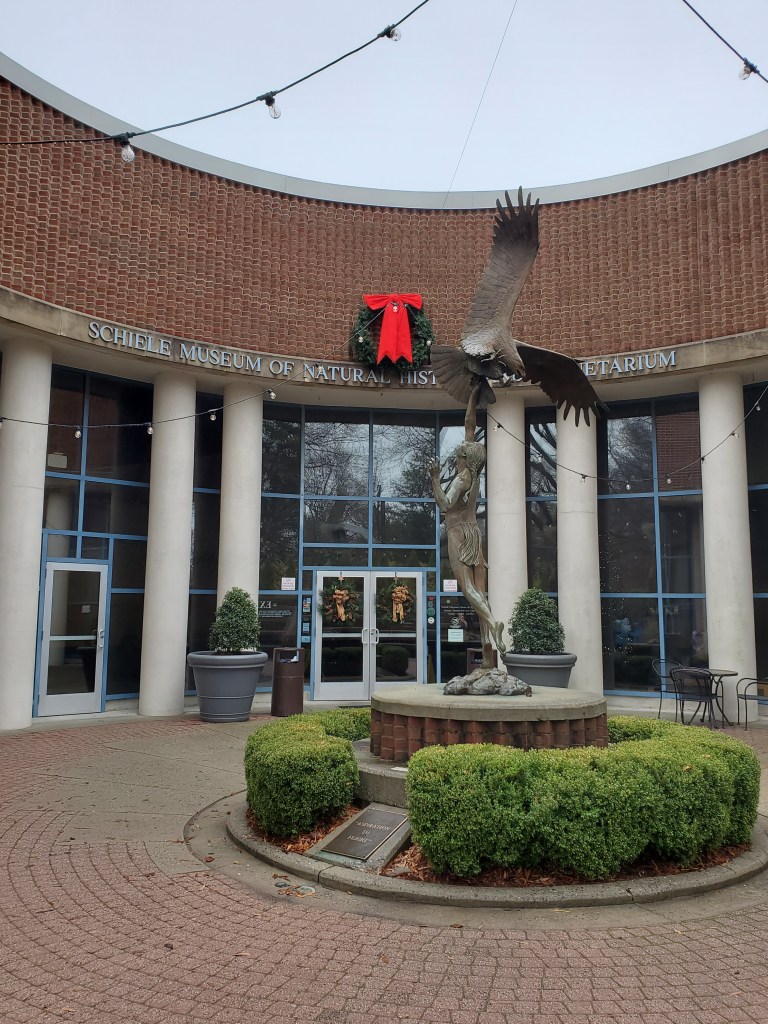
While in Gastonia, peruse through the Schiele Museum (1500 E. Garrison Blvd), an affiliate of the Smithsonian Institution which houses dinosaur, creepy nature, stone, and animal exhibits (the largest collection of mounted land mammals in the Southeast donated by a retired Boy Scout and his wife) as well as a children’s pirate play area. Venture across the museum grounds for a nature trail, Catawba Indian Village, Stone Age Heritage Site, gazebo, grist mill, pond, farm, and more. The museum hosts planetarium exhibits, laser music shows, and many special events throughout the year. I spent a few minutes talking to a few Girl Scout leaders who had just finished an overnight Space Science-themed overnight event for younger scouts. They look like they had had a blast!

While in Gastonia–Bee City, USA– you can also visit the American Military Museum (109 West Second Ave.) and the Alfred C. Kessell History Center (300 South Firestone St.). The history center is housed in the renovated Loray Mill, which now has touchscreen monitors with online, interactive displays and artifacts of the daily life of mill workers of the time. Displays tell the stories of the infamous 1929 and 1934 strikes until the Firestone Tire and Rubber Company later ran the mill for more than 60 years.

Dallas, NC

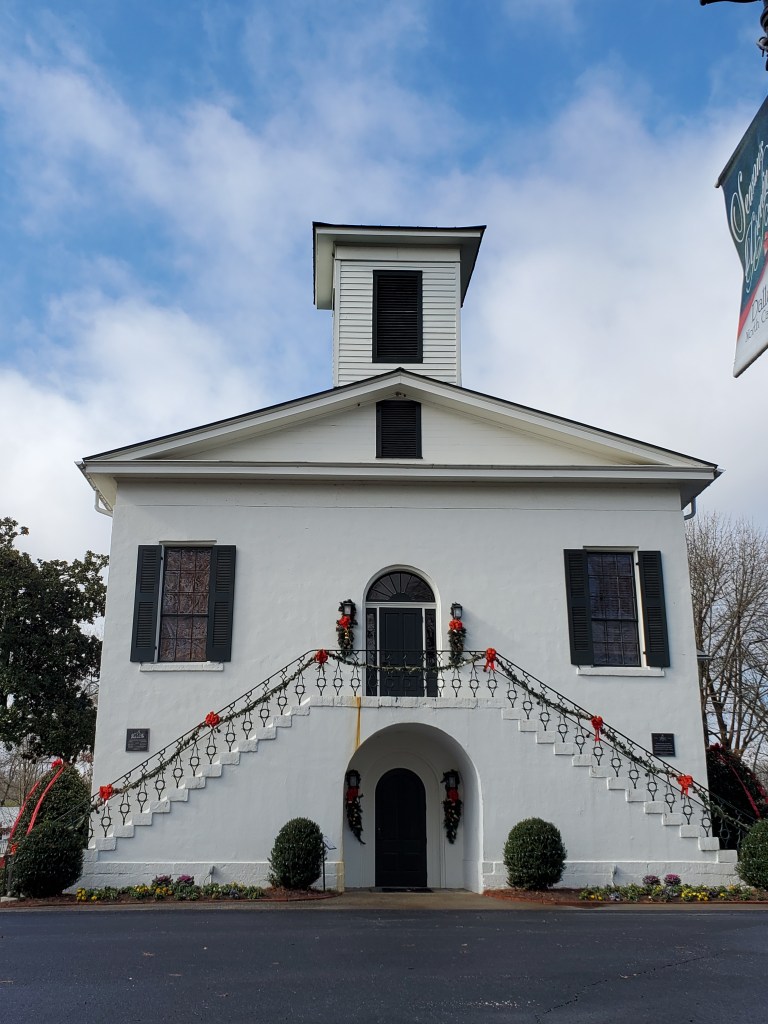
Tucked in just north of Gastonia is Dallas, a quiet suburb of Charlotte. Named for George M. Dallas, Vice President of the U.S. under James k. Polk. This adorable little town is the oldest incorporated town in Gaston County (since 1863). It was also the original county seat for Gaston County from 1846-1911. The old Gaston County Courthouse was renovated in 1868 after a fire had damaged the building. The courthouse still stands on the main square of town and was decorated quite strikingly for the holidays. Dallas had an opportunity to become a larger metro area when plans were proposed for a rail line and bridges over several area waterways; however, the town’s residents declined for fear they would be awakened during the night and their livestock would be frightened.

In Dallas, you will find the Gaston County Museum (131 West Main St.), located in the former Hoffman Hotel, which was constructed in 1852 in a simple Greek Revival style. When you step through the doors, notice the amazingly intricate front door assembly–surely original to the structure. The hotel served travelers passing through. You’ll find authentically furnished period rooms, a parlor, changing art exhibits on the third floor, and a gift shop downstairs with many well-priced treasures. (I did some Christmas shopping here.) You’ll also see remnants of the county’s prolific combed yarn mills and photos taken during Gastonia’s mill strikes. The old courthouse is right across the street alongside a newer town gazebo.

Stanley, NC

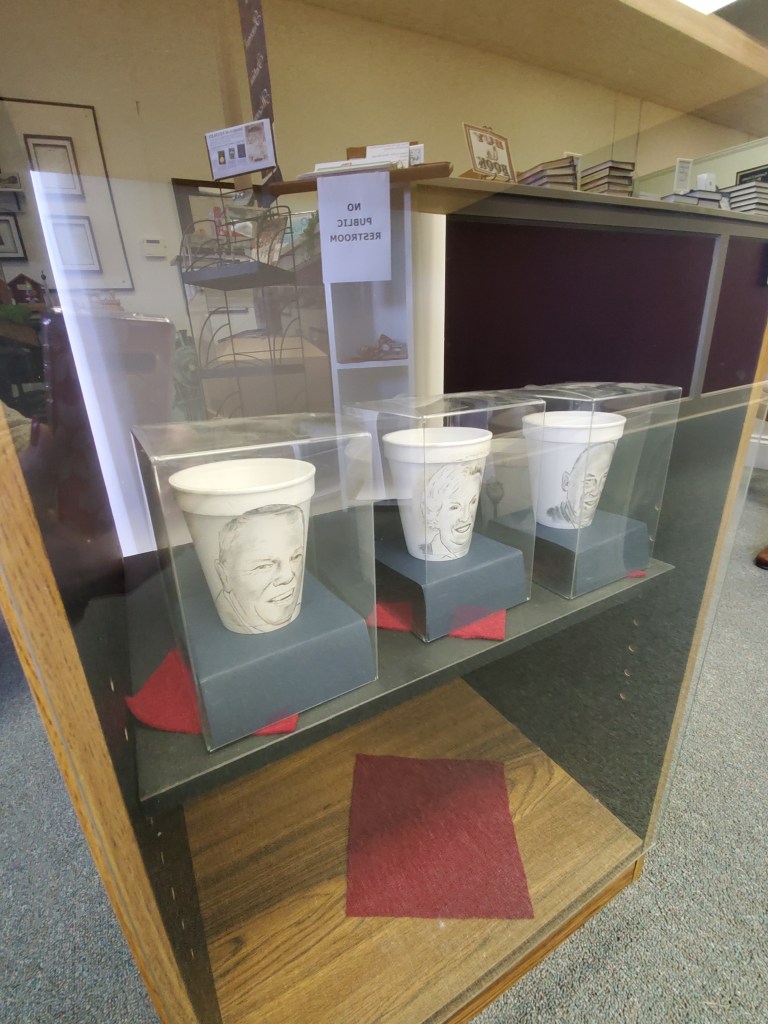
Just a hop away, in Stanley, is the Brevard Station Museum (opened in 1991). The town was originally called Stanley for a Mr. Stanley who had panned for gold in the area long before the 1849 Gold Rush. The town was later changed to Brevard, and then changed back to Stanley. The area is also well-known for its discovery of the giant-leaf magnolia as well as the longest-serving police chief in America, congratulated via letter by then President Ronald Reagan. Take a walk through the small museum, including vintage clothing, sports and military memorabilia, local textile industry and railroad exhibits, as well as exhibits from the area’s modern claim to fame–The Cup Guy, who draws intricate pencil drawings on discarded Styrofoam cups. You’ll also find an area for local to research their genealogy, including reference books of vital records and family histories.

Cherryville, NC

During the last half of the 18th century, German, Dutch, and Scots-Irish families from Pennsylvania migrated south and settled in what became Cherryville, NC. In 1862, the Wilmington, Charlotte, and Rutherford Railroad (later Carolina Central Railroad) extended westward, terminating in Cherryville (due to construction halting because of the Civil War). After the war, construction began again, and the railroad extended beyond Cherryville, which became a water and coal stop. A local resident planted cherry trees along the railroad, and train engineers began calling it Cherryville, and the name was officially adopted in 1881.

By the early 1900s, the town was a bustling industrial community of 1,000 people and the town was home to 13 mills–all of which eventually closed, leaving the town without an industry to feed its people. In 1932, the company that eventually became Carolina Freight Carriers took up shop in Cherryville with its trucking company hauling fruit produce from Florida to Cherryville.

On July 13, 1966, Trains #45 and #46 hit head-on on the southeast side of town, killing one and injuring three. Several rail cars were destroyed and scrapped on site. While in Cherryville, take a walk through the quiet streets and stop in the local shops and museums.

At the Cherryville Historical Museum, you can follow the history of the town from the early 1800s to today. The painting of a bull was once the exterior of a building until the museum building was constructed. The bull was covered in plaster for 80 years, and has since been uncovered. The town and historical museum are seeking funds now to fully restore the painting. Check out our Instagram page for an old photo of the bull in its original form as well as how it appears today.

Then experience the early days of trucking in Cherryville as it comes alive through exhibits at the C. Grier Beam Truck Museum, housed at the old Beam’s Shell Service Station and Office (listed on the National Register of Historic Places in 1997). The museum is run by a husband-and-wife team, both extremely knowledgeable about the industry and its history in the area. You’ll find a large variety of vintage, restored truck packed into the 7,500-square-foot museum. Don’t forget to stop by the Cherryville Historic Depot (105 Depot St.), where you can watch the model trains or bring your own. Then stop by the outdoor Cherryville Heritage Park located in the downtown area. The park includes 19th-century buildings that illustrate the developments of Cherryville, including the first City Hall, a school, smokehouse, liquor bonded warehouse, and a jail.

In the summer and fall, be sure to stop by Bush-n-Vine Farm, popular for their sunflower fields.

Belmont, NC

Back in Belmont, I stopped at the Belmont Historical Society (40 Catawba St.) to see their collection of historical exhibits. You’ll find artifacts surrounding the Indians who traveled through here as well as the textile industry, which was important for the area, and a sports hall of fame, 1920s restored mill house and a separate kitchen building.

Stop by the many quaint and kitchy shops in Belmont, including Gig’s Boutique, Stowe Mercantile, and the Cotton Candy Factory with all sorts of gourmet cotton candy flavors and candies. Then check out Stowe Park in downtown, home to numerous lighted trees during the holidays–Festival of Trees.

Carolina Speedway

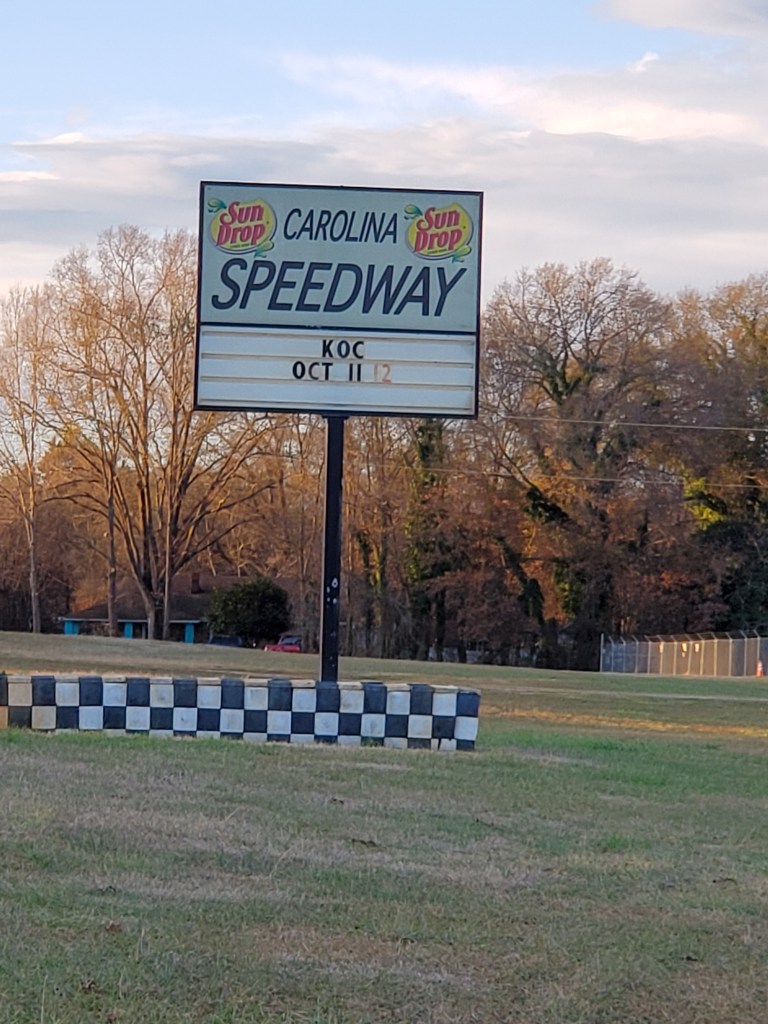
Before heading to the evening holiday light shows, I made one quick stop at Carolina Speedway (6335 Union Rd). Of course, there are no races this time of year, but head by here in the summer and you’re sure to catch the sounds and smells of good ol’ North Carolina dirt track racing at its best on Friday nights. The 4/10-mile track hosts a variety of dirt track cars throughout the season.

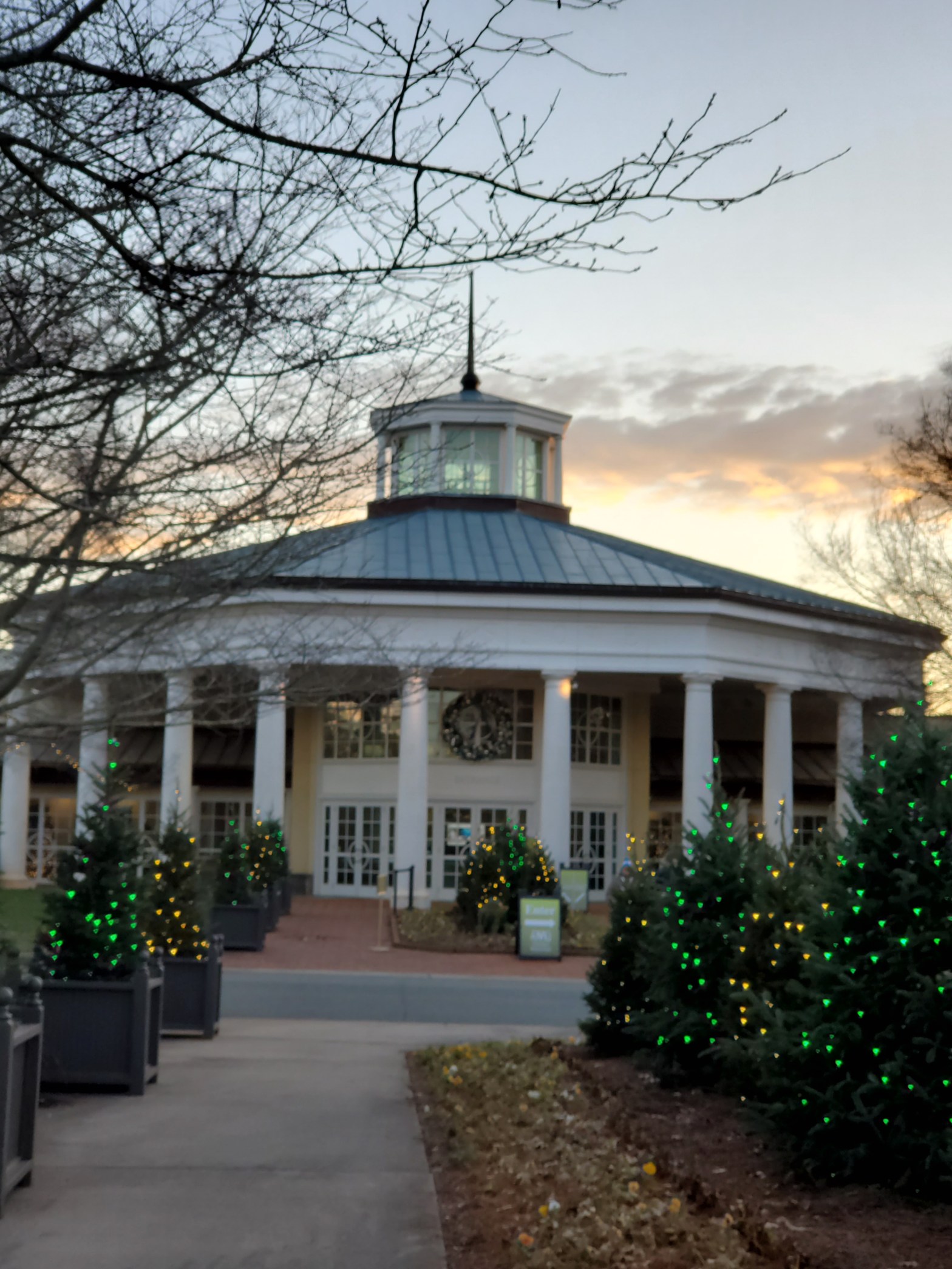
Daniel Stowe Botanical Gardens

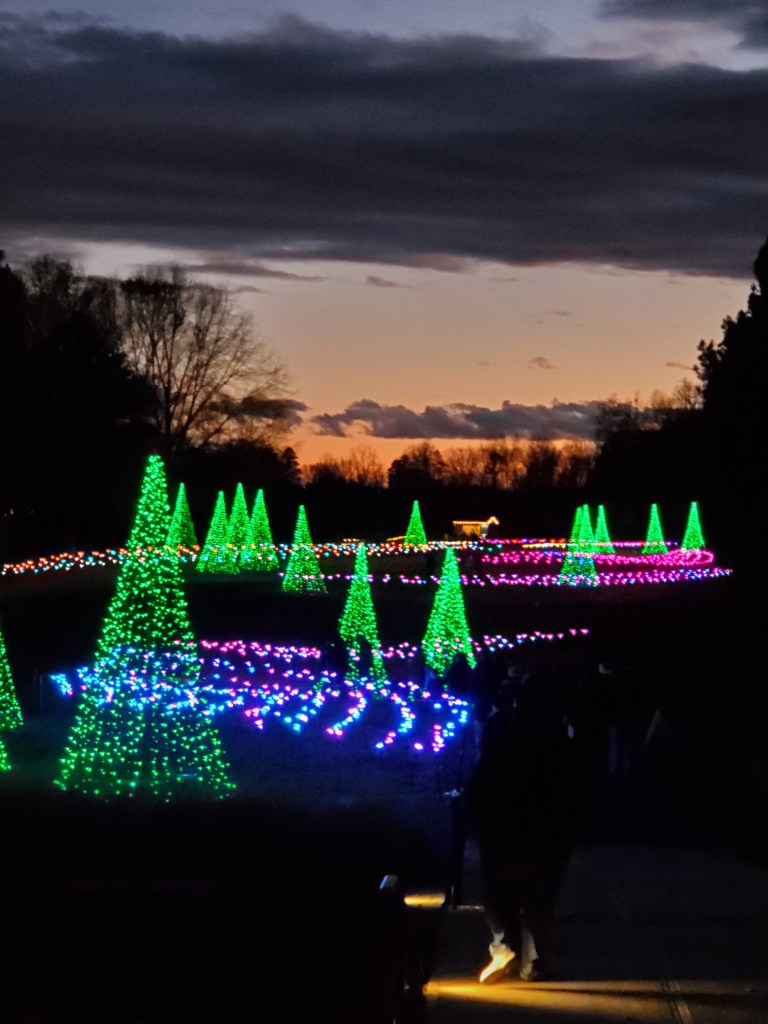
By day year-round or by night during the holidays, Daniel Stowe Botanical Gardens (6500 South New Hope Rd.) is a feast for the eyes. And between the end of November through early January, they host the shimmering Mile of a Millions Lights with lighted topiaries, trees, fountains, and more. I suggest purchasing your tickets in advance in order to save a few bucks. Get there right at 5pm. Yes, it’s not dark yet, but by the time you peruse through the vendors and gift shop, then get yourself a glass of wine or hot chocolate, it’s plenty dark to start your journey. You’ll get lots of Instagrammable photos, as these lights photograph well. See our Instagram page.

McAdenville, NC

Last stop–McAdenville–Christmas Town USA! First, I want to say there’s more to do here than see the Christmas lights. Spend some daylight hours here and check out the delicious treats at Floyd & Blackies Bakery, town shops, and restaurants. By night, enjoy the tradition that started in 1956. If you’re already in town, then enjoy a leisurely walk through the lighted streets and homes. If you’re arriving by car at night, you can drive through the 1.3 mile festive loop. Be prepared for a long wait as all exits from the highway lead to one lane through the town. I got in line just past 6:30 and it took four hours to drive the 1.9 miles from the highway to the town limit and then through the light displays. It was certainly beautiful and worth the wait. You’ll just need to plan to have a full tank of gas, drinks, and snacks as well as activities to keep the kids busy. There are a few gas stations/convenience stores along the way, so you can stop for an emergency bathroom break, snack, drinks, or gas.

So, back in 1956, the town’s Men’s Club decided to decorate several trees with lights. The town is now an annual destination for more than 500,000 visitors each year, with residents, churches, and businesses participating–and going all out. More than 400 trees are decorated with red, white, and green lights with a special display surrounding the lake at the town’s center. Check out their website for access instructions as some roads are blocked during this time. It’s free to drive through!

Journey through Iredell County, NC

From an old western town to a luxury lake community, you’ll find it all in Iredell County. Nestled in the foothills between the mountains and the Piedmont, somewhat north of Charlotte, this county has a lot to offer. The NC state legislature divided Rowan County in 1788, and the new resulting county was named Iredell after James Iredell, associate justice of the first Supreme Court during George Washington’s presidency.

The day’s travels began with a quick ride through Houstonville, named for Captain Christopher Houston (1744-1837), an American Revolutionary War veteran, who was instrumental in establishing Iredell County in 1788 as well as the county seat of Statesville in 1789. Houston did move to Tennessee in 1815.

Union Grove

Next stop is Union Grove, an area that was a favorite spot for American Indians before the early settlers arrived. Many Indian artifacts have been found in the area, especially at a site known as Indian Hill near the Jennings Mill. Several mills were build in the area, and today’s itinerary includes a stop at Linney’s Mill. Severe flooding in the area in 1848 left only three mills in operation in northern Iredell County. Ebenezer Academy, the oldest schoolhouse still standing in Iredell County, was first on my list for the day but was unable to find it. So, I’m keeping it on my list for my next ride through. If you know the best way to find this treasure, let me know.

Union Grove General Store

If you’re passing through Union Grove, you have to stop at the quaint general store (1932 W. Memorial Highway). They are know for their extensive selection of knives, and they have numerous local crafters’ items for sale as well as local jarred goods, including jam from the Dutch Kettle. (See Yadkin County blog.) But even better than that, this building originated as a one-room school house back in 1903. The building was moved across the street to its current location in 1973. You can see where the old blackboard used to be as well as where the original floors meet the new flooring when the building was expanded to its current size. Incidentally, the shop owners discovered some old school papers in the attic; but unfortunately didn’t get a photo before touching the papers, which virtually disintegrated on contact. I just love digging up these old stories as I travel throughout a county. And while you’re there, be sure to take your picture with the big, carved wood bear outside.

Love Valley, NC

Slip back in time at Love Valley (inc. 1963), known as the Cowboy Capital of NC, has been on my list of NC treasures to visit since I started PortableNC! I couldn’t wait to get there, and the day had finally arrived. Love Valley is quite possibly one of the only–if not THE only–old authentic western town left in NC. No joke! This little town is straight out of a western movie, and I planned for the full experience. My friends and I reserved our horses (Sugar, and Puddin’) from Brushy Mountain Horseback Adventures (Call Amanda at 704-914-7401). You’ll find them on Phil’s Pass off of Fox Mountain Road.

In 1954, Love Valley founder Andy Barker (1924-2011) and his wife Ellenora sought a place outside the hustle and bustle of Charlotte for a quieter, simpler way of life. The entire established town, founded in 1954 and located in the foothills of the Brushy Mountains, only 0.62 square miles including water! Walk among the rustic buildings and wooden walkways–just like in an old western movie–constructed by Andy Barker’s construction crew: the Presbyterian church, arena, post office, and the rest of the buildings. As of the 2010 census, there were 90 people, 17 households, and 9 families residing in the town.

We saddled up and rode our horses into town–Yessiree! Tied them up and sallied through town dressed in jeans and boots–as western as we could get. It was a chilly and windy fall November day on top of the mountain, but we didn’t mind one bit. The old western part of the town is just one street… what you see is what you get. But it’s truly as western as it gets. The owner of Shelby’s Saloon was kind enough to let us in for a peak even though he wasn’t open yet. We found out that they filmed a Mountain Dew commercial in town as well as a few country music videos too! Who knew? And in 1970, the Allman Brothers headlined here for a rock festival. More than 100,000 people came for the event. Can you imagine??

Now, I’ll be the first to admit, there’s not a ton to do there, but absolutely go for the experience. However, you can get some great pictures and just enjoy the look and feel of the area. We went on Frontier Days, which had a light turnout. They were cooking beef and chicken chili and rice in dutch kettles over the fire, plus corn bread and peach cobbler–the perfect grub for a chilly, windy day.

Heads up–you’ll want to call ahead to reserve your horses–and plan to come on an event day, which sometimes include a rodeo. Sometimes the shops aren’t open at all on off weekends. It’s a tiny town run by just a few folks. If you’re not into horseback riding, you can park in the lot just outside of town. No cars are allowed on Main Street, the old dirt road in town. So, park and walk just a few hundred feet and you’ll be there!

P.S. You can donate to the preservation of this town through Go Fund Me.

Fort Dobbs State Historic Site

On our way to Statesville, we stopped at the Fort Dobbs Historic Site (438 Fort Dobbs Road), which is a completely historic reconstruction of the original fort built in the fall of 1755 and completed in 1756 by the soldiers of the Royal Governor of North Carolina, Arthur Dobbs. As the state’s only French and Indian War fort site, it accommodated a company of at least 50 men, including living, cooking, and eating space for officers, and also served as a supply depot and negotiations center with Native Americans. Hostilities between the Indians and settlers took place for more than two years, including an attack on the fort by more than 60 Cherokee Indians.

After peace was instilled in 1761, the fort was closed and was soon in ruins by 1766 and the area became farmland. The Daughters of the American Revolution acquired the land in 1909 and eventually donated it to the state. Archaeological excavations began in 1967, recovering nearly 6,000 artifacts, some of which can be seen at the site’s visitor center and museum. The site has been completely reconstructed according to the original plans. You can tour the building (donation suggested), and the site holds several re-enactments each year. Six events are planned for 2020. You’ll also find a convenient parking lot and bathrooms on site.

Statesville

Statesville, NC, is Where It All Comes Together! In 1753, Scots-Irish and Germans from Pennsylvania began settling the area to plant crops in fertile soil where game and water were both plentiful. In 1800, the town’s name was listed as States Ville with 95 inhabitants, including 68 free white persons and 27 slaves. In 1833, Statesville began laying railroad tracks to connect the Piedmont to the rest of the U.S. territory. Statesville soon became leaders in NC for tobacco and tobacco products, whiskey, and roots and herbs. On August 27, 1891, a passenger train derailed on a 300-foot-long bridge. Seven cars fell and about 30 people died in the accident.

You’ll find many popular events here throughout the year, including the large Carolina Balloon Fest (You can take a hot air balloon ride, full or tethered to the ground.), Pumpkin Fest, and Full Bloom Film Festival. We made stops at the Heritage Museum (1335 Museum Road), Iredell Museums (134 Court Street), and several shops downtown. Of note is the town’s clocktower and the gorgeous architecture of City Hall; several items of public art; Southern Distilling; Rescue Ranch, (a 501(c)(3) nonprofit started by NASCAR driver Ryan Newman and his wife Krissie; and the 3,600-square-foot Sculpture Garden at the corner of East Water Street and North Center Street (which we found on our return trip at night after a great dinner at 220 Cafe). Art selections are a combination of permanent and revolving specimens, and some are for sale. You will also find the Governor Zebulon Vance House and Museum (located in a highly sketchy neighborhood–501 West Sharpe Street) and the ruins of what must’ve been an incredibly beautiful and large church destroyed by fire. Also stop by the Statesville Civic Center to see the amazing fresco painted by world-renowned and local, native Statesville artist Ben Long.

Troutman, NC — Daveste Vineyards

Enjoy a wine tasting at the bar or a table, then stroll around the property of Daveste Vineyards, the county’s first winery/vineyard (155 Lytton Farm Road). The timber-framed tasting room and outdoor veranda overlooks the vineyard, stream, and pond, and features works of art both inside and out. They hold several events throughout the year, including live music on Thursday evenings and weekends. Families may also want to visit the nearby Zootastic Park (385 Ostwalt Amity Road), a walk-through zoo with a wagon ride. Up-close animal encounters (15-60 minutes) are extra.

Lazy 5 Ranch

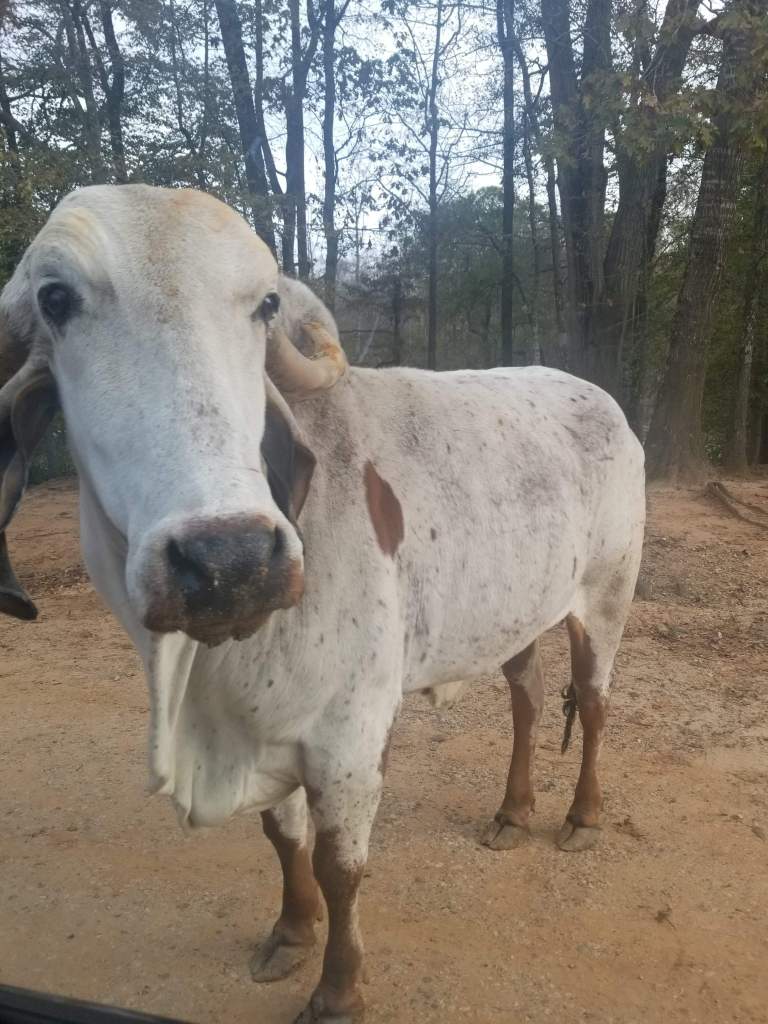
Before heading into Mooresville proper, we make a stop at Lazy 5 Ranch (15100 Highway 150 East). This is another must-do in Iredell County. This unique destination is a drive-through (either your vehicle or a park wagon ride) wild animal park that houses more than 700 animals from six continents, including several giraffes. Pick up some feed buckets at the gate, and you can feed the animals from your vehicle. You’ll have a blast at this up-close-and-personal experience. Buy the program if you want to identify the animals as you drive through. You’ll also find several petting areas and walk-through exhibits, a playground, picnic area, gift shop, and snacks.

Note, there are strict instructions not to exit your vehicle at any time. Don’t ride with your minivan doors open. And don’t feed the zebras, buffalo, or cows with the long horns. Otherwise feel free to feed, and hold onto your buckets tight! Some animals are likely to knock the bucket out of your hands–or take off with it altogether. You may want to purchase more than one bucket per person, as the ride-through is longer than you think, and you’ll run out of food quickly (or possibly lose a bucket, as previously mentioned). Be prepared for some slobber on your vehicle and some possible gnawing of your side view mirror. (It could happen.) Also no honking or headlights, no hand feeding, and no littering (except for stolen feed buckets… leave those behind). And please be gentle driving throughout at only 5 mph, practicing patience as animals cross and linger in front of and around you.

Otherwise, prepare for a great experience. The park is open year round from 9:00 a.m. and closes for the last patrons one hour before dusk.

Mooresville

We ended the day in Mooresville, nicknamed Race City USA, has grown up around NC’s largest man-made lake, Lake Norman, and is probably best know as the home of more than 60 NASCAR racing teams and racing-related businesses, and drivers as well as an IndyCar team. You’ll find the NASCAR walk of fame (215 N. Main Street) in the quaint downtown shopping district as well as the NC Auto Racing Hall of Fame and Memory Lane Motorsports and Historical Automotive Museum (769 River Highway).

The town was incorporated in 1873 and once had a Class D NC State League baseball team from 1937-1942 called the Mooresville Moors. John Franklin Moore, for whom the town was named, helped establish the town’s first brick factory and built some of the town’s brick buildings on Main Street. He died in 1877, and his wife, Rachel Summrow Moore, continued the town’s development.

In 1833, the town saw railroad lines and a new depot, which brought growth to the area, including the first water plant in the early 1890s, a phone company in 1893, a library in 1899, and the first of many textile mills in 1900. In 1938, artist Alicia Weinick painted the mural North Carolina Cotton Industry in the town’s post office. (You’ll find cotton fields in the area.) Also, prominent local sculptor Selma Burke, born and raised in Mooresville, was commissioned to create a bust of President Franklin D. Roosevelt for the Four Freedoms plaque on the Recorder of Deeds building in Washington, D.C. The bust would later be used for the image on the U.S. dime! A nice little claim to fame for Mooresville and Iredell County!

In town, you will also find the Welcome Home Veterans’ Living Military Museum (165 N. Main Street), several antique shops, an arts gallery, many NASCAR race shops that you can tour, and more. Opt for a daytime (11:30 a.m. and 2:00 p.m.) boat tour of Lake Norman on the Queen’s Landing Lake Norman Tours (1459 River Highway). You can also make reservations for a dinner cruise aboard on of the two boats available.

Journey through Lee County, NC

One of North Carolina’s smallest counties, Lee County is just about 255 total square miles. The area has historically been one of the leading brick manufacturers in the U.S. due to its location between the Sandhills region and the clay-predominant Piedmont region. The leading crops in the area are tobacco and cotton–and I did stumble upon a gorgeous cotton field in full bloom. Lee County also holds the state’s highest concentration of oil and natural gas.

Cumnock
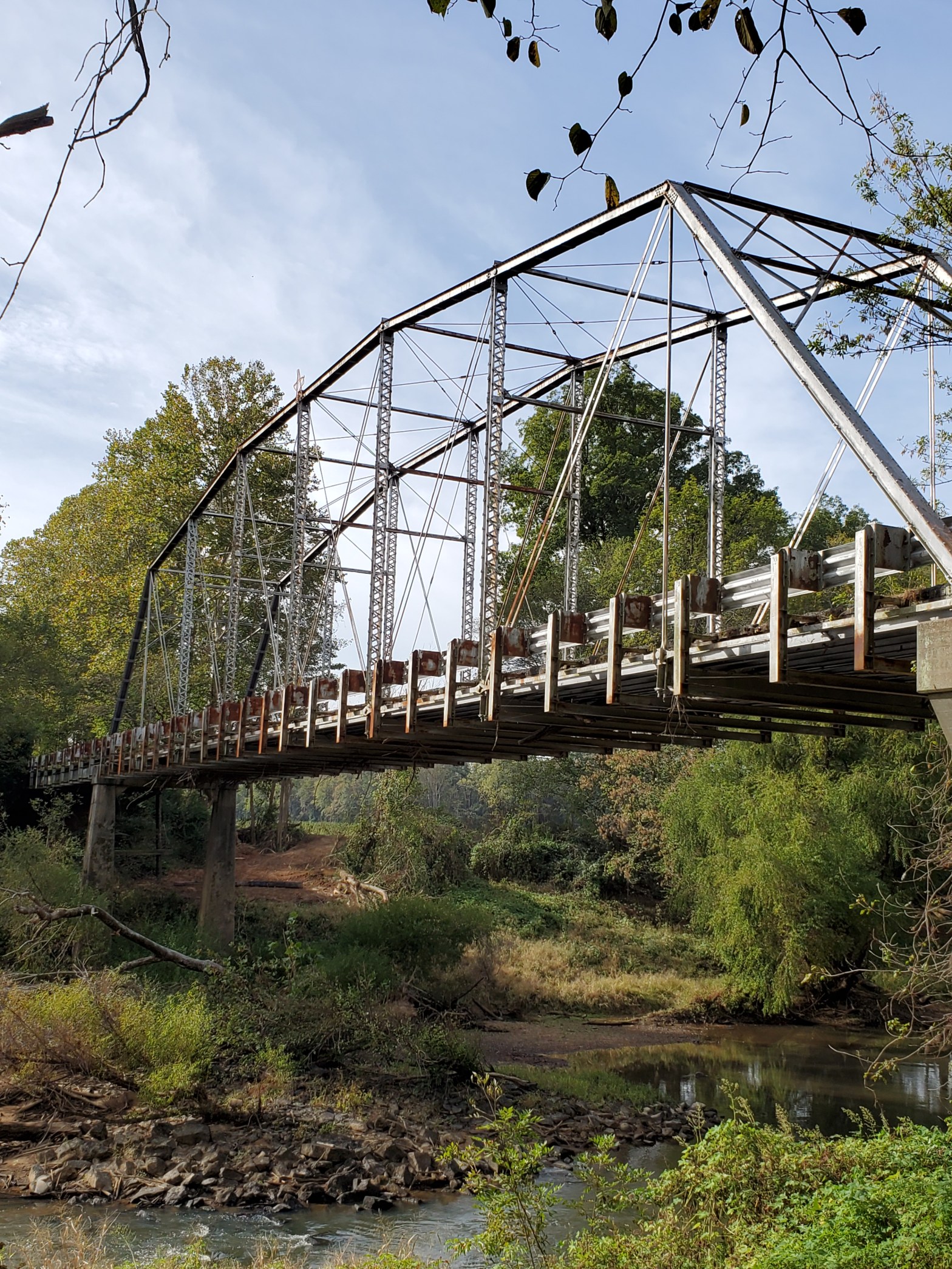
Deep River Camelback Truss Bridge

My day touring through Lee County started in Cumnock, right on the border of Lee and Chatham Counties, at the Deep River Camelback Truss Bridge and Deep River Park and Camelback Bridge Landing built around it (3485 R. Jordan Road). (From 421, exit at Cumnock Road and head southeast. Follow the road to the county line, then as you cross the new bridge, look to the left and you’ll see the truss bridge. At the next intersection, take a left onto Everett Dowdy Road, and an almost immediate left into the parking area for Deep River Park.)

The Deep River Camelback Truss Bridge, 160 feet long divided into 8 panels, is steel construction that rests on stone and concrete piers with a macadam road surface on a plank deck 40+ feet over the Deep River. (FYI, between Hurricane Florence [Sept. 2018] and Hurricane Michael [Oct. 2018] the region received so much rain that the Deep River swelled to cover the bridge and completely flood the park and surrounding area.)

While here, I met a group of people doing some cleanup around the park in prep for the upcoming 3rd annual Bigfoot Festival on November 2, 2019. A nearly full day of events are planned, including a retelling by locals who have seen a Bigfoot as well as Sasquatch experts and more. The group’s intent is to hold the festival at the park the first Saturday in November each year.

As the Deep River separates Lee and Chatham counties, the bridge is a connector between the two. On the Chatham County, park side, of the bridge, you’ll find a map of the area showing several historic sites and a flying-saucer-like structure, which was a Boy Scout project from several years ago. (Incidentally, there was a Boy Scout Eagle Project happening on the other side of the bridge on the day of my visit.) You’ll also note a plaque depicting a rabbit on the brick columns, and that’s where a little Chatham County history comes into play, even though I am in Lee County that day.

Way back in the late 19th century, cottontail rabbits flourished pervasively in the area. In fact, during a particular snowstorm on November 1, 1896, nine inches of snow covered the area, which drew the rabbits out in such numbers that young boys were able to chase and catch them with only their bare hands. Prized for their meat and skins, this abundant rabbit population soared Chatham County into the rabbit trade. In fact, numbers were so prolific that Our State Magazine reported 94,342 rabbits exported from Siler City by local Chathamites between 1910 and 1914. So, where were they being exported? New York City restaurants, it’s been told!

The bridge was listed on the National Register of Historic Places in 1979. The section along the Deep River was the site of coal, iron, and copper mining and iron foundries throughout much of the 19th century. The bridge was originally constructed in 1901 as part of a multi-span bridge over the Cape Fear River at Lillington, about 30 miles southeast in Harnett County. After a span of that bridge collapsed in 1930, it was deconstructed to make way for a new bridge at the site, and one of the salvages spans was reconstructed at the current site to replace a covered wooden bridge that had burned at the site in 1929. This Truss Bridge #155, now owned by the Deep River Park Association, is one of only four camelback truss bridges left in NC.

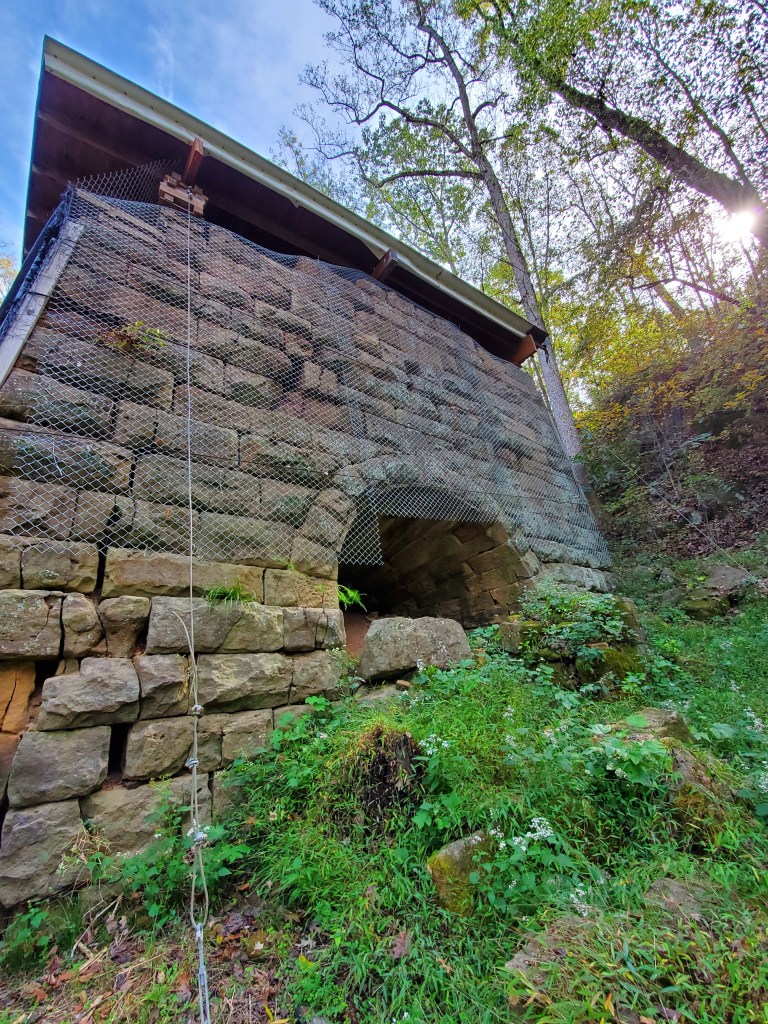
Endor Iron Furnace

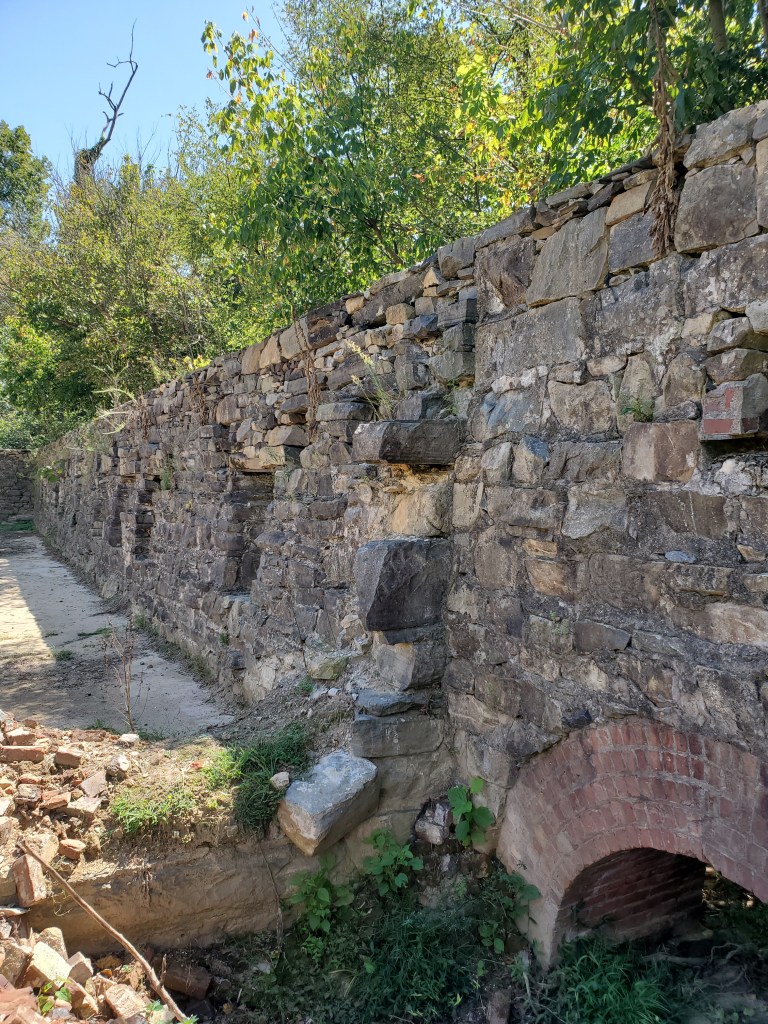
Travel back the way you came (right out of the parking lot and a right on Cumnock Road), then take your third left onto Cotten Road and a left onto Iron Furnace Road after the train tracks. Follow this road to the end, and you’ll see a gated path. Park here and hike about 10 minutes (You’ll cross over another set of railroad tracks.) to discover another hidden treasure in Lee County. This 35-foot stacked stone edifice was used to produce workable iron for the American Confederacy. Look carefully and you may still find bits of iron ore and pig iron dating back to the Civil War and Reconstruction era. The furnace was placed here to take advantage of the ore veins in the nearby Deep River. The furnace was used for about 10 years, and the remains still stand today. Read ahead in the Sanford section to learn about my discussion with a member of the fundraising team for the Endor Iron Furnace.

Ole Gilliam Park

This historic area along Highway 42 just outside of Sanford boasts a covered wooden bridge and an old mill, plus other buildings originally built by Stephen Henly in 1850. The mill ran until 1870 when he sold the mill complex to Alexander McIver. Howell, John, and Jessica Gilliam leased the mill for many years, then bought the mill and surrounding 500 acres from McIver in 1890. (I had found a cemetery earlier while passing between the Truss Bridge and the Endor Iron Furnace, where members of the McIver and Goldston (Goldston, NC) families and others were buried.) The Gilliams owned the mill until 1928 when it was washed away in a flood. The present mill you see today was reconstructed by Worth Pickard with a few other friends and family members on weekends and holidays in 1979 up the creek from the original site; it is a faithful reproduction of the original Gilliam Mill. All working parts were obtained from old mills throughout the Southeast. In 2000, proprietors Nancy and Worth Pickard donated the mill and 15 acres of land and existing buildings and relics to the Ole Gilliam Mill Park. Today, the park is run by a Board of Directors and is used for several events, including the Ole Mill Crank-Up, church groups, and motorcycle clubs as well as weddings, family reunions and those who wish to visit and walk through the park.

Sanford

The county seat of Sanford was named for C.O. Sanford, a railroad civil engineer who was instrumental in the building of rail lines through the area, which eventually grew to be the city of Sanford. Jonesboro was another major town in the area, and the two eventually joined to form one community: Sanford. For decades, Lee County was the only courthouse in the U.S. with an RFD address. The courthouse had been placed directly between the two towns, but Sanford had grown so much that it merged with Sanford to become one town. The area of Jonesboro was renamed Jonesboro Heights. You will still see remnants of Jonesboro throughout the area.

The city became an important source of coal, brownstone, and brick–even a key provider throughout the U.S. In 1959, Sanford produced 10% of the total bricks in the U.S. and was named “Brick Capital USA.” The area still has a large brick production today. The city also had a seven-season Class D professional minor league baseball team, The Sanford Spinners, from 1940-42 and 1946-50. They played home games at Temple Park, and the Spinners won the regular season pennant three times!

Modern history recalls a large tornado tearing through the Sanford area on April 16, 2011, demolishing a Lowe’s Hardware, a warehouse, and multiple homes and buildings before moving into Wake County. On October 21, 2014, Sanford established a formal sister city relationship with Yixing, China. And the Maine-to-Florida U.S. Bicycle Route 1 passes through downtown Sanford and Lee County.

While in Sanford, I visited a few more gems.

  • City of Sanford Mural Art Trails: includes a growing collection of 9+ murals throughout the city
  • Temple : built int 1925 and hosted vaudeville shows in the 1930s. It was closed from 1965-1980, but has since reopened, hosting concerts, musicals, dramas, and comedies on Thursdays through Sundays.
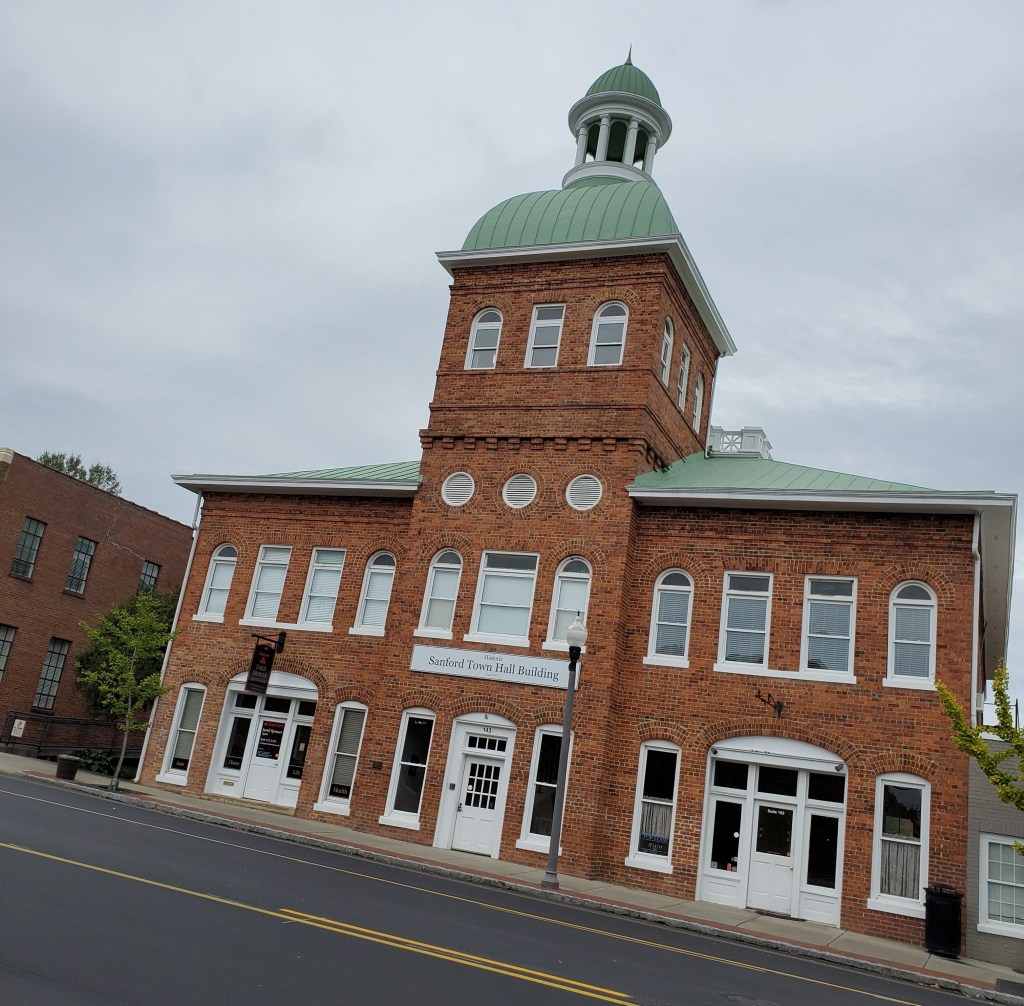
  • Sanford Town Hall Building
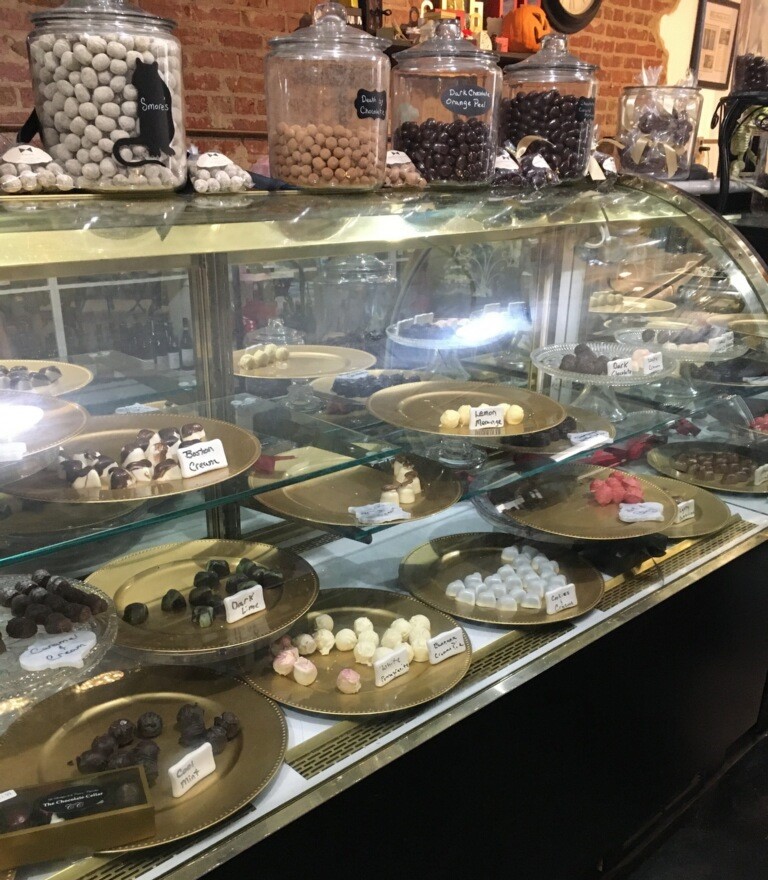
  • The Chocolate Cellar: across from Depot Park. This shop is tucked away below street level, but just follow your nose. The delectable smell of chocolate will lead you straight there! Discover a wide array of extravagantly infused truffles, gourmet chocolates, and assorted candies and gifts (many made on site) as well as a wine tasting room for a Chocolate and Wine Flight experience!

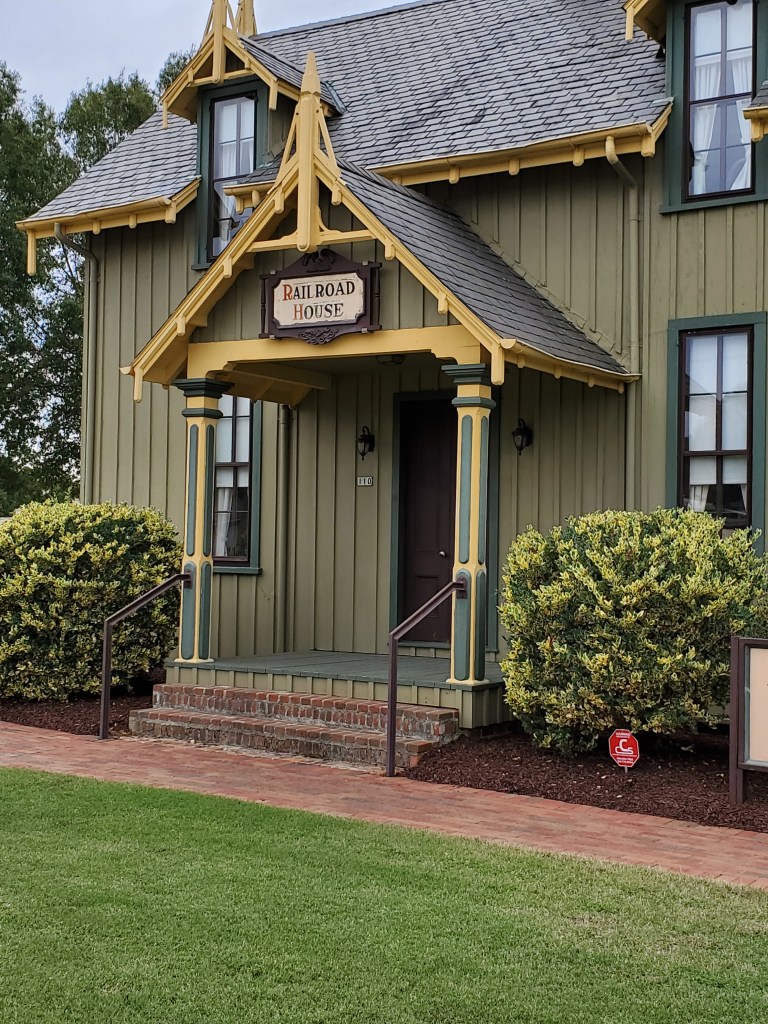
Depot Park and Historic Railroad House

Located at 106 and 110 Charlotte Avenue, respectively, the two spots make a lovely place to visit. The Railroad House is the oldest house in downtown Sanford, dating to 1872. The house contains a museum featuring local memorabilia and interesting history of the area. You can tour the house for free on our own or request a guided tour by the Railroad House Historical Association of the house and other local historical sites. Outside the house, and part of Depot Park, you will find a 1911 Baldwin 2-8-0 locomotive, which is preserved on site. Beside the locomotive, you’ll find two whimsical metal statues of a ticket collecter and passengers as well as various markers throughout. (Museum hours are Saturday and Sunday 1-4pm, and other times by request.)

While visiting the Railroad House, I spoke with a woman who is on the fundraising team for the Endor Iron Furnace. She reports that $300,000 of the needed $1 million has thus far been raised to fully restore, stabilize, and preserve the structure. Planning and Phase 1 activities are in process to eventually build a public park around the centerpiece structure. It is not known at this time how the group will raise the remaining $700,000 for the project. (According to a brochure, tours of the Endor Iron Furnace are available upon request.)


Big Bloomer’s Flower Farm

When you’re in the Sanford area, be sure to stop by this gem: Big Bloomer’s Flower Farm. Even if it’s off season or you’re just passing through, you can peruse through the green houses, enjoy the garden statuary, check out the biggest agave plant I’ve ever seen, and take your photo in The Big Chair!

Broadway

The town of Broadway, NC, became know as “The Town of Candles” in the late 1960s because the water tower was covered in lights and businesses turned on a single white candle in each window. The tradition spread throughout the town and surrounding areas. Broadway was settled in 1870 and was incorporated in 1907. The town’s name came from a broad level opening in the region’s vast pine forest. During the early 21st century, many local Broadway citizens visited New York City and saw a Broadway show. So, Broadway in New York came to Broadway, NC. A show was put on at the local elementary school with TV and stage actress Sandy Duncan leading the way.

While in Broadway, I discovered a Town Clock, Veterans Memorial, and the cutest Little Free Library (beside the Veterans Memorial).

Old Carbonton Dam

My final stop for the day was scheduled to be the Old Carbonton Dam. But lacking any sort of address, and despite driving to and fro, I was unable to find this hidden treasure. If you discover it for yourself, message me and let me know how you got there.

Happy discovering Lee County!
Journey through Rockingham County, NC

“To move, to breathe, to fly, to float,
To gain all while you give,
To roam the roads of lands remote,
To travel is to live.”

Hans Christian Andersen

It was a sunny day, one day post-Hurricane Dorian which hit our state both as a Category 2 and Category 3 storm. Most of the damage was on the coast, with more than 20 tornadoes touching down both on the shore and inland as far as Pender County. The worst of the tornadoes hit Emerald Isle. The Piedmont was only mildly affected, with some wind and a little rain. So, it was a beautiful day here to set out.

Monroeton

My first stop was an accidental discovery in the Monroeton area. I was passing by the cemetery at Fairgrove United Methodist Church. I’ve never been in this area, so it was a complete surprise to stumble upon this lovely old cemetery surrounded by a stone wall and with 1830 iron gates marking both entrances. That means this cemetery is still standing after 189 years!

Upon getting home, I did a little research and found a few interesting details. Fairgrove was originally two words (Fair Grove), and it was originally a log church. Conference members from miles around would often camp on the church property in wagons and tents. In 1966, the brick church building that exists today was built. It is not known when the church’s name became one word.

Tombstones date back to 1833, including a few Civil War veterans. And graves for slaves were marked by individual stones. It is believed that the rock wall was built by slaves before the Civil War using stones from the Cunningham Plantation. It’s amazing to think of the people, amazing craftsmanship, and hard labor that went into building this beautiful wall–which has survived nearly 200 years! And here’s another little gem: head to the field across the street and you’ll find a marker noting the remaining mounting stone where women in the 1800s would dismount and mount their horses when attending church.

I’ll close this stop with a story that’s been passed down through generations. Legend has it that Eliza Chilcutt, the church’s last surviving member (who is also buried at the cemetery), had read through his entire bible 122 times. One cloudless day, the church caught fire and he was praying over the burning church when a large rain cloud appeared and put out the fire–and the church was saved.

In Monroeton, you’ll also find a historical marker for Troublesome Creek Ironworks (at US 158 and SR 2422), originally called Speedwell Furnace, an iron furnace archaeological site. After the Battle of Guilford Courthouse on March 15, 1781, General Nathanael Greene (for whom Greensboro was named) and his troops camped at the ironworks to plan their second attack on Cornwallis. George Washington also visited the ironworks in 1791.

Reidsville

Reidsville is the established county seat and the largest city in Rockingham County. Incorporated in 1873, the city was named for the Reid family, who settled there. Here you’ll find a variety of downtown shops and historic homes, including the Penn House (now used as a wedding and event venue), the Jennings-Baker House, and Governor Reid House.

Governor Reid House

This Victorian structure (located on the corner of Market Street and Lawsonville Ave.) dates to 1881 and was the home of Governor David Settle Reid, son of Reuben Reid and Elizabeth Williams Settle, the family for which the city was named. In addition to serving North Carolina as governor, David was also Reidsville’s first postmaster and a U.S. Senator. This home was the first structure in Reidsville to be listed on the National Register of Historic Places. Call in advance to schedule a tour, available Monday–Friday.

While in Reidsville, you can also visit The Reidsville Visitors Center (140 South Scales St.) open Monday–Friday) and the Museum Archives of Rockingham County (MARC) is open Monday–Saturday, 10am-4pm. So, feel free to stop in; it’s just $5.00 (1086 NC Highway 65). This museum is housed in the county’s old courthouse and contains exhibits displaying a snapshot of the county’s history.

Chinqua Penn Planation used to be a big draw and tourist attraction for the area; however, financial woes for the former owners put the plantation in dire straits. Artifacts inside the home were auctioned off to buyers around the world in order to pay more than $3 million owed to creditors. It is now a private residence and was closed to the public in 2012.

Eden

Not far from the Virginia border, my visit to the Eden began with a stop at the Eden Historical Museum (656 Washington St.), just $1 for a walk-through and a walk by the quaint, historical Bullard-Ray-Harrington House next door, a two-story Greek Revival home. It has been enlarged and remodeled in the Colonial Revival Style with a lovely wrap-around porch and Doric order columns. You’ll probably find an odd vehicle parked in front (perhaps an old, rusted station wagon with a bike mounted on top). It’s my understanding that the owner of the Bullard-Ray-Harrington House is a lady set to turn 93 in October of 2019!

The Boone Road Historic District contains a variety of delightful historic homes. In town, you will also find the Dempsey-Reynolds-Taylor House (now a law office) and Dr. Franklin King House (Ildewilde), which is set up on a hill. Perhaps the town’s largest employer, Karastan Rugs, offers factory tours mostly on Wednesdays.

Before leaving Eden, I have two more stops: Governor Morehead Park and Matrimony Creek Greenway–both have waterfalls. Governor Morehead Park (422 Church St.) is the site of the original Old Stone Mill built by Governor John Motley Morehead (Morehead Planetarium in Chapel Hill) in 1839 and destroyed by fire in 1893. It was rebuilt and used for several decades, but eventually torn down. The original foundation wall of the Leaksville Cotton Mill still stands, and you can take a very brief hike to see the hidden waterfall, which you can hear from any spot on the site.

Remaining foundation wall of Leaksville Cotton Mill, Governor Morehead Park

My final stop in Eden is the Matrimony Creek Greenway (1335 Washington St. next to Hampton Heights Baptist Church), a 1-mile, paved nature trail leading to a delightful waterfall, including 1/2-mile and 3/4-mile markers along the way. Once at the falls, you can take your shoes off and step in or sit on side-by-side benches in perfect view of the falls.

One little bit about Eden’s history: Eden was originally a 70,000-acre estate owned by William Byrd II. He originally called his estate “The Land of Eden”. When he died, he left his estate to his son William Byrd III, who had no dreams as his father did to develop an industrious community. He only wanted to live well, so he sold off 26,000 acres to Simon and Francis Farley, two merchant brothers from the island of Antigua. Long story short, William Byrd III’s daughter Elizabeth Hill Byrd married James Parke Farley, son of Francis Farley, who took over the land and called it Sauratown. Elizabeth’s father committed suicide and James died in the American Revolution, leaving her a widow with four daughters. Elizabeth later married Reverend John Dunbar, who attempted to manage Sauratown but failed. Two of their daughters, Maria Farley and Rebecca Parke Farley, later sold their land shares to Patrick Henry of Virginia. On his deathbed, Henry gave the land to two of his sons, Alexander Spottswood Henry and Nathaniel West Henry.

Stoneville

Named for brothers Thomas and Pinkney Stone, Stoneville was incorporated in 1877 and is home of the Deep Springs Plantation, the former land now comprising a country club and golf course and surrounding residential neighborhood. The original plantation house, built by James Madison Scales and his wife, Elizabeth Leseur, still stands as a private residence. Scales’ brother, Alfred Moore Scales, owned nearby Mulberry Island Plantation, built in 1850 and no longer exists.

Deep Springs Plantation was named after a deep spring on the property, which supplied water to the house. In 1846, a 25-pound meteorite landed near the house. It is now on display at the NC Museum of History in Raleigh.

Memorial Park in honor of a tornado victim, where a 100-year-old building stood before the storm


The statue above is in honor of one of the victims of the March 20, 1998 tornado, which caused tremendous destruction in the downtown area. This little memorial park with the mural, clock, statue, and water feature is located where a 100-year-old building housing a ceramic shop, once stood before the tornado. The town had little warning, and 3 people died. A clock on the outside of one of the buildings stopped when the tornado struck at approximately 3:35 pm, and it was never repaired–left frozen in time.

You’ll also find a little antique store downtown.

Mayodan

Travelers will soon discover that Rockingham County is a land of rolling hills and bucolic farmscapes dotted with aged tobacco barns, rivers, forests, and small villages.

Named for both the Mayo and Dan Rivers, Mayodan’s downtown consists of just a few blocks of brick buildings, including Mayodan Arts Center (207 West Main St.) that’s open during the week. But before you get to thinking, there’s not much to this town, be sure to catch two gems: Autumn Creek Vineyards and Fall Creek Fall in Mayo River State Park.

Autumn Creek Vineyards (364 Means Creek Rd.) is a vineyard, but not a winery. Many of their wines are bottled by Childress Vineyards. Gather on the front porch, then enjoy a tasting at the large, rustic wood bar. Sit out on the covered patio or out on the large back deck, overlooking the expansive rolling hills of the vineyard. They are open 11am-6pm on Saturdays, and sometimes host events and live music. This vineyard has its regulars, and while I was there I was told about another hidden gem in the county–which just happened to be my next stop. So, it was great to get a nod in advance.

Fall Creek Fall, dome rock waterfall

The Mayo River State Park is a nature preserve with a series of interior trails, some that lead nearly to the Virginia border. This park makes for a great day of hiking. Possibly the greatest treasure in this tranquil park is the Fall Creek Fall, a dome rock waterfall about 9-12 feet high. Head to Deshazo Mill Road (which turns to gravel) and follow to the gravel lot at the trailhead. From there, it’s just a short 1/4-mile at most hike to the falls. You’ll start hearing the falls soon. Take your shoes off and dip your feet in the refreshing water.

Madison

My last stop of the day, in my opinion, was the best treasure of my trip. I found Madison to be a quaint town at the meeting of the Mayo and Dan Rivers. Madison just celebrated its 200th anniversary in 2018. You’ll find tall bridges passing over the rivers in this former tobacco mecca that had as many as 44 tobacco factories at one time.

You can’t miss the Town Clock (corner of Dalton and Murphy Streets), which towers over all other structures. After World War II, local citizens contributed money toward purchasing the clock in honor of the men who served and died for the U.S. The clock was purchased from Boston for about $600, believed to have been shipped by boat to Wilmington, then by rail to Madison. Engraved on the clock are the words “All Those Who Served” as well as on the clock bell, cast in Baltimore by McNeely and Son. The attached building has had many owners over the years, including the Gem-Dandy Company (originally Gem-Dandy Garter Company) whose owner officially transferred the rights to the clock to the Town of Madison. In 1968, a gear broke and silenced the chimes, but the clock still kept time. In 1997, the clock’s timing mechanism failed, and the clock was finally fully repaired later that year. In December 1997, the clock’s chimes rang again for the first time in almost 30 years.

Be sure to check out the Academy Street Historic District, with mid-19th and mid-20th century homes of various architectural styles. Many of the original homes from the 1800s still stand, including those of Federal, Victorian, Greek Revival, Colonial Revival, and Bungalow styles. You’ll also find the Jordan Cabin (211 Decatur St.) just passed a snug little underpass. The former log cabin is covered in clapboards and dates to at least 1799, according to an engraving on a brick in the cabin’s chimney. And the Alfred Moore Scales Law Office (Academy St.) is just a few streets away beside an aged Presbyterian cemetery. Alfred Moore was governor of North Carolina from 1885-1889 and served as a Brigadier General in the Army of the Confederacy among many other positions.

Madison Dry Goods Store
Note: The back wall is a local artist’s rendering of Rockingham County, complete with current and former landmarks.

Before you leave Madison, be sure to check out the Madison Dry Goods Store (104 West Murphy St.) a former hotel and mortuary at the same time! This shop is a community staple and the cutest old country store with modern apparel and a general store with soaps, natural foods, mixes, jams, sauces, honey, treats, and much more. Check out the small museum upstairs before 5:00 p.m. The shopkeeper has a wealth of knowledge about the building and will surely point out its interesting facets, including one of three rope elevators still remaining in the town. Across the street, you’ll find the Eclectic Calico shop (109 West Murphy St.), full of good-vibe home and local artisan goods. Don’t leave without petting Bella, the docile store kitty who has her own Instagram following: @bellastorekitty.

A few other notes about Rockingham County. It has a few interesting communities (not townships): Happy Home, Matrimony, and Intelligence. And you can also explore the Rockingham County Quilt Trail with 31 displays of Americana barn art throughout the county’s rolling hills.

Happy exploring!

Journey through Yadkin County, NC

A Journey through Yadkin County

“One’s destination is never a place, but a new way of seeing things.”
Henry Miller

August 24, 2019

I hemmed and hawed the night before my departure about whether or not to go. Earlier in the week, the weather had looked pleasant for Saturday. But by that night, it looked like definite rain… no chance for a ray of sunshine all day… periods of light rain and sprinkles. But it was my inaugural outing and I had planned it for about two weeks, so off I decided to go into the North Carolina countryside–Yadkin County–rain or shine. After a quick stop to fill up my tank, I was on my way…

Huntsville


On a cloudy, slightly rainy Saturday morning, there wasn’t much traffic on the road. I arrive in Huntsville about 9:20 a.m. with two things on my list to see: The Big Poplar Tree and the H.H. Sofley House. The Big Poplar Tree was the site of the 1780 Battle of Shallow Ford, an American Revolution skirmish on October 14, 1780. Six hundred Loyalist militia attempted to cross the Yadkin River to join General Cornwallis in Charlotte. A battle ensued and Loyalist militia fled. One Patriot died in the skirmish: Henry Francis, who is buried at the site of the Big Poplar Tree, believed to have been shot out during battle. I stopped at the local Battle Branch Café to ask for directions to find the tree, but was told that the tree is now on private land and the owner doesn’t much like people trespassing to find the tree. So, the best I can offer you is this photo from the Yadkin County Historical Society Facebook page, which has not been kept up for years.

Big Poplar Tree, Huntsville, NC
Photo credit: Yadkin County Historical Society Facebook page

The H.H. Sofley House, or the White House as it is also called, was placed on the National Register of Historic Places in 1982. Built in 1795, the house is representative of Early Republic/Late Georgian style with a Quaker plan. This home is also now a private residence, so no tours and no photo to show.

Yadkinville

A short jaunt from Hunstville is Yadkinville, at the center of the county. It appears that Unifi is the main employer in town with one very large production plant and another building, possibly a trucking facility nearby. I was expecting a larger town, but the downtown area was just a few blocks, and nothing happening on a rainy Saturday. I’m planning on heading back here on a future weekday when I get the chance, and I’ll write a minipost for you then.

First named Wilson, for Louis D. Wilson, a legislator who died in the Mexican War, Yadkinville was chosen as the county seat with the founding of Yadkin County in 1850. The town’s name was changed to Yadkinville in 1852 after it was discovered that another NC town was already named Wilson. Yadkinville was incorporated in 1857. It’s first courthouse was made from bricks handmade on a farm north of town.

The Yadkin Cultural Arts Center’s (226 E. Main St.) modern design juxtaposes against the small-town backdrop. Harboring the Welborn Gallery with artist exhibitions and several art studios in the surrounding spaces as well as the Willingham Theater (shows year-round), it’s quite kitchy. Regular hours are Monday–Friday, 9am-5pm. They boast “Big City Excitement, Small Town Charm.”

Wall Mural across from Yadkin Cultural Arts Center gifted by Jo and Tom Dorsett

Before leaving Yadkinville, I’ve got two more things on my list. Shallowford Farms popcorn is also only open Monday–Friday; however, you’ll find their popcorn sold at the local Food Lion: butter, cheese, and kettlecorn flavors. Look for it in the deli section.

Next comes my first of three winery visits of the day: Hanover Park Vineyard (1927 Courtney-Huntsville Rd.), a lovely old restored home located on a former tobacco farm, surrounded by rows of grape vines. It’s the first bonded winery in Yadkin County since prohibition. Stop by for a wine tasting of their European varietals and enjoy a glass on their porch, or picnic on the lawn under the breezy canopy of old, majestic oak trees. And be sure to say hello to Pearl, the owners’ so-adorable cocker spaniel, who also has a rosé named for her.

Then… what a find! A beautiful waterfall at Shore-Styers Mill Park (photo at top of post). It was the highlight of my visit to Yadkinville. It’s truly not much of a park… just a small parking area and few meandering trails along side the waterfall’s runoff. I suppose you could also picnic under the canopy or on the rocks on a pretty day. But a beautiful discovery nonetheless.
P.S. There is a few inches of a drop-off between the road and the parking lot. However, there is one small section that does meet the road pretty well.

Hamptonville

I found another sweet surprise a few miles down the road in Hamptonville: an area with a quiet Amish settlement established in the 1980s. Just after passing into town, I saw an honest-to-goodness Amish buggy passing in the other direction! And the kind gentlemen even waved! I had never seen an Amish buggy in person before. So, for me this was the highlight of my day. I still get excited just writing about it. I know, some of you may not think this is a big deal. But I’ve come to appreciate the small things in life. And for me this was a small joy; hence, a big joy.

Just around the corner, I found my next destination: Shiloh General Store (5520 St. Paul Church Rd.), an Amish-run market, which is apparently a big destination because the parking lot was packed… people coming and going, folks sitting on the porch chatting and snacking. Inside, you’ll find a large variety of jarred goods, soup mixes, baked goods, cheese, spices, and so much more. The line at the register snakes around the corner continuously, but moves quickly. And of course, the gentlemen at the registers are oh-so-kind. I purchase four soup mixes, chocolate ice cream cookies (a treat for my daughter), nonpareils ( a treat for me), and some Dutch Kettle blackberry jam. I plan to stop by The Dutch Kettle (5016 Hunting Creek Rd.) afterward for a photo, but I know they are closed on Saturday, so I pick up a jar here. Incidentally, you’ll find Dutch Kettle jam at local stores too and even at a gas station all the way up in Jonesville (my next stop).

Amish-run Shiloh General Store, Hamptonville, NC

A few interesting tidbits… The Hampton House is believed to be the oldest residence in Yadkin County. And at one time, the town’s well was located in the middle of a street, but it was paved over when U.S. 21 was constructed in 1940.

Jonesville

Jonesville is by far, the largest town in Yadkin County. In less than a mile stretch, you’ll find a small Best Western hotel, a Cracker Barrel, a large gas station, a variety of fast food chains, and a few local restaurants as well.

I did dig up this little bit of history on Jonesville. Back on December 21, 1912, a the Jonesville High School second floor auditorium collapsed during a Christmas concert. More than 300 people were present when people fell to the first floor when the floor collapsed. Two elderly women and a young girl (Nancy Swaim, Mrs. William Smith and Lexie Luffman, a 12-year-old girl) were killed and nearly 100 people injured. Sam Ray extinguished a stove fire in the auditorium as the floor began to collapse, also saving many lives.

I decide to peruse through the Antique Mall, then head to Lila Swaim Park with a beautiful tunnel of trees to drive through. You may also want to take a walk on the Jonesville Greenway.
P.S. You’ll find some Dutch Kettle jam at the gas station here beside the Subway restaurant.

East Bend

My final two stops of the day are two more wineries. The Yadkin River Valley is a rich, fertile area. So, you will find many local wineries here: Brandon Hills Vineyard, Cellar 4201, Divine Llama Vineyards (Yes, they have llamas!), Flint Hill Vineyards, Dobbins Creek Vineyards, Hanover Park Vineyard (see above), Laurel Gray Vineyards, RagApple Lassie Vineyards (the newest), Shadow Springs Vineyard, Windsor Run Cellars, Sweet Home Carolina Vineyard & Winery, and Sanders Ridge Winery, Restaurant & Cabin and The Big Woods Zip Line.

I hadn’t planned on stopping at Flint Hill Vineyards–a quaint yellow 1800s restored farmhouse and gardens that sit among century-old oaks–but I had passed by it twice and decided to head in. The owners, Brenda and Tim Doub, are Dutch, hence the windmill motif on the labels and inside as well. A friendly crowd was already into their tasting, so I joined alongside and headed out with a bottle in tow. Quite interestingly, they have a white wine Viognier variety that is aged in stainless steel. Enjoy their wine on the porch, patio or picnic area.

My last stop before heading home was… drumroll please… Divine Llama Vineyards. Yes! That’s what you were hoping for, right? This delightful winery opened in 2009 and sits on 77 acres, boasting views of Pilot Mountain from various spots on the property.

Now, whereas the other two wineries I visited were rather laid back with merely a small crowd, Divine Llama was rocking. In fact, the parking lot was packed and the tasting bar was packed too. The wait, about 10-15 minutes, was well worth it. I left with no less than three bottles–and *blush* the first bottle of red wine I’ve every bought. (I guess I wasn’t born with a palette for red wine, so I surprised myself in finding a red wine that I liked.) Enjoy your wine in the rustic farmhouse, on the rocking chair porch, or at the picnic tables under the trees.

Before you head out, be sure to walk the gravel path past the llama statue to visit the real llamas on the farm. In spring, fall, and winter (when weather is more temperate) you can head out on a two-mile trek with your very own llama (and feed them too).
P.S. You get a 10% discount if you buy three bottles… twist my arm. And many of the wines are named after their llamas.

Llamas at Divine Llama Vineyard
Photo credit: Matt Everhart

Other areas of interest:
East Bend
Donnaha Site (archeological significance)
Morse and Wade Building (100 E. Main St.)
Kitchen Roselli (105 E. Main St.), open 12-2p.m. and 5:30-9p.m.

Richmond Hill
Richmond Hill Law School and Nature Park (tours of the Law School on certain Saturdays)

Nebo
Lake James Antique Mall (2420 Harmony Rd.) Open 10a.m.-5p.m. on Saturdays

Enon
Glenwood Plantation (1820 Taylor Rd.), private residence
Durrett-Jarrett House (0.35m north of jct. NC 1605/1569)

Do you live in or have you visited Yadkin County? What do you love about the area?