
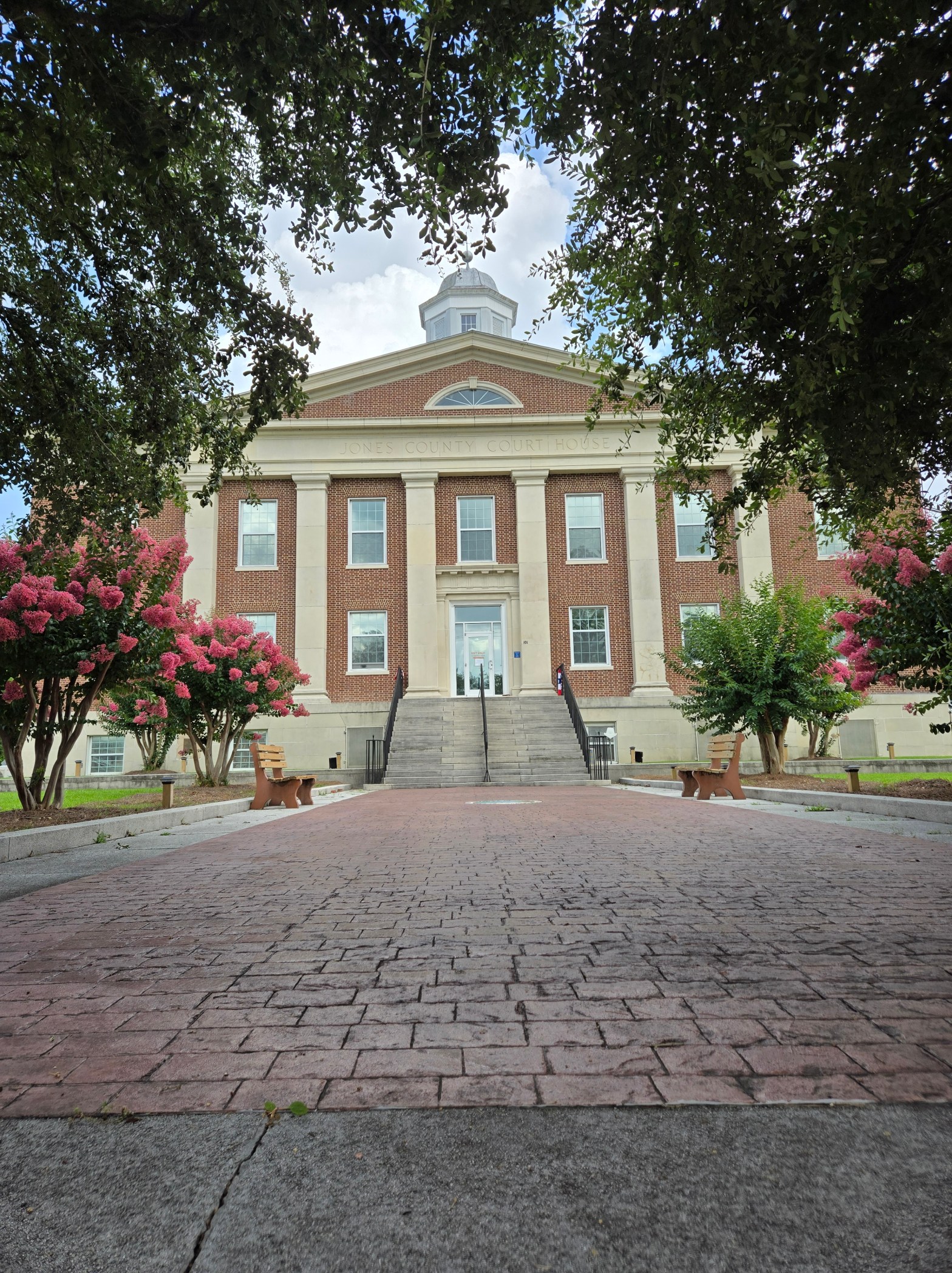
Duplin County was formed in 1750 from New Hanover County. It was named for Thomas Hay, Viscount Dupplin (later 9th Earl of Kinnoull), as he was known when he served on the Board of Trade and Plantations in England in the 1740s. In 1784, the western part of Duplin County became Sampson County.
The county’s tag line is Uncork. Unwind. Unplug., surely a reference to the county’s famous Duplin Winery as well as its many rural and recreational areas as well as parks and golf facilities.
- Caleb Bradham (1867–1934), an American pharmacist born in Chinquapin, is best known as the inventor of the soft drink Pepsi.
- Ruth Faison Shaw (1889–1969), an American artist and educator born in Kenansville, is credited with introducing finger painting into the United States’ education system.
- William Thornton, born in Duplin County, was North Carolina’s first astronaut, flying on two Space Shuttle Challenger missions.
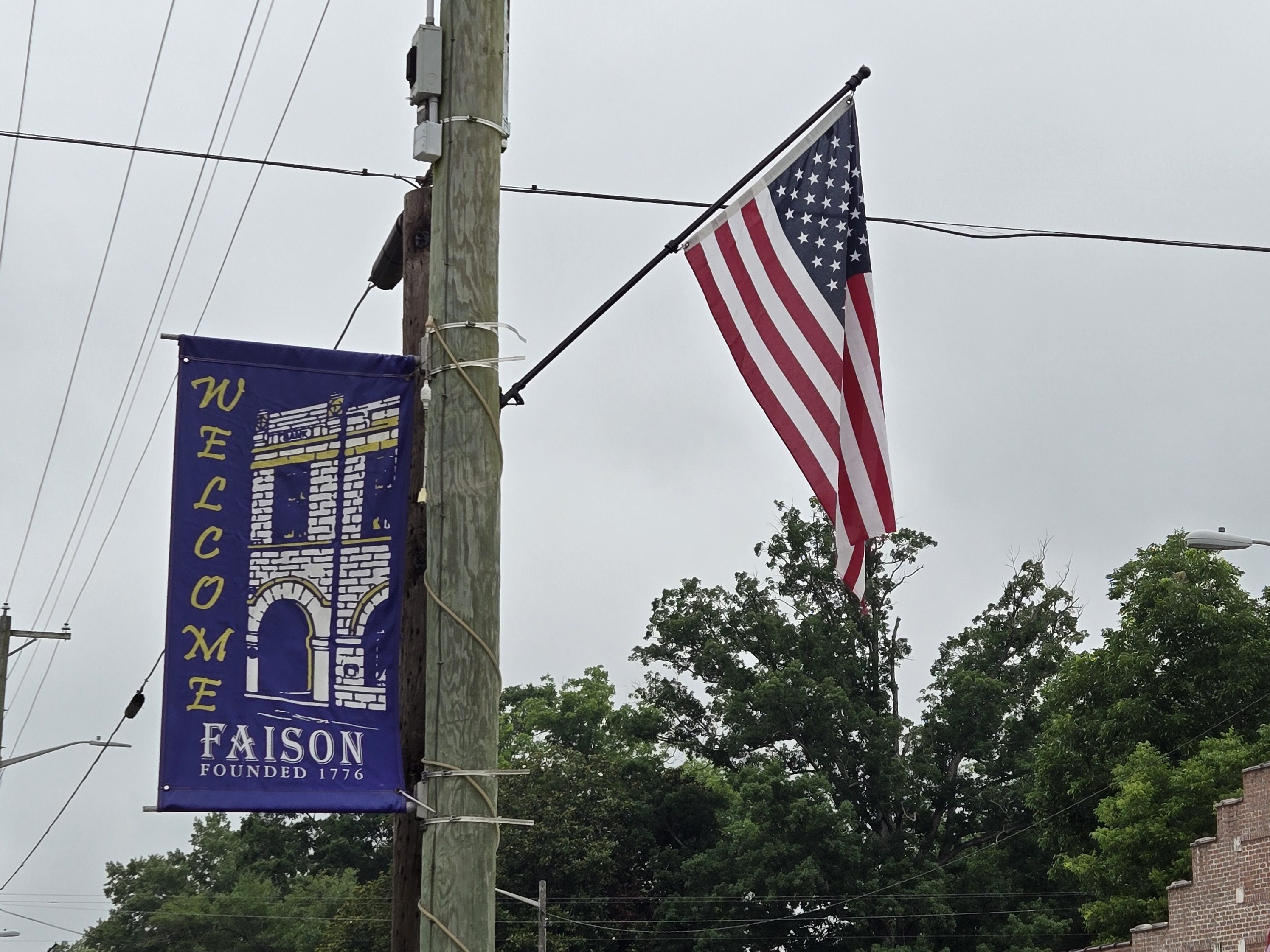
Faison
Faison was originally called “Faison’s Depot,” and under the latter name was founded around 1833. The town was named for Henry Faison, the original owner of the town site.
In the late 1800s and early 1900s, Faison’s strategic location along the Wilmington to Weldon railroad made it a major center for agricultural commerce and shipping point for agricultural products, by rail, to northern cities. In the mid-1900s, farmers from miles around, would bring their products to the Faison Produce Market, to be auctioned/sold and shipped, mostly by truck, to northern markets.
Today, Faison has emerged as an international exporter of food products. Major agribusinesses include, Bay Valley Foods, Southern Produce Distributors, Cottle Farms, and Burch Farms. The original Faison Depot Train Station (c. 18880 was moved to the Town Park and today serves as a Public Library and Public Museum. You’ll also find the Faison Museum here (106 Park Circle), housed within the town library (and old train depot).
The Faison Area also claims more than 700 veterans from all wars.
Warsaw
Warsaw is the home of the oldest Veterans Day celebration in the USA, and they hold an annual Veterans Day Parade each November.

Duplin County Veterans Museum
The Duplin County Veterans Museum (119 E. Hill St.) is located in the historic L.P. Best House, a beautifully restored Queen Anne/Neo-Classic-style house in the Warsaw National Register Historic District (built in 1894). The museum houses military artifacts and memorabilia from many periods in military history displayed primarily on the second floor. The first floor is a restored tribute to the L.P. Best family. The museum is only open for restricted hours or by appointment, so check ahead to schedule your visit.
Country Squire Winery
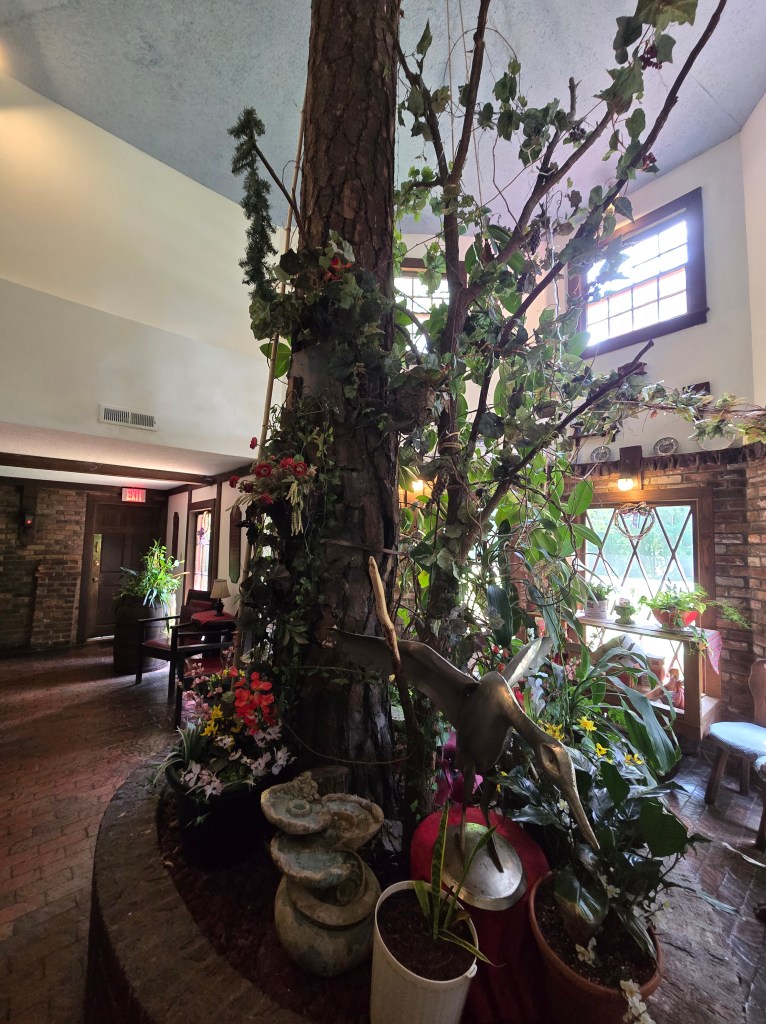
Within Warsaw’s district, you’ll also find the classic Country Squire Winery Restaurant & Inn (748 NC HWY 24/50), which was the place to be seen back in its heyday. However, the restaurant still fills up for dinner, especially on the weekends. It is quite a unique place with a rustic interior and actual tree trunks left inside throughout its various dining spaces. After dinner or a wine tasting, stop by the gift shop. And you can even check in to stay at their inn next door. The venue also hosts weddings, special events, and business group meetings.
Rose Hill
The town of Rose Hill was named for the abundance of wild roses near the original town site. You’ll find two must-see attractions in this small, rural community. Rose hill hosts the annual Grape Stomp as well as the NC Muscadine Festival, both in September each year.

Duplin Winery
Duplin Winery (505 North Sycamore St.) is boasted as North Carolina’s first and oldest winery — and the largest winery in the South. The winery makes award-winning Muscadine wines, including reds, whites, blushes, specialty wines, alcohol-free wines, and frozen Sweezers. They also have an extensive gift shop. You’ll find additional locations in N. Myrtle Beach and Panama City, FL.
World’s Largest Frying Pan
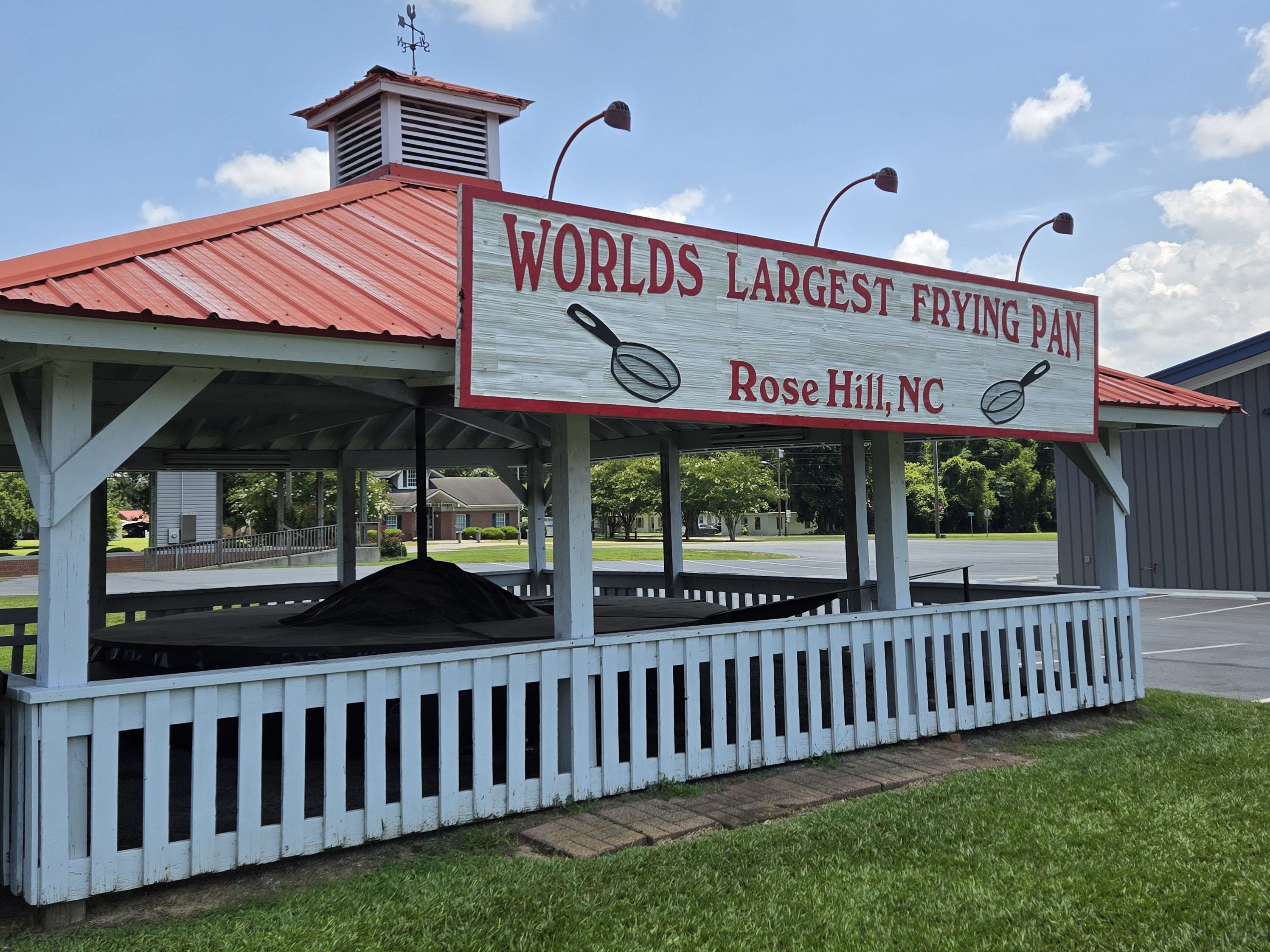
You can’t pass through Rose Hill or Duplin County without stopping at this roadside attraction — The World’s Largest Frying Pan (510 E. Main St.). It is viewable by the public at any time day or night. The frying pan, used only once each year during the NC Poultry Jubilee, holds 200 gallons of oil and can fry more than 300 pieces of chicken at one time!
Wallace
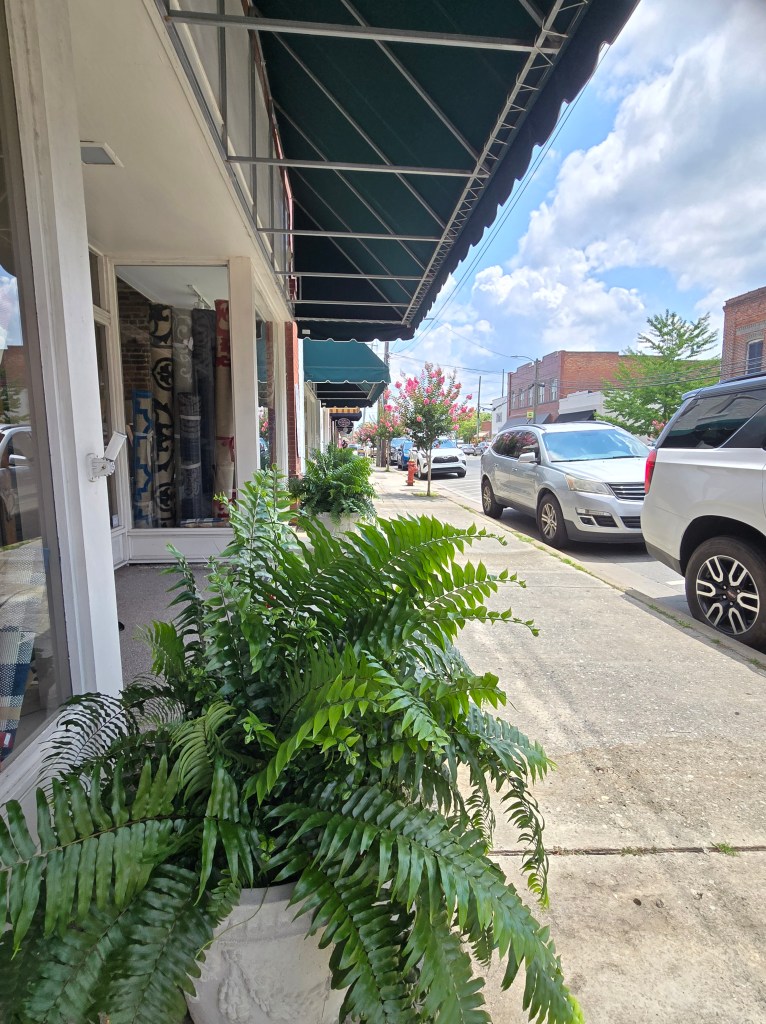
Wallace is a small town that straddles both Duplin and Pender counties. The town of Wallace was first known as Duplin Crossroads and was incorporated into existence in 1873. Later in 1899, the town fathers decided to adopt the new name, Wallace, to honor Stephen D. Wallace, an official of the Atlantic Coast Line Railroad. Wallace is Duplin County’s largest population and retail trade center serving over 50,000 people in a surrounding three county area. The town holds the Carolina Strawberry Festival on the first weekend in May each year and the Backstreet Music Festival in August. Here, you’ll find the Thomas C. Townsend Fireman’s Museum (316 Murray St.) and the Wallace Train Depot (206 Southwest Railroad St.) as well as some nice downtown shopping and restaurants, including the Pink Willow Boutique.
Chinquapin
The roots of Chinquapin, North Carolina lie largely with the Thigpen family, who migrated to the area from Perquimans Precinct in the 1730s. Chinquapin has always been a predominantly agrarian community focused around the cultivation of corn and (to a lesser extent now) tobacco. Raising livestock and harvesting timber/naval stores has also been an essential component of the local economy for centuries. Before the railroad, the only feasible method for these commodities to reach the market (namely that of Wilmington) was via river. Ideally located near the N.E. Cape Fear, Chinquapin was oftentimes the port of departure for produce in eastern Duplin County, especially at times of low water levels when sites further upriver were not accessible. Throughout the early 19th century, the plantation at Chinquapin grew from a homestead with a handful of slaves to a community of several dozen people.
In 1865, toward the end of the Civil War, Union troops captured a small steamer named the A. P. Hurt at Fayetteville. They appointed a former slave named Dan Buxton as its pilot and sent it to operate at Chinquapin. After the war, Buxton tracked down the businessmen who had originally owned the vessel and informed them that he considered the A.P. Hurt to still be their property. Buxton promised to return her if they kept him as pilot for life. When she sank in 1923, he was still on the job after sixty years.
Beulaville
Beulaville is the most recent town to be incorporated in Duplin County. The earliest Native Americans thought to have lived in the area were the Joara (whose settlements date back to AD 1000), based out of present-day Burke County. The Joara were the chiefdom of the Mississippian culture. Immediately prior to European colonization in the early 18th century, the coastal plain of North Carolina was home to many distinct Native American tribes: the Coree, Coharie, several small Neusiok communities, and the Tuscarora.
Native American burial mounds are numerous in Duplin County, in the rural areas surrounding Beulaville especially. There are four sizable mounds within a ten-mile radius of the town, the two largest being in the vicinity of Hallsville and Sarecta. Combined, these mounds contain roughly one hundred bodies.
The arrival of the Palatines at New Bern and the ensuing wave of English and Welsh settlers sparked a conflict known as the Tuscarora War (1710–1715). With the elimination of the last Tuscarora stronghold at Fort Neoheroka and subsequent exodus of the remainder of the tribe to New York (they became the sixth nation of the Iroquois Confederacy), the interior of the coastal plain was made available for European settlement. Many of the original European settlers of what is now Beulaville arrived from Beaufort, Craven, Jones, and Onslow counties.
In 1736, Duplin County (then upper New Hanover County) was the destination of several hundred Ulster Scots (Scotch-Irish) and a handful of Swiss Protestants. Beulaville proper was founded as “Snatchet” in 1873 out of necessity for a trading center for nearby farmers and those in the business of logging and turpentine production. Also colloquially referred to as “Tearshirt” by locals, the town was once notorious for alcoholism and frequent street brawls. Indeed, the manufacture and distribution of corn liquor remained a steady source of income for many families well into the 20th century. Upon demolition of a prominent downtown building (which had formerly served as a soda shop in the 1950s) to make way for a McDonald’s, a moonshine still and several barrels of the drink were uncovered in the basement.
Sarecta
Sarecta was the first incorporated town in Duplin County, North Carolina, established in 1787. When Sampson County was created out of a portion of Duplin County in 1784, there was a need to establish a new court house in a more central location. Sarecta and the present location of Kenansville were the two candidates, and General James Kenan (for whom Kenansville is named) cast the deciding vote against Sarecta. By act of the North Carolina General Assembly on January 6, 1787, the town was established under the spelling “Sarecto” and was 100 acres in size including lots and property for a town commons.
Kenansville
Kenansville is the county seat of Duplin County. The town was named for James Kenan, a member of the North Carolina Senate. Liberty Hall (409 S. Main St. — right beside the Cowan Museum), his early-1800s-era historic home, is located within Kenansville. At the time of this visit, Liberty Hall was closed for repairs.
Cowan Museum of History & Science
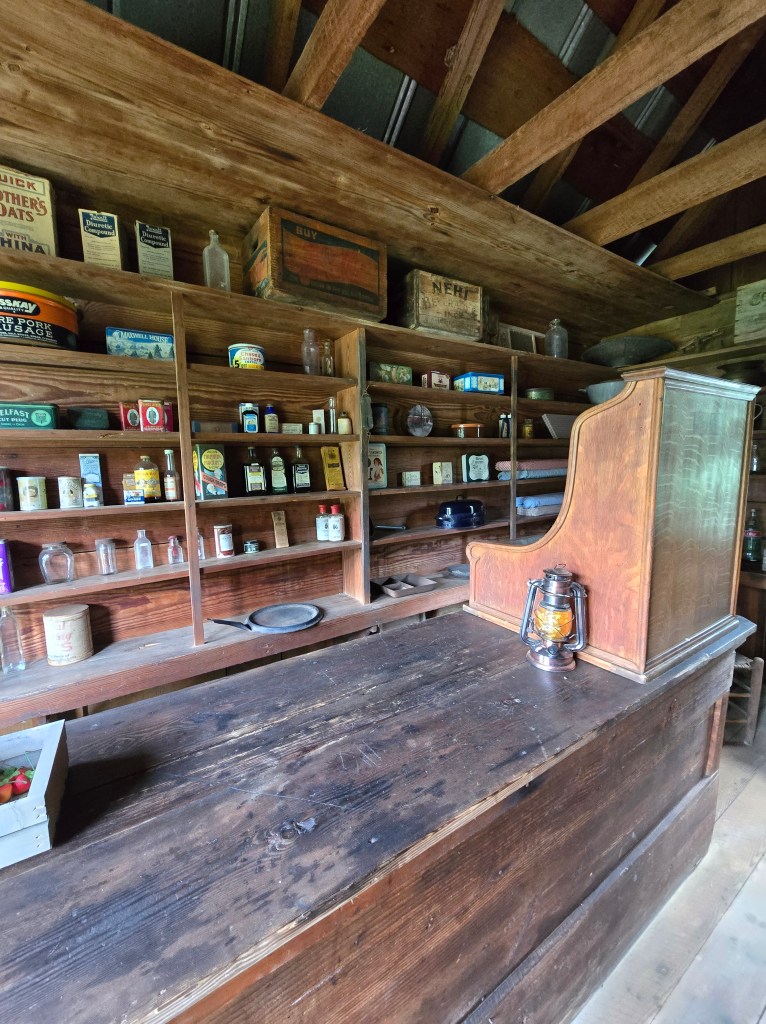
The Cowan Museum of History and Science 9411 S. Main St.) was founded in 1981 by George and Ila Cowan as a memorial to their daughter, Joann Cowan Brown. It is housed within the Kelly-Farrior House (ca. 1848) and has an adjacent historical park with 6 wooden buildings, which include a log cabin, general store, and tobacco barn. Also on the grounds is a botanical garden with approximately 90 species of commercially-available native plants in what has become one of the region’s first free, public native-plant-focused botanical landscape garden. This outdoor space, which is open 24-hours a day, has pollinator gardens, a wet meadow garden, Longleaf Pine upland garden, and a Bald Cypress wetland garden.
Of the 4,300 objects in the collections, about 2,000 were donated to Duplin County by the Cowan family, with most focusing on 19th- and 20th-century tools and technology. Objects on display include a diversity of woodworking tools, gardening tools, agricultural implements, items used in a variety of crafts and trades, medical devices, many household artifacts, and an impressive collection of geological specimens. Unique items may be encountered onsite, such as a 1930s permanent wave machine, an alternative fuel fan, and a hog oiler.
Next stop… Jones County!
 Portable NC