
Wake County was formed in 1770 from parts of Cumberland, Johnston, and Orange Counties. And prior to English colonization, present-day Wake County was part of the Tuscarora nation. However, Wake County did lose some of its territory through the formation of other counties, including Franklin County in 1787 and in Durham County in both 1881 and 1911. The first courthouse was built at a village originally called Wake Courthouse, now known as Bloomsbury. In 1771, the first elections and court were held, and the first militia units were organized.
During the colonial period of North Carolina, the state capital was originally located in New Bern. For several years during and after the Revolutionary War, there was no state capital, and the General Assembly met in various locations. Fayetteville served as the state capital in 1786, 1789, 1790, and 1793, then Raleigh became the permanent state capital in 1794. In 1792, a commission was appointed to select a site to build a permanent state capital. The commission members favored land owned by Colonel John Hinton across the Neuse River, but the night before the final vote, the committee adjourned to the home of Joel Lane for an evening of food and spirits. The next day, the vote went in Lane’s favor.
Lane named Wake County in honor of Margaret Wake Tryon, wife of colonial Governor William Tryon. Raleigh was named after Sir Walter Raleigh, and established in 1792 on 1,000 acres purchased from Lane. Although Raleigh had never set foot in North Carolina, he had sponsored the establishment of the first English colony in North America on North Carolina’s Roanoke Island in 1585. The city of Raleigh became both the state capital and the new seat of Wake County.
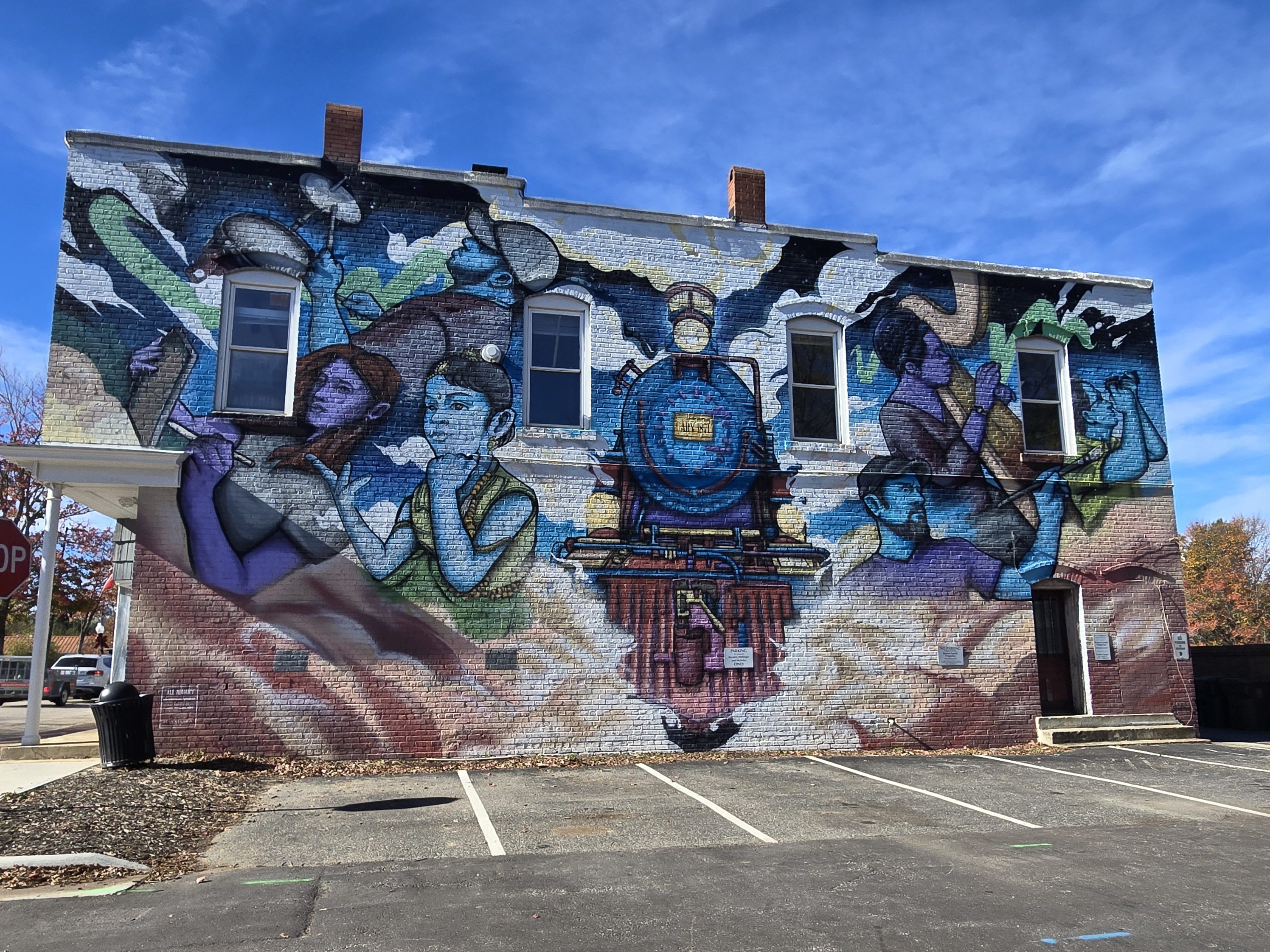
Cary
Before the arrival of European settlers, the Tuscarora and Catawba people lived in what is now called Cary. However, their numbers were greatly reduced due to smallpox epidemics, resulting from both contact with Europeans who carried the disease and having no prior immunity.
Cary began as a railroad village and became known as an educational center in the late 19th and early 20th centuries. The creation of nearby Research Triangle Park in 1959 resulted in Cary’s population doubling in a few years, tripling in the 1970s, and doubling in both the 1980s and 1990s. Cary is now the location of numerous technology companies.
In Cary, 68.4% of adults hold a bachelor’s degree or higher, which is higher than the state average. In 2021, it was identified as the safest mid-sized place to live in the United States, based on 2019 FBI data. It also has a median household income of $113,782, higher than the county average of $88,471 or the state average of $60,516.
In the 1750s, John Bradford moved to the area and opened an ordinary or inn, giving Cary its first name—Bradford’s Ordinary. However, most of the land remained in the hands of two men, both named Nathaniel Jones. Arriving around 1775, Jones of White Plains plantation owned 10,461 acres in eastern Cary, while Jones of Crabtree owned most of what is now western Cary.
In 1854, Bradford’s Ordinary was linked to a major transportation route when the North Carolina Railroad came through the settlement, followed by the Chatham Railroad in 1868. Wake County farmer and lumberman Allison Francis Page also arrived in 1854 and is credited with founding the town. For $2,000, Page purchased 300 acres surrounding the planned railroad junction and built his home called Pages, a sawmill, and a general store–and donated 10 acres for a railroad depot.
For a time, the community was unofficially known as Page, Page’s Siding, Page’s Station, Page’s Tavern, and Page’s Turnout. But Page eventually named the community Cary because of his admiration for Samuel Fenton Cary, head of the Sons of Temperance in North America, who had delivered an oration in Raleigh two months prior. Cary was incorporated on April 3, 1871, with Page serving as the first mayor.
Electricity came to Cary in 1921 and, for the first time, Cary had housing developments along with a volunteer fire department and municipal water and sewage system. During the Great Depression, the Bank of Cary failed, and the town went bankrupt. Conditions were so challenging that Cary had four mayors in two years.
In the 1930s, a new North Carolina State University research farm supported Cary’s farmers. One Cary garden club began growing gourds and showed their products and related crafts at the North Carolina State Fair. After the club’s first annual Gourd Festival in 1944, they sent exhibits to the International Gourd Society Festival in Pasadena, California, and won many prizes, which earned Cary the nickname “Gourd Capital of the World”, a designation reflected by gourds circling the original version of the town seal. Now named North Carolina Gourd Festival, the annual event moved to the North Carolina State Fairgrounds in 2000.
All of the streets in Cary were paved by the early 1950s and residential suburbs began forming around the downtown area, including Veteran Hills, Russell Hills, and Montclair subdivisions. The town gained its first supermarket, Piggly Wiggly, in 1950, followed by the Cary Public Library in 1960, and a town-funded fire department in 1961.
In 1960, Cary’s population was 3,356 but by 1970, it had grown to 7,686. To preserve its small-town feel, of Cary formed the Community Appearance Commission in 1972, which focused on regulating the look of downtown through sign ordinances. The Land Dedication Ordinance of 1974 required developers to set aside one acre of green space for every 35 housing units constructed.
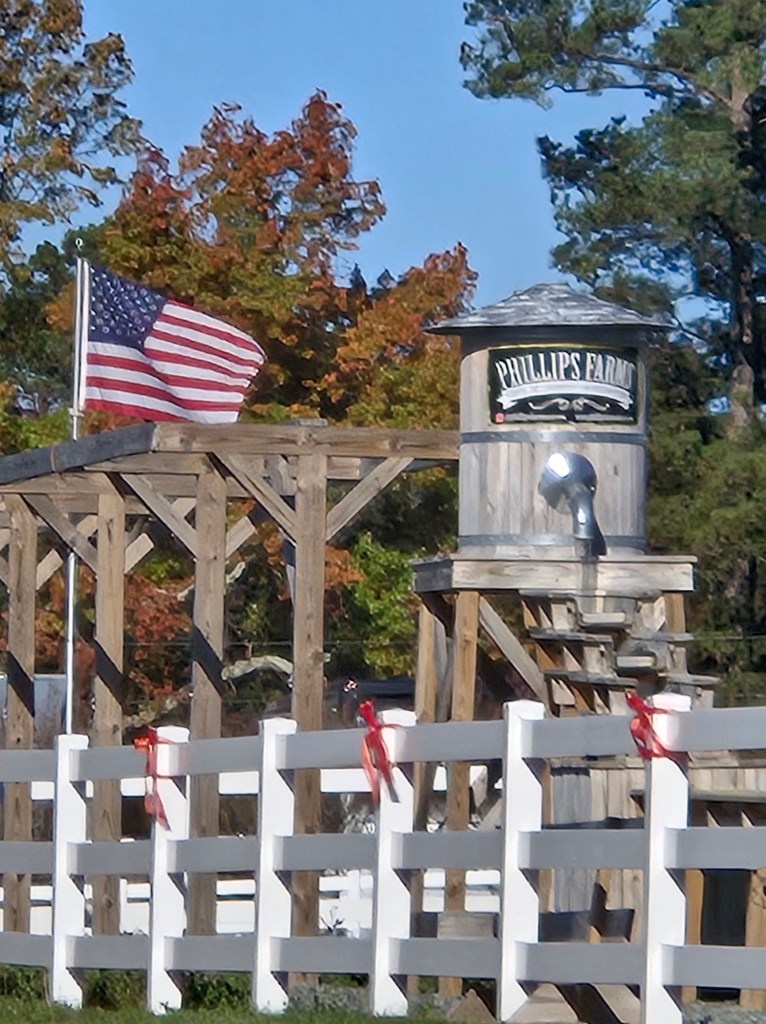
Phillips Farms
Phillips Farms (6800 Good Hope Church Rd.) has been a staple of the Raleigh/Wake County area for decades. They host all-day family fun and events in season.
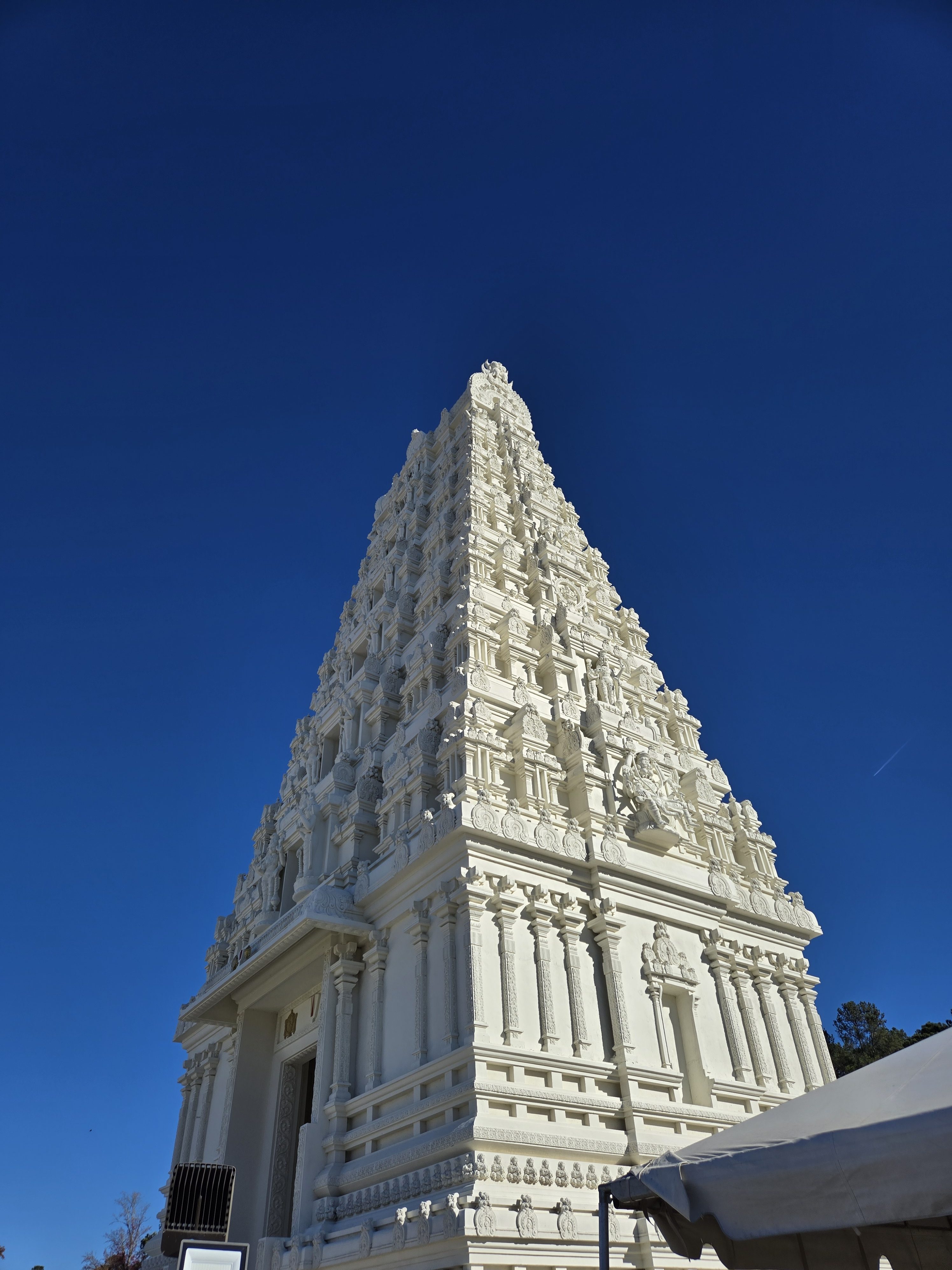
Sri Venkateswara Temple of North Carolina
We encourage you to respectfully stop by this amazing complex of temples just outside of Cary (121 Balaji Place). This is a place of quite contemplation, and you can enjoy the amazing, artful architecture of the temple buildings as well. Be sure to watch for the signage and remove your shoes before entering into the worship area for a close-up view of some additional buildings and spaces. Please be respectful and do not enter the buildings unless you are there to worship.
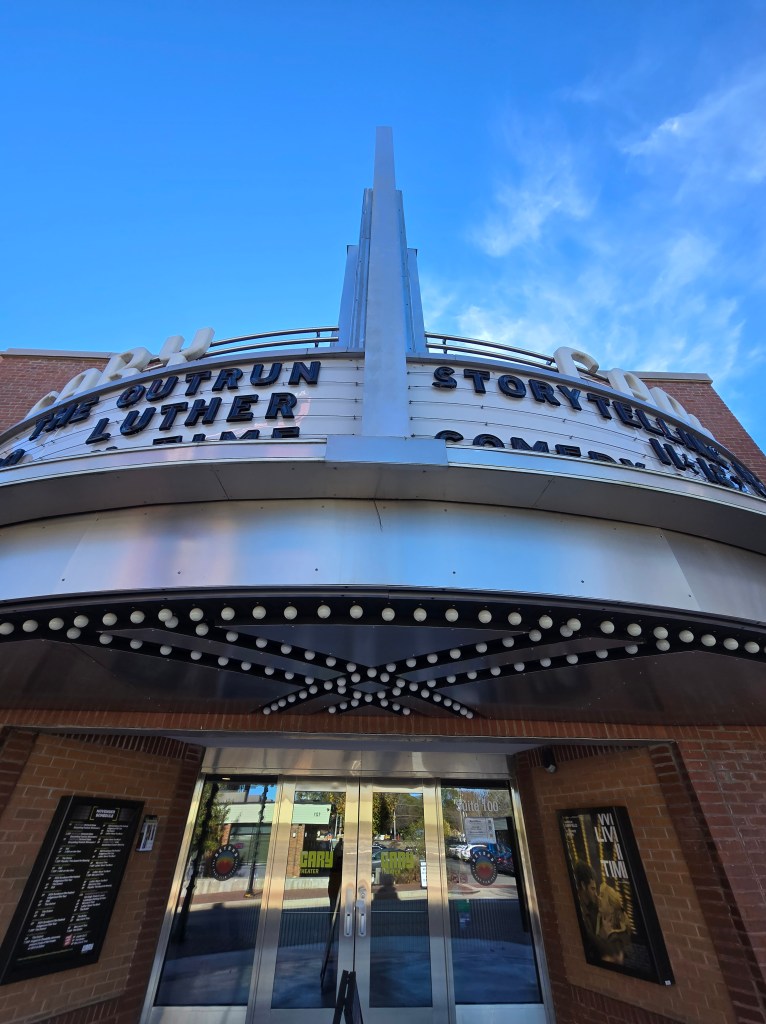
Cary Theater
The original Cary Theater (122 E Chatham St.) still features shows and productions year round.

Downtown Cary Park
Downtown Cary Park (327 S Academy St.) is a place for all ages. From ultra imaginative kids playgrounds to green spaces, walkways, thoughtful plantings, a water fountain, and more, there’s lots to enjoy here year round!

Cary Arts Center
The former and original Cary High School (101 Dry Ave.) has been reimagined as the now Cary Art Museum. Stroll through the exhibits — and you’ll see remnants of the original high school, both inside and out, including a locker exhibit inside and a must-see public art piece outside made from original locker doors.
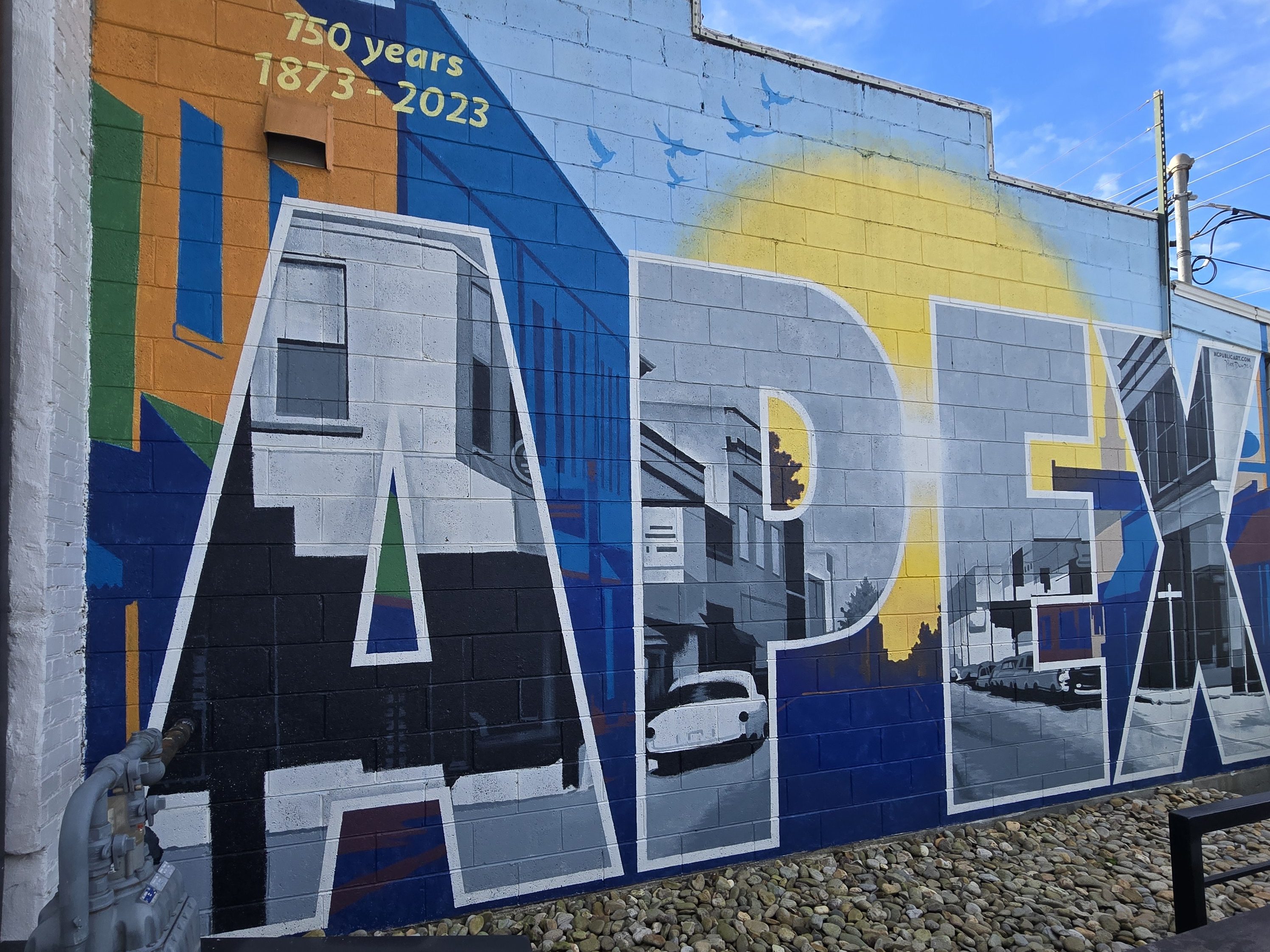
Apex
In 1994, the downtown area was designated a historic district, and the Apex train depot, built in 1867, is designated a Wake County landmark. The depot location marks the highest point on the old Chatham Railroad, hence the town’s name. The town motto is “The Peak of Good Living.” Apex’s population boom occurred primarily in the late 1990s when Research Triangle Park, established in the 1960s, created strong demand for technology workers.
In 1869, the Chatham Railroad, connecting Chatham County with Raleigh, was completed. At the highest point of the line, which railroad workers dubbed the “apex of the grade”, existed a pond. Trains leaving out of Chatham would stop at the pond to replenish their water. A community began to grow around the stop, which the railroad workers called Apex. The town of Apex was incorporated in 1873 and grew slowly through the succeeding decades, despite several devastating fires, including a June 12, 1911 fire that destroyed most of the downtown business district.
In 2015, Apex was named the number-one place to live in America, according to Money magazine. Apex PeakFest is the community’s annual festival held on the first Saturday in May.

Holly Springs
The town of Holly Springs, established in 1877, grew around free-flowing freshwater springs, believed to be the original “holly springs”, surrounded by large, mature holly trees.
In 1875, George Benton Alford moved his successful mercantile business from Middle Creek Township to Holly Springs, and was instrumental in beginning an economic revival in the community. A year later, he bought the Leslie house, which was the centerpiece of the village. Over the years, he made significant additions and improvements to the house until it became one of the largest mansions in Wake County, one of the few with its own ballroom.
Alford, a businessman and politician, started several businesses, including a mercantile store, a sawmill, a cotton gin, and the Holly Springs Land and Improvement Company, and eventually, the General Assembly granted the town a charter. He started a newspaper, The Cape Fear Enterprise, which he used to promote the town.
The town built its first sewage plant in 1987, then real growth occurred. Holly Springs, in line for the spillover from increased populations in Cary and Apex, suddenly boomed; its population increased from 900 in 1992 to an estimated 6,000 in 1998 to nearly 25,000 in 2010.
On April 16, 2011, a large tornado touched down close to the Holly Springs town center, uprooting trees and destroying homes and buildings.
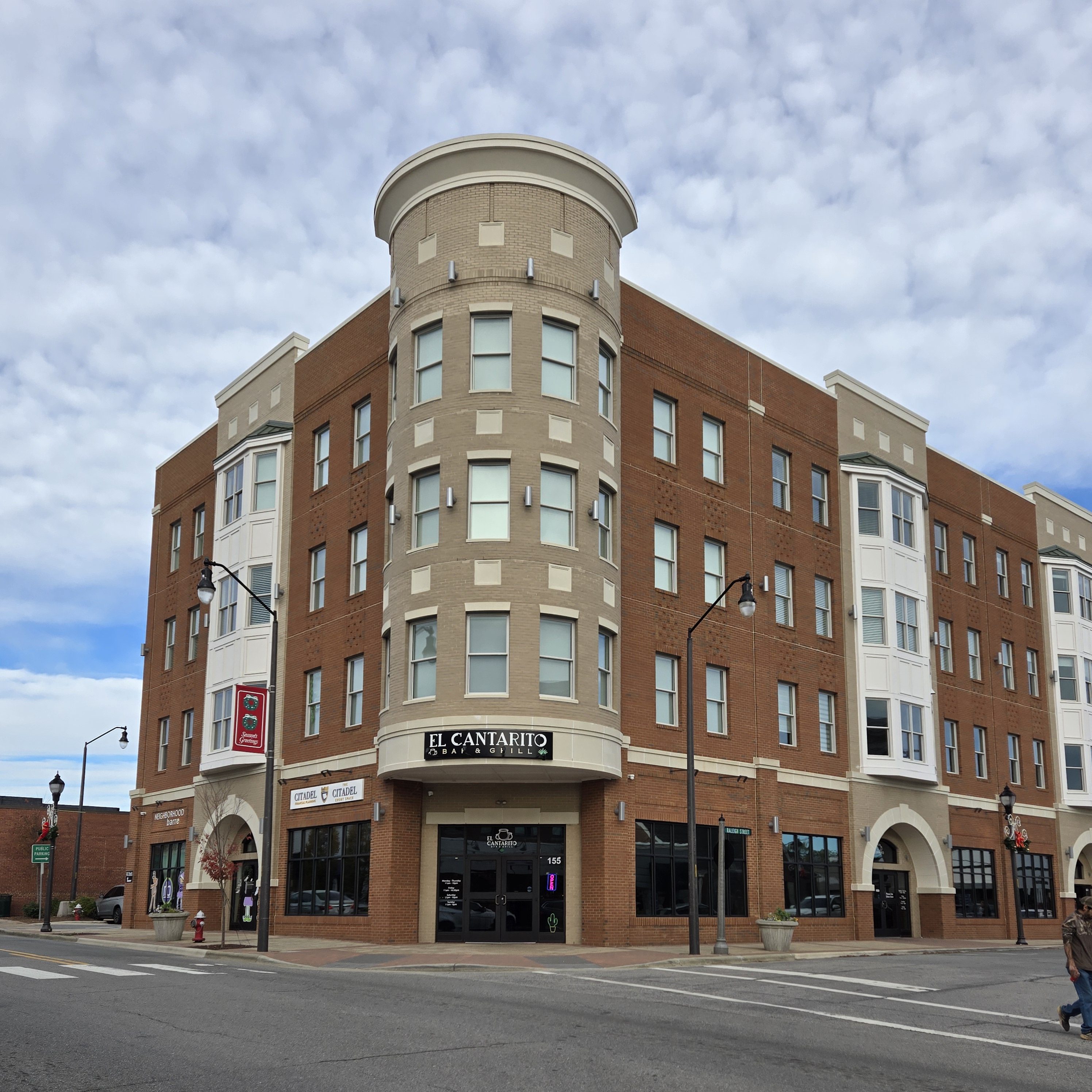
Fuquay-Varina
The hyphenated name attests to the town’s history as two separate towns. Fuquay Springs and Varina merged in 1963 to create the modern town. Economically, the town initially grew due to tobacco trade and agriculture, but has seen recent population growth and real estate development due to its proximity to Research Triangle Park.
Frenchman William Fuquay first settled in the small farming town of Sippihaw, named for the original Native American tribe that inhabited the area. Around 1858, while plowing the fields of the family tobacco farm, Stephen Fuquay, son of William, discovered a spring. Originally the spring was used solely for drinking water. Stephen soon came to the conclusion that the mineral water flowing from the springs had healing properties. As word spread, locals began to help the springs establish this reputation, which brought residents from neighboring communities and counties to its waters. The springs were eventually walled in to better serve the tourists coming to the area by road or rail. In 1860, Fuquay sold the springs to a group of local investors who formed the Chalybeate Springs Company to market the attraction and its waters.
At that time, another Sippihaw resident, J. D. “Squire” Ballentine, was returning home from the Civil War. Ballentine had been the town’s schoolmaster before going off to fight for the Confederate Army. During his tour of duty, he had received letters from one of many southern ladies who wrote to the troops to improve their morale. Originally signing her name “Varina”, perhaps an homage to the wife of Jefferson Davis, Virginia Avery would later meet and fall in love with Ballentine. He continued to call her Varina throughout their life together. When he became the first postmaster at the new post office in town in 1880, he named it “Varina” in her honor. A community grew just south of the springs, near the post office and the couple’s Varina Mercantile Company general store. In time, it adopted the same name.
The Fuquay Mineral Spring’s popularity grew in the 1890s and around the start of the 20th century as local businessman John Mills developed the idea to offer “Moonlight Excursions” to the springs. He fitted flat rail cars with seats and offered nighttime train trips to southern Wake County from Raleigh. As more guests came to the springs to “take the waters,” a group of small hotels sprung up in town, along with restaurants, barbecue stands, and a dance pavilion with a player piano. The town became a tourist destination. In 1902, Sippihaw was renamed “Fuquay Springs” in honor of its founding family and was officially incorporated in 1909 and the two towns merged into Fuquay-Varina in 1963.
Fuquay-Varina History Museums
When Fuquay-Varina celebrated its Centennial in 2009, the town established the Fuquay-Varina Museums Complex (131 South Fuquay Avenue) to house treasured artifacts from the town’s past. Countless townspeople shared their collections and recollections to create a vivid picture of Fuquay-Varina as it grew through the 19th and 20th centuries.On your visit to the museum complex, you’ll see the Squire Ballentine School featuring a 2-room schoolhouse, the first post office, the old jail and scores of displays in the Centennial Museum. Also, visit the tobacco barn and caboose. The Fuquay Mineral Spring Park is nearby.
Fuquay Mineral Spring Park
104 Spring St
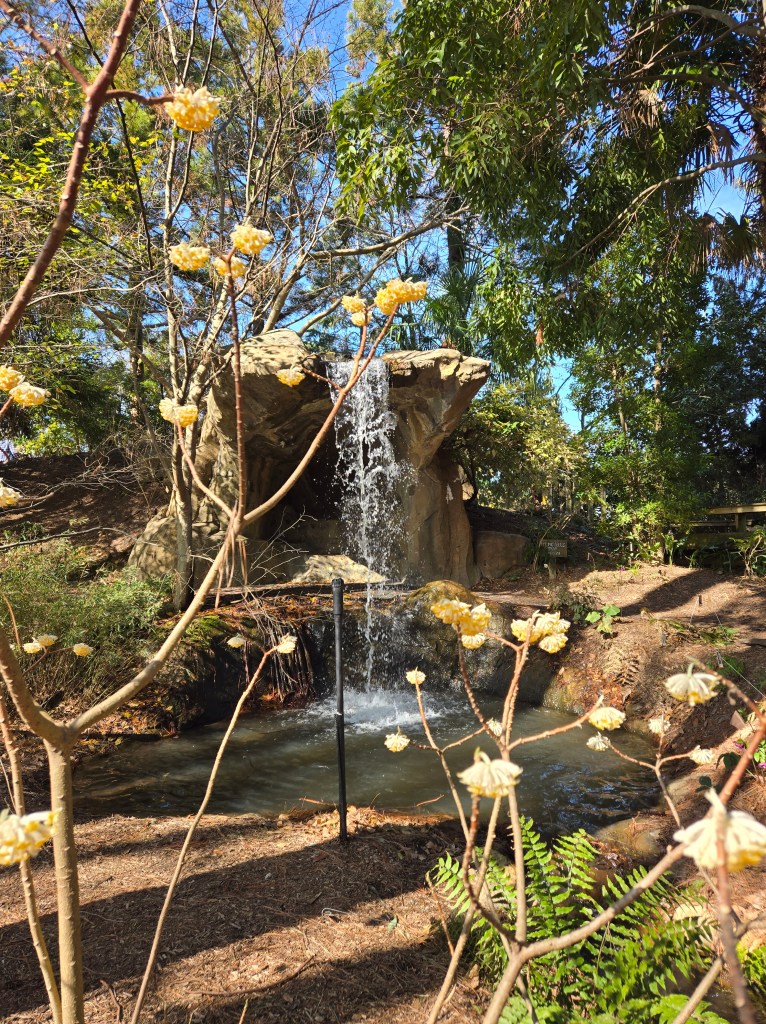
Juniper Level Botanic Garden
Stop by the Juniper Level Botanical Garden (9241 Sauls Rd.) to tour their grounds, gardens, sculpture, a waterfall, pond garden, rain garden, bog garden, and more displaying a large variety of native and exotic plants. Some greenhouses are open to the public, and many plants are for sale. You’ll find a plethora of varietals that you won’t find at your local home and garden stores.

Garner
Land near the town of Garner was first settled around 1751. In the 1850s, the North Carolina Railroad was built. Scotty McCreery, American Idol season 10 winner, is from the area.
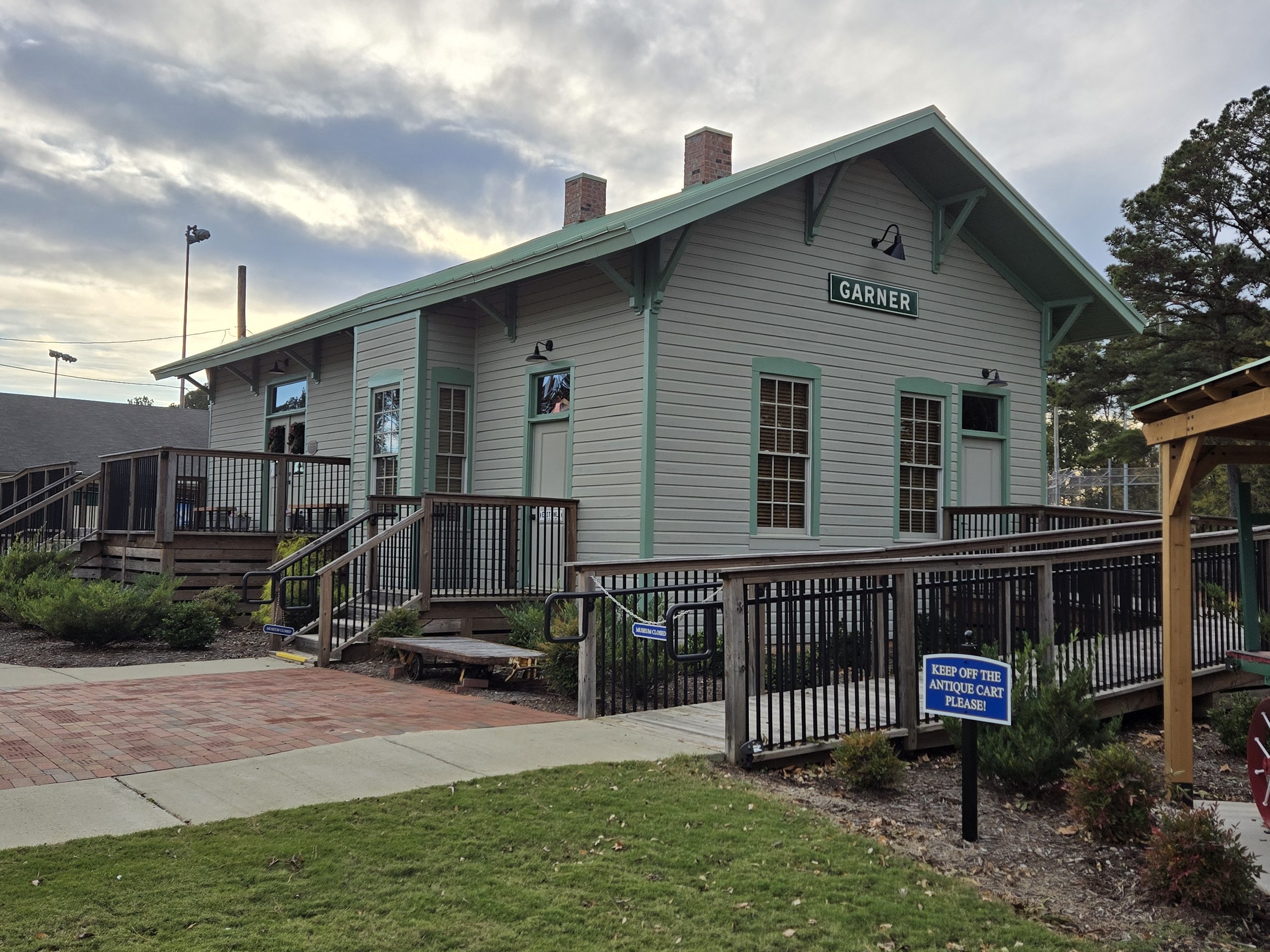
Garner History Museum
Visit the Garner History Museum (106 Pearl St.) to view exhibits on area farming, trains, Native American settlements, schools and sports, phones through the decades, plus a sweatshirt worn by American Idol star and season 10 winner Scotty McCreery.
Knightdale
Named for Henry Haywood Knight, a local Wake County landowner who donated land to found a railroad depot, the town was incorporated in 1927.
For many years the Knightdale area was a crossroads served only by a post office. By the end of the 19th century, locals decided there was a need to establish a town. Henry Haywood Knight donated some of his land holdings in the area to the Norfolk and Southern Railroad Company in order to entice the company to build a railroad that would provide freight and passenger service. Although Knight did not live to see the railroad arrive in Knightdale, not long after his death in 1904, the railroad finally came to the community that would bear his name.
After the railroad and depot were built, the area began to develop quickly. Norfolk and Southern moved families into the community to take care of the railroad, and many of the older homes that exist today in Knightdale were built specifically for the use of railroad workers and their families. The first railroad stationmaster’s house can still be seen along the tracks on Railroad Street. As the community continued to grow, Knightdale received its articles of official incorporation from the North Carolina Legislature on March 9, 1927, with the first mayor being Bennett L. Wall.
On February 7, 1940, a fire broke out in the center of town. The townspeople turned out to help extinguish the fire, but the fire was not brought under control until firefighters arrived from Raleigh with an adequate water supply. Several businesses and homes were destroyed and the townspeople rebuilt the historic downtown area.
After World War II, the population of Knightdale grew at a steady pace, thanks to the Baby Boom. The corner drugstore, the bank, and the barber shop located on First Avenue served as places of business, as well as places for social gatherings. Movies were often shown on the wall of the old bank building, which is located at the intersection of First Avenue and Main Street. In 1952 a municipal water system was installed.
Frankie Muniz, a popular television and film actor, grew up in Knightdale. He started his acting career performing the role of Tiny Tim in “A Christmas Carol” for three years. Nominations for his performances include the Hollywood Reporter Young Star Award and the Young Artist of Hollywood Award.
Mingo Creek Park
100 Parkside Commons Drive
Wendell
Incorporated in 1903, Wendell was settled in the 1850s, when farmers in Granville County were victims of a blight that came to be known as the Granville County Wilt. Their tobacco crops failed, and they chose to move to a new location with more fertile land for their crops. As settlement increased, a small village took form. The villagers asked the local schoolteacher, M.A. Griffin, to choose a name. Griffin suggested they call it Wendell, in honor of his favorite poet, Oliver Wendell Holmes. However, the townspeople pronounce each syllable with equal emphasis, not as the poet’s middle name is said. The Town seal was adopted on April 4, 1963.
There are several personalities and notable people from the area:
- George J. Laurer, inventor of the Universal Product Code
- Ron and Amy Shirley, reality television stars of Lizard Lick Towing
Wendell Mural Trail
The Wendell Mural Trail is an interactive, outdoor tail of murals painted on the buildings of downtown Wendell. Take some time to explore and see if you can find all of the murals.
- Wendell: Small Town, Big Charm, Artist Unknown. Located at 115 E. Third Street
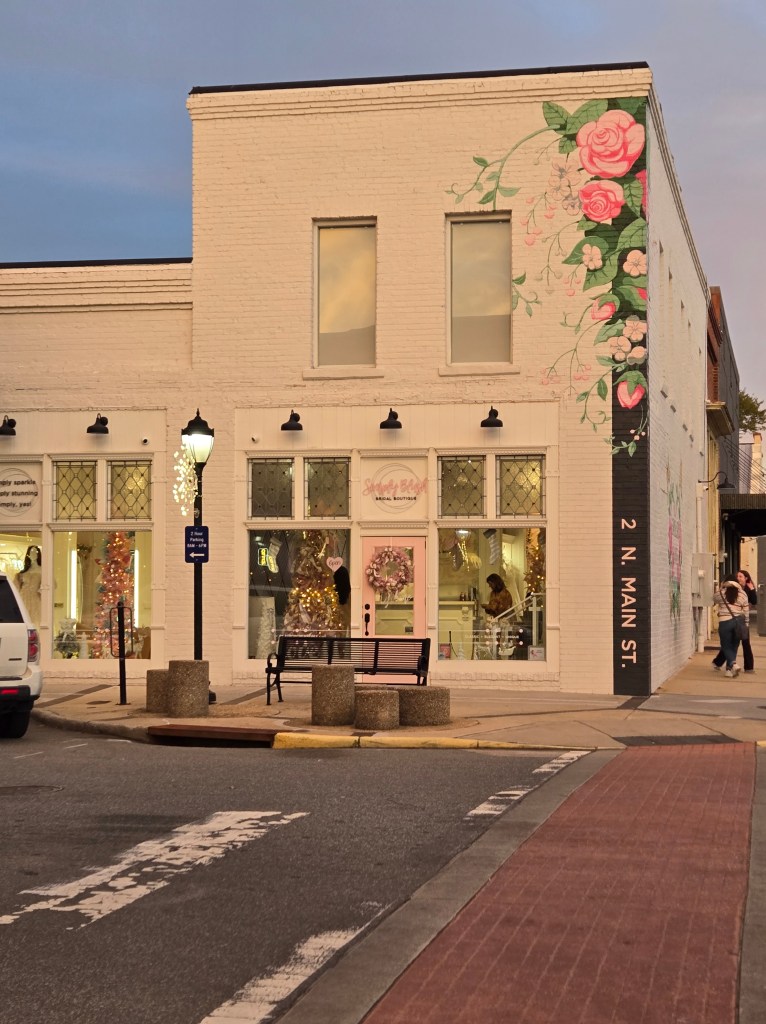
- Simply Blush, by Betsy Peters Rascoe. Located at 2 and 4 N Main Street
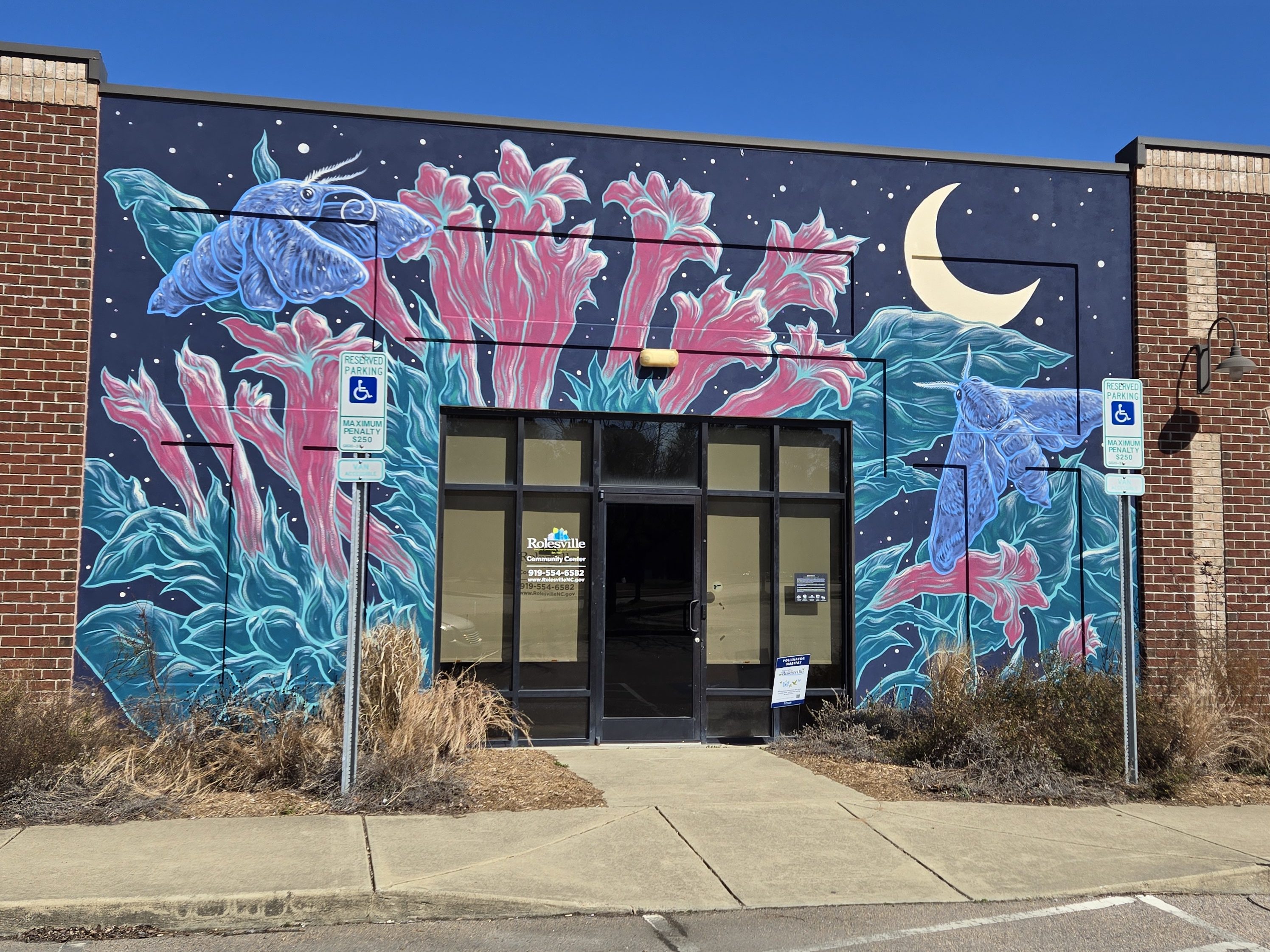
- Pollinators, by Matthew Willey. Located at 20 E. Campen Street.
- Lewa, by Aurelis Lugo. Located at 19 N. Main Street
- Train, by Peggy Lee. Located at 100 W. Third Street
- Oliver: The World’s Largest Tobacco Worm, by Michael Brown. Located at 15 W. Fourth Street
- Breathe Deeply, by Lisa Gaither. Located at 3451 Wendell Boulevard
- Oliver Wendell Holmes Quote, by Peggy Lee, 122 N. Main Street
- Tree of Hope, by Peggy Lee, 128 N. Main Street
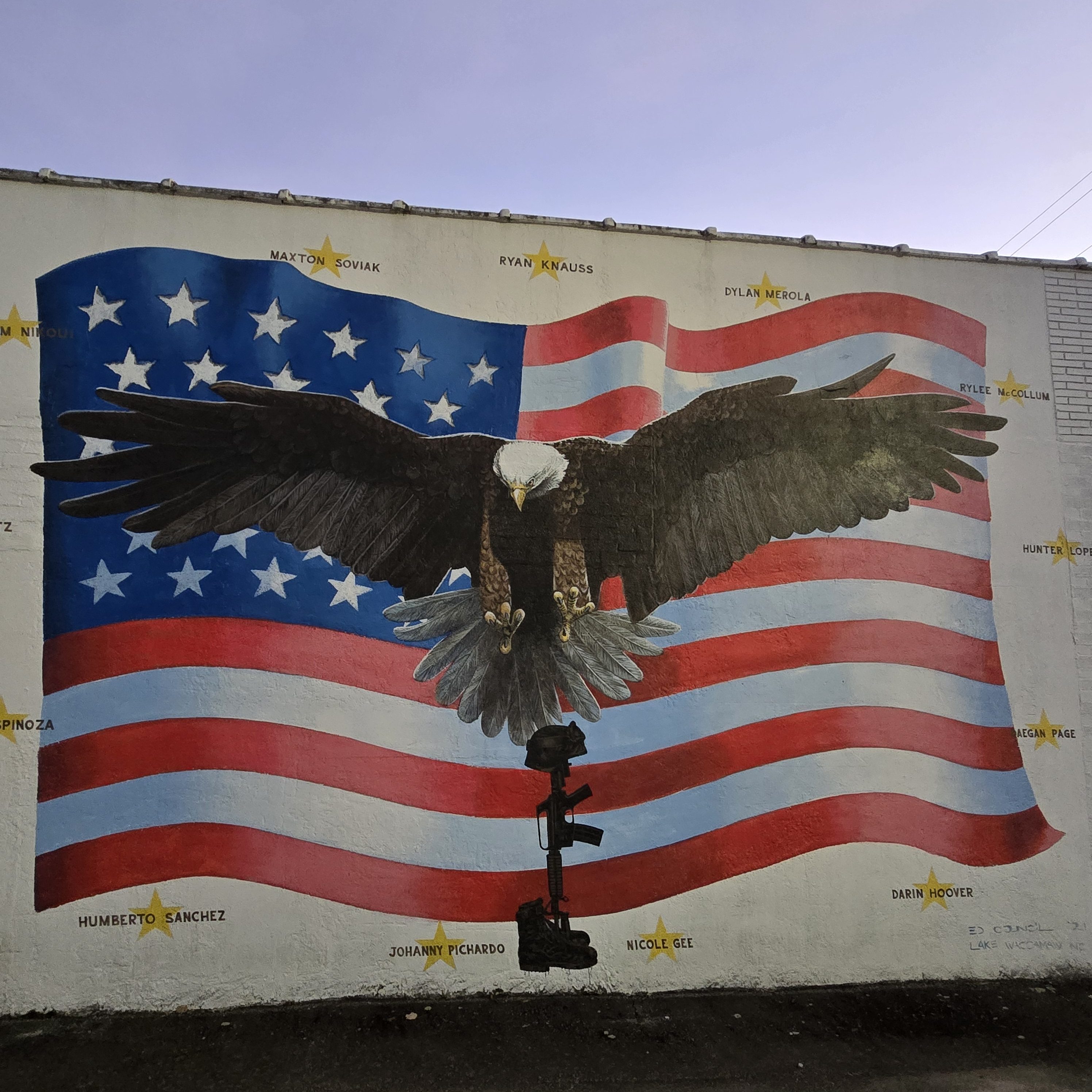
- Soldier Memorial, by Ed Council. Located at 114 N. Main Street
- Chocolate Strawberry, by Lisa Gaither. Located at 235 Cook Street
- Community Garden, by Amy Richards. Located at 601 W. Third Street
- Bike, by Autumn Cobeland. Located at 2301 Wendell Falls Parkway
Zebulon
Edgar B. Barbee and Falconer B. Arendell organized the Zebulon Company for development in 1906. Shortly thereafter, they began to divide up their 49 acres into lots, blocks, streets, and avenues. On February 16, 1907, the town was officially recognized as Zebulon, North Carolina, named after Zebulon Baird Vance, the Governor of North Carolina during the American Civil War.
Rolesville
In the beginning of the nineteenth century, William H. Roles, the namesake of the town, purchased land in the area and settled there. The town was chartered under his leadership in 1837 and became a stagecoach stop. Rolesville was incorporated on January 18, 1837, by the North Carolina Legislature.

Wake Forest
Wake Forest was the original home of Wake Forest University for 122 years before it moved to Winston-Salem in 1956.
In 1832, Dr. Calvin Jones, originally from New England, bought 615 acres of forested land in Wake County, North Carolina. He built his plantation here. The sparsely populated area became known as the Forest of Wake, or Wake Forest. Jones sold his farm to the North Carolina Baptist Convention for $2,000, who opened the Wake Forest Manual Labor Institute, later Wake Forest College, on the site. The community was incorporated as the “Town of Wake Forest College” in 1880. In 1909, the word “College” was removed from the name of the town, then the college moved to Winston-Salem in 1956.
In 2007, the town was listed by Forbes magazine as the 20th fastest growing suburb in America, with a 73.2 percent increase in population between 2000 and 2006.
Little House Museum & Gallery
201 N. Main St.
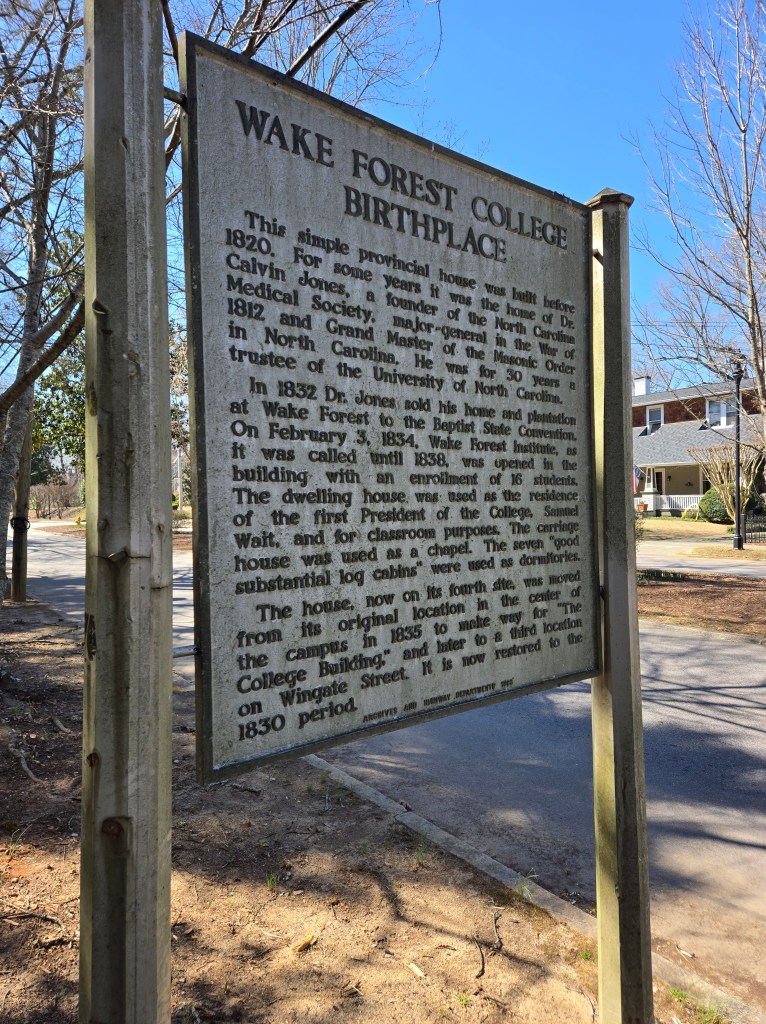
Wake Forest College Birthplace
450 N. Main St.
The Wake Forest College Birthplace collects, preserves and displays the history of the town of Wake Forest as well as Wake Forest University. Visitors have access to an impressive collection of photos, books, college publications, furniture, documents, professors’ writings, and medical, law and sports memorabilia.
Wake Forest Historical Museum
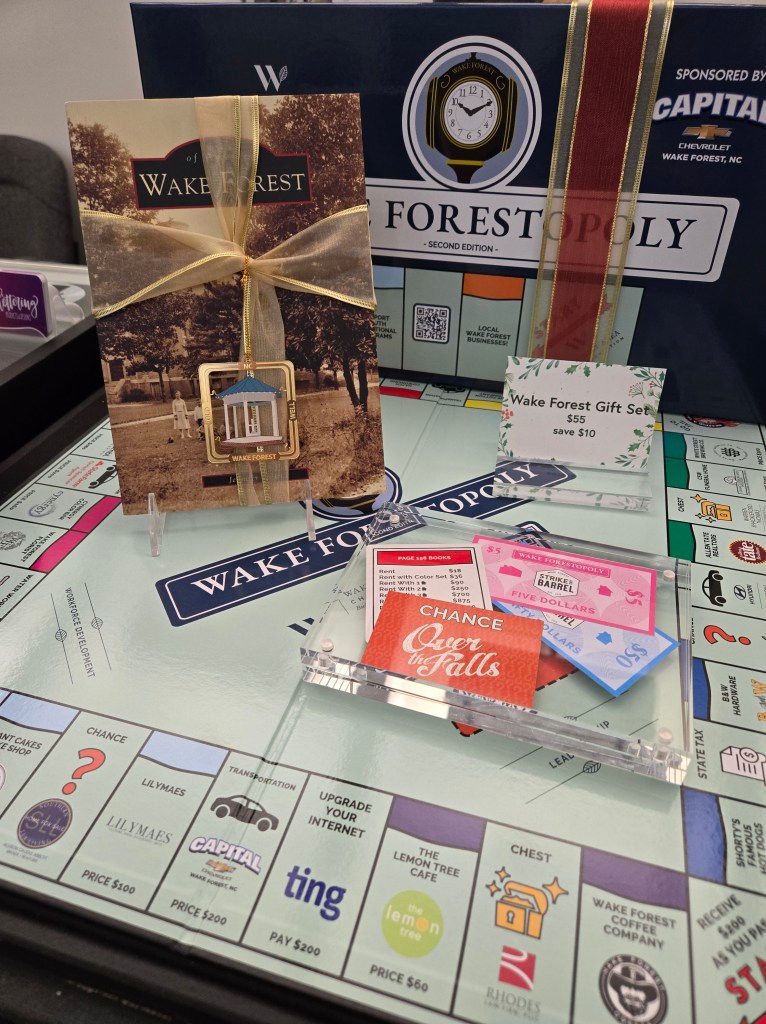
Wake Forest Historical Museum (414 N Main St), also known as the Dr. Calvin Jones House, was built in 1820 and was the residence of the first president of Wake Forest College and the center of activities that took place at the school. The museum displays the history of the town of Wake Forest as well as Wake Forest University. The house contains collections of photos, books, college publications, furniture, documents, professors’ writings, and medical, law and sports memorabilia.
Falls
The Falls community was founded in the 1850s, with the construction of a paper mill on the Neuse River at the site. It was named for the now-submerged Falls of the Neuse, which were the reason for building the mill.
Next stop… Raleigh!
 Portable NC