
Forsyth County was formed in 1849 from Stokes County and was named for Colonel Benjamin Forsyth, who was killed in the War of 1812. The town of Horneytown in Forsyth County was named for the Horney family of early settlers, and it has frequently been noted on lists of unusual place names.
Clemmons
Originally named Clemmonsville, the Village of Clemmons was founded in 1802 and incorporated in 1986. Clemmons is steeped in rich history dating back to when the area was first settled in 1802 by Peter Clemmons. It quickly became a hub for both agriculture and industry. Stagecoach lines ran through Clemmons on a regular basis and electric power generation at the Idols Dam Power Station helped to propel the village into the industrial age.
Each January, the Village of Clemmons offers a Lego contest for all ages. The town also holds an Annual Tree Lighting as well as Christmas in July, Community Day, and Festival of Lights. July is “Clemmons Cares” month with a community effort to share ways to spread love throughout the community and highlight local individuals, groups, organizations and businesses that make Clemmons a special community. During the month of February, Clemmons sponsors a month-long campaign of Neighbors Helping Neighbors – an educational and collection campaign for the Clemmons Food Pantry.
Interesting Fact: The Clemmons Little League baseball team made the 2002 Little League World Series as the Southeast team. A notable player on the team was 2011 NASCAR Camping World Truck Series and 2013 NASCAR Nationwide Series champion Austin Dillon.
Clemmons Moravian Church
The Clemmons Moravian Church (3535 Spangenberg Ave.) began as the vision of Edwin Theodore Clemmons, grandson of Clemmons founder, Peter Clemmons. Wishing to benefit both the Moravian church and his native community, Edwin provided in his will for the Moravians to establish a congregation and a boarding school in Clemmons. His instructions were that they erect a church, a school, and a parsonage. They were also to purchase land to be subdivided into building lots of an acre each and sold to Moravian families for one dollar per lot. Children of these families could then attend the Moravian School free of charge. The original church building finally reached the end of its useful life and was demolished in 2010.

West Bend
In West Bend, you’ll find several wineries and vineyards along the eastern edges of the Yadkin River Valley, including Medaloni Cellars (9125 Shallowford Rd) near Lewisville.
Lewisville
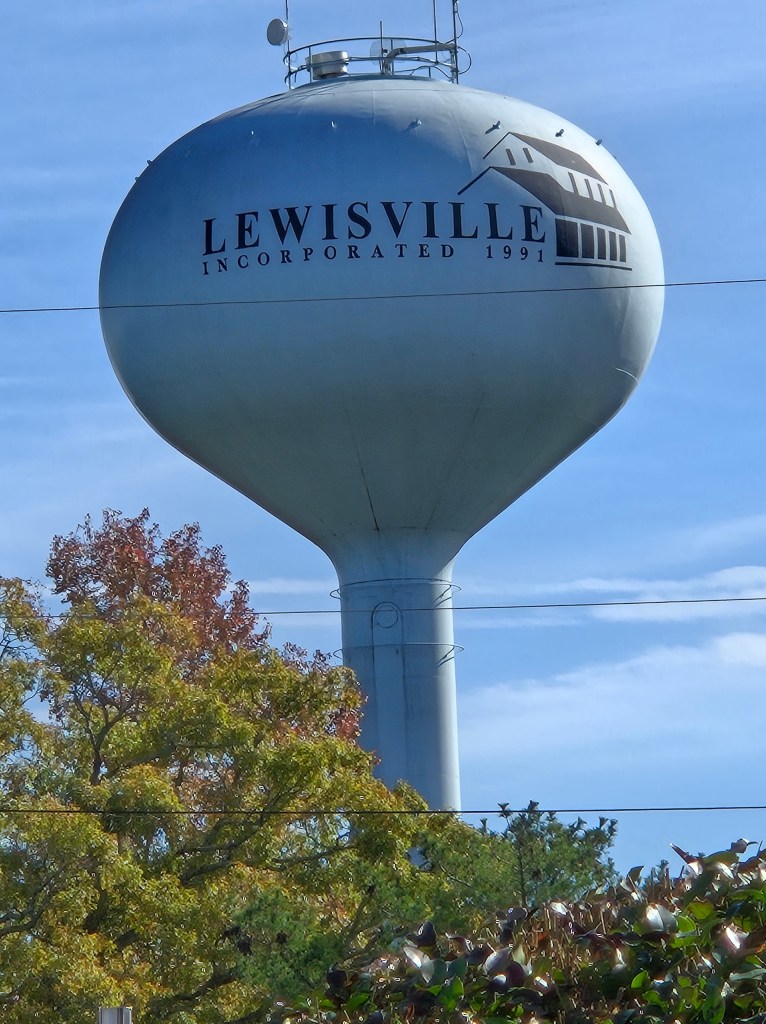
Incorporated on August 13, 1991, the town of Lewisville was inhabited in the mid-1770s by settlers moving westward following the Great Wagon Road from Pennsylvania into Virginia and then North Carolina. These travelers frequently stopped overnight on the banks of the Yadkin River before crossing the Shallow Ford. The town was born in the 19th century when Moravian settlers blazed a wagon trail across the pastures and established a community. Lewisville was named after one of those settlers, Lewis Laugenour, a benefactor who donated land for development in today’s central area of town. Lewisville’s town motto is “Shallow Fords to Great Heights.” NASCAR drivers and brothers, Austin and Ty Dillon, are from the area.
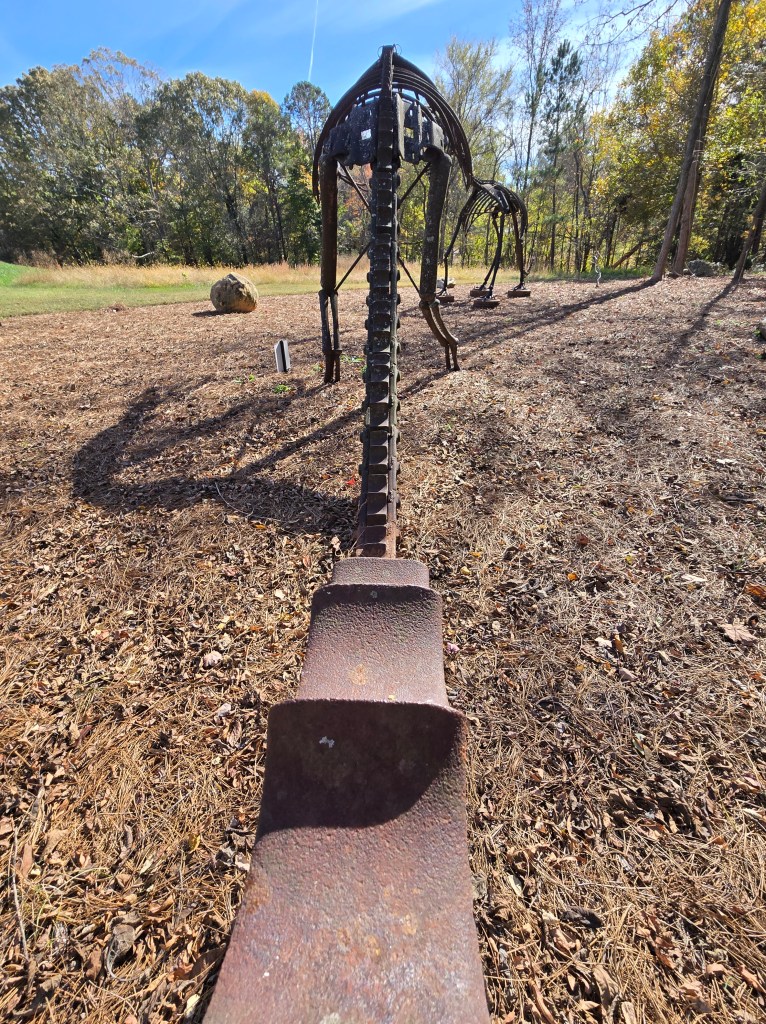
At the Mary Alice Warren Community Center (7632 Warren Park Dr.), you’ll discover the metal sculptures of local artist Frank Holder, including Opal the ostrich at the entrance and two dinosaurs behind the community center. In 2021, the students at Lewisville Elementary School voted to name the dinosaurs Lewissaurus and Elliesaurus. Cliff Lewis, a Lewisville resident, donated these three pieces of Frank Holder’s artwork to the Town in memory of his mother, Elizabeth Baer Lewis.
Frank Holder (1931-2009) was a metal sculptor and Lewisville resident and professional welder who retired from R.J. Reynolds Co. He created many metal sculpture pieces from scrap metal, including giant insects that hold mailboxes, a whale that spouts water, a provocative mermaid, a roadrunner, daffodils, soaring eagle, leaping ram, and many more. His work is displayed at area galleries and craft events in various states.
Shallowford Square
6555 Shallowford Road
Pfafftown
In 1784, Peter Pfaff Sr. bought land west of Muddy Creek, and a post office eventually was built in the community in 1888. After Clemmons and Lewisville incorporated, Pfafftown tried in 2001 to do the same but was not successful. Instead, much of the community was annexed by Lewisville or Winston-Salem in 2006. Pfaff’s house, the John Jacob Schaub House, and Waller House are listed on the National Register of Historic Places. Jim Drake, and aeronautics engineer who is credited as the inventor of windsurfing, is from the area.

Bethania
Bethania is the oldest municipality in Forsyth County, and was incorporated in 1995, upon the reactivation of the original 1838/1839 town charter. In 2009, Bethania celebrated the 250th anniversary of its establishment in 1759. As the first planned Moravian settlement in North Carolina, Bethania exists as the only remaining independent, continuously active Moravian village in the southern United States, and is the only known existing Germanic-type linear agricultural village in the South. The 500-acre Bethania National Historic Landmark district is the largest such district in Forsyth County. Bethania and its 18th- and 19th-century properties are listed on the National Register of Historic Places.
Bethania was founded June 12, 1759, by the Moravian Brethren of Wachovia as a congregational, agricultural, and trades community. Bethania was the first planned Moravian settlement in Wachovia, and members of a “Society,” under the care of the Bethania congregation, were permitted to reside in the village after July 1759. Today, Bethania’s 18th-century, German-type linear agricultural village design remains visible and intact, and most town lots and roadways have remained in continuous use since 1759. The name “Bethania” is the German form of “Bethany,” the name of a village near Jerusalem recorded in the New Testament as the home of Mary, Martha, and Lazarus, as well as that of Simon the Leper.
During the Revolutionary War, this town was considered by locals not as “Bethania” but as “HauserTown” (pronounced Hooz-er) because of the significance of families with the last name Hauser that resided there. Mary Hauser was one of the first people buried in Bethania’s God’s Acre cemetery.
Historic Bethania Visitor Center
In March 2007, the town of Bethania opened a visitor center and museum, Historic Bethania (5393 Ham Horton Lane), to welcome friends and guests, and to promote education and cultural resource preservation in the community. The center’s facilities include a relocated and restored Moravian farmstead home, the Wolff-Moser House, dating to ca. 1792, one of the earliest known surviving rural Moravian farmstead homes in North America. The Wolff-Moser House can be visited by the public during the center’s open hours. The visitor center, located at the intersection of Main Street and Bethania Road, also serves as an orientation center for those wishing to explore the Bethania National Historic Landmark District. Visitors to the c. 1759 Bethania Historic District can obtain a tour map and additional information, walk or run on the many scenic trails, visit the God’s Acre, and view several other preserved historic homes.
Donnaha
Donnaha (sometimes spelled Donnoha) is a Native American village and was once a stop on the former Southern Railway, now used by the Yadkin Valley Railroad. The name Donnaha was first used in 1889/1890 by Dr. Samuel Martin, a descendant of a supposed Cherokee chief, who lived in nearby Winston-Salem. The original courthouse site was destroyed by a cyclone in 1830.
Tobaccoville
While a Tobaccoville post office was established in 1879, the village was not incorporated until 1991, as a defense against forced annexation of the area by the nearby city of King.
Rural Hall
The town of Rural Hall is known as the Garden Spot of the World. The earliest settler was Anthony Bitting (1738-1804), who was born in Pennsylvania to a German-American family. In the 1770s, he moved from Bucks County to Maryland, then to southern Virginia. He supplied material to the Continental Army and may have participated in the battle of Guilford Court House. His descendants still live in the county and his grandson, Benjamin Lewis Bitting (1832-1922), built the house that gave Rural Hall its name.
Rural Hall is a community where settlers began spilling out of nearby Bethania and the frontier economy began to attract new entrepreneurs in the late 1700s. The community’s history can be traced to a trapper’s cabin built in the 1740s. Today, the small log structure stands as part of a stately 18th century home in southern Rural Hall.
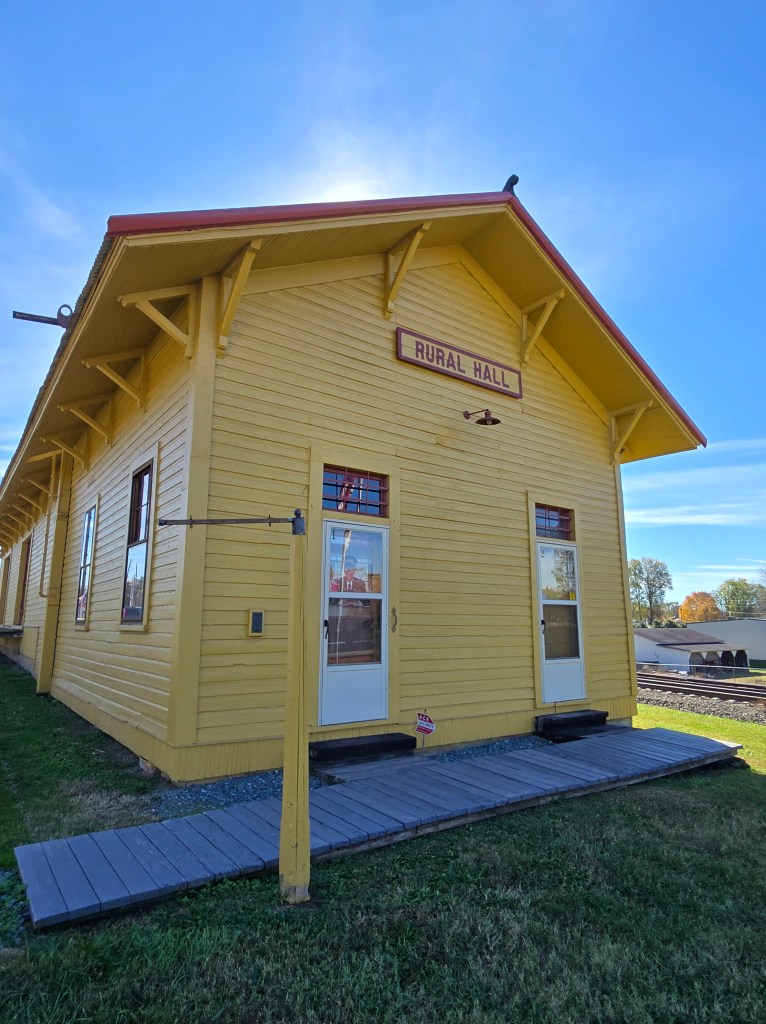
Another early settler was Johann Adam Geiger (Kiger) who donated 102 acres to the Nazareth Evangelical Lutheran Church, which still serves the community today. The town developed after the Cape Fear & Yadkin Valley Railroad erected a station in 1887. Rural Hall now is the operational center of the Yadkin Valley Railroad, and many of the Yadkin Valley locomotives can be found idling there when not working.
With growth of the community immediately after the War Between the States, postal demands of residents and businesses soared. Benjamin L. Bitting, who was appointed postmaster, used his home as the post office. Bitting’s home had a wide hall that extended from the front to the back and “was wide enough to drive a wagon through,” according to reports from the day.
Mail coming into Forsyth County post office was marked for “The Hall,” some intended for Salem, some intended for the Bitting Hall. That posed a dilemma for the postmaster at Salem and created the need for the community in northern Forsyth County to have a name. To solve the problem of routing the mail, the Salem postmaster began to mark the mail to “The Rural Hall.” On June 1, 1974, the Town of Rural Hall became incorporated as a municipality.
Rural Hall Historic Train Depot
Rural Hall Historic Train Depot (8170 Depot St.) is a specialty museum and operational center for the Yadkin Valley Railroad. The depot was listed on the National Register of Historic Places in 1983.
Belews Creek
Belews Creek was originally named “Belews Creek Mill” and a post office has been located in the community since 1831.
Walkertown
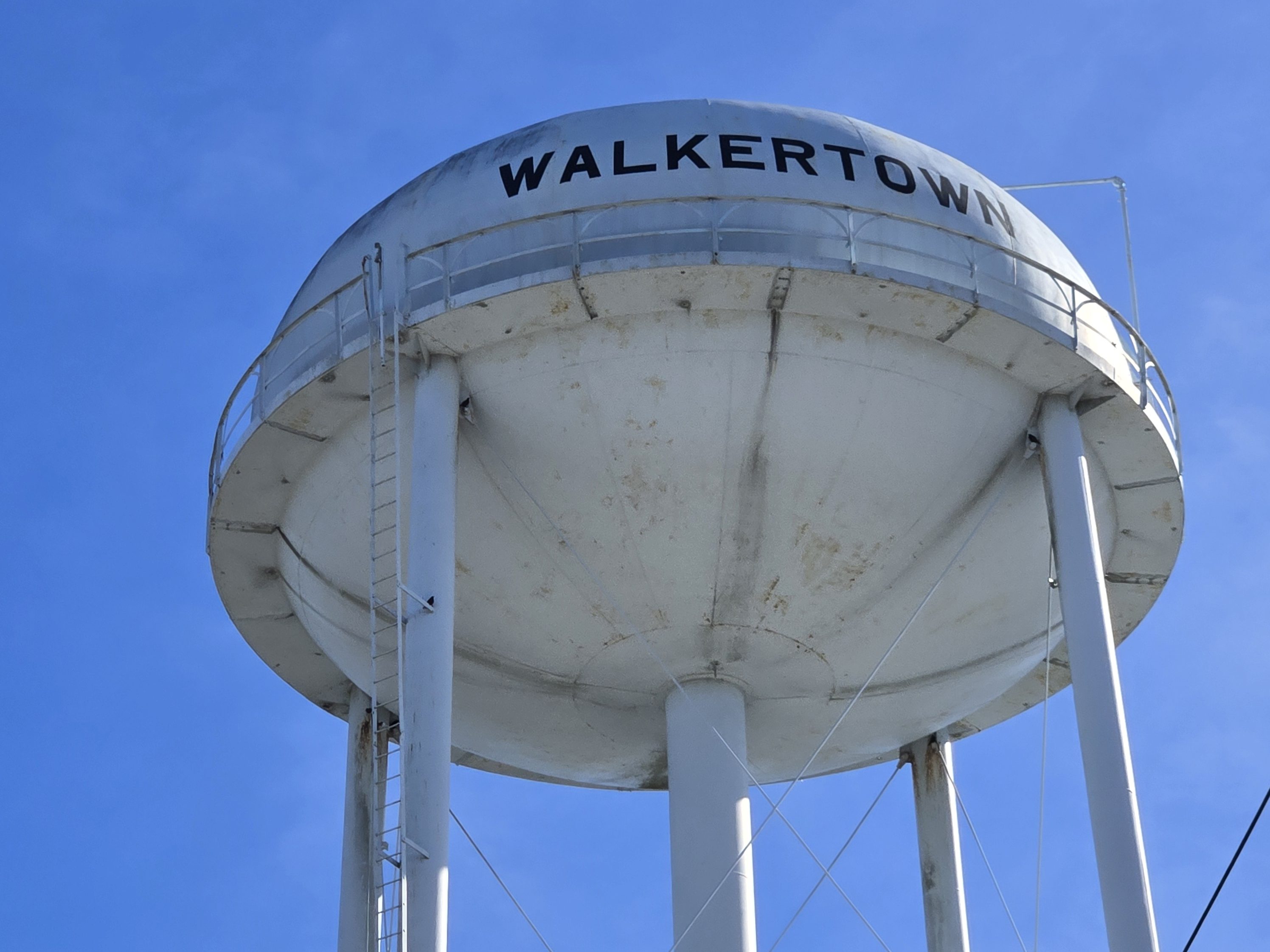
Walkertown was named for Robert Walker who was living at the site by 1771. Walker left the area to relocate in the West, but his home remained standing through the mid-20th century. The town was incorporated in 1984.
Kernersville
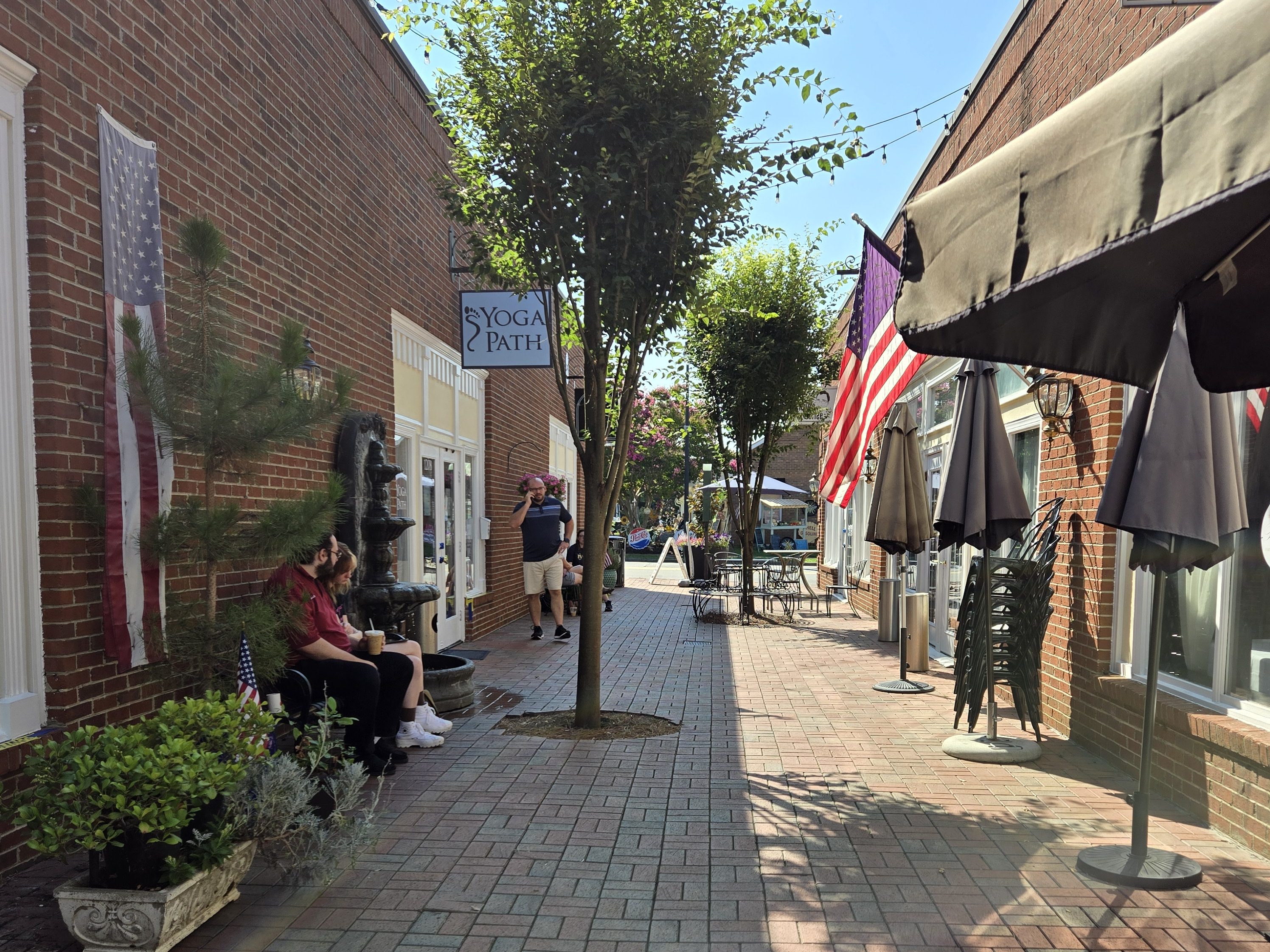
Known as The Heart of the Triad, this site was first settled by an Irishman named Caleb Story in 1756. Circa 1770, the site was purchased by William Dobson and was called “Dobson’s Crossroads.” George Washington was served breakfast at Dobson’s tavern on June 2, 1791. Joseph Kerner bought the property in 1817, continuing to operate the inn; the town then became known as “Kerners Crossroads.” Kerner left his property to two sons and a daughter. Not long after the arrival of the railroad, the town was incorporated as “Kernersville” in 1873.
The First Baptist Church, Kernersville Depot, Korner’s Folly, North Cherry Street Historic District, South Main Street Historic District, and Stuart Motor Company are among sites listed on the National Register of Historic Places
In late 2005, President George W. Bush visited Kernersville’s Deere-Hitachi plant to give a speech about the American economy. In the summer of 2008, former president Bill Clinton spoke at R. B. Glenn High school. He was campaigning for his wife, Hillary Clinton, in the Democratic primary. Donald Trump Jr. hosted a campaign rally for his father and then-president, Donald Trump, at Salem One, Inc. on October 19, 2020.
Interesting Fact: There was brief flirtation with relocating the Minnesota Twins to Kernersville in 1998.

Paul J. Ciener Botanical Gardens
A visit to Kernersville is not complete without a stop at the botanical gardens (215 South Main St. — just down the street from Körners Folly). Named for Paul J. Ciener, a longtime community leader and owner of a Ford dealership in town. The garden is most prolific from late spring to early fall; however, there is beauty in the gardens at all times of year with more than 1,500 plant species and 35 viewing spots within the gardens’ seven acres maintained by garden staff year-round. The Gardens holds many weddings and other events throughout the year as well as a lovely Christmas lights display during the holidays. The garden is open to the public and free to tour during open hours. Twice annually, the garden holds a plant sale, where you’ll find many unique plants that aren’t available from traditional retailers. Get there early for the best selection, because availability is limited and the plants go fast! And remember to stop in the gift shop before you go!

Körners Folly
Körners Folly (413 South Main St. — just down the street from the Botanical Gardens) is truly Forsyth County’s architectural wonder and one of the most unusual homes in the state. Established in 1880, the 22-room house and museum displays original furnishings and artwork. Although you can tour through the house on your own, we highly recommend the guided tour, as you’ll learn so many cool historical facts and stories of the property’s history that you just won’t get from passing through on your own. Körners Follyalso has a gift shop!
Kernersville Museum and the Kernersville Depot
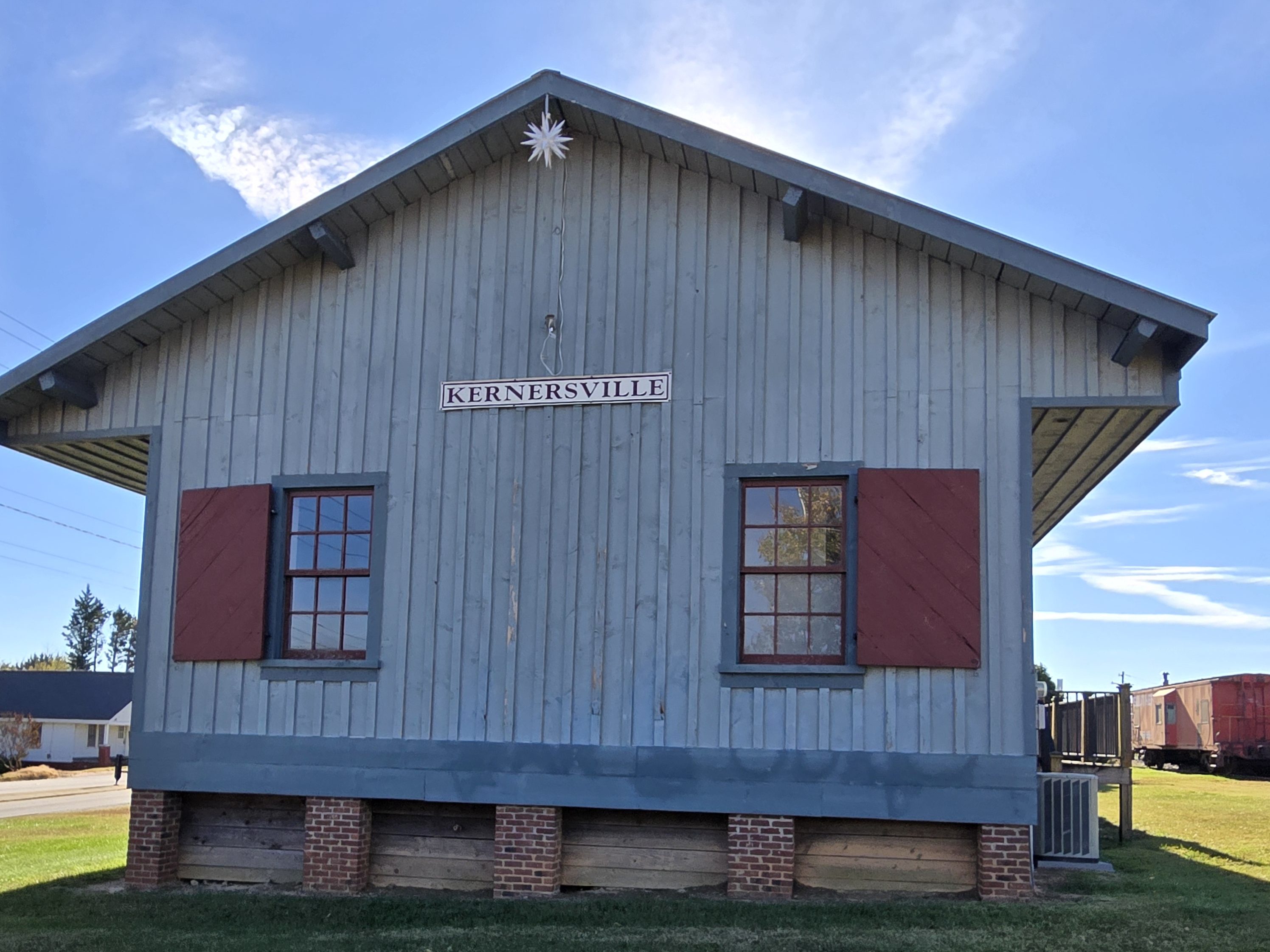
Refurbished by the town and completed in 2009, the town’s original Train Depot now houses the Kernersville Museum (127 West Mountain St.). Managed by the Kernersville Museum Foundation, which began in 2013, the museum focuses on the history of the town of Kernersville.
Kernersville Auto Museum
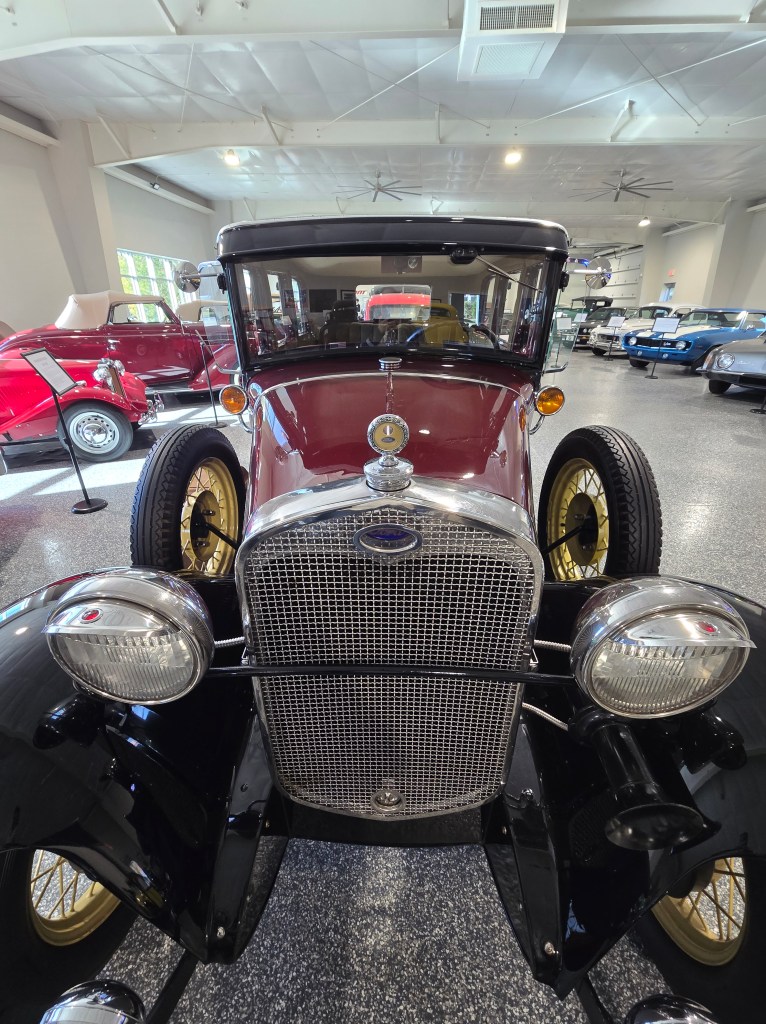
The Kernersville Auto Museum (204 Holly Tree Dr.) is Where Memories and History Come Alive! Here you’ll find a wide variety of vintage, classic, and exotic cars and vehicles collected from across the U.S. and abroad. All vehicles have been donated to the museum or are locally owned. The museum holds many community meetings and events. Admission is free and donations are accepted.
Next Stop… Wake County!
 Portable NC