

The original Davidson County was formed in 1786 as the far western portion of North Carolina, with its county seat at Nashville and a territory covering most of what is now Middle Tennessee. However, when Tennessee was established as a separate state in 1796, this county became Davidson County, Tennessee. The current North Carolina county was formed in 1822 from Rowan County. It was named after Brigadier General William Lee Davidson, an American Revolutionary War general killed at the Battle of Cowan’s Ford on the Catawba River in 1781.
In 1911, a new county called Piedmont County was proposed, with High Point as its county seat, to be created from Guilford, Davidson and Randolph Counties. Many people appeared at the Guilford County courthouse to oppose the plan, vowing to go to the state legislature to protest. The state legislature voted down the plan in February 1911.
One of Davidson County’s most famous attractions is the annual Lexington Barbecue Festival, held in the city of Lexington during October, bringing in more than 100,000 visitors from across the southeastern U.S. There is also a yearly Davidson County Agriculture Fair held in September. In addition, Thomasville hosts an annual Everybody’s Day Festival, the longest running festival in the state, which also draws about 100,000 visitors each year — about half locals from the Davidson County and half from outside of the county. The Southeastern Old Threshers Reunion is also held every year at the Denton Farm Park.
You’ll l find many year-long attractions in Davidson County, including Historic Uptown Lexington and the Davidson County Historical Museum located in the old courthouse. Alongside the Yadkin River sits Boone’s Cave Park where, according to legend, a young Daniel Boone and his family once lived for over a year while their home was being built. Other attractions include Denton Farm Park and the North Carolina Vietnam Veterans Memorial. The historic Wil-Cox Bridge spanning the Yadkin River has been preserved for pedestrian traffic and is now part of the Yadkin River Park. The Big Chair in Thomasville is also a major landmark — and a popular roadside attraction.
Davidson County is home to many race fans — especially those of Richard Childress Racing, the owner of Dale Earnhardt Sr.’s famous race team. You’ll also find Childress Vineyards and the Richard Childress Racing Museum, housing lots of Dale Earnhardt Sr. race cars and memorabilia.
High Rock Lake is the northernmost of the Uwharrie Lakes and the second largest lake in North Carolina behind Lake Norman. Its water surface covers 15,180 acres and there are 365 miles of shoreline. It begins at the confluence of the Yadkin River and the South Yadkin River. It has been the host of the Bassmaster Classic and is the site of frequent other local angling competitions.

Thomasville
An All-American City, Thomasville has been called Chair City or Chair Town as well as the Seat of Hospitality; and it was once notable for its furniture industry, as were its neighbors High Point and Lexington. This Piedmont Triad community was established in 1852 and hosts the state’s oldest festival: Everybody’s Day each year in September.
John Warwick Thomas was born June 27, 1800, and by age of 22 owned 384 acres in the Cedar Lodge area after marrying Mary Lambeth, daughter of Moses Lambeth. By age 30 he was a state representative. In 1848, he became a state senator. He pushed to get a railroad built through Davidson County and invested his own money in the effort. Knowing the railroad was coming, Thomas built the community’s first store in 1852 at present-day West Main and Salem streets, and the community was named Thomasville, for its founder. In 1855, the North Carolina Railroad was built through Davidson County, reaching Thomasville on November 9 of that year. On January 8, 1857, Thomasville was incorporated and occupied one square mile, with the railroad dividing the town into north and south sections.
Long Bill Whiteheart may have been the first to make furniture in the area. He crafted split-bottom chairs at home. D.S. Westmoreland also made chairs at home starting in 1866, and his factory on what became Randolph Street was built in 1879 but burned in 1897 and was never rebuilt. One of the oldest furniture plants was Standard Chair, built in 1898. Other furniture companies included Lambeth Furniture, Thompson Chair, Cramer Furniture, and Queen Chair Company. Thomasville Chair, started in 1904, soon became the town’s leading furniture manufacturer. By 1916, 2,000 chairs a day were being made citywide.
By 1909, Jewel Cotton Mills and Amazon Cotton Mills gave Thomasville another industry: textiles. Sellers Hosiery Mills of Burlington opened in 1913, and Thomasville Hosiery opened in 1916.
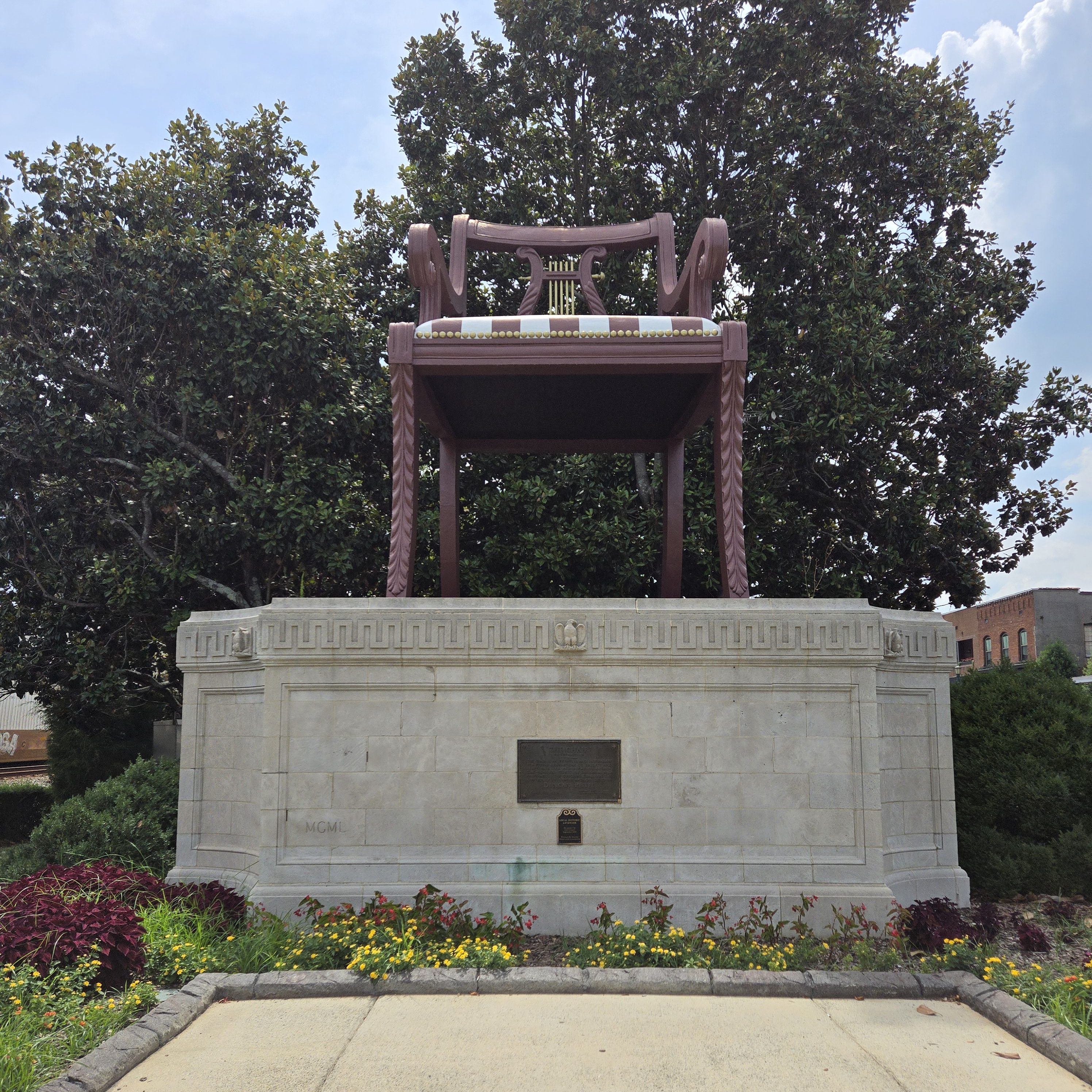
The BIG Chair
Thomasville is commonly referred to as the Chair Town or Chair City, in reference to a 30-foot landmark replica of a Duncan Phyfe armchair that rests in the middle of the city. The original Big Chair was constructed in 1922 by the now-defunct Thomasville Furniture Industries (formerly the Thomasville Chair Company) out of lumber and Swiss steer hide to reflect the city’s prominent furniture industry. However, this chair was scrapped in 1936 after 15 years of exposure to the weather. In 1951, a larger concrete version of the chair was erected with the collaboration of local businesses and civic organizations and still remains today. The Big Chair gained national attention in 1960 when then presidential candidate Lyndon B. Johnson greeted supporters on the monument during a campaign tour whistle stop. Although larger ones have been built, many Thomasville residents still boast that the Big Chair between the two Main Streets is the World’s Largest Chair.
In Thomasville, you’ll also find the large clocktower directly across from the Big Chair, North Carolina’s oldest train depot, the 100% Producers Only Farmers Market, and the NC Vietnam Veterans Memorial. And you can wander around the downtown area on a hunt for 17 public art wall murals as part of the T’ville Mural Project.
Silver Valley
The unincorporated town of Silver Valley is generally accepted to be the site of the first precious metal, silver, found in North Carolina. A colonial road went through Silver Valley, which is now Old NC 10. Gold and silver deposits are a result of geologic faults in the area. Other gold deposits were found further south near El Dorado in what is now Uwharrie National Forest. After land was acquired for Uwharrie in the 1930s, the last American gold rush occurred. Though gold and silver were recovered, the area was never a huge economic success. Around 1900, new silver finds in Silver Valley prompted interest in silver. Just to the North, in the city of Thomasville, a building was constructed for a silver refinery, and the High Point, Thomasville, and Denton railroad was extended to Silver Valley. But before the refinery became active, the silver ran out and the building became Amazon Cotton Mills, which at some point was acquired by Cannon Mills in Kannapolis, NC. The “zon,” as locals referred to the mill, employed many young boys as soon as they turned 16, and offered a special half-shift from 4pm to 8pm to accommodate school work. Silver Valley became a commuter community to Thomasville with workers employed in the many furniture factories and 17 cotton mills until the mills closed with the exodus of textiles and furniture to Asia.
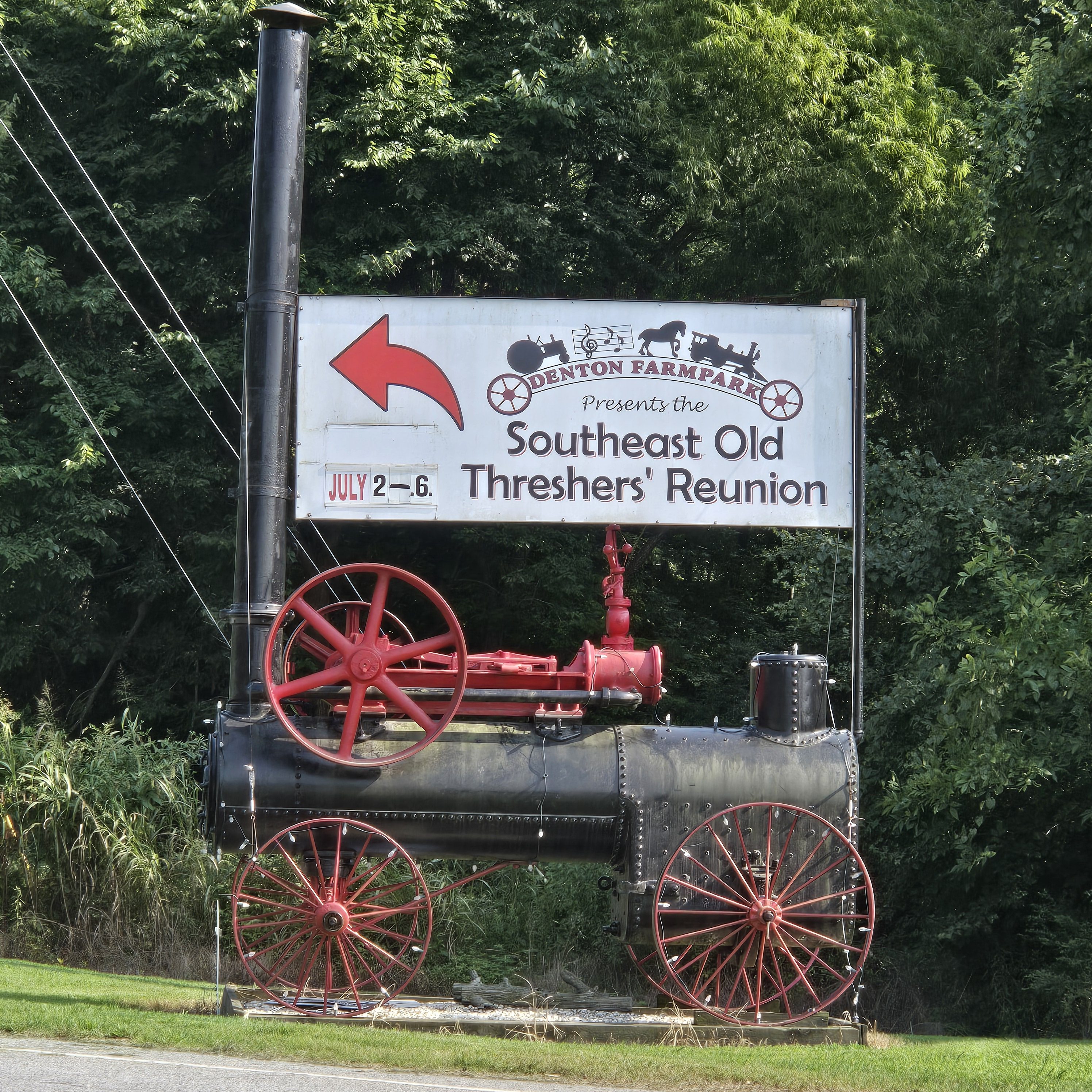
Denton
The founding of Denton may be dated from the time the place acquired a post office, began to be called “Denton” and ceased to be “Finch’s Cross Road”. The General Assembly passed a bill incorporating the town of Denton on March 11, 1907.
The Southeast Old Threshers’ Reunion, described as the largest antique tractor and engine show in the Southeast, takes place during the July 4 holiday at Denton Farm Park, a historical park with several restored buildings. A one-day event with airplane rides later expanded to include displays of farm equipment to give people something to do while they waited — and to teach about the history of agriculture in the area. As of the 48th annual event in 2018, more than 50,000 attended from across 20 states; the five-day event includes hundreds of vendors, train and helicopter rides, musical performances, and fireworks.
Denton also hosts an Antiques Festival and Denton Street Festival each year.

Denton Farm Park
1072 Cranford Rd
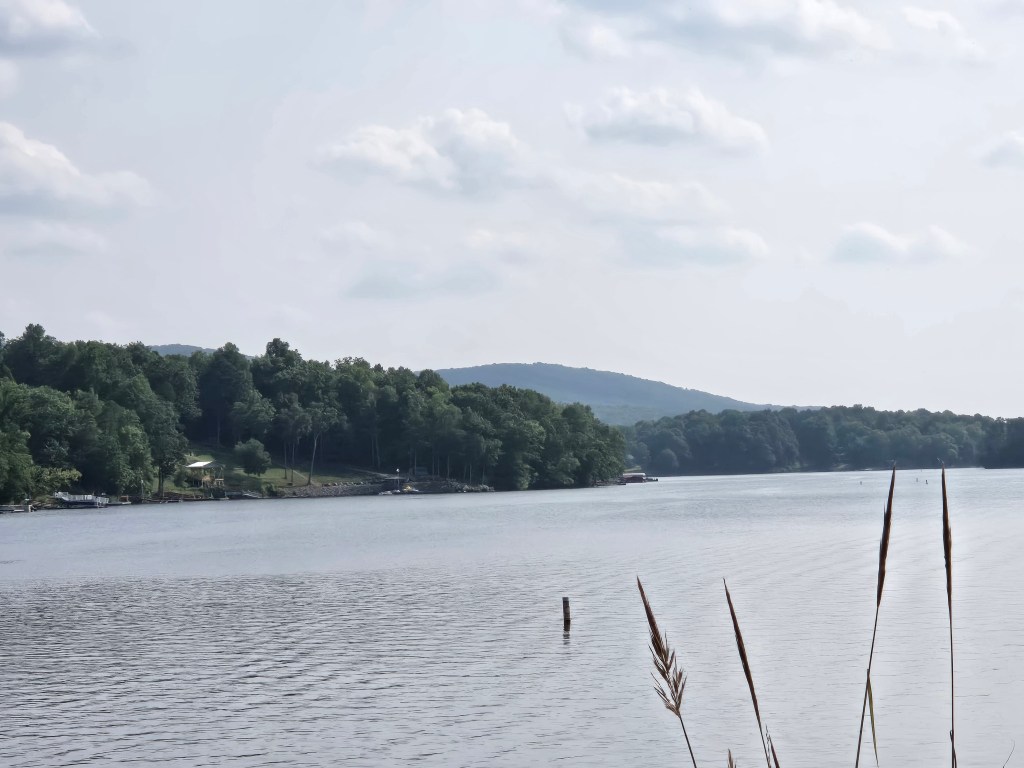
High Rock/High Rock Lake

Churchland / Boone’s Cave Park
Churchland is home to Boone’s Cave Park (3552 Boones Cave Rd. in Churchland). The 110-acre state park is named after America pioneer Daniel Boone. The entire Boone family came to this area in 1755, when Daniel would have been approximately 15 years old at the time. They reportedly lived in the cave or approximately one year while cabins for the group were being built. There has never been any proof of a Boone cabin on park property, although a foundation was found at an unmarked location, but no direct or confirmed connection to the Boone family could be made. There are, however, copies of many land grants in the Boone family name surrounding what is now park property. (Daniel’s brothers, uncle, and father were all land owners.) The park itself offers 6 miles of hiking trails plus fishing and limited camping. The cottonwood tree on park property is the third largest on record in the state at 169 feet tall, more than 16 feet around the trunk, with a 109-foot-wide canopy.
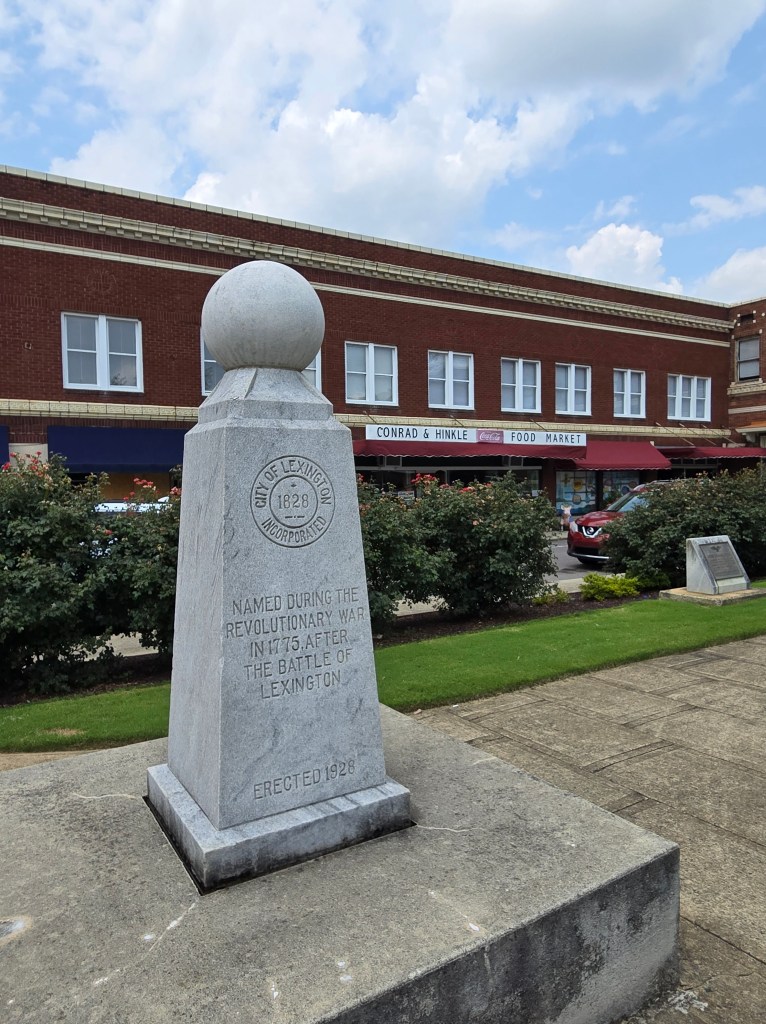
Lexington
The Lexington area was at least sparsely settled by Europeans in 1775. The settlers named their community in honor of Lexington, Massachusetts, the site of the first skirmish of the American Revolutionary War. Lexington was incorporated as a city in 1828. Silver Hill Mine, located a few miles south of Lexington, opened in 1838, and was the first operating silver mine in the country.
Lexington has been noted as one of America’s top four best cities for barbecue by U.S. News & World Report. The City calls itself the Barbecue Capital of the World. Since 1984, the city has hosted the Lexington Barbecue Festival, one of the largest street festivals in North Carolina. As of 2003, the city has over 15 barbecue restaurants, an average of more than one per thousand residents. Both the art initiative Pigs in the City and the Lexington Barbecue Festival bring in tourists from all over the country.
Lexington-style barbecue is made with pork shoulder cooked slowly over a hardwood fire, usually hickory. It is basted in a sauce (called “dip” locally) made with vinegar, ketchup, water, salt, pepper and other spices. The ingredients vary from restaurant to restaurant, with each restaurant’s recipe being a closely guarded secret. While each is vinegar-based, the taste varies widely from tangy to slightly sweet or spicy. The most distinguishing feature of the Lexington Barbecue Sandwich is the inclusion of red slaw (sometimes called barbecue slaw). Red slaw is a combination of cabbage, vinegar, ketchup, and crushed/ground black pepper; it is distinguishable from coleslaw because it contains no mayonnaise.
The oldest surviving house in Lexington is The Homestead, built by Dr. William Rainey Holt (1798–1868), a physician born in what is today Alamance County.
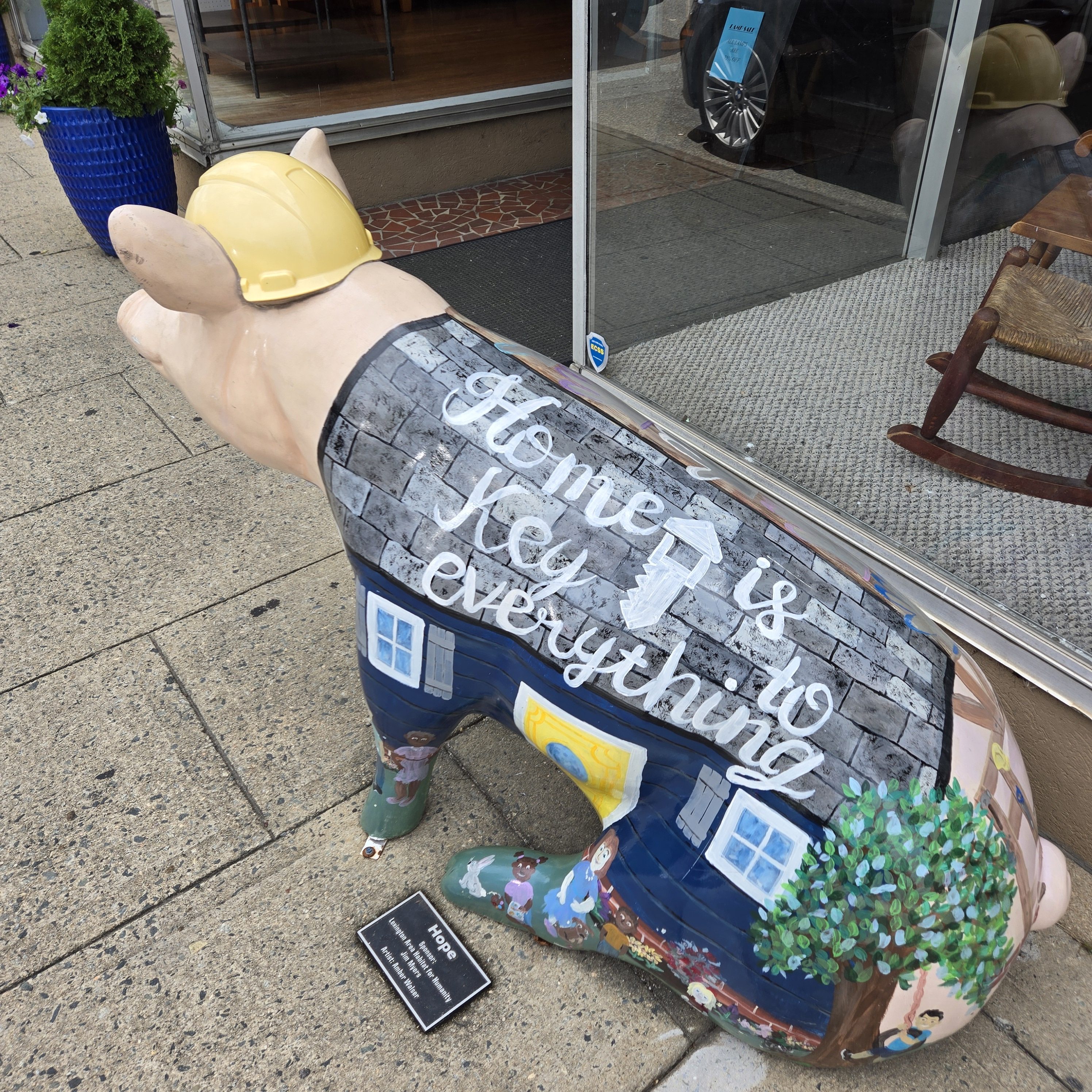
Pigs in the City
Pigs in the City is a public art initiative coordinated by Uptown Lexington, Inc., a nonprofit organization created to revitalize the downtown (locally called “uptown”) area of Lexington. People paid commissions to artists to decorate life-sized sculptures of pigs, which were installed throughout the city. Pigs in the City began in 2003, and the event drew more than 40,000 visitors from all over the state in its first year.

Davidson County Historical Museum
Housed in the old Greek Revival structure of the Davidson County Courthouse, the Davidson County Historical Museum (2 South Main St.) features a permanent collection of the area’s natural and cultural history.
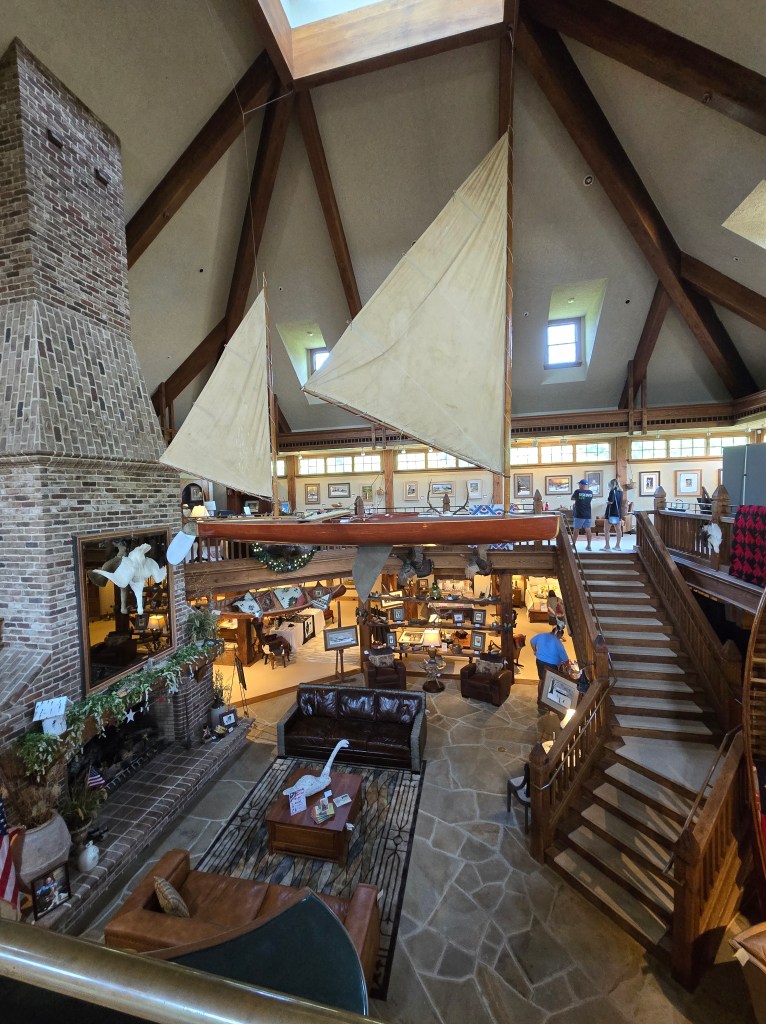
Bob Timberlake Gallery
The Bob Timberlake Gallery (1714 E Center Street EXT) invites visitors to peak into the artist’s life and shop for Timberlake accessories as well as originals and prints of his world-famous realist paintings showcasing the simple life in North Carolina with highly-detailed and colored paintings. His work has been exhibited in galleries the world over. Timberlake still lives in his childhood home in Lexington, NC. The gallery hosts many special events throughout the year, some featuring local artists, including the annual Christmas in July Event.
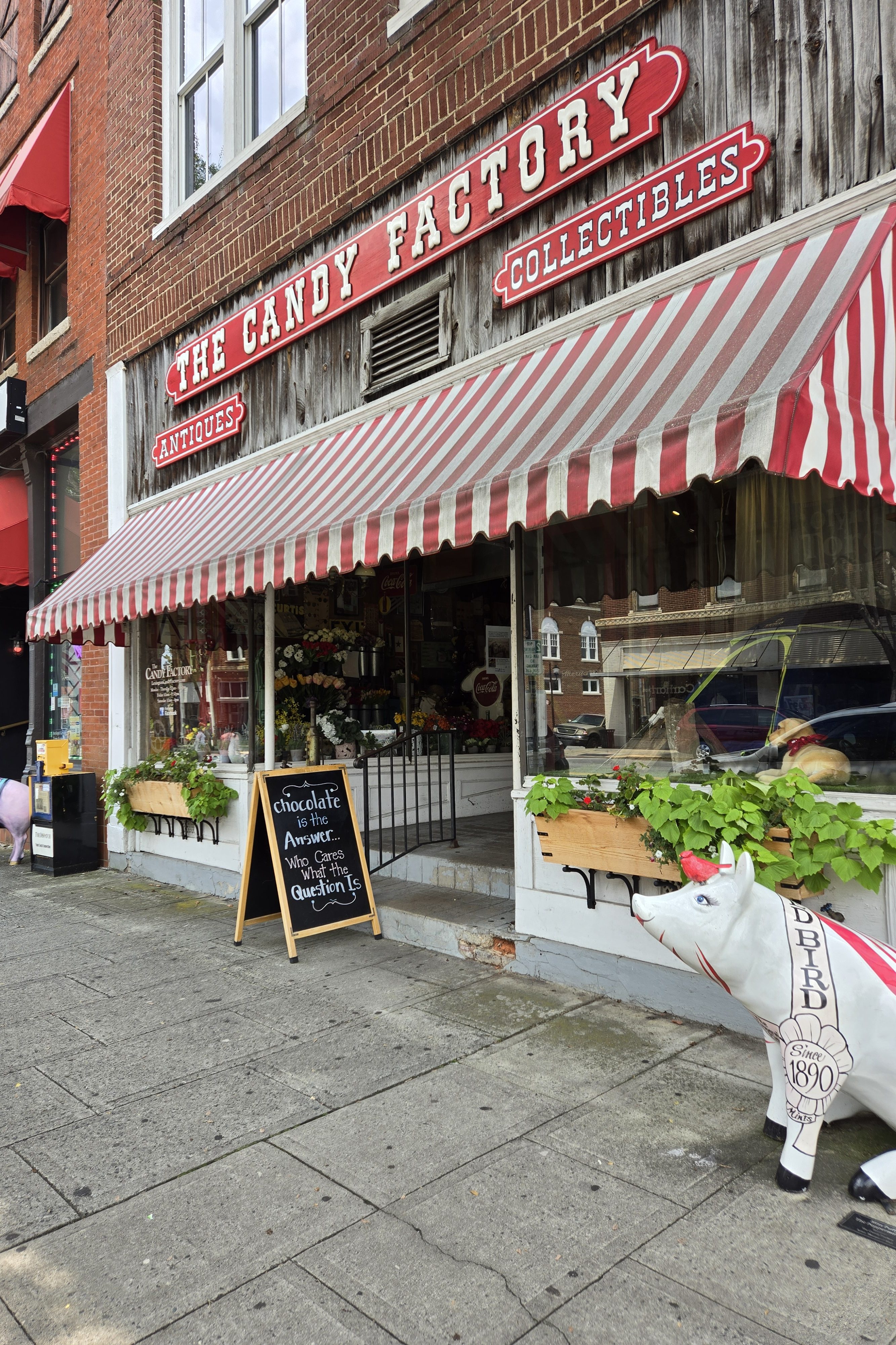
The Candy Factory
No trip to Lexington is complete without a visit to the old-timey, historic Candy Factory, complete with creaky wooden floors. With a classic red-and-white awning, this community gem is a destination for candy lovers — modern and nostalgic alike. Here, you’ll find classic candies from the 50s, 60s, 70, 80s, and 90s as well as house made chocolates and decadent treats, plus 50+ sugar-free candies too. Stop by for your favorites as well as an array of seasonal and holiday goodies too.

Childress Vineyards
Spend a few hours perusing the grounds and buildings at the Tuscany-inspired Childress Vineyards (1000 Childress Vineyards Rd.). The vineyard grows, harvests, barrels, and bottles its own European grape varietals. Enjoy daily lunch at the Bistro, try a wine tasting, and shop in the huge gift shop. Weddings and private and corporate events are also held here. They’re touted as one of America’s top 25 tasting rooms!
Welcome
The town motto is “Welcome to Welcome, A Friendly Place,” as posted on the welcoming sign.

Richard Childress Racing and the RCR Racing Museum
If you’re a NASCAR fan and/or a Dale Earnhardt fan, Richard Childress Racing and the RCR Racing Museum (on Industrial Dr.) is a must-see. You’ll encounter larger-than-life-size portraits of Dale Earnhardt, see many of his classic race cars on display, see video of the hero himself speaking, relive a bit of the past, and even take a peak into Richard Childress’s own office, where many a deal has been hammered away and signed. And it’s more than just a memorial to Dale, the museum’s footprint also displays vehicles from the truck series, trophies, and more. You’ll also have the opportunity to walk through one of the Goodwrench haulers and see the many countless signatures of fans, who paid homage to the late racer. Through some miracle, this blogger somehow found her own signature among the thousands on display!
Weathervane Winery
1452 Welcome Arcadia Road
Arcadia
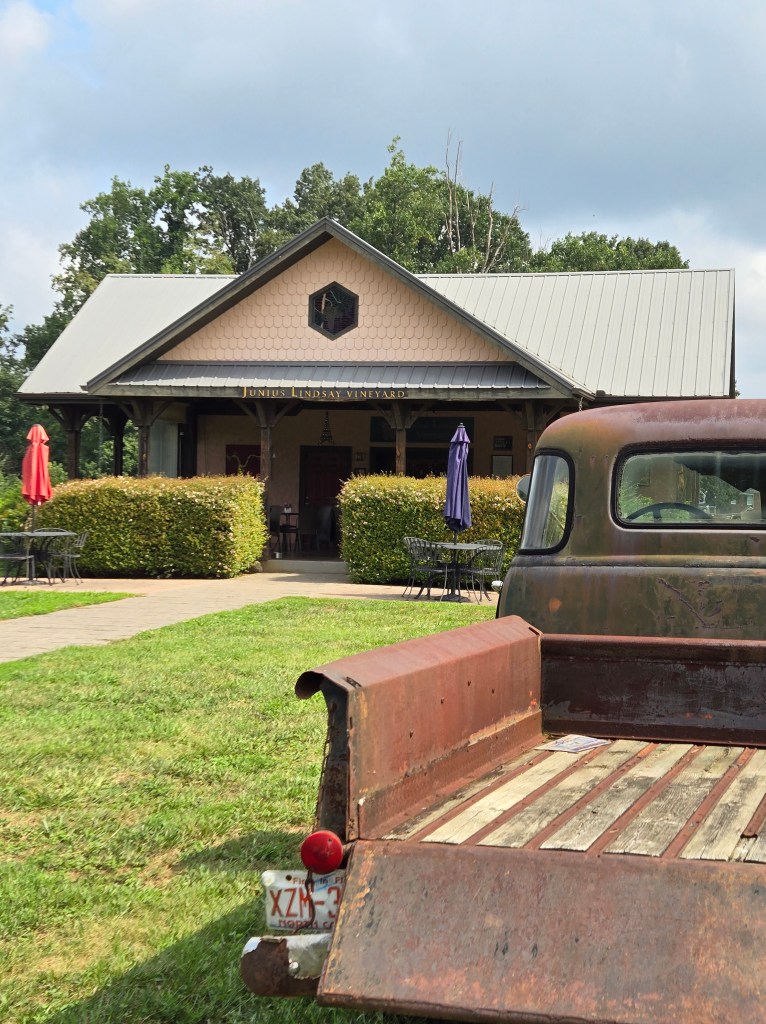
Junius Lindsay Vineyard
385 Dr Zimmerman Rd
Midway
Midway derives its name from its geographic location, “midway” between the cities of Winston-Salem and Lexington. However, urban sprawl and annexation by the city of Winston-Salem has moved the city limits of Winston-Salem, which now borders Midway, while Lexington’s nearest border is 7 miles away. The Town of Midway, located in the northern section of Davidson County, North Carolina was incorporated on June 29, 2006. Midway is Davidson County’s fifth and newest incorporated municipality. At the time of formation, the town encompassed eight square miles with a population of 4,399. After citizens requested annexation, Midway now covers nine square miles with a population of 4,700. Every autumn, the town hosts the Midway Christmas Parade in celebration of the coming Christmas season. NASCAR drivers and brothers Terry Labonte and Bobby Labonte are from the area.
Wallburg
The Wall family played a prominent role in the settlement of the community in northeast Davidson County. In 1860 Samuel W. Wall the second generation of the family in the area began a coach-making business with $600 worth of capital investment and three employees, producing 10 buggies and carriages worth $1,100 annually.
Two of Samuel’s sons, Charles Moses and George, founded their own firm, the Wall Lumber Company, in the late 1880s, and began to prosper by providing processed lumber to the Lexington and High Point furniture companies. Their saw and planing mill transformed the raw lumber purchased from local farmers into planks, wooden boxes, and some finished products, such as couch frames.
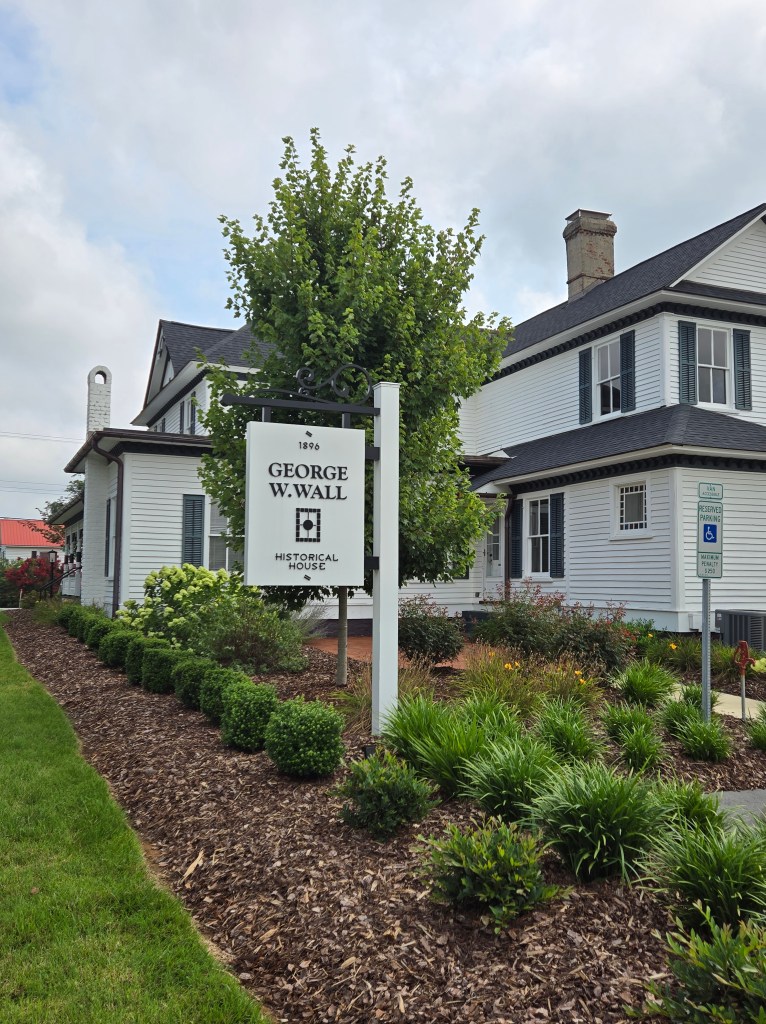
The George W. Wall House
In 1888, George W. Wall married Hattie Charles and made his first land purchase, a 40-acre tract, which he purchased from his father for $400. George and Hattie built a plain two-story frame house on their land and began their family. By 1896, both the family finances and family size had increased to the point that a new residence was constructed. The first house was moved to an adjacent site, and between July and December of that year the present Wall residence was built.
The two houses now occupy adjacent corners of the intersection of N.C. 109 and the Motsinger Road. All building supervision was apparently done by George himself, using local workmen. The lumber most likely came from the family company. According to family tradition, the stained-glass windows were ordered from High Point, and it is likely that much of the woodwork, including the doors, moldings, and some of the mantels, came from the factory as well. Hattie is said to have designed the woodwork, and Turner Wall, who worked with his brothers in the lumber company, is credited with the construction of the most ornate features, such as the staircase and some of the mantels. George and Hattie raised 11 children in the house, and lived there until their deaths in 1943 — only six weeks apart.
Next stop… Guilford County!
 Portable NC