

Surrounded by the Roanoke and Meherrin Rivers, the Northampton County area was first organized under English colonial authority as the Albemarle Precinct. In 1729 part of Albemarle was split off to form Bertie County; then Northampton County was formed from part of Bertie in 1741. The county was named for James Compton, the fifth Earl of Northampton, England. Finally, in 1759, parts of Northampton County, Bertie County, and Chowan County were combined to form Hertford County.
Graysburg
Garysburg first appeared in official records as a post office named “Peeples Town” sometime between 1818 and 1825. “Peeples Town” or “Tavern” as it was also called, was located near the banks of the Roanoke River. Roderick B. Gary, a native of Halifax, NC, later settled in Northampton County and gave “Garysburgh” its name in 1838; and the spelling was officially changed to Garysburg in 1892. Gary became the operator of a hotel (now the Collier Place) and also served Northampton County as a state Representative.
During the 1840s, the original town’s site along the river was abandoned, and people began to settle in a nearby site just further north, which is now the present-day town of Garysburg. Situated between the railroad and the river, the town served as a major market for Northampton County and a point of interchange for commerce.
During the Civil War, Confederate troops established a camp just north of town and dug trenches near the river bridge to protect it from attack. The Methodist Episcopal Church (built upon land also donated by Gary) was converted into a hospital and used by Confederate soldiers from both North Carolina and Virginia, some of whom are buried in the church’s courtyard. Following the war, Garysburg remained prosperous.

NCCAR (North Carolina Center for Automotive Research)
Situated at 310 Technology Drive, right beside a Lowe’s Home Improvement distribution center, you’ll find NCCAR, North Carolina’s own test raceway. Built and designed to exacting standards, the North Carolina Center for Automotive Research is an independent, nonprofit center devised to meet the ever-evolving product research, testing, and development demands of the automotive industry. State sponsorship and affiliation with North Carolina’s university and community college system offers exceptional opportunities for matching the innovative talents of the world’s automotive industry with the research capacity and business development resources of the State of North Carolina.
On-site, corporations and groups can also make use of their advanced chassis dynamics laboratory, plus client garages with virtual office connectivity, and a two-axle chassis dynamometer with climatic air handling and emissions.
The test track provides a 4.6-mile handling course, including dynamics areas with high-speed entry. The track is often used by NASCAR drivers, law enforcement training, prototype and vehicle testing, commercial shoots, and racing groups. The weekend of our visit, the track was hosting a women’s motorbike group.
Conway
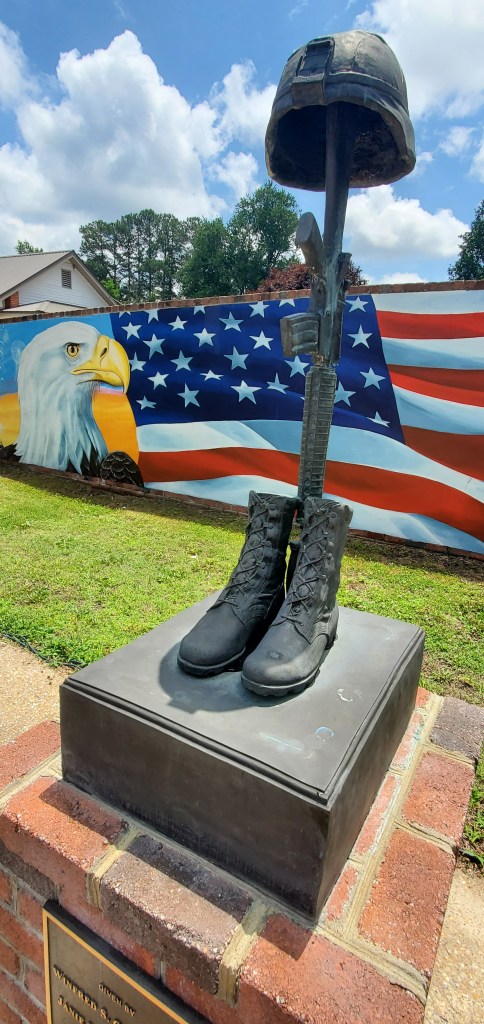
Veterans Memorial Park
Visit the county’s Veteran Memorial Park (Main St.), which displays a beautiful art mural. In Conway, you’ll also find one of Napolean Hills murals, which are located throughout the county.
Woodland
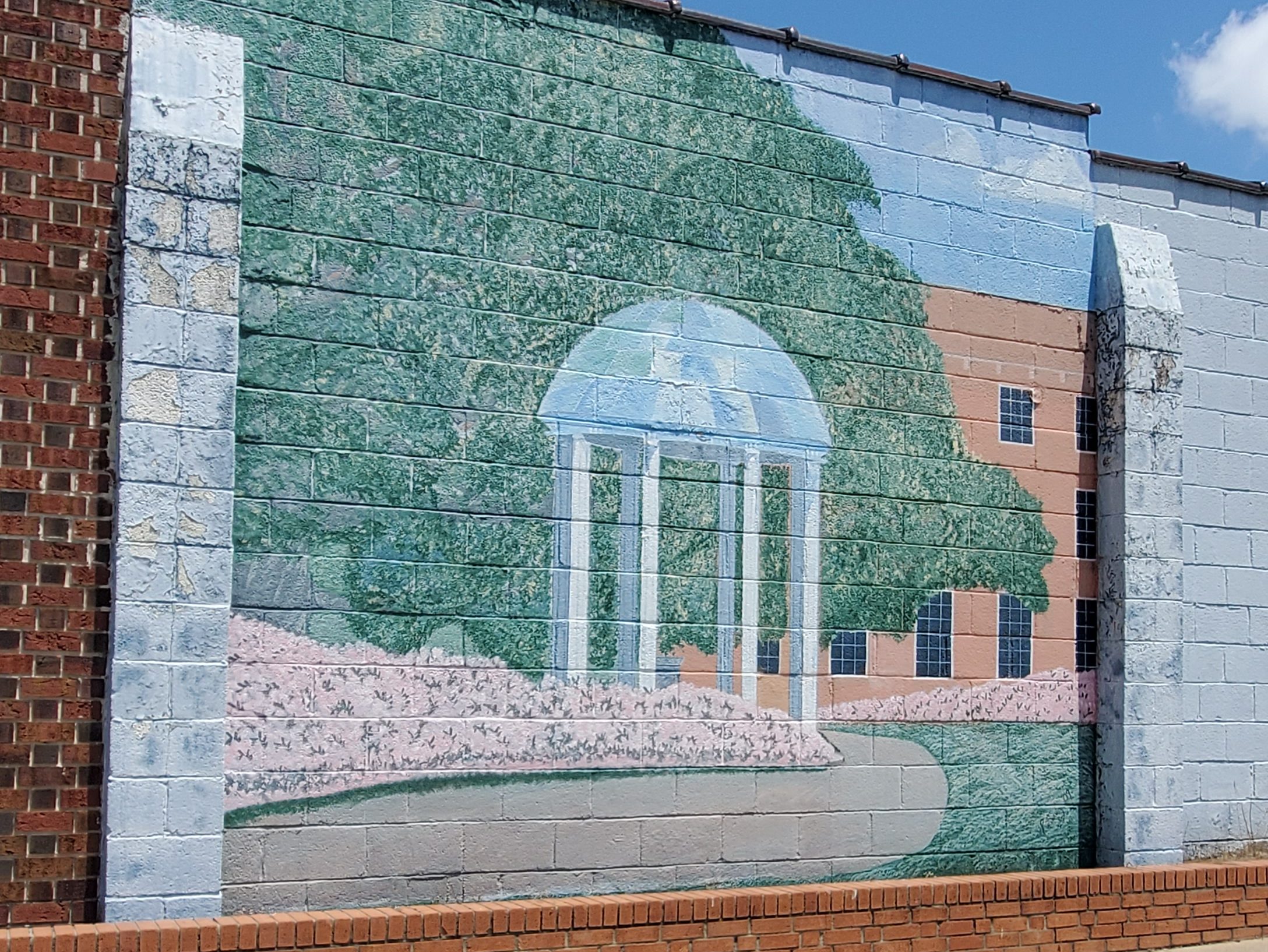
When stopping in Woodland, be sure to see the Penny Beasley and Napolean Hill murals.
Rich Square
Quakers were some of the earliest settlers in Northampton County, being established there by the early 1750s. The congregation in Rich Square was established in 1760, and it was once a center for the Religious Society of Friends in North Carolina. By 1832, they were a minority in Rich Square, though they continued working to relocate former slaves into free states.
In 1947, Godwin Bush was a black man in Northampton County who escaped a lynching by a white mob; two all-white grand juries refused to indict the seven white kidnappers. In response, local pastor and businessman Paul A. Bishop promoted a black-led boycott of white-owned businesses in Rich Square (contemporaneously described by a black community leader as “a town that didn’t like black folk.”) Many of the boycotted stores went out of business.
Amazing Story: On July 26, 1959, Lieutenant Colonel William Rankin was flying his US Marine Corps F8U Crusader from Naval Air Station in South Weymouth, Massachusetts to the Naval Air Station in Beaufort, South Carolina. Rankin lost all power at an altitude of 47,000 feet when he ejected into the −70 °F air and began uncontrolled decompression through an intense thunderstorm and hail for the next 40 minutes. After “the most prolonged and fantastic parachute descent in history,” he landed near Rich Square, was rescued by a local farmer, and taken to Ahoskie, North Carolina for medical care. The plane crashed near Scotland Neck, North Carolina.
Miles Darden (1799–1857), supposedly the largest man in history, was from the area.
Lasker
Singer, songwriter, and American Idol alumni Chris Daughtry, known as the lead vocalist and rhythm guitarist for the rock band Daughtry, is from Lasker.
Jackson
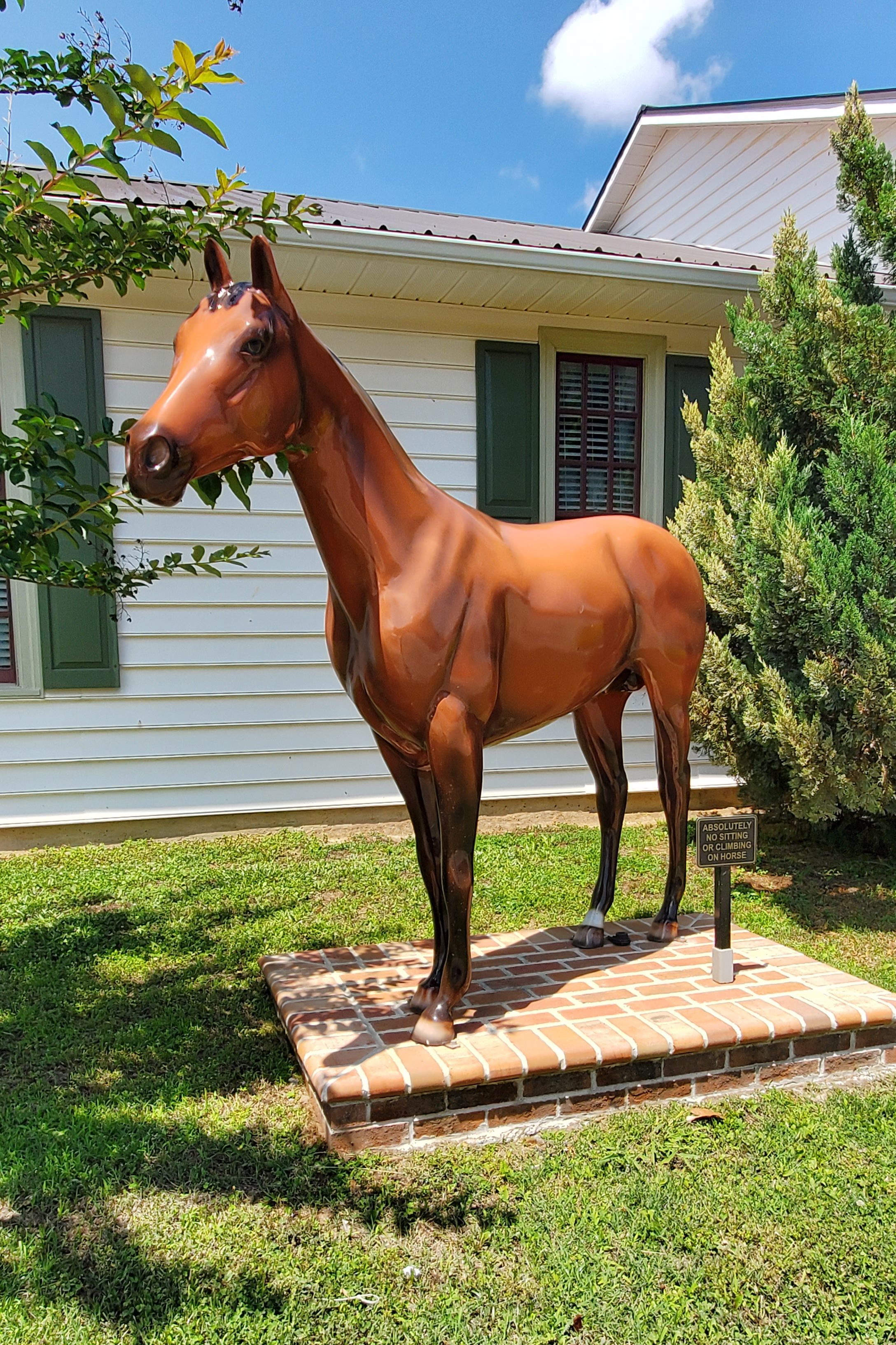
As the central city in Northampton County Jackson has it’s own claim to fame… Sir Archie. Thoroughbred Sir Archie (also known as Sir Archy), who died in 1833. Most racehorses foaled in America are related to him in some way. Among his descendants are Man O’War, Sea Biscuit, Native Dancer, Bold Ruler, Secretariat, Seattle Slew, Cigar, and Barbaro.
In Jackson, you’ll also find a series of Murals painted by Napolean Hill, including one of Sir Archie himself on one side of the Northampton County Museum.
Northampton County Museum
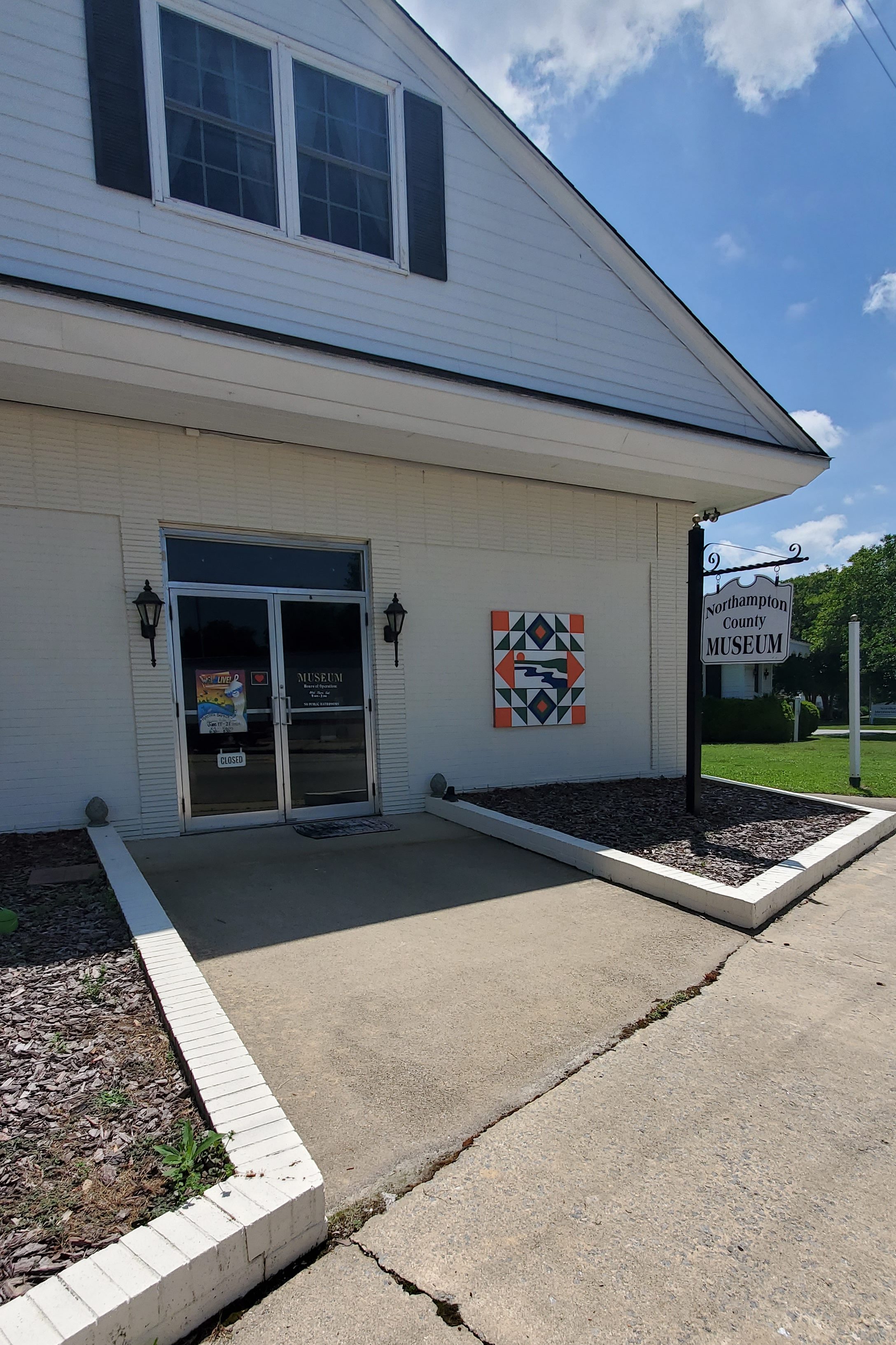
While in Jackson, stop by the Northampton County Museum (203 West Jefferson St), just beside Lafayette Park, for a peak into the county’s history.
Next stop… Hertford County!
 Portable NC