

Alamance County was formed on January 29, 1849 from Orange County. Alamance County was named after Great Alamance Creek, the site of the Battle of Alamance (May 16, 1771), a pre-Revolutionary War battle in which militia under the command of Governor William Tryon crushed the Regulator movement. Great Alamance Creek, and Little Alamance Creek, according to legend, were named after a local Native American word to describe the blue mud found at the bottom of the creeks. Other legends say the name came from another local Native American word meaning “noisy river,” or for the Alamanni region of Rhineland, Germany, where many of the early settlers came from.
During the American Revolution, several small battles and skirmishes occurred in the area that became Alamance County. Several occurred during the lead-up to the Battle of Guilford Court House, including Pyle’s Massacre, the Battle of Lindley’s Mill, and the Battle of Clapp’s Mill.
In the 1780s, the Occaneechi Native Americans returned to North Carolina from Virginia, settling in what is now Alamance County rather than their first location near Hillsborough. In 2002, the modern Occaneechi tribe bought 25 acres of their ancestral land in Alamance County and began a Homeland Preservation Project that includes a village reconstructed as it would have been in 1701 and a 1930s farming village.
During the early 19th century, the textile industry grew heavily in the area, so the need for better transportation grew. By the 1840s, several mills were set up along the Haw River and near Great Alamance Creek as well as other major tributaries of the Haw River. Between 1832 and 1880, at least 14 major mills were powered by these rivers and streams. Mills were built by the Trollinger, Holt, Newlin, Swepson, and Rosenthal families, among others. One of the mills, built in 1832 by Ben Trollinger, is still in operation. It is owned by Copland Industries, sits in the unincorporated community of Carolina, and is the oldest continuously operating mill in North Carolina.
One notable textile produced in the area was the “Alamance plaids” or “Glencoe plaids” used in everything from clothing to tablecloths. The Alamance Plaids manufactured by textile pioneer Edwin M. Holt were the first colored cotton goods produced on power looms in the South, and paved the way for the region’s textile boom. (Holt’s former home is now the Alamance County Historical Society.) By the late 20th century, most of the plants and mills had gone out of business, including the mills operated by the once great Burlington Industries, a company based in Burlington. By the 1840s, the textile industry was booming, and the railroad was being built through the area as a convenient link between Raleigh and Greensboro.
North Carolina actually seceded from the union after a special legislative session in which North Carolina’s legislature unanimously voted for secession on May 20, 1861.
No battles took place in Alamance County, but it sent its share of soldiers to the front lines. In July 1861, for the first time in American history, soldiers were sent in to combat by rail. By the end of the war, 236 people from Alamance County had been killed in the course of the war, more than any other war since the county’s founding.
Alamance County was also once the state leader in dairy production. Several dairies including Melville Dairy in Burlington were headquartered in the county. With increasing real estate prices and a slump in milk prices, most dairy farms have been sold and many of them developed for real estate purposes.
According to a 1975 study of the history of post offices in North Carolina by Treasure Index, Alamance County has 27 ghost towns that existed in the 18th and 19th centuries. Additionally, five other post offices no longer exist. These towns and their post offices were either abandoned as organized settlements or absorbed into the larger communities that now make up Alamance County.
Blanche Taylor Moore, convicted murderer, whose life story was portrayed in the television movie “Black Widow: The Blanche Taylor Moore Story,” starring Elizabeth Montgomery, was from the area.

Elon
Elon began in 1881 as a North Carolina Railroad depot in between the stations of Goldsboro and Charlotte, called “Mill Point” because it was envisioned to be a shipping point for area cotton mills. Locals called it “Boone’s Crossing.” Because of a growing population, a post office was built, which established a more permanent residency in 1888.
In 1889, the local Christian Assembly created an institution of higher learning called the “Graham Normal College”. The founders of Elon College named the school “Elon”, because they understood that to be the Hebrew word for oak, and the area contained many oak trees. The town was called “Elon College” until the college known as Elon College became Elon University. The town then changed its name officially to Elon.

Elon University
Elon College (100 Campus Dr.) was founded by the Christian Connection, which later became a part of the United Church of Christ. The charter for Elon College was issued by the North Carolina legislature in 1889. William S. Long was the first president, and the original student body consisted of 76 students. In 1923, a fire destroyed most of the campus, including school records, classrooms, the library, and the chapel. The board of trustees voted to rebuild immediately. Many of the buildings that were erected in the years following the fire still stand and make up the bedrock of Elon’s campus.
An institution that for many years enrolled mostly North Carolina residents, Elon began to enroll significant numbers of students from the mid-Atlantic states in the mid-1970s, and began to improve its academic standards for admission. By the start of the 21st century, about 68 percent of Elon’s students came from out-of-state and were only accepted if they met high academic standards. Elon became known as a selective university and, by 2013, 82% of incoming students were from out of state. Elon’s transformation was the subject of an academic study by George Keller of the University of Pennsylvania titled Transforming a College: The Story of a Little Known College’s Strategic Climb to National Distinction. The study, published by Johns Hopkins University Press, depicted how Elon transformed itself from a regional religious college to a selective, nationally recognized university.
Elon is no longer affiliated with the United Church of Christ. Elon’s mission statement states that the university “embraces its founders’ vision of an academic community that transforms mind, body, and spirit and encourages freedom of thought and liberty of conscience”, and emphasizes its commitment to “nurture a rich intellectual community characterized by student engagement with a faculty dedicated to excellent teaching and scholarly accomplishment.”
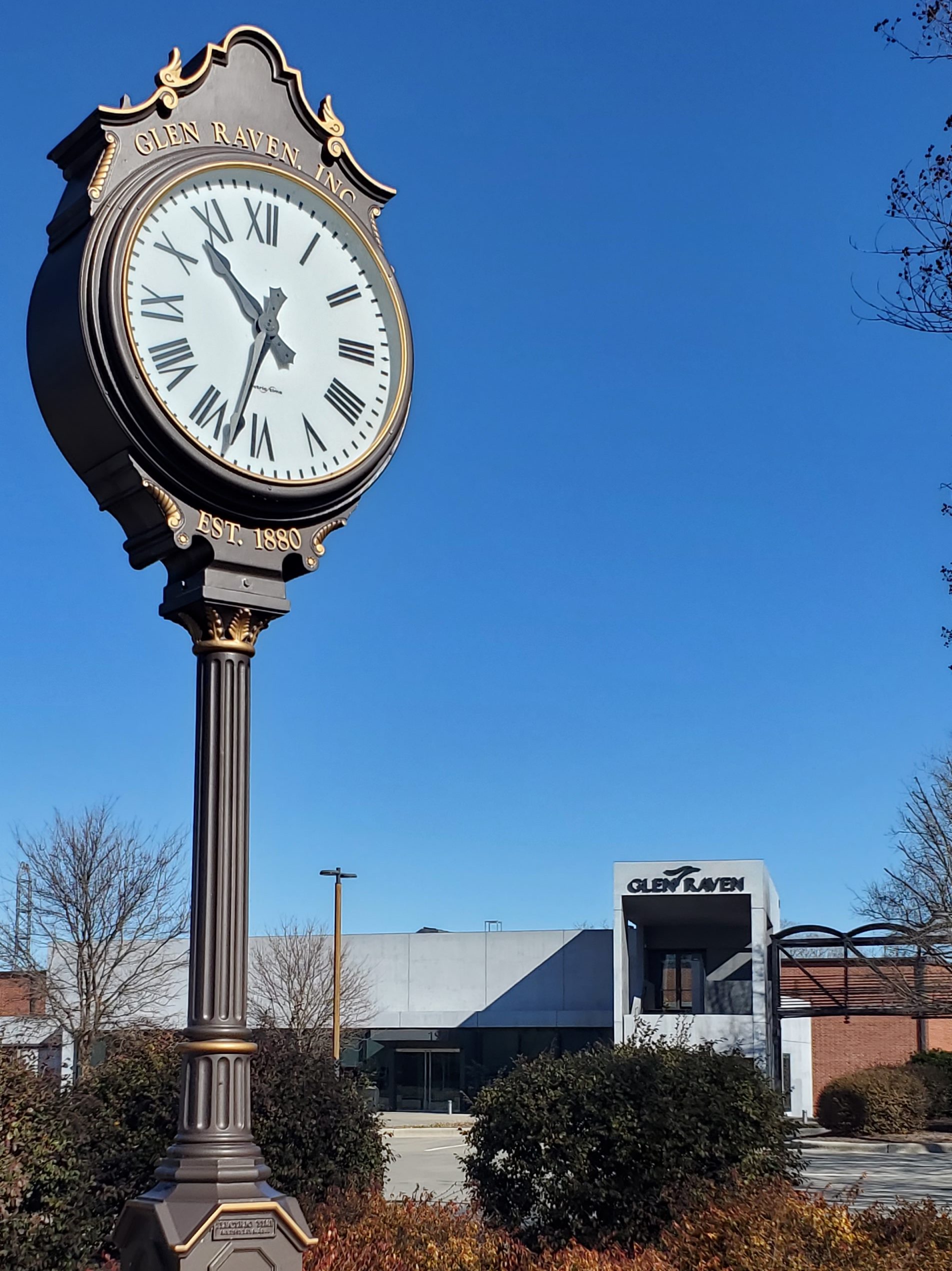
Glen Raven
Glen Raven is a census-designated place (CDP) in Alamance County and is part of the Burlington Metropolitan Statistical Area. The area of current Glen Raven was once occupied by Altamahaw-Ossipee Native American people. A fabric manufacturer by the name of John Quinten Gant used the land as the headquarters of present-day Glen Raven Fabrics. Glen Raven Fabrics created the fabric used to make the first American flag that was planted on the moon. Sunbrella is their flagship brand.
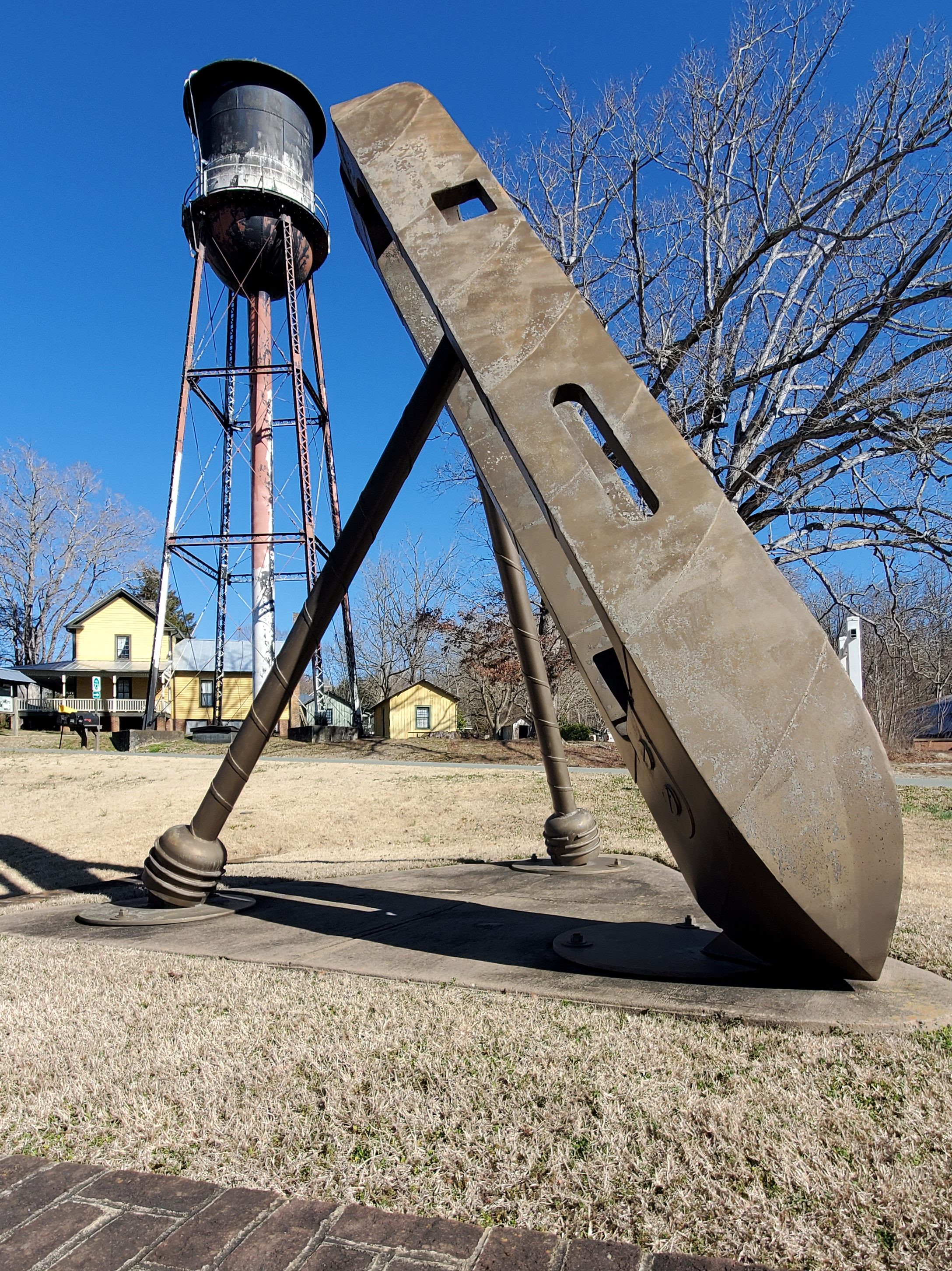
Glencoe
Glencoe is an unincorporated community in Alamance County located on the Haw River. Glencoe is also home to Textile Mill Town and Textile Heritage Museum. The Glencoe Mill Village Historic District and Glencoe School are listed on the National Register of Historic Places.

Textile Heritage Museum
Peruse through the Textile Heritage Museum (2406 Glencoe St, Burlington) for a peek back into the past. Then head to the mill keeper’s home across the street to see two restored rooms in period furniture and decor.
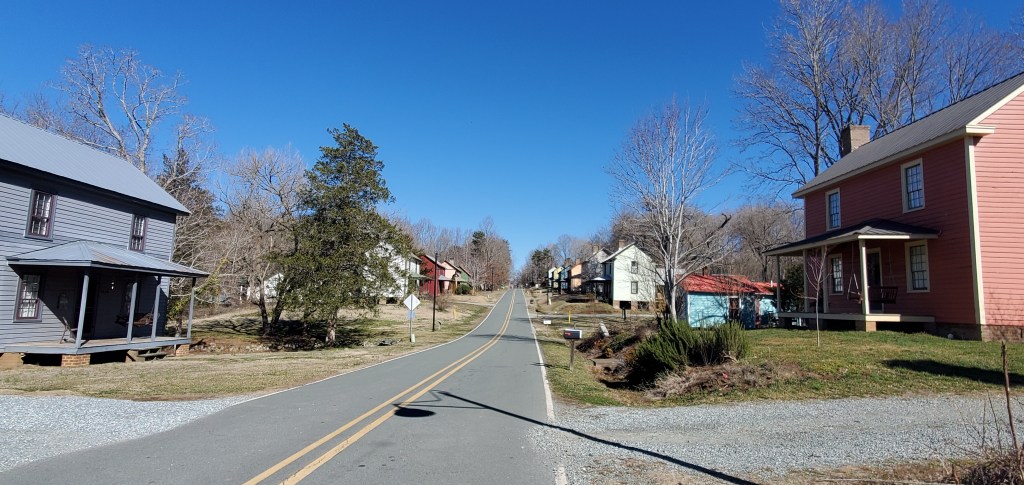
Glencoe Mill Village
The old mill homes along Glencoe St. take up 3 surrounding streets. Workers were given a roof over their heads but were not allowed to buy their homes. This, combined with low wages and long work days, led mill workers to strike in the 1880s
Today, you can walk through the colorful old mill houses, which are mostly occupied and have been kept up. Listed on the National Register of Historic Places, the Glencoe Cotton Mill complex consists of the mill production facilities, the Company Store and Administrative offices of the mill president (the Textile Heritage Museum), a barber shop (private residence), Baptist Church (active), and individually restored houses owned by private residents. The village was built between 1880 and 1882 on 105 acres of land along the river. Glencoe was developed and managed by James H. Holt, son of textile pioneer, Edwin M. Holt, who would become one of the most influential textile entrepreneurs of the South throughout the nineteenth century.
Millworkers’ produced plaid cotton flannel material, which was shipped to finishing mills all over the United States. Historical interpretive markers are positioned throughout the Glencoe Village for visitors to learn more about the people who lived and worked in Glencoe during its prosperity. You’ll also find hiking trails, kayak and canoe accesses, picnic areas, and public fishing along the Haw River. A variety of companies currently reside within the mill complex.
In the 1970s, the mill was sold to Glen Raven Mills, which still owns it to this day. Though the mill is gone many of the mill houses have remained.

Ace Speedway
Ace Speedway (3401 Altamahaw Racetrack Rd)is a 4/10-mile oval stock car racing track. Originally constructed by Roy Maddren and opened in 1956 as a 1/3-mile dirt oval, the track was expanded in 1984 to a 3/8-mile dirt oval. In 1990, the track was paved and became part of the NASCAR Wintson Cup banner. In 1999, the track was re-expanded to a 4/10-mile paved oval and the pits were expanded as well.

Mebane
Mebane is a city located mostly in Alamance County, North Carolina, United States, and partly in Orange County. The town was named for Alexander Mebane, an American Revolutionary War general and member of the U.S. Congress. It was incorporated as “Mebanesville” in 1881, and in 1883 the name was changed to “Mebane”. It was incorporated as a city in 1987. In October 2014, the city council voted to adopt a new seal and slogan, replacing “A progressive community, the perfect place to call home” with “Positively Charming”. The Annual Dogwood Festival is help in April each year.
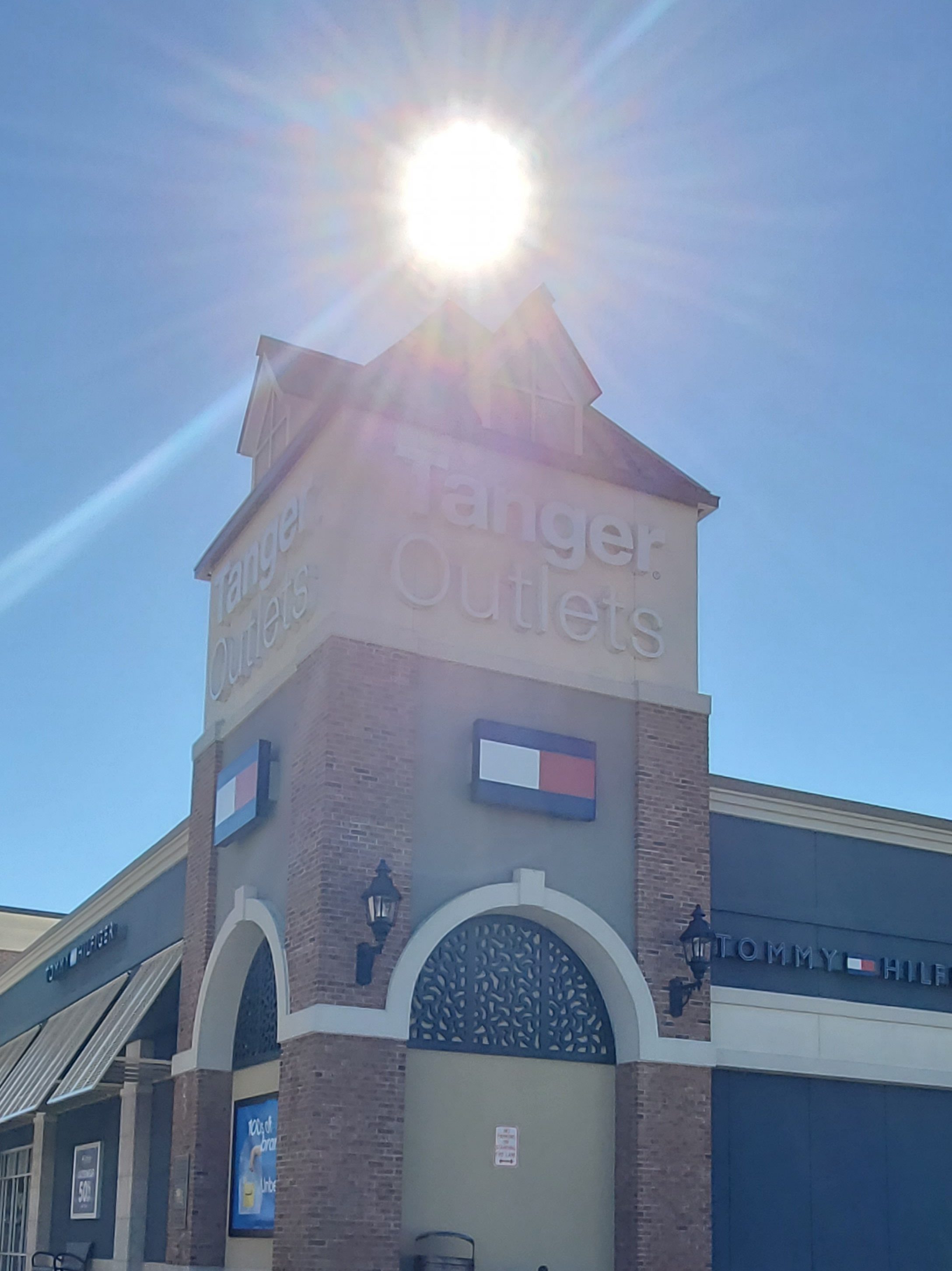
Tanger Outlet
Shop to your heart’s content at Tanger Outlet (4000 Arrowhead Blvd, Mebane).
Swepsonville
Swepsonville was named for the builder of a mill on the western side of town. Swepson disappeared one night with a considerable amount of money and soon established a mill in the North. The old mill, unused for many years, burned down in 1989 in a ten-alarm fire which brought firetrucks from all surrounding counties, was visible from the freeway 3 miles away, and made the national news.
Haw River
Haw River was officially incorporated on June 1, 1973. In 1745, Adam Trollinger established a homestead on the banks of the Haw River. From that beginning, the community of Haw River was developed. Trollinger was a native of the Rhine River valley in Germany and had lived in Pennsylvania before heading south to seek a new life. His settlement was very near the site of an earlier Sissipahaw Indian village. Trollinger chose the spot because it had an easy crossing while nearby the river moved with enough power to drive a mill wheel.
In 1748, Adam’s son, Jacob, built a grist mill, one of the first industries in the wilderness area. A village known as Trollinger’s Ford grew up around the mill.
Lord Cornwallis passed nearby during the last days of the Revolutionary War. His foraging soldiers raided Trollinger’s Mill and confiscated the miller’s grain. When Jacob confronted the redcoats, they bound him to a tree with a bridle bit in his mouth. Upon his release, Trollinger sent two of his sons and a slave to help fight the British.
Benjamin Trollinger built the first part of the Granite Mill in 1844, marking the beginning of the textile industry in the village. It is the only antebellum mill building in Alamance County still in use. In 1849, the North Carolina Railroad was chartered and Benjamin Trollinger secured its passage through the mill town by building a railroad bridge over the river at his own expense. The town became known as Haw River Depot. Benjamin Trollinger also was instrumental in locating the railroad repair station at Company Shops (now Burlington) a few miles west. The railroad bridge was the scene of derailments in 1911, 1936, and 1960. The last wreck damaged the depot which led to its demolition.
In 1928, the cotton factories in Haw River were acquired by Proximity Manufacturing, which later became Cone Mills Corporation. When corduroy became popular, the company decided to produce the cloth in Haw River. The plants south of Main Street were renamed Tabardrey and were equipped with new machinery to produce corduroy. The mills north of the highway became Granite Finishing for the finishing of the cloth. Corduroy production began on May 1, 1930, and Granite was shipping finished goods by June of the same year.
The little town thrived in the years following World War II. Businesses flourished on Main Street in the 1950s, and the Cone plants became the largest producers of corduroy in the world, employing over 1,000 people in 1981.
Graham
Graham was laid out in 1849 as the county seat of the newly formed Alamance County, and was incorporated as a town in 1851; it became a city in 1961. It was named for William Alexander Graham, U.S. senator from North Carolina (1840–1843) and governor of North Carolina (1845–1849).
The lynching of Wyatt Outlaw, the first African-American Town Commissioner and Constable of Graham, on February 26, 1870, by the Ku Klux Klan, along with the assassination of State Senator John W. Stephens at the Caswell County Courthouse, provoked Governor William Woods Holden to declare martial law in Alamance and Caswell Counties, resulting in the Kirk-Holden War of 1870.
Sesquicentennial Park
In downtown Graham, you’ll find Sesquicentennial Park, a small gazebo-like park at the North West corner of Court Square.
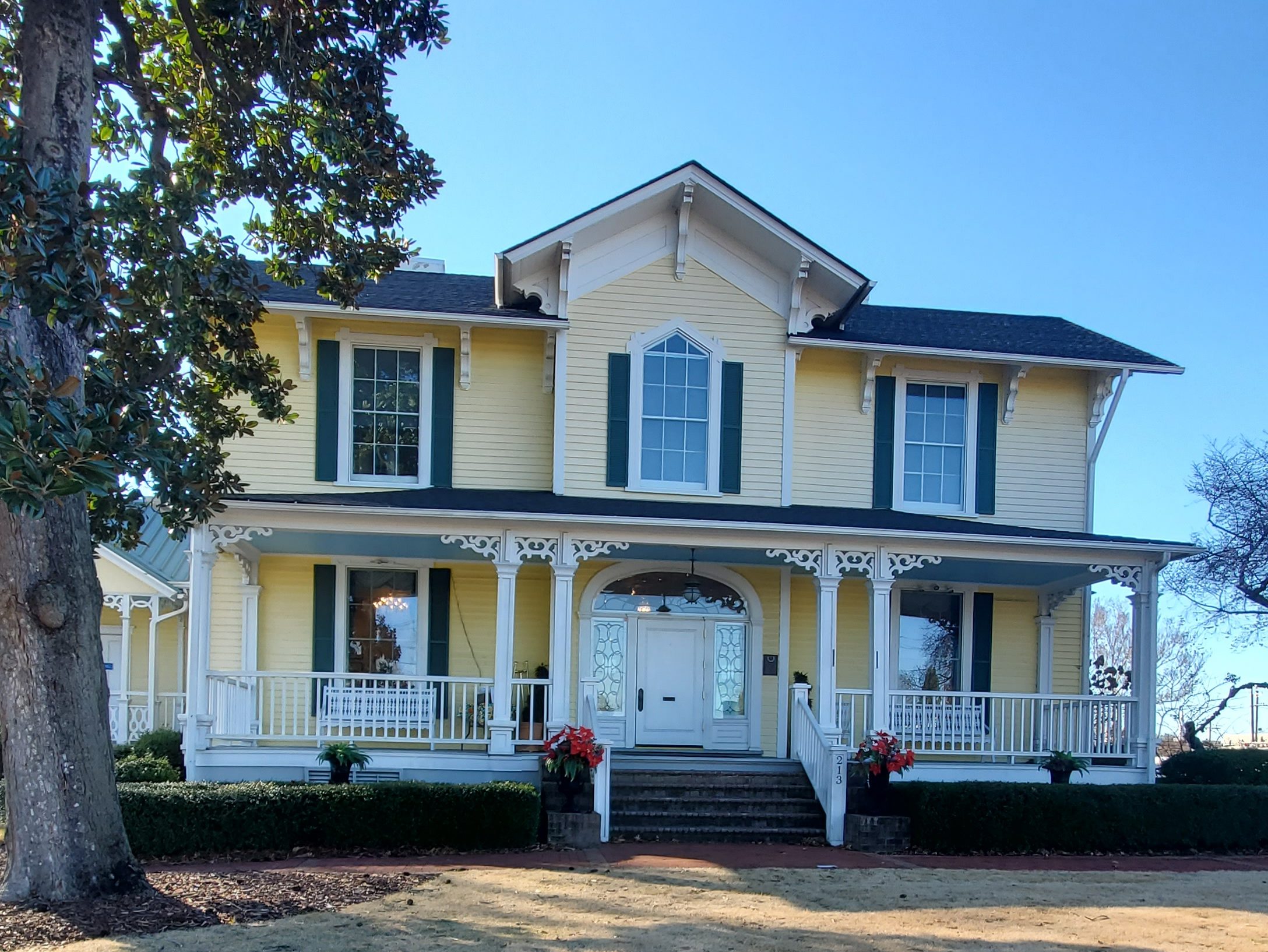
Alamance Arts
213 S Main St, Graham
Graham Historical Museum
135 W Elm St
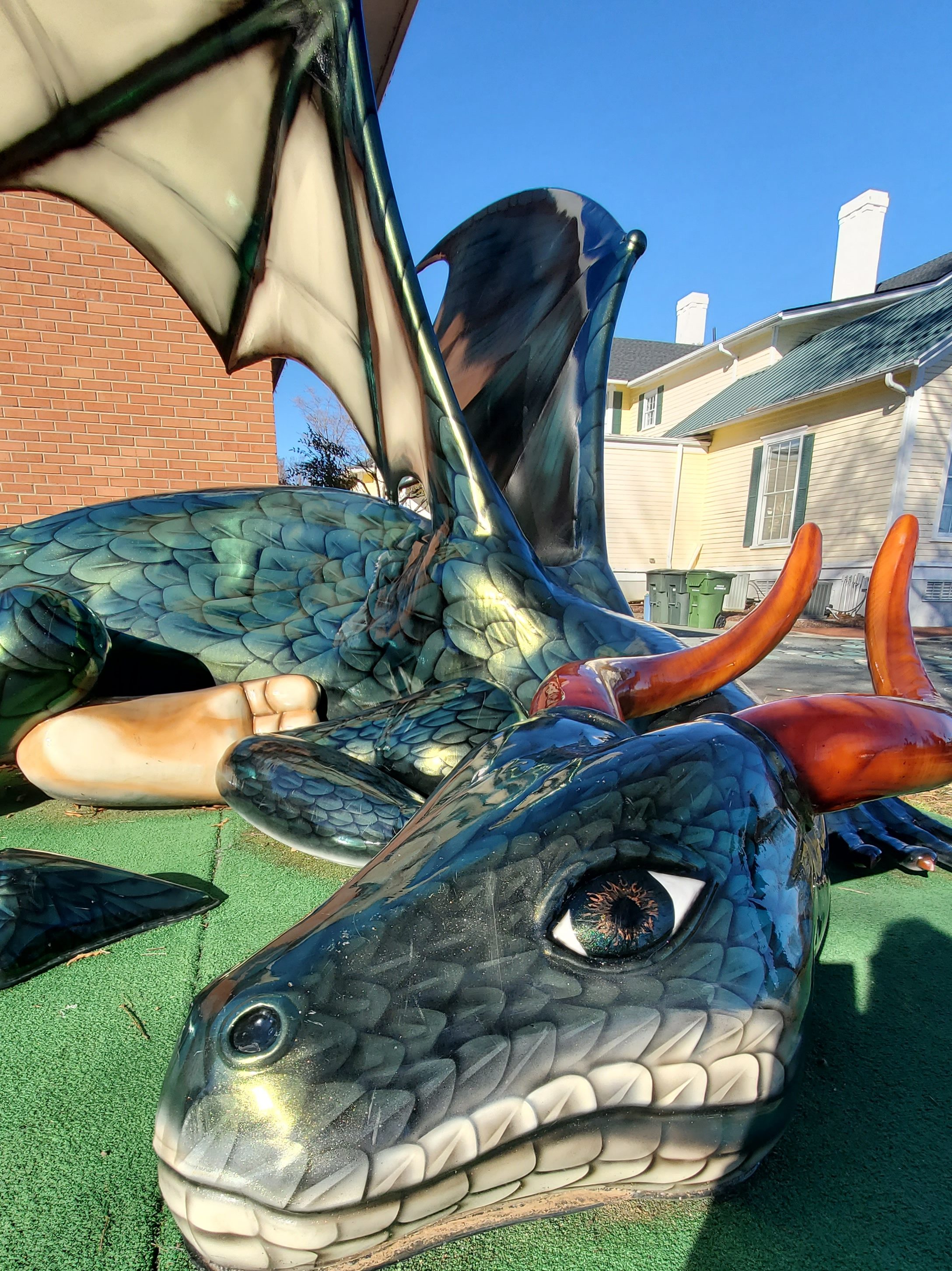
Alamance Children’s Museum
217 S Main St, Graham
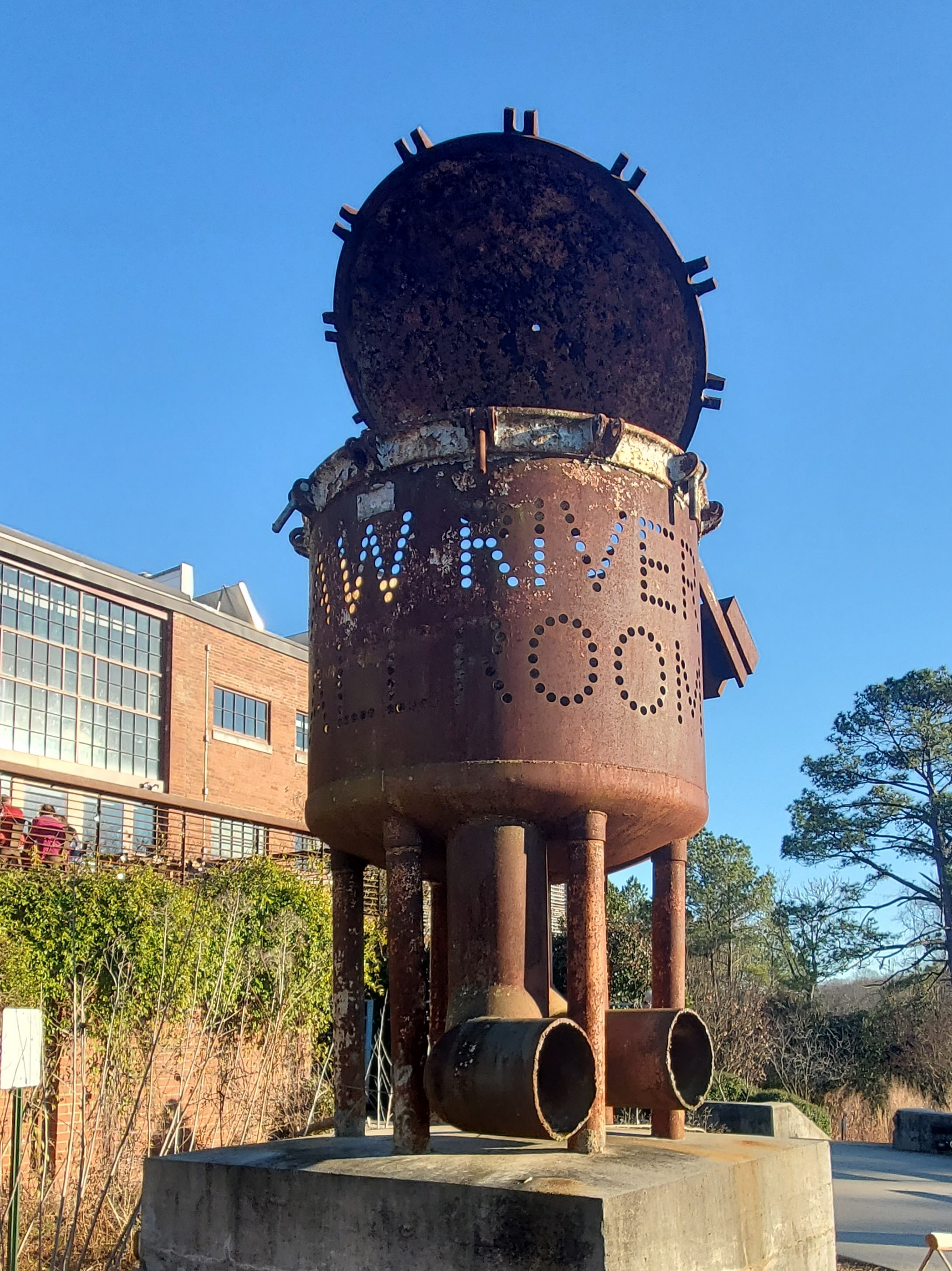
Saxapahaw
Saxapahaw, like most communities in Alamance County, was a mill town built around the community’s cotton mill along the Haw River. The first mill was built in the community in 1844 by Quaker settler John Newlin, but was later demolished to make way for a brick structure. The current mill building was owned and operated by Dixie Yarns until 1994, when a tornado damaged the structure and operations never resumed. Building remodeling was completed in 2006 and the facility, now known as Rivermill, houses apartments and a restaurant. The Haw River Ballroom is a music venue set in the former Dye House of Saxapahaw’s historic cotton mill. The Former Saxapahaw Spinning Mill and James Monroe Thompson House are listed on the National Register of Historic Places.
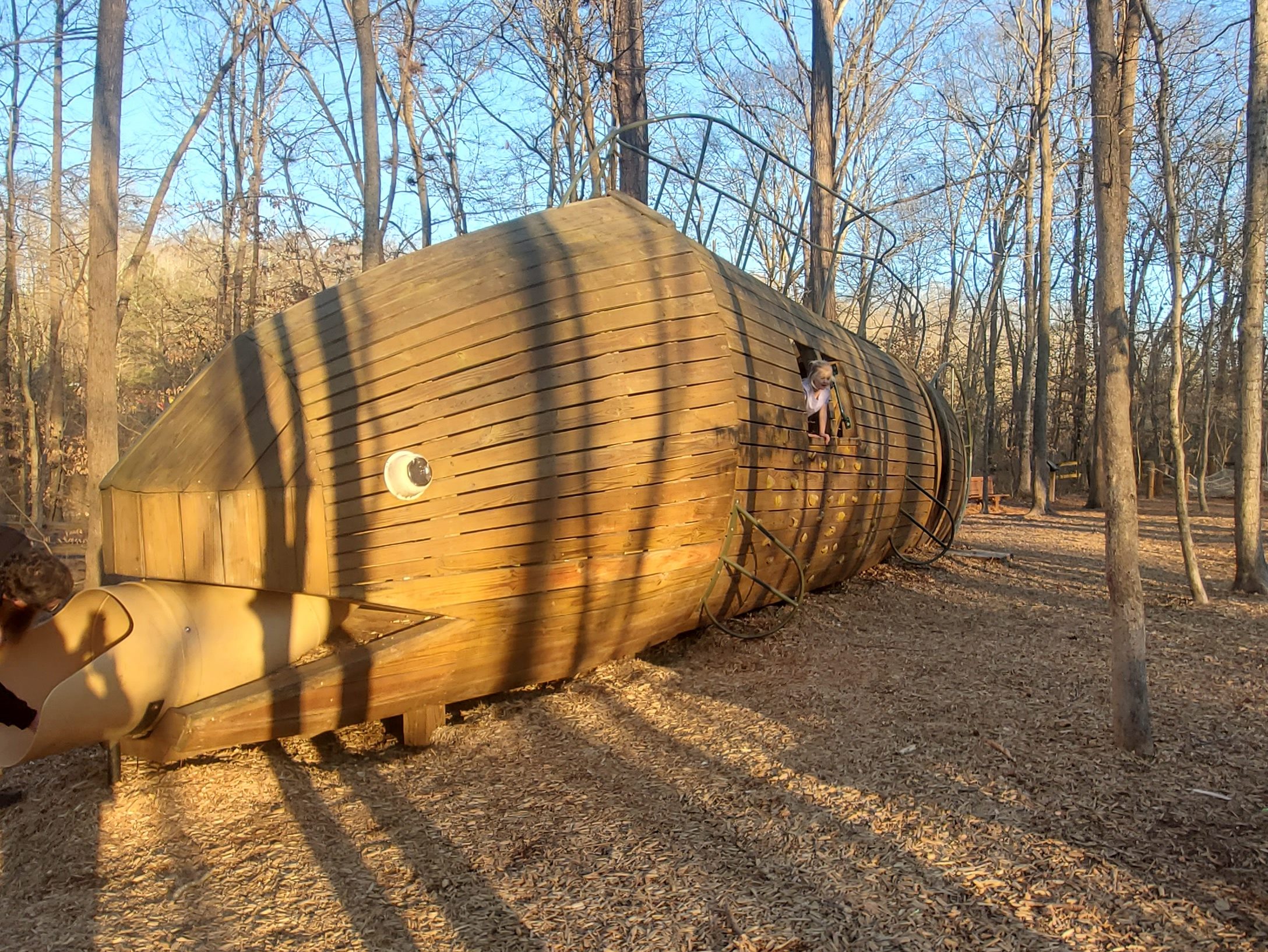
Saxapahaw Island Park
This cute little riverside park (5550 Church Rd) is tucked away just opposite the Rivermill and restaurants, immediately on the other side of the bridge. It’s just a short walk from the parking lot to this wooded playground and unique play structure.
Eli Whitney
Eli Whitney gained its name from the inventor of the cotton gin, Eli Whitney. The reasoning for this was because there was once a cotton gin located in the community, but has been gone for many years now. Eli Whitney was once home to a school as well, but it too closed and was later demolished. The school’s gymnasium was left standing and now serves as a community center.
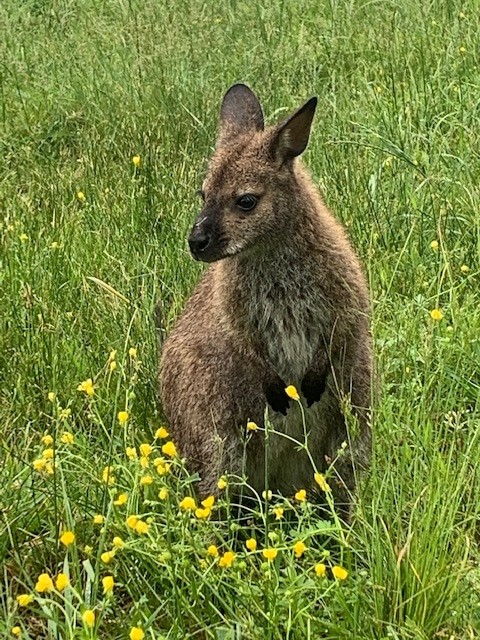
Liberty Acres
Liberty Acres (8790 Sylvan Rd.) is an animal conservation park and equine rescue. Plus, they have an extensive exotic bird breeding station. There’s always a variety of animals here, from zebras and horses to foxes, wallabies, reptiles, turkeys, parrots, exotic birds, and much more!
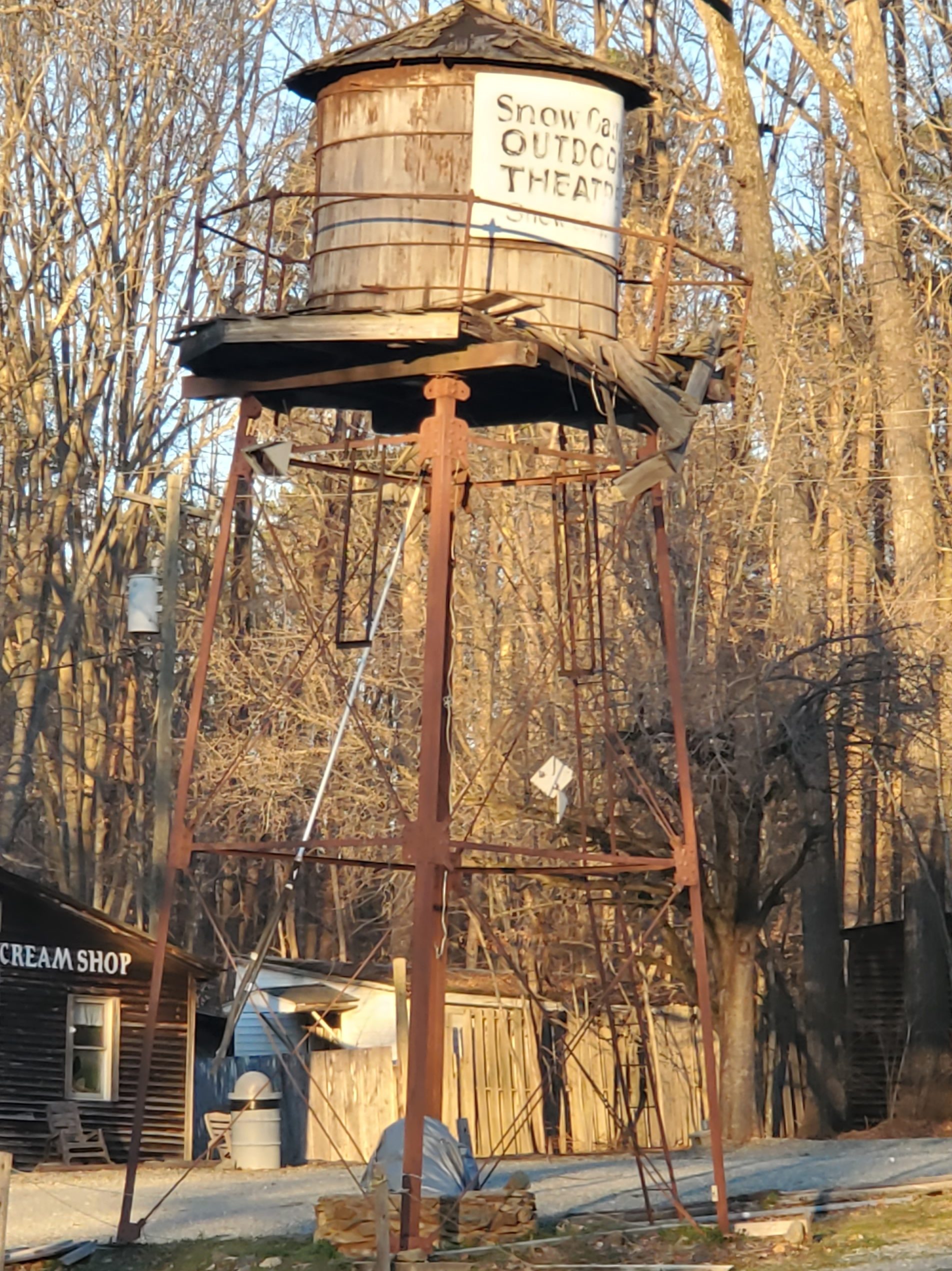
Snow Camp
The origin of the name of the community is disputed, but the most commonly accepted story as to how the name came about was that before the American Revolution a group of hunters from Pennsylvania camped there during a snowfall. The lesser accepted story is that General Cornwallis camped there during a snowfall around the time of the Battle of Guilford Court House.
Though quite small, Snow Camp is historically significant. Herman Husband, a leader in the Regulator Movement lived here. The Regulator Movement culminated in the Battle of Alamance prior to the Revolutionary War. During the Revolutionary War, battles were fought nearby at Lindley’s Mill, Clapp’s Mill, and at Pyle’s Defeat.
Snow Camp was also a site of early Quaker settlement in North Carolina, as Friends from Pennsylvania migrated to the Cane Creek valley in the mid-1700s and established the Spring Meeting at Snow Camp; several historic buildings clustered around the spring remain from that settlement.
Today the Snow Camp Outdoor Theater (301 Drama Rd) is popular for outdoor theater throughout the summer.
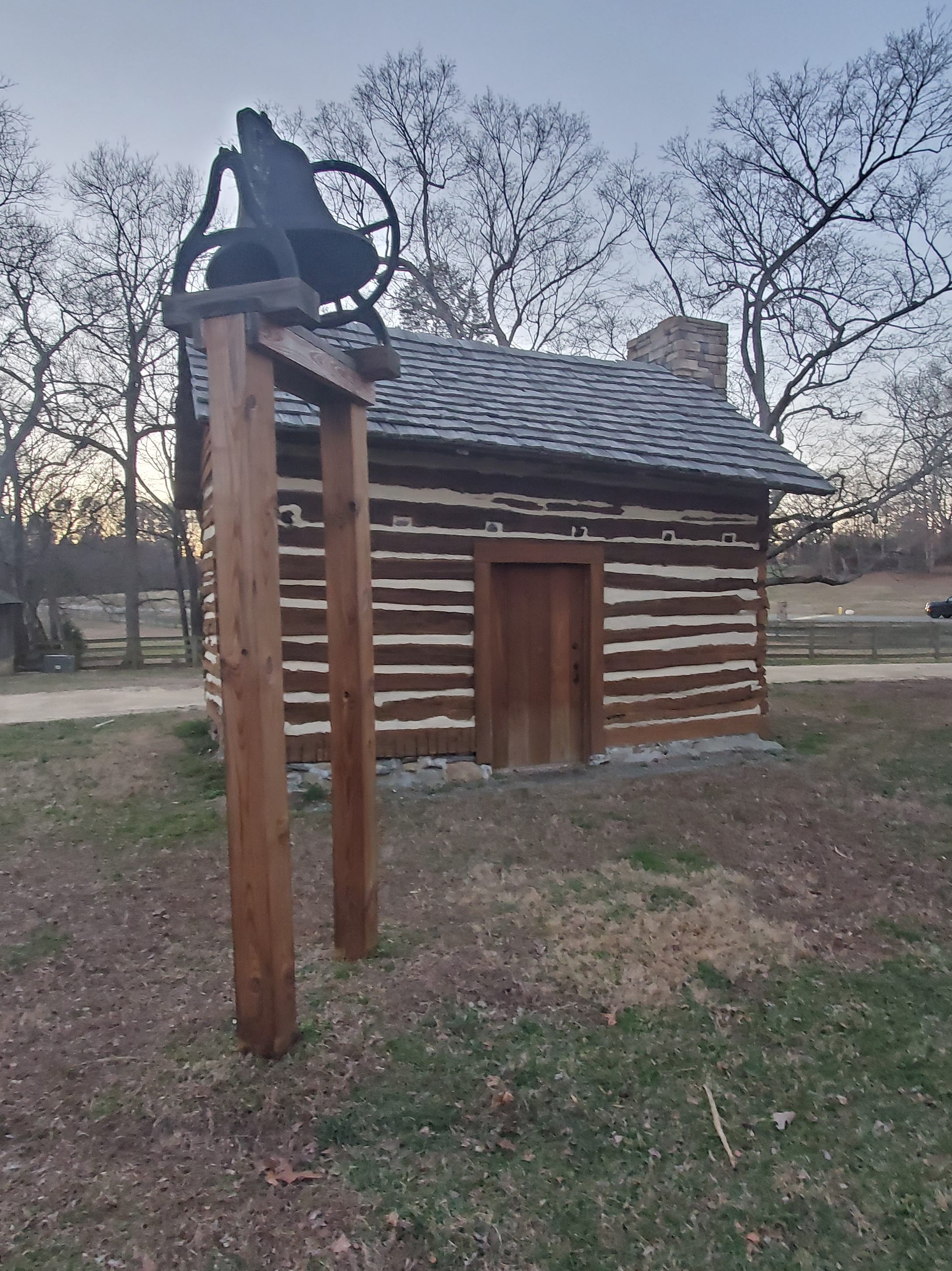
Cedar Rock Park
At Cedar Rock Park (4242 R Dean Coleman Rd), you can stroll through an array of old buildings, a well, an old schoolhouse bell, and more — plus, friendly goats and sheep too.
Alamance
Alamance was the site of the largest conflict of the War of the Regulation on May 16, 1771. Governor William Tryon’s decisive victory over a force of 2,000 Regulators effectively ended the war (Battle of Alamance). The region around Alamance was also the site of a defeat of British Loyalists in the American Revolutionary War in a skirmish known as Pyle’s Massacre on February 25, 1781. The name is said to have been given by German settlers, from the Native American word ‘allamanca.’
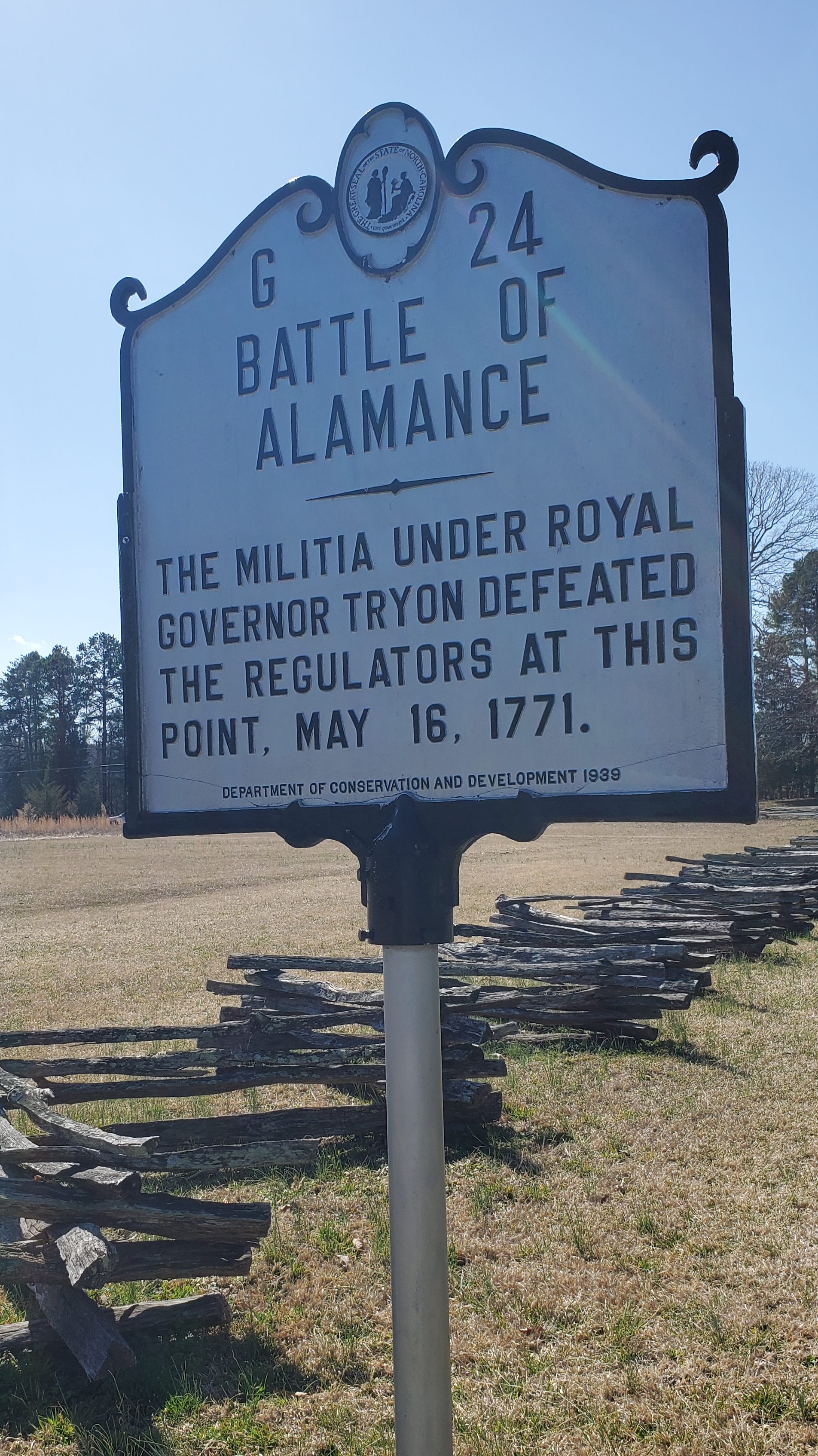
Alamance Battleground
Alamance Battleground (5803 NC-62 South) is a must-stop for history and war buffs. The site marks where the Battle of Alamance ended the War of Regulation on May 16, 1771. The site includes a visitors center, a log home, monuments, site markers, a cemetery, and walking trails.
Next stop… Burlington!
 Portable NC