

Throughout Bladen County, you’ll find a plethora of pine trees, as it is part of the Southern Pines/Sandhills region, as well as corn, soy bean, watermelon, and blueberry fields as well as turf farms. Curiously, you’ll also happen upon a large number of private family cemeteries–some roadside and some set back on private land. As the third largest county in North Carolina, Blade County encompasses 879 square miles and is known for Houston peanuts.
Named for Martin Bladen, a member of the Board of Trade, Bladen County was first settled by Highland Scots who came to the Cape Fear Valley in 1734 seeking religious freedom. Bladen’s original residents also included the Waccamaw people. Once North Carolina’s largest county, Bladen received its name, “Mother of Counties,” because 55 counties have been carved from it. It now contains some 879 square miles and is the fourth largest county in the state. Originally, Bladen contained over 1,000 lakes and was the state’s most beautiful county. The lakes, believed to have been created by a bombardment of meteors 100,000 years ago, have developed into important recreational areas and tourist attractions. Within its present boundaries, seven of them remain.
Prior to European settlement, the area was occupied by Native American peoples: Waccamaw and Cape Fear. (Cape Fear has come to represent a general population of Native Americans that lived along the river, and identified as such by the European settlers.) During this time, the Native Americans were growing food, hunting with bows and arrows, and making pottery.
Bladen County is abundant in natural recreation areas with three rivers within its boundaries, including the Black River, South River, and the Cape Fear River, which is the largest and bisects the county. These rivers provided transportation for crops and naval stores products, allowing for farmers to export their goods. In addition to three rivers, Bladen County is home to the Bay Lakes and 2 State Parks: Jones Lake State Park and Singletary Lake State Park. White Lake is also a popular attraction for swimming and camping.
The county is rich in colonial history starting with the Scottish settlers. It was the site of the Battle of Elizabethtown, where the Patriots broke Loyalists/Tory power. When the American Revolutionary War began, records indicate that 300 men served in the Bladen County Militia.
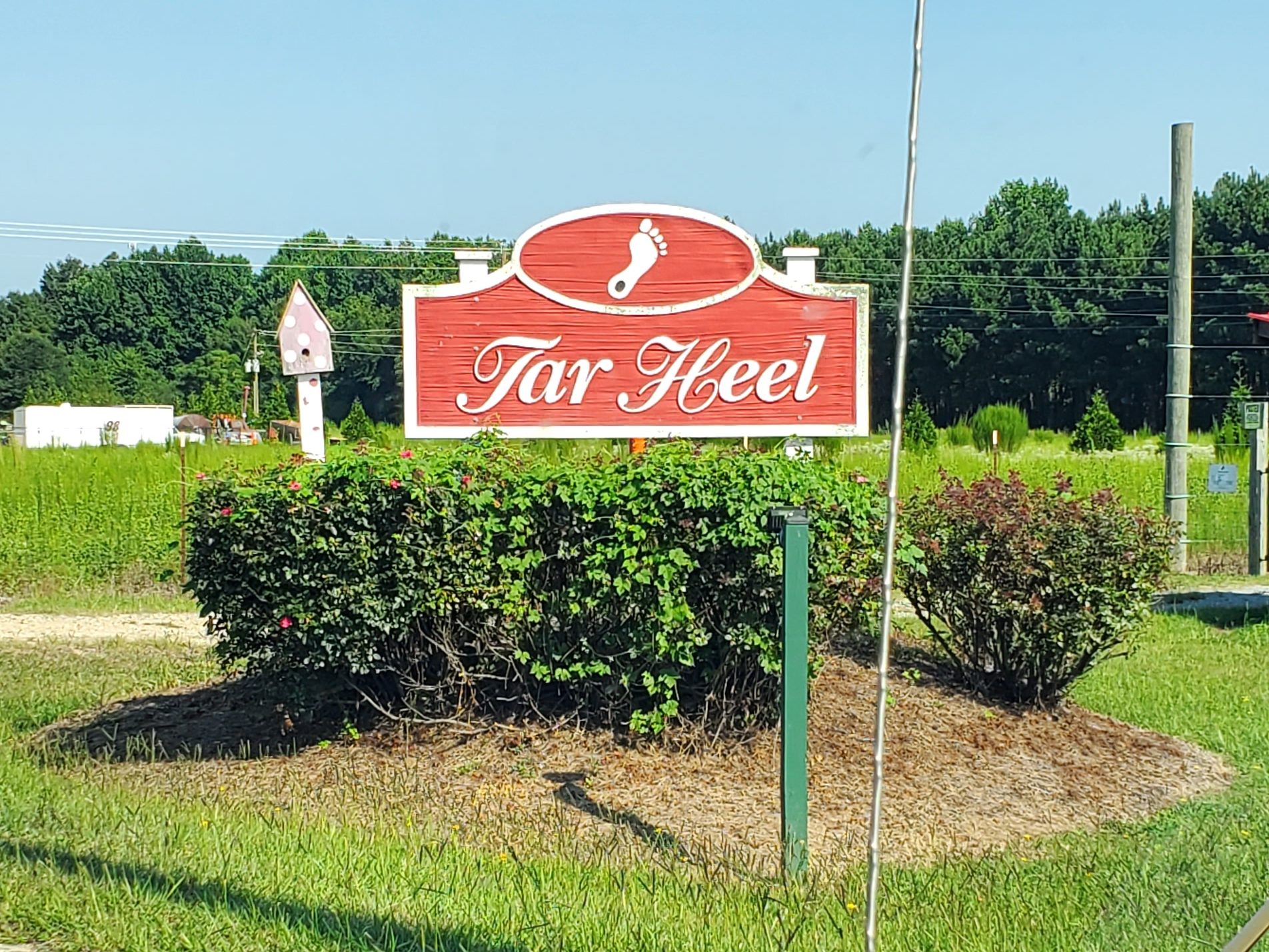
Tar Heel
Incorporated by the State of North Carolina in 1964, the town of Tar Heel is home to the largest pig processing plant in the world, which opened in 1992, operated by Smithfield Foods and is located just north of the town limits.
This farming community has a history dating back to the Revolutionary War. Colonel Thomas Robeson, for whom Robeson County was named, lived in the Tar Heel community. The town was known for its landing on the Cape Fear River. The state operated a ferry at this landing, and it was a major loading point for vessels that transported agricultural goods to the market in Wilmington. The major product was barrels of turpentine. Tar Heel had several turpentine stills, and the remains of some of the old stills can be found in the area. The results of transporting the barrels of turpentine, leaking barrels, caused a tar-like material to be found around the landing and the access to the river. When the community people talked of going to the village, it was said they were going to get tar on their heels, thus the name ‘Tar Heel.’

Harmony Hall Village
Harmony Hall Plantation (1615 River Rd.) is the 1760s-era home of Col. James Richardson on the Cape Fear River. The plantation today is home to several buildings that span the years from the home’s origin to 1900, including a one-room school that operated in Bladen County during the last quarter of the 19th century. The Harmony Hall Plantation grounds are open to the public – but the hiking trail to the Cape Fear River may be currently closed. Unfortunately, the house is closed too due to mold damage caused by Hurricane Florence.
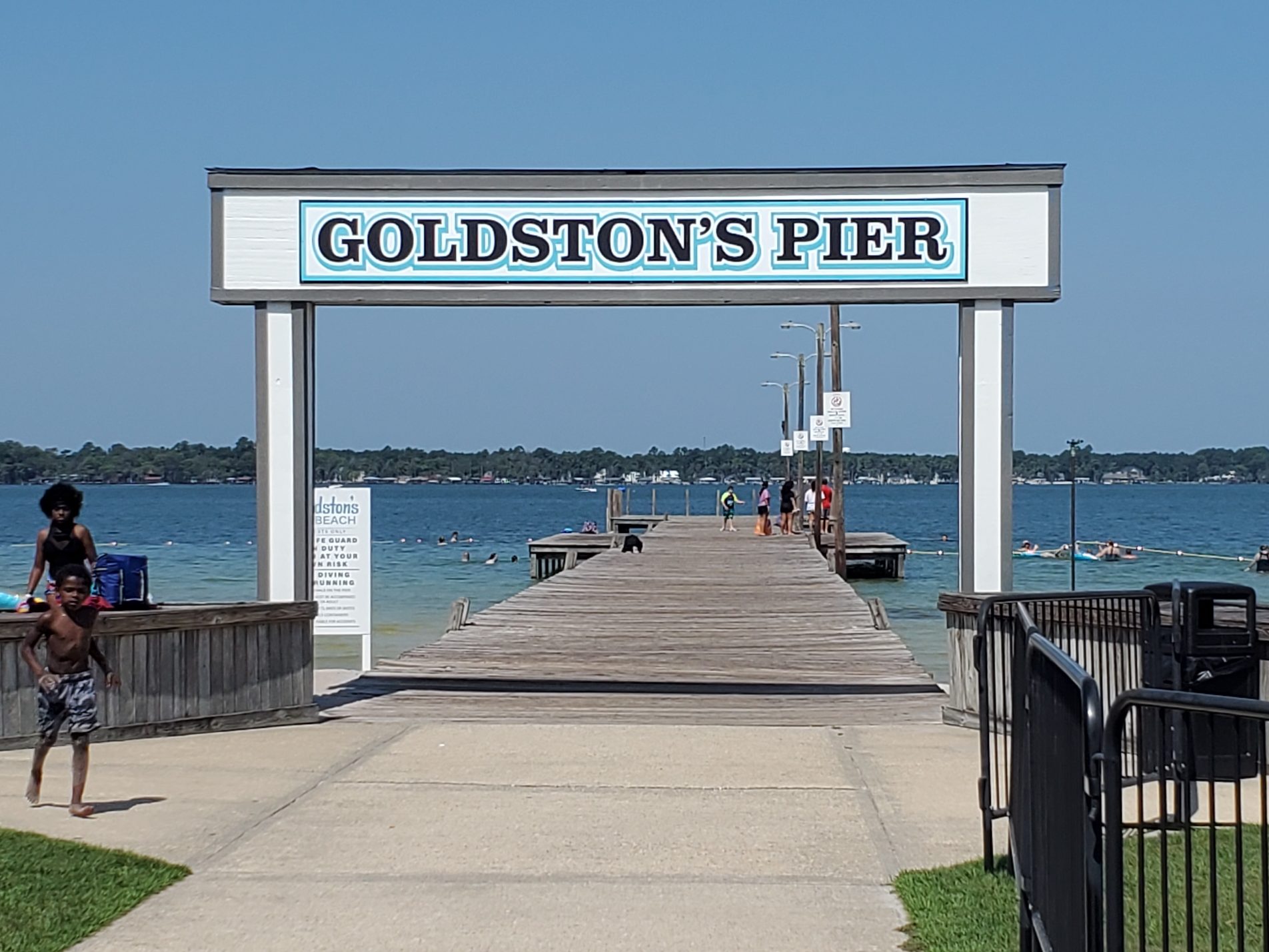
White Lake
The community of White Lake along with the lake itself and the nearby White Lake Water Park (192 NC-53) has been a leisurely summer family destination for generations of North Carolinian families. From summer rental cottages to gated communities and year-round homes and estates, plus local favorite restaurants, watering holes, an arcade, and more, you’ll find this area well visited throughout the summer months as well as the off season. It has been labeled “The Nation’s Safest Beach.” Some accommodations are open year-round. White Lake is also the home of the annual White Lake Water Festival, held the third weekend in May each year.

Elizabethtown
Some maintain that Elizabethtown is named for Elizabeth, the wife of George Carteret, while others believe it was named for the love interest of a local landowner. In the 1970s, Elizabethtown more than doubled its size through annexation, increasing from about 1,400 square feet to 3,700 square feet in area.
Elizabethtown’s downtown area contains tree-lined streets and brick sidewalks, plus a variety of quaint shops (Sassy Chick Boutique, The People’s Emporium, and more) and eateries, such as Burney’s Sweets & More, as well as the Cape Fear Farmer’s Market. Be sure to stop at the Lt. Col. Curtis L. Brown, Jr. mural, which memorializes a former NASA astronaut and retired United States Air Force colonel who participated in six space missions and is considered a local hero. Brown was born in Elizabethtown on March 11, 1956, and their airport, the Curtis L. Brown Jr. Field Airport, is named in his honor.
In Elizabethtown, you’ll also find the Cape Fear ATV Park as well as the Elizabethtown Half-Pipe Skate Park (in Leinwand Park), featuring a quarter-acre half-pipe along with other skateboarding obstacles. The park can host up to 50 skateboarders. Elizabethtown hosts the Pork and Beats Festival the first weekend in November each year at the Cape Fear Farmers Market. The town is due to hold its 250th Celebration on September 23, 2023.
P.S. If you are a fan of the Mermaid Castle shop (originally at Carolina Beach, which then relocated over the bridge to the Monkey Junction area of Wilmington), they have now relocated to Elizabethtown.
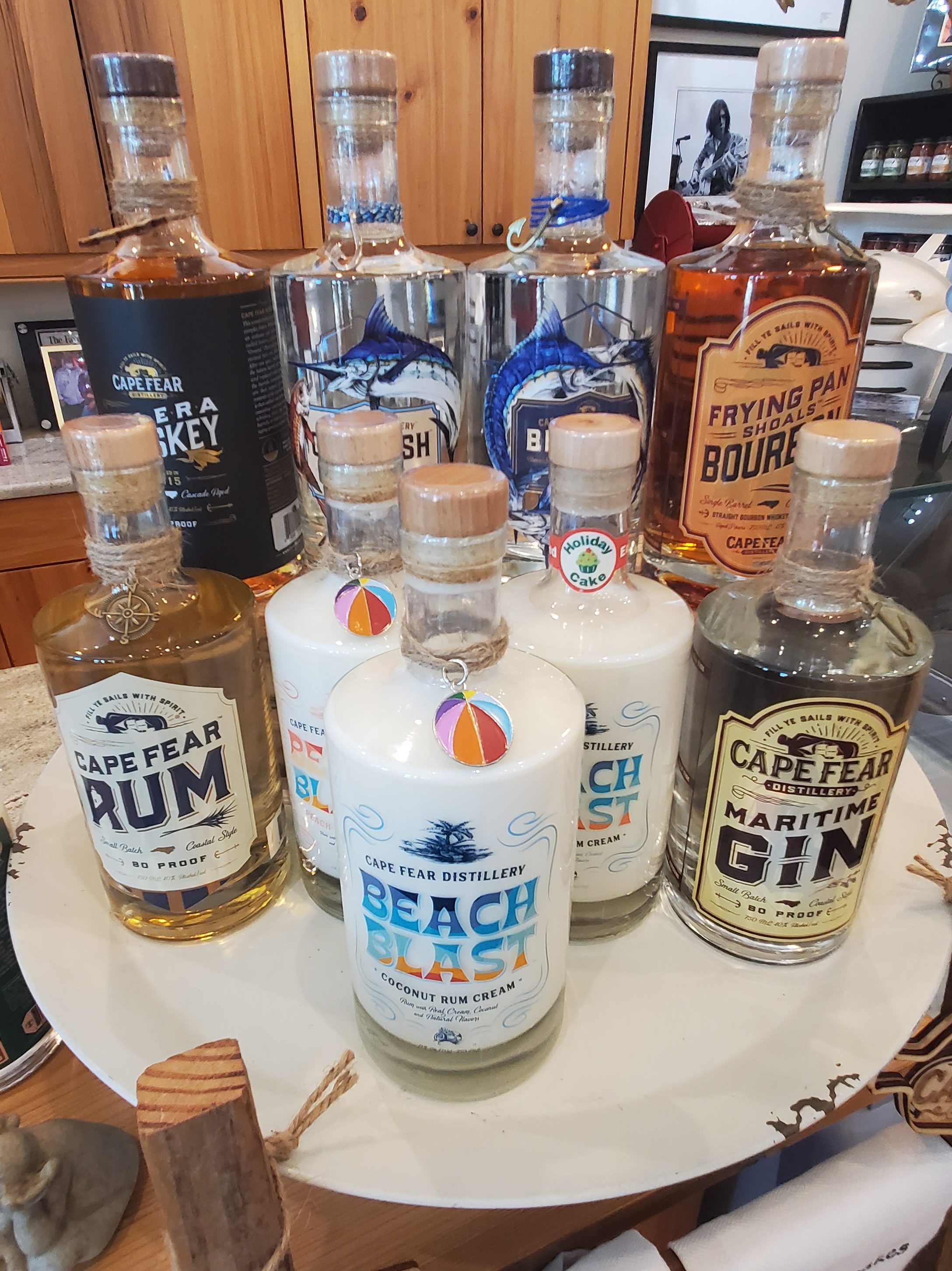
Cape Fear Vineyard and Winery
The Cape Fear Vineyard and Winery is a MUST SEE (195 Vineyard Dr.). This enterprise distills and bottles its own gin, rum, coconut rum, vodka, whiskey, and bourbon. Stop by the Tipsy Toad gift shop to purchase your own bottles and singles, gifts, swag, and ice cream. Stroll the grounds to discover statuary and public art sculptures, including some pieces from Michael Jackson’s Neverland Ranch. The owner is also quite the collector, and on the grounds you’ll find an AMAZING collection of original and lithograph artwork by both world-renown artists and celebrities, including Dr. Seuss, Richard Petty, David Bowie, Olivia Newton-John, Elton John, Frank Sinatra, Michael Jackson, Marilyn Monroe, Burt Reynolds, Marlon Brando, David Lee Roth, Alice Cooper, Jimi Hendrix, Redd Foxx, Grace Slick, Billy Bob Thornton, Pablo Picasso, and much more! You’ll also find articles of clothing worn by Whitney Houston, Michael Jackson, James Brown, and Prince. Altogether, the collection (I was told) is probably valued at more than $2 million.
Oh, and they also have a number of small, truly quaint, modern cottages for those who’d like to stay for a weekend or an entire week.
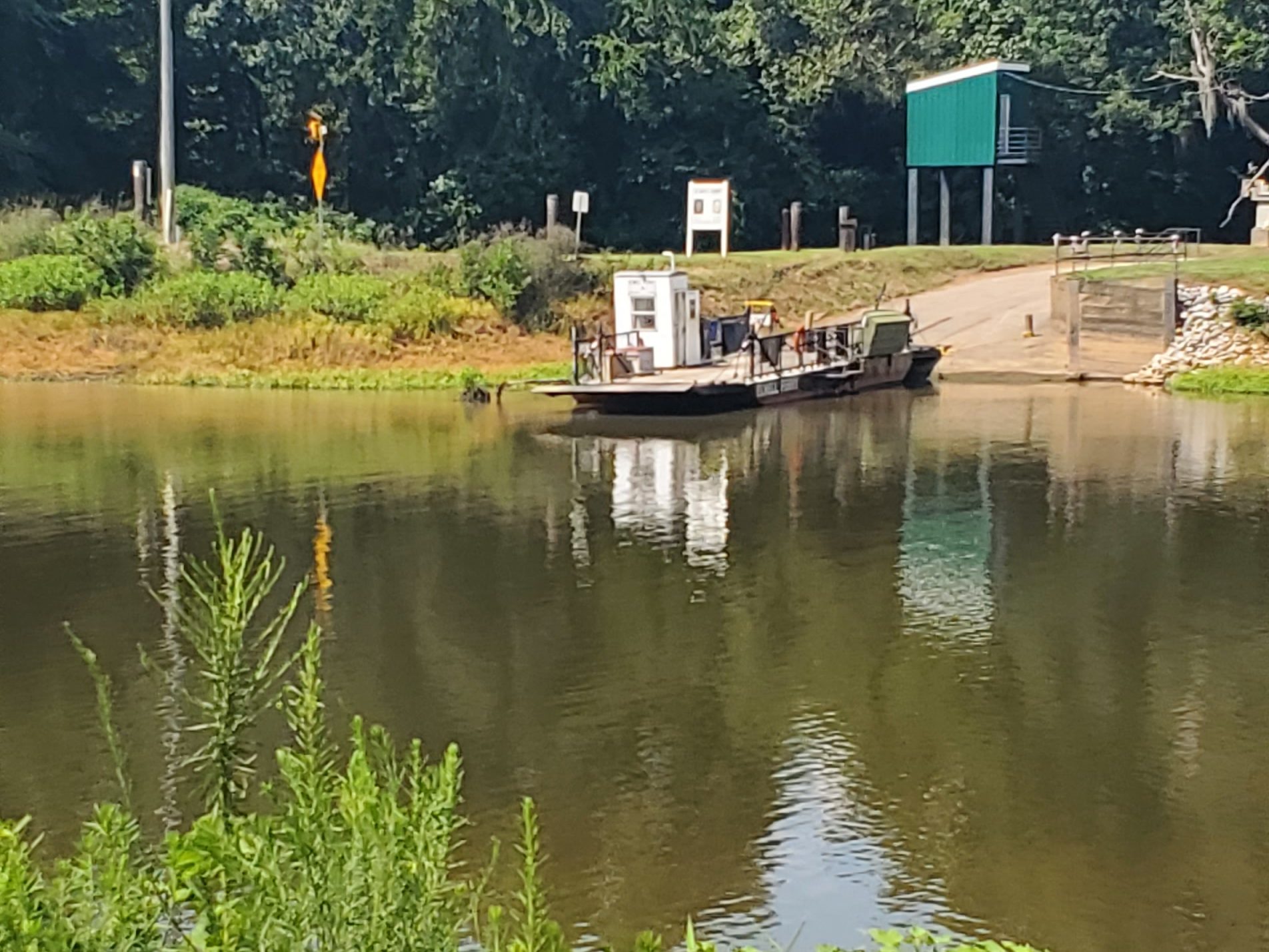
Elwell Ferry
Tucked away in Southeastern Bladen County, one of the last remaining inland river ferries crosses a sleepy Cape Fear River. For more than a century, the Elwell Ferry has shuttled local residents and farmers across the river between the tiny crossroad towns of Kelly and Carvers.
The Elwell Ferry began operation in 1905. Two brothers, John R. and Walter H. Russ, began the service, which crosses the same point to this day. At the time, the Elwell Ferry was one of numerous river ferries in the state and the country operated by local residents to connect local farms and villages to each other. Nearly all of the Elwell’s sister ferries have been replaced by bridges or abandoned altogether. Many consider the Elwell Ferry a living relic of early transportation within North Carolina.
Today, the ferry is owned and operated by the NC Department of Transportation. The ferry holds a maximum of two passenger vehicles or about four tons in total weight capacity. It runs from 6:00 a.m. to 6:00 p.m. in the spring and summer and from sunrise to sunset in the winter and fall. On average, anywhere from 60 to 80 vehicles per day utilize Elwell Ferry. (There is no ferry service on Christmas Day.)
Directions: From Fayetteville or Elizabethtown: Follow NC 87 South approximately 14 miles past the end of the Elizabethtown Bypass. Turn left onto Elwell Ferry Road, and the ferry is about one and a half miles straight ahead. If the ferry is not on your side of the river when you arrive, just beep your horn and the operator will come and pick you up. The total ferry crossing is about five minutes.
P.S. If you want to get to the tow of Kelly, this is truly the quickest way, as it is a 24-minute trip by road–or just 5 minutes across the river. The town of Kelly was severely flooded from Hurricane Florence in September 2018 and nearly all of the town’s 800+ inhabitants had to be evacuated or rescued.

Bladenboro
The town of Bladenboro was incorporated in 1903. Development around Bladenboro, a farming community also known in its earliest days for its turpentine and lumber, began to take off after a railroad was built through the area in 1859. In 1885, brothers R.L. and H.C. Bridger came to Bladenboro from Little River, South Carolina, to operate a turpentine business. They soon became involved in the timber business and operated a cotton gin. The brothers and their descendants would have a major effect on the shaping of the town and its economy for much of the next century. Major businesses, owned and operated by members of the Bridger family and which employed many area residents, have included Bridger Corporation (a farming supply company and general store no longer in operation), Bladenboro Cotton Mills (established in 1912 and later sold to become Highland Mills), and the Bank of Bladenboro (established in 1908 and now part of First Citizens Bank). Bladenboro’s downtown was also heavily damaged by hurricanes Matthew and Florence.
In 1954, Bladenboro received national attention for several mysterious animal killings, mostly of dogs and livestock, in the area. The animals had broken jaws and had been drained of blood in a fashion not unlike the supposed attacks of the legendary Chupacabra monster. However, sightings describe the attacker as resembling a cat or wolf, which led to the local legend known as the “Beast of Bladenboro.” In 2008, the History Channel television series Monster Quest performed an analysis concerning these attacks, which were beginning to happen again, and concluded that the attacker might have been a cougar.

Lu Mil Vineyard
Sitting on a lush, rolling rural landscape, including ponds, trails, and gardens, Lu Mil Vineyard (438 Suggs-Taylor Rd.) is the family farm of the late Lucille and Miller Taylor. It is one of North Carolina’s oldest working farms. The gift shop is open daily for both shopping and wine tasting, and the facility hosts events and weddings on the grounds as well. Plus, you can stay in one of their 12 Vineyard Cabins, with nightly rates available on both weekends and week nights.
Next stop… Alleghany County!
 Portable NC