

A drive through Sampson County will quickly reveal that it is largely an agricultural area. You’ll pass by outstretched fields of corn, tobacco, soy bean, and even watermelon. The area is also known for its blueberry farms, sandy soil, pine groves and forests, and cypress swamps as well as occasional palm trees and Spanish moss. Sampson County is also The Barn Quilt Capital of North Carolina ® with at least 140 recognized barn quilts across the county’s Barn Quilt Trail– and the county even has its own signature barn quilt!
Among the first European settlers of the area was John Sampson, who was appointed as the first Register of Deeds for Duplin County. He served as a Lt. Colonel, and then a Lt. General in the county’s militia, and was later elected as the first mayor of Wilmington. Sampson brought with him Richard Clinton, who was believed to be his stepson.
In 1776, at the outbreak of the Revolution, Clinton organized a company of militia from upper Duplin County and led them as captain in the defense of Wilmington against the British. He was later appointed Colonel of Cavalry and Brigadier General of the Fayetteville District. Upon the establishment of the state government of North Carolina by the Halifax Constitution of 1776, Clinton was elected as one of the first members of the House of Commons, representing the County of Duplin as a House member. Clinton continued as a representative of Duplin County until the creation of Sampson County in 1784. Clinton secured passage of the act creating the new county, and proposed the name “Sampson” in honor of John Sampson, his stepfather and benefactor.
According to the 2000 census, there were 1,029 members of the state-recognized Coharie Intra-tribal Council, Inc., a state-recognized tribe in Sampson County, who claim descent from certain tribes of Indians originally inhabiting the coastal regions of North Carolina.
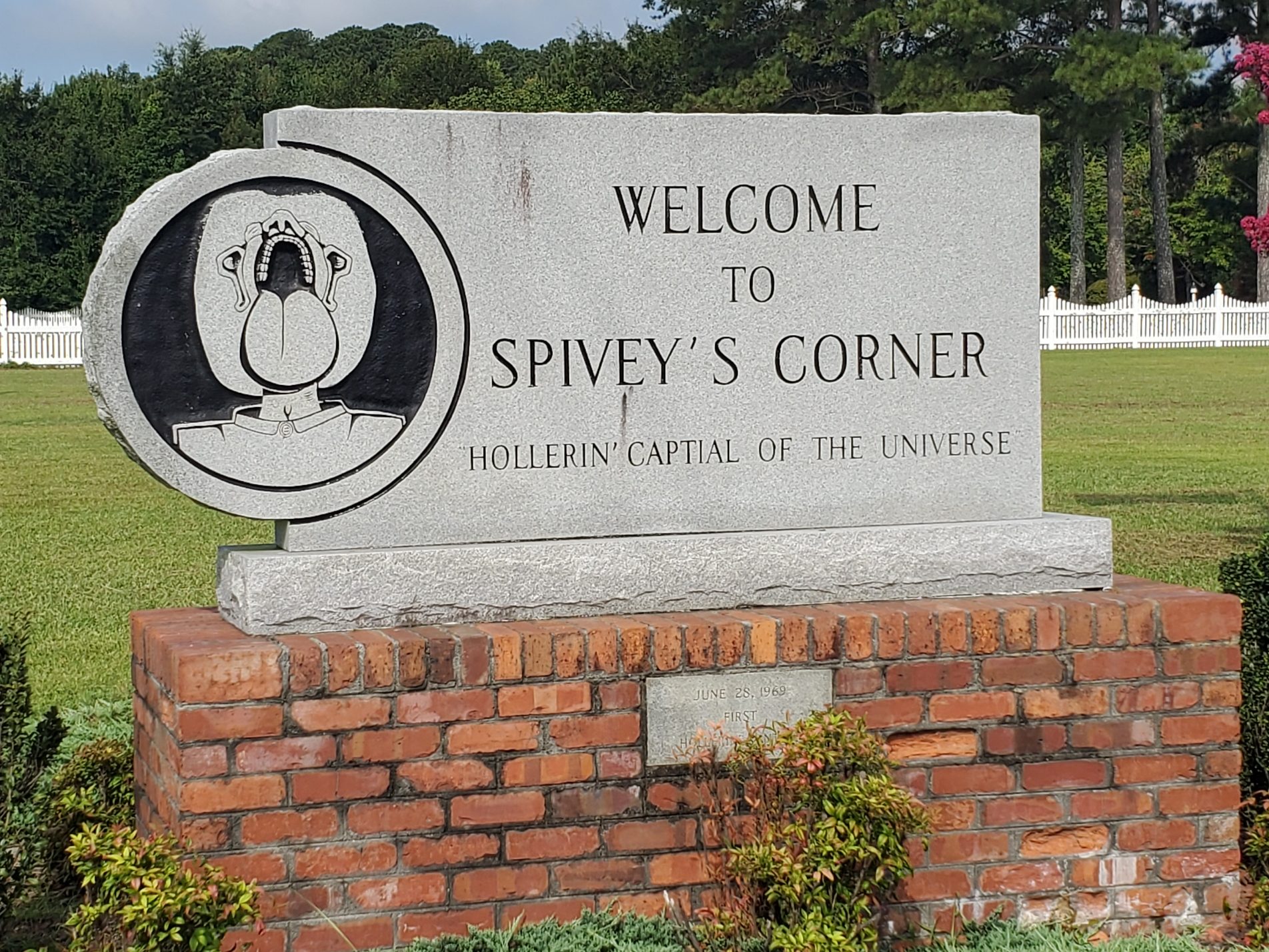
Spivey’s Corner
From 1969 to 2015, Spivey’s Corner was the home of the nationally known National Hollerin’ Contest. Contestants from the contest have appeared on Johnny Carson’s The Tonight Show and the Late Show with David Letterman. The National Hollerin’ Contest, first held in 1969, was an annual competition held in Spivey’s Corner. It continued for nearly 50 years, before ending in 2015.
The contest, which was held on the first Saturday in September, was inaugurated in order to revive the almost-lost art of “hollerin”, a sophisticated vocal tradition that served as a means of long-distance communication between individuals as well as an amusing form of entertainment, before the widespread adoption of the telephone. From 1969 until 2012, the contest was held on the third Saturday of June, with it changing to September beginning in 2013. The final contest was held in 2015.

Newton Grove
The town of Newton Grove was first incorporated in 1879 as the New Town at the Grove, because of the prominent oak grove, then again in 1935 as Newton Grove. Early courthouse records of Sampson County show that the Newton Grove post office was once known as Blackman’s Store. Another post office six miles west of Newton Grove was known as Blackman’s Mills from 1858 to 1914. The Blackman family were affluent planters who settled in the area in the early 18th century. They were descendants of Jeremiah Blackman, mariner of London who captained several ships that brought English settlers to the Colony of Virginia in the 17th century.
During the Civil War, the Battle of Bentonville was fought nearby.

Clinton
Clinton is named for Richard Clinton, a Brigadier General of the North Carolina militia in the American Revolution.
The first settlers came to the Clinton area around 1740. The community was originally known as Clinton Courthouse. There was an earlier incorporated town of Clinton elsewhere in the state; however, that town in old Rowan County (Now Davie) folded in 1822 and Clinton in Sampson County was incorporated as a town in the same year. In 1852, the corporate limits of the town extended a half mile each way from the courthouse.
Clinton, the county seat of Sampson County, is the largest and oldest city in the county, having been incorporated in 1822. As the geographic center of the county, and because Sampson County is primarily rural farmland, Clinton developed as the major agricultural marketing center. The city had a minor league baseball team in the Tobacco State League from 1946 to 1950.
The first European settlers to come to the Sampson County area were Scotch-Irish immigrants from North Ireland around 1740. One of the many Scotch-Irish drawn to the area in search of rich farmland and flowing rivers was John Sampson. Sampson was Duplin County’s first Register of Deeds. He served as a Lieutenant Colonel, and then a Lieutenant General in the county’s militia and was later the first mayor of Wilmington, North Carolina.
In April of 1784, the North Carolina General Assembly established Sampson County from land taken from neighboring Duplin County. Land from Wayne and New Hanover counties would be annexed later to form the present-day boundaries. The early records of the town have been lost due to one or more of the disastrous fires that have swept Clinton. The largest was a Tuesday night, March 2, 1877, that many said could be seen from 10 miles away.

Sampson Arts Council
Stop by the Sampson Arts Council (709 College St.), located in the historic Victor Small House, during the week to view art exhibits or partake in community art classes.
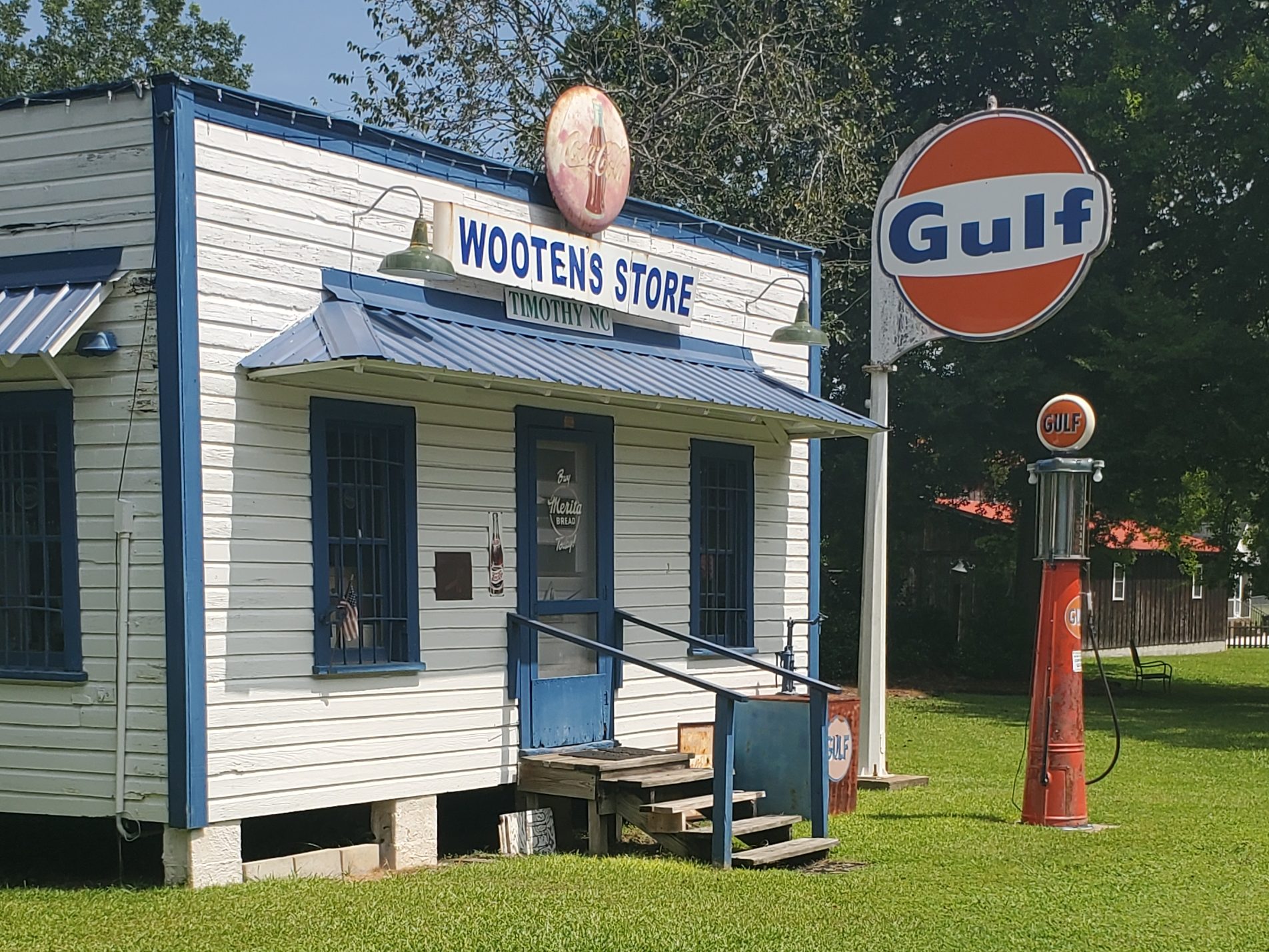
Sampson County History Museum
Founded in 1997, the Sampson County History Museum (313 Lisbon St.) has grown into a “village” of eleven buildings, representing over 250 years of Sampson County history. With thousands of permanent artifacts, visitors are encouraged to explore these pages from the past and reflect as they search through their own lives and their place in history.
Each building holds a unique key to the past: military history, sports, law enforcement, fire department, agriculture, and more. A restored country store, 18th-century log cabins, and a 19th-century farmhouse stand side by side with modern exhibit halls, telling the story of Sampson County.
Tours are free, though donations are accepted.
Hubb’s Farm
Families can enjoy a day at Hubb’s Farm (10273 N US Hwy 421) with special events in the spring, fall, and at Christmas, including a corn maze, pumpkin patch, farm animals, rides, and more.
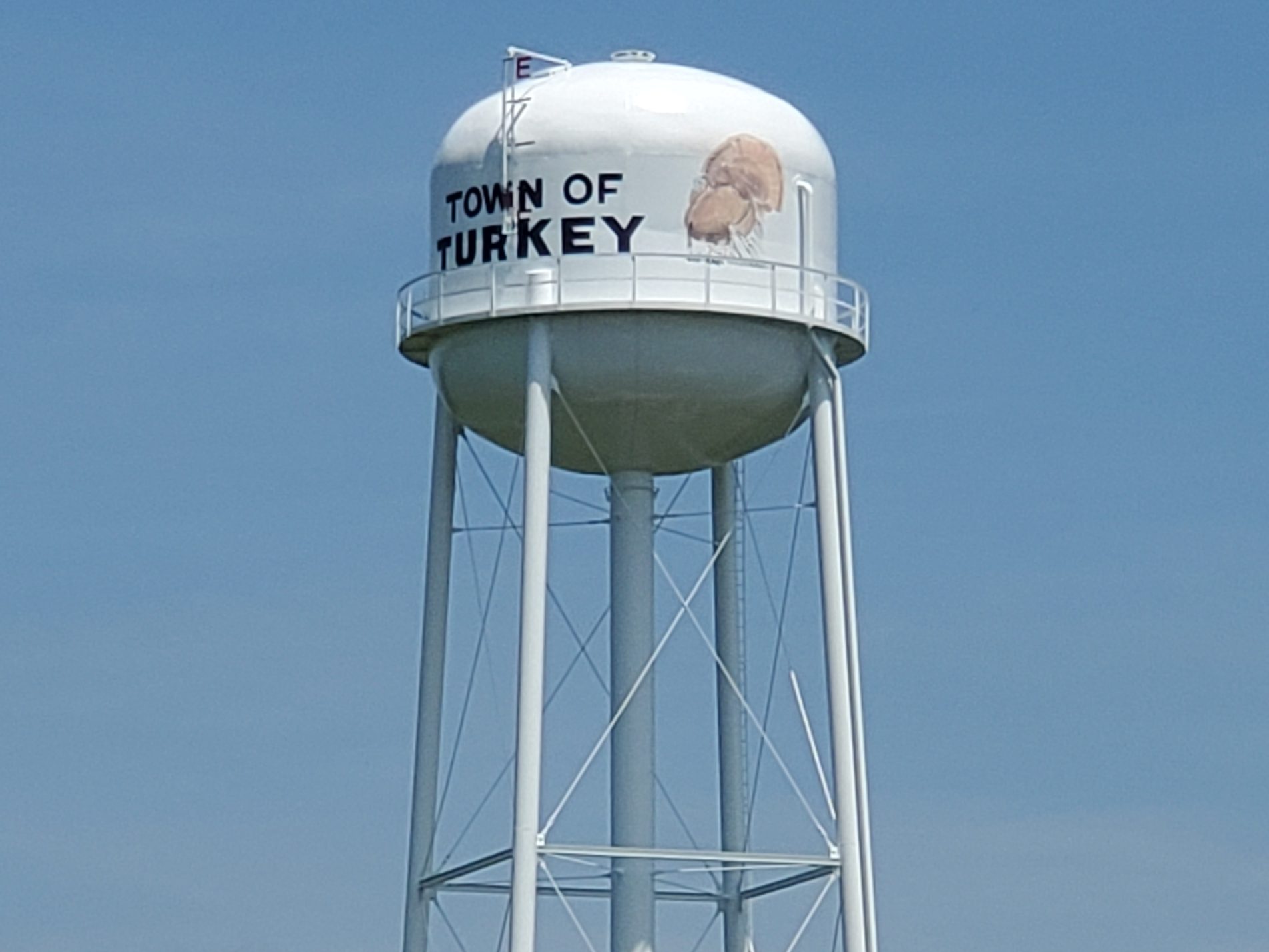
Turkey
The name of the town was once Springville, but during the town’s early history a large group of wild turkey moved into the area, and the people regarded that as a sign. The town’s post office sometimes has received mail intended for the Republic of Turkey. At one time, the post office received letters from stamp collectors asking for a Thanksgiving Day postmark.
P.S. On the way into Turkey from Clinton, you’ll pass by a Butterball Turkey plant!
Ivanhoe
The town of Ivanhoe was nearly completely submerged from Hurricane Florence in 2018.

Garland
The community of Garland was settled in about 1888 and named Sloan’s Crossing. It was incorporated in 1907 as Garland, after U.S. Attorney General Augustus Hill Garland. Garland is home to Cashwell Farms, a 100-year-old farm that currently serves as a working blueberry farm has many varietals blueberry bushes for sale–far better than the ones you’ll find at your local garden store. The Garland Shirt Company, the town’s major employer, produces shirts and other assorted apparel items for Brooks Brothers.
The Garland Rotary Parade & Festival was formerly held the first Saturday in October on Front St. with food, games, shops, and music until 2012. However, after the Garland Rotary Club lost its charter in 2013, the town organized a Community Day with a parade and festival beginning on October 4, 2014.
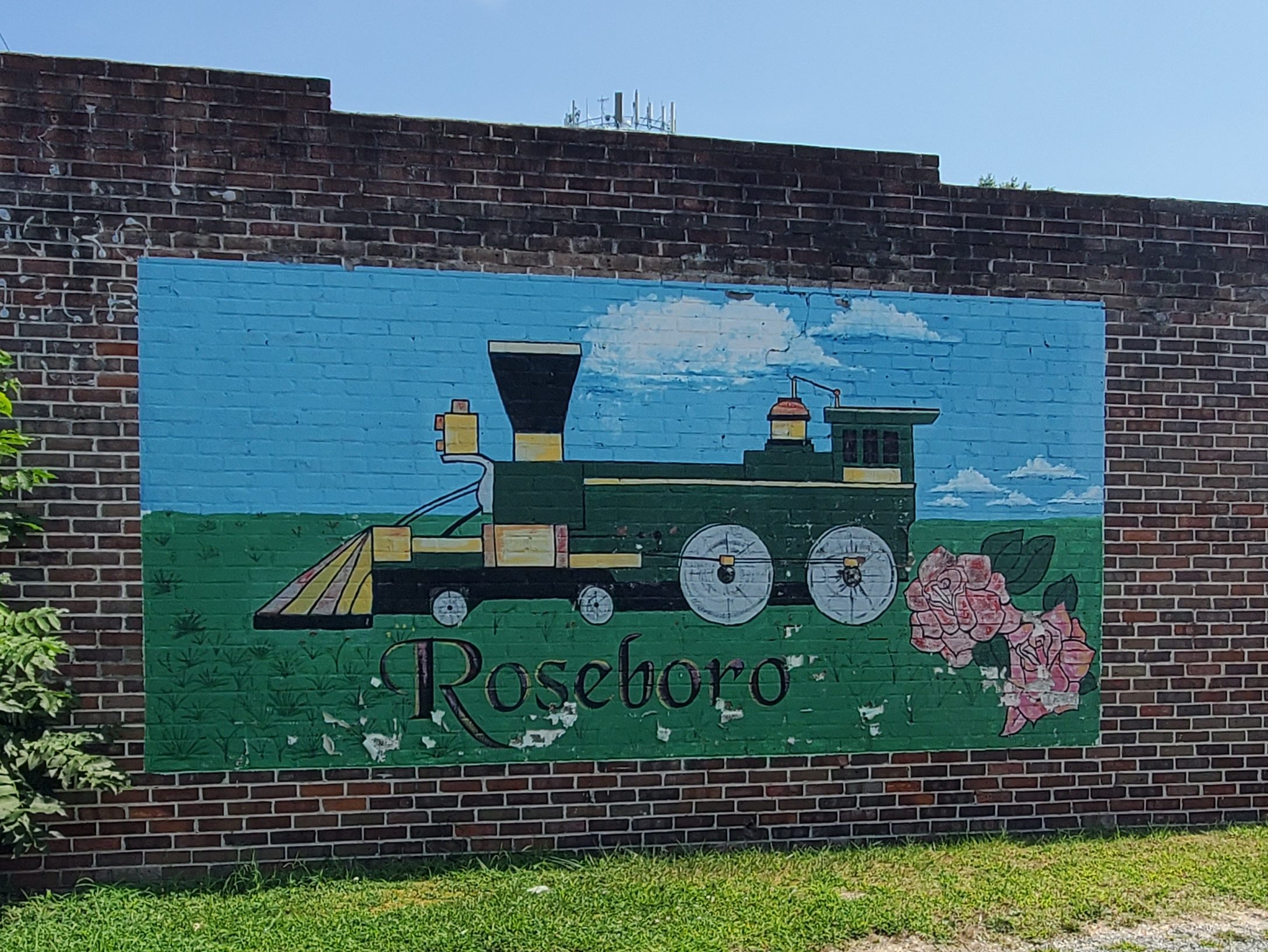
Roseboro
Roseboro was founded when the Cape Fear and Yadkin Valley Railroad built a line in 1889-1890 from Fayetteville to Wilmington, and it joined Stedman, Autryville, Garland, Kerr Station and several other communities that sprang to life when depots were built and commerce came into being.
There are two stories of how Roseboro got its name, but research has proven it to be named after John M. Rose, secretary of the Cape Fear and Yadkin Valley Railroad. Roseboro was incorporated in 1891, and all but one of the first commissioner’s last names is still prominent in the town.
Roseboro’s oldest building was constructed around 1897 by W.J. Fisher. In 1908, Dr. Paul M. Crumpler practiced medicine in front of the building while Whit Tart operated a drug store in the rear, thus the beginning of Tart & West Drug Store. In 1930, Paul and Sammy Butler opened a barber shop at the site. In the 1950s, Willie Butler moved in and began a mortgage and finance company. In the late 1950s, it was leased to Vander Simmons who used it for an accounting office. In 1961, Mr. Lennon H. Fisher, grandson of W.J. Fisher, took occupancy of this building and formed Fisher Insurance Agency. It remained at that location until 1978. In 1989, Jim Buchanan moved into this building and opened a photography business. In 1990, he changed the name to Jim B’S E-Z Rental. At last check, Summerlyn Naylor, great-great-granddaughter of W.J. Fisher, operates a business in the building.
Roseboro has a cute, walkable downtown with several restaurants and shops, including the James Trading Company (est. 1995). The town is planning a Bloomfest 2024 with a Kickoff Event on April 26 and the festival on April 27, 2024.
Earl Strickland, professional pool player and 9 ball world champion, is from the area.
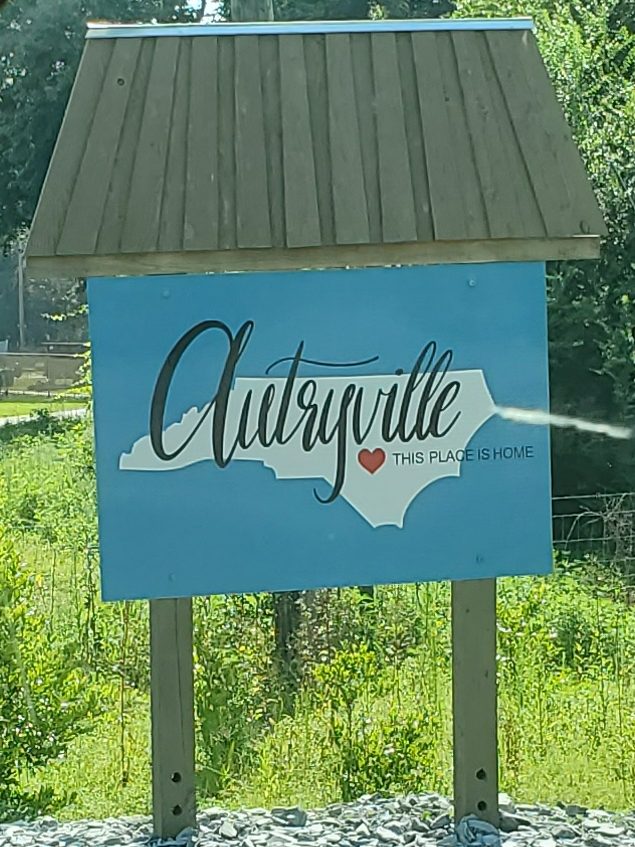
Autryville
The town of Autryville was named for Micajah Autry (1794 – March 6, 1836), an American merchant, poet, and lawyer who died in the Texas Revolution at the Battle of the Alamo.
Next Stop… Bladen County!
 Portable NC