

Lenoir county was formed in 1791 from the southern part of Dobbs County and was named for William Lenoir (1751-1839), an officer in the American Revolutionary War who took part in the Battle of Kings Mountain. The area hosts a BBQ Fest on the Neuse in May each year, including a car/truck show. You can also take a foodie tour on the Eastern NC BBQ Trail (Four of the trail’s 13 stops are in Lenoir County.) and several breweries, including Mother Earth Brewing (311 N. Herritage St. in Kinston).
More opportunities include events, location, and local food stops on the African American Music Trails of North Carolina–with many stops in Lenoir County and surrounding counties–as well as the Blue Ridge Music Trail, the Kinston Area Railroad Modelers Association (KARMA) and the Kinston Community for the Arts Public Art Trail.
If you’re a Civil War buff, then Lenoir County is a must see for you. And even if you’re not, there’s plenty to discover in this county for people with nearly any interest… public art, sculpture, history, museums, food, breweries, downtown walking, wall murals, and much more. Kinston saw its share of bloody battles during the Civil War. In 1862, 2,400 Confederates troops and 12,000 Union troops faced off at a site known as Harriet’s Chapel. Lenoir County was the site of two major Civil War battles: The First Battle of Kinston and The Battle of Wyse Fork, not to mention the significant history of the CSS Neuse ironclad (much more to come on that). For Civil War enthusiasts and historians, you’ll want to stop at the Kinston Battlefield Park memorial site (corner of Meadowbrook and Harriet’s Dr.) as well as the Chapel Site (Hwy 258 South, 1/4 mile from the Visitor and Information Center — P.S. The staff is really helpful there!) and Starr’s Battery & Breastworks (on a trail taken from the Chapel). Other high-interest spots are the Maplewood Cemetery (mass grave of 44 unknown Confederate soldiers), the Graave of the Unknown Union Soldier, and the Cultural Heritage Museum, which honors more than 200,000 black soldiers and 7,000 white officers who fought with the Union. In addition, the Battle of Kinston History and Driving Tour includes 14 local sites. (Begin at the Visitor and Information Center.) Enthusiasts can continue their journey of discovery on the North Carolina Civil War Trails.
La Grange
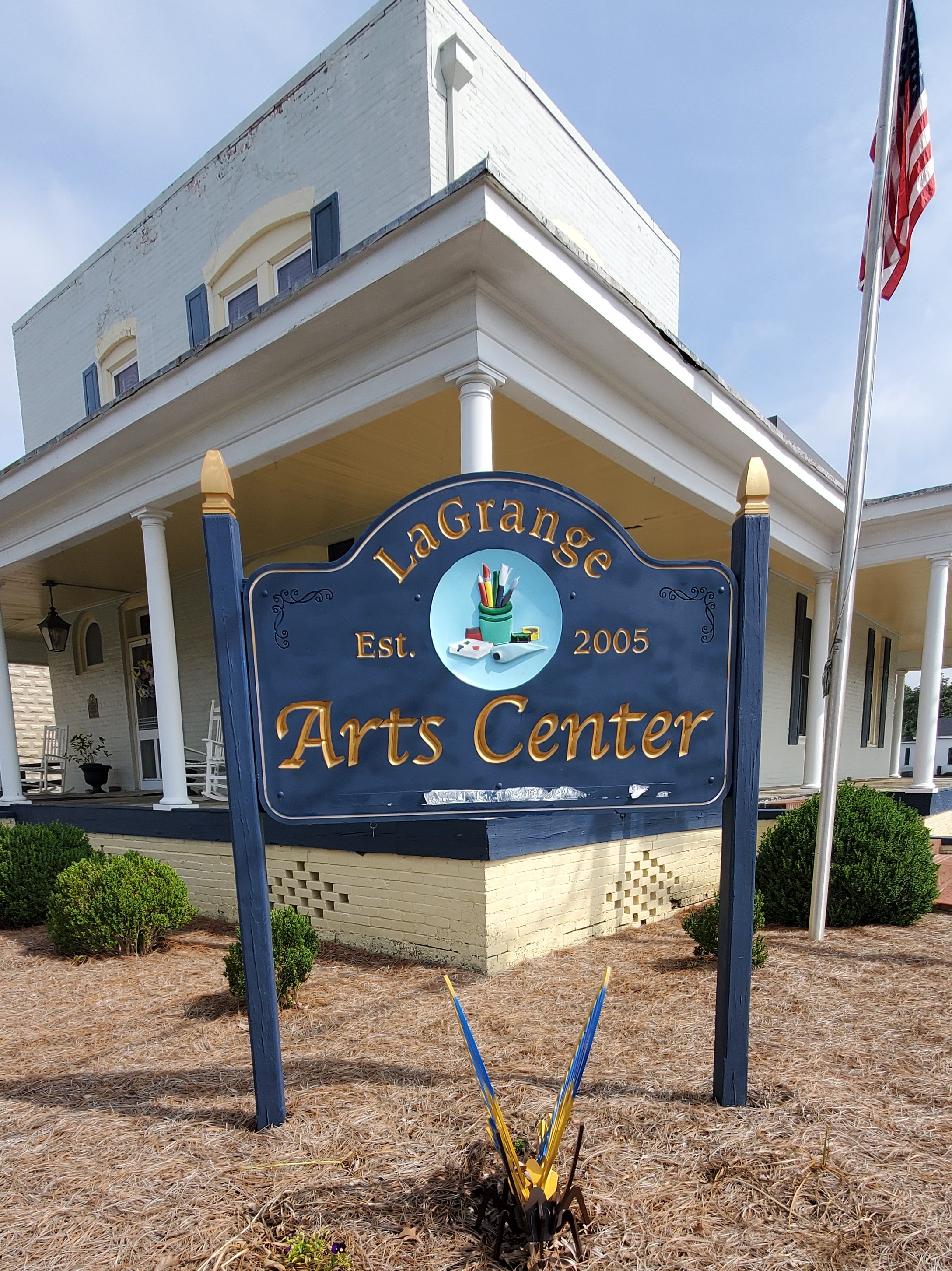
La Grange was incorporated in 1869 and named for the French estate of the Marquis de Lafayette, the Château de la Grange-Bléneau. The Garden Spot Festival is a yearly event held in September. In La Grange, you’ll find the La Grange Arts Center, which holds local art exhibits, craft shows, and classes for both adults and children as well as special events. The Center is housed in the town’s first brick building. Numerous pieces of art are also available for purchase.

Deep Run
The village of Deep Run was incorporated in 1925 through 1928. At one time, the town was called Red Town, due to the number of houses with red tin roofs.
Pink Hill
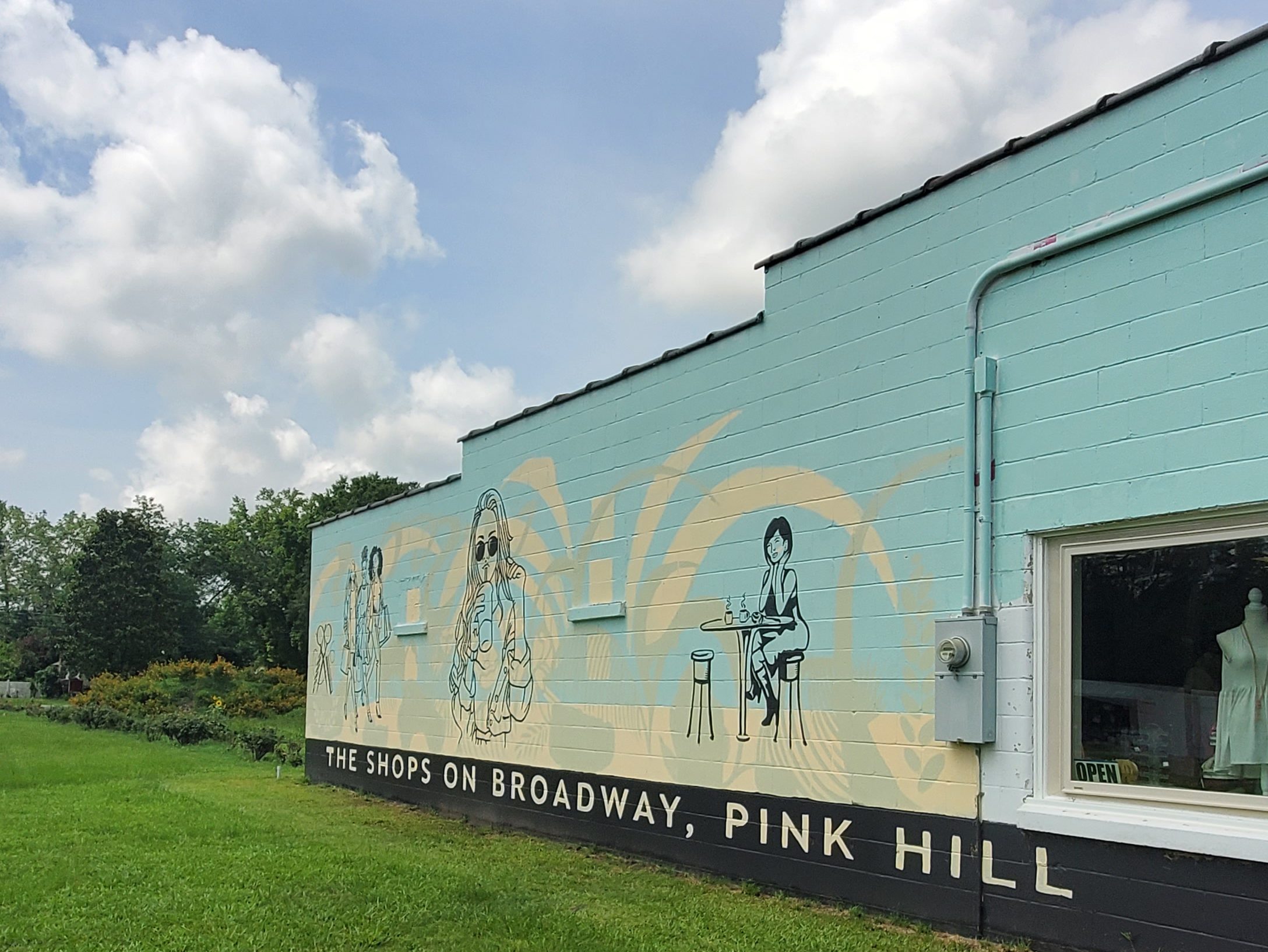
The town of Pink Hill was incorporated in 1915. You’ll find the Wilbur A. Tyndall Tractor Museum (N.C. Highway 11) has a collection of John Deere, Massey, and other tractors from various years in addition to area farm memorabilia from the area.
Kinston
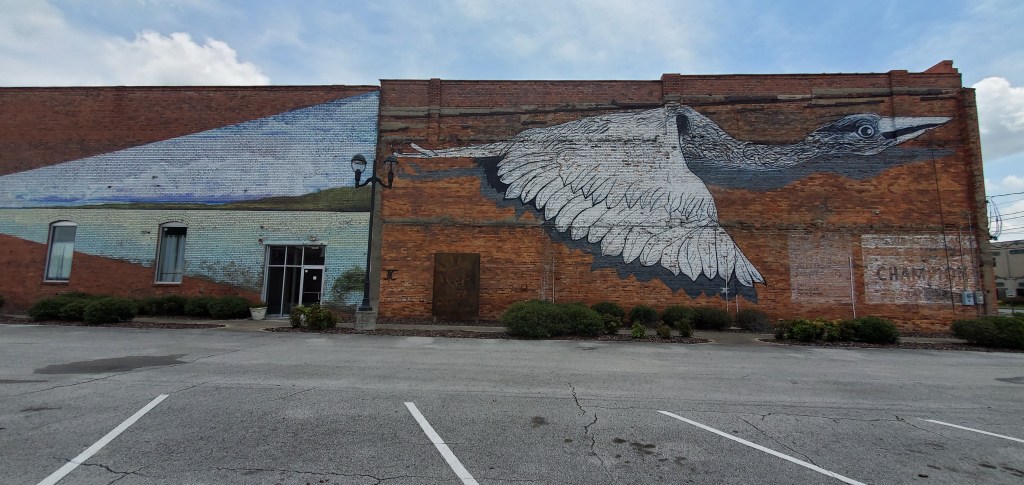
Kinston was the big surprise in this county–unexpectedly large. You can spend the entire day in this city walking the streets, seeing the sights, stopping in museums, shopping, dining, and exploring public art as well as the beautiful, historical architecture, and much more. Kinston even has a Lions Water Adventure Park, Down East Wood Ducks baseball park, and a drag racing strip!
In 2009, Kinston won the All-America City Award–the second time in 21 years the city has won the title. Harmony Hall, the oldest building in Kinston, was owned by North Carolina’s first governor, Richard Caswell.
At the time of English settlement, the area was inhabited by the Neusiok people. Preceding the historic tribe, indigenous peoples of a variety of cultures had lived in the area for thousands of years. Before the English colonists established the city, they called the area “Atkins Bank”, referring to a bluff once owned by Robert Atkins just above the Neuse River. Atkins Bank was the site of farms, a tobacco warehouse, and a Church of England mission.
Kinston was created by an act of the North Carolina General Assembly in December 1762 as “Kingston”, in honor of King George III, who had recently ascended to the throne. After victory in the American Revolution, the citizens renamed the city “Kinston” in 1784 to show the population’s disavowal of royalty. In 1833, Kinston briefly became “Caswell”, in honor of Governor Caswell, but the name Kinston was restored the following year.
Commissioners appointed to design the town began to accept “subscriptions” for numbered lots. To keep a lot, subscribers were required to build brick homes of specific dimensions within three years or lose their rights to the property. The town was laid out with border streets named East, North, and South, with the western border the Neuse River. The two principal roads within these borders were named for King George and Queen Charlotte. They remain King Street and Queen Street to this day. Other streets were named in honor of Governor Arthur Dobbs (later renamed Independent Street) and the commissioners.
In December 1791, an act was passed in the General Assembly to abolish Dobbs County and form Lenoir and Glasgow Counties. At that time, Kinston was designated the county seat for Lenoir County. Kinston was incorporated as a town through an act of the legislature in January 1849.
During the onset of the Civil War, Camp Campbell and Camp Johnston were established nearby as training camps, and a bakery on Queen Street was converted to produce hardtack in large quantities. The city also housed a factory for the production of shoes for the military. The Battle of Kinston took place in and around the city on December 14, 1862.
From February 5 to February 22, 1864, 22 deserters were executed by hanging in the city. The court martial and subsequent hangings were carried out by the 54th Regiment, North Carolina Troops, Confederate States Army. Fifteen of these men were from Jones County and had all started their service in the 8th Battalion North Carolina Partisan Rangers.
The Battle of Wyse Fork, also known as the Battle of Southwest Creek (March 7–10, 1865), took place very near the city. At this later battle, the Confederate ram Neuse was scuttled to avoid capture by Union troops. Remnants of the ship have been salvaged, and were on display at Richard Caswell Park on West Vernon Avenue. A climate-controlled museum has been built on downtown Queen Street, and has moved the hulk there to prevent further deterioration of the original ship’s remains. A full-scale replica vessel (Ram Neuse II) has been constructed near the original’s resting place (known as the “Cat’s Hole”) beside the bank of the Neuse River on Heritage Street in Kinston. Union Army forces occupied the city following the battle and United States troops were assigned to the area through the Reconstruction era.
During the late 19th century, an expansion into new areas of industry occurred, most notably the production of horse-drawn carriages. Kinston also became a major tobacco- and cotton-trading center. By the start of the 20th century, more than 5 million pounds of tobacco were being sold annually in Kinston’s warehouses.
During the 20th century, new industries were founded, including lumber and cotton, as North Carolina businessmen invested in processing their own crops. Professional sports were introduced in the form of a minor league baseball team. Later growth came from a DuPont plant for the manufacture of polyester fibers, and manufacturing plants for pharmaceuticals. Growth finally slowed following the 1960s, with the shift in textile production overseas. Efforts to reinvigorate the economy through various means have had limited success.
Kinston was heavily impacted by flooding in 1996 and 1999. Hurricane Fran struck the North Carolina coast on September 5, 1996, and brought 16 inches of rain to the area, causing the Neuse River to flood portions of the city. On September 16, 1999, Hurricane Floyd struck the area, bringing 17 inches of rain. It caused what locals have called the “Flood of the Century.”
The Cultural Heritage Museum, built in 2000 on South Queen Street as a new economic development catalyst for Kinston and the surrounding areas of eastern North Carolina, was created to recognize the contributions of African Americans in numerous fields. It pays tribute to the more than 200,000 Black soldiers and 7,000 White officers of the United States Colored Troops who fought with the Union forces in the Civil War. It also honors Black military veterans from all wars, Carl Long and the Negro Baseball League players, local heroes, and Africa and Black history in general.
Kinston is home to several notable restaurants. The Chef & the Farmer, recipient of a James Beard Award, started by Vivian Howard and Ben Knight, is located in downtown Kinston. The PBS series A Chef’s Life focuses on the restaurant, owners, and local farmers from whom it sources, such as Brothers Farm.
The city holds annual festivities, including the Sand in the Streets concert series held at Pearson Park, the Annual BBQ Festival on the Neuse River, and the Festival on the Neuse.
Kinston’s Grainger Stadium is home to the Down East Wood Ducks, a Class A Minor League Baseball team in the North Division of the Carolina League that began play in 2017. It was previously home to the Kinston Indians minor league baseball team, as well as youth and college level baseball tournaments. The town first hosted professional baseball in 1908. The Kinston Drag Strip hosts a variety of motor-sports events throughout the year.
In 2012, Woodmen of the World constructed the Woodmen of the World Community Center and Lions Water Adventure Park, a 53,000-sq. ft, facility that offers a cardio and strength-training center, an Olympic-sized swimming pool, several corporate reception areas, and conference rooms, as well as a quarter-mile elevated track and several sporting courts.
In 1956, Kinston was the site of a rare, perfect game of billiards, as Willie Mosconi sank 150 balls in a row in one inning against Jimmy Moore. In 2018, ESPN called Kinston “America’s Basketball Heaven.” According to the ESPN article, one in 52.7 players on Kinston High School’s varsity team makes the NBA.
The city of Kinston will celebrate Never Give Up Day on August 18th, 2023. Never Give Up Day is a day honoring the qualities of determination and the power of individuals who simply refuse to give in to life’s challenges. More than 80 cities across the US proclaim Never Give Up Day.
Community Council for the Arts
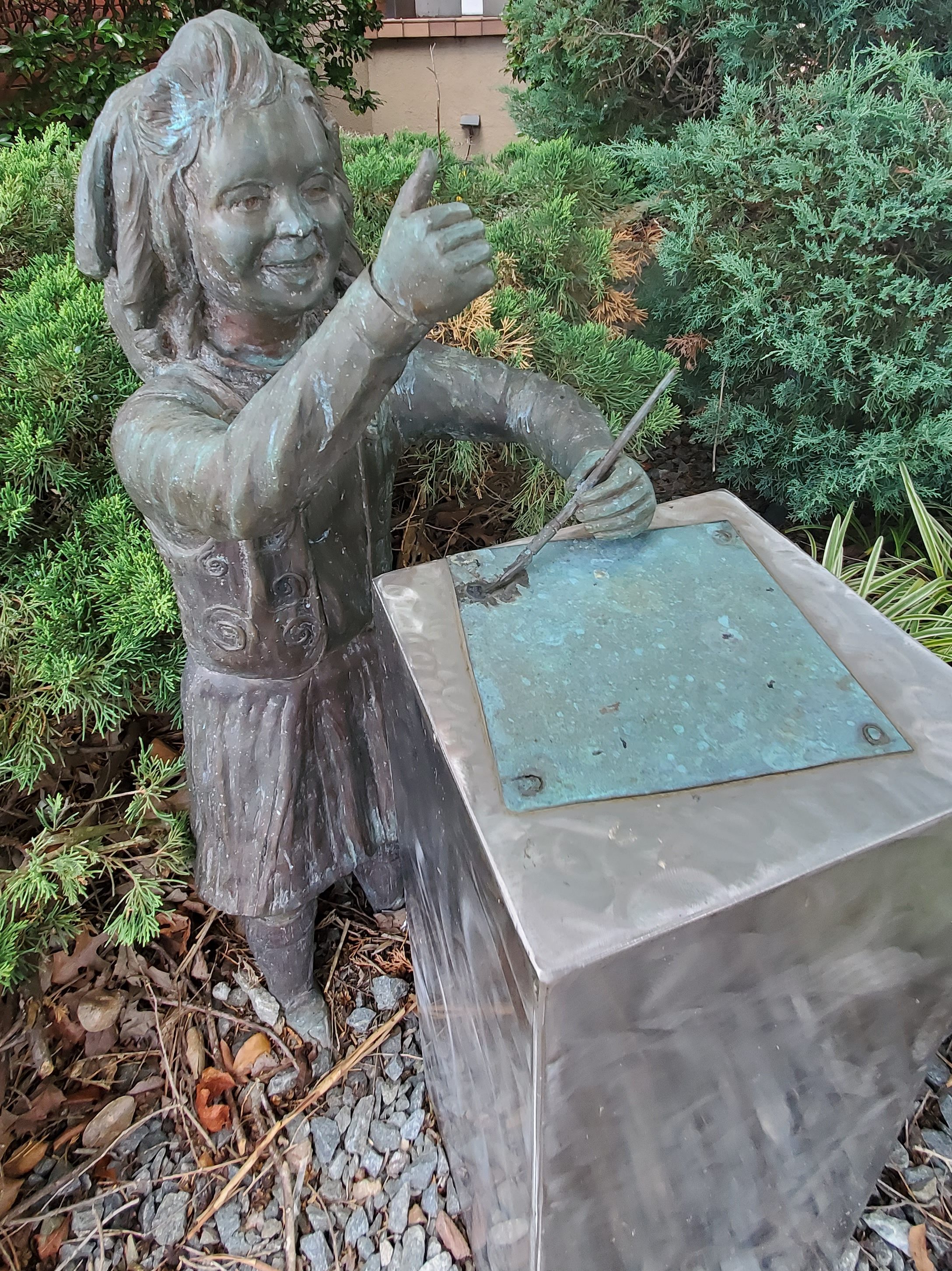
The Community Council for the Arts is a nonprofit organization that is dedicated to helping residents experience the joy, promise and the pursuit of artistic excellence. You’ll discover the 2-story Arts Center (400 N. Queen St.) filled with exhibits by many local and regional artists, plus workign artist studios, classes and programs, and more. Admission is free.
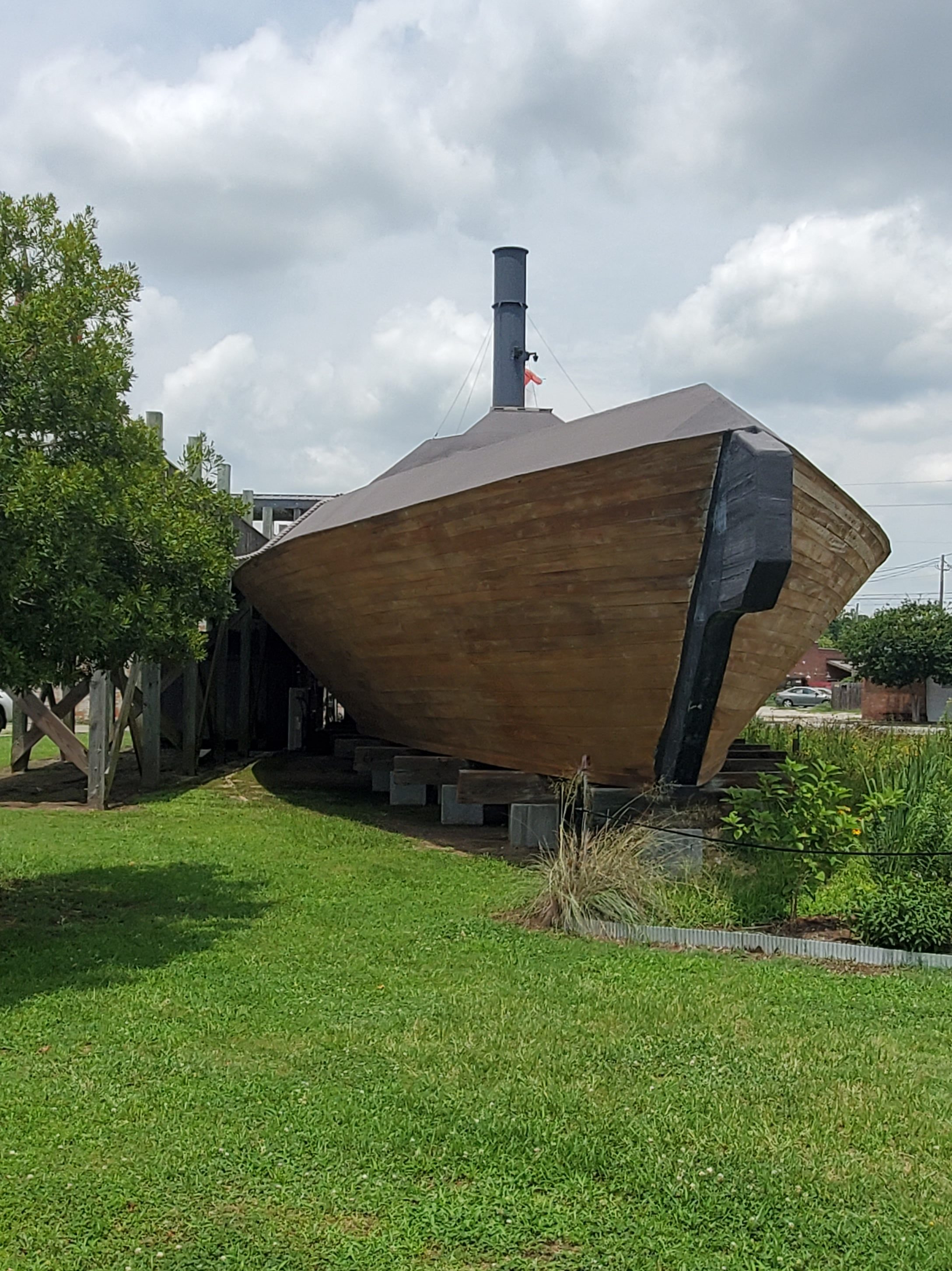
CSS Neuse II
Kinston is home to the CSS Neuse II (118 N Herritage St), which is listed on the National Register of Historic Places. Its remains are on display in the CSS Neuse Civil War Interpretive Center but a full-size replica is on display in the center of downtown. In its first foray into action, the Neuse ran aground in the Neuse River on April 22, 1864, and was stuck until mid-May when the waters of the Neuse river rose and dislodged the vessel. The replica vessel itself is a museum, and you can walk its exterior and interior, which includes some historic displays and information. An exterior deck allows you to view the vessel from above. It is the worlds only full-size replica of a Confederate ironclad gunboat. Construction began on the site in 2002, and the vessel/museum was opened in 2009 with docents on site.

CSS Neuse Museum
Once your visit the CSS Neuse II, walk a few blocks over to 100 N Queen St and visit the CSS Neuse Civil War Interpretive Center. Displays focus on the building, operation, destruction, and recovery of the CSS Neuse. The museum contains the remains of the original ironclad.

African American Music Trail
During its tobacco days, Kinston was a hotbed of music, and musicians traveled from all over to play in the tobacco warehouses. One of those singers, James Brown, traveled with his band members from Kinston. It is said they brought “a Kinston sound” to Brown’s music.
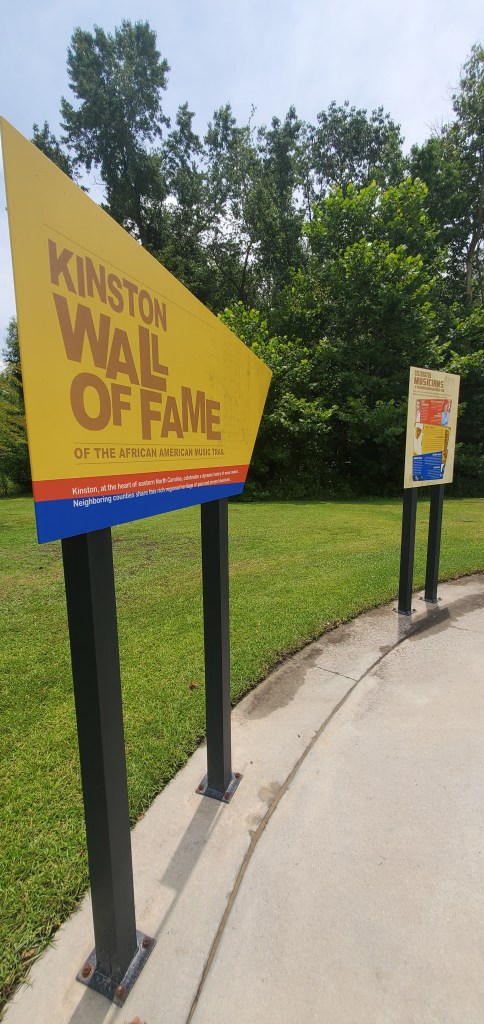
Kinston Music Park
Located near the Neuse River, you can stroll through the Kinston Music Park, read lyrics and quotes, and admire colorful music-inspired mosaics. You can also enjoy the park’s sculpture Intersections, which has images of famous jazz, soul, gospel, and rhythm and blues musicians from Kinston and nearby communities.
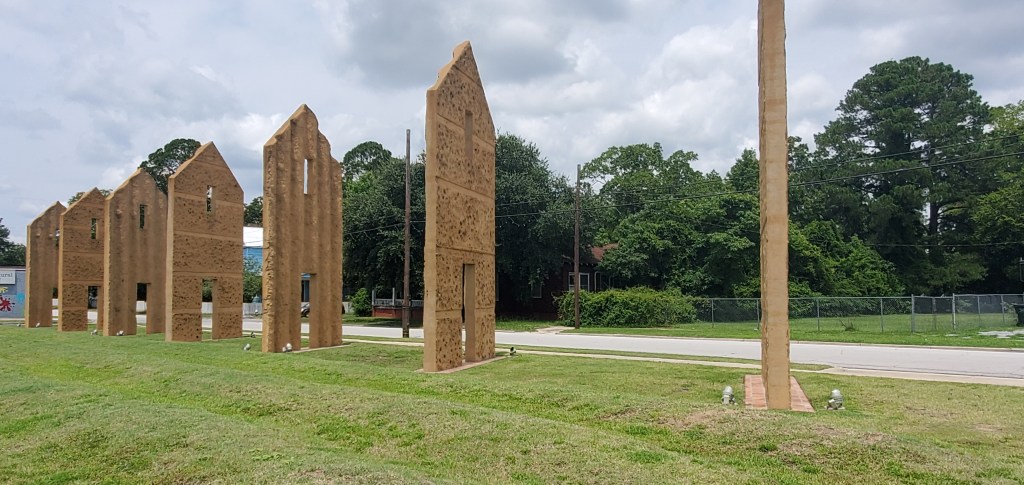
The Flue
In the heart of downtown, you’ll find a large public art sculpture called The Flue (400 N. Queen St.) — seven tall concrete tobacco barn facades. Built on a lot that once housed Brooks Tobacco Warehouse, the installation has a commanding presence. Each structure stands 28 feet tall and 16 feet wide, casting shadows over an empty field. The sculptures were created by an earth casting technique by Raleigh artist Thomas Sayre. Sayre also has earth casting public art sculptures on Greensboro’s Downtown Greenway and throughout the state and country.

Caswell No. 1 Fire Station Museum
The Caswell No. 1 Fire Station Museum is Kinston’s oldest brick structure and the city’s original fire station (118 S. Queen St.) and features fire hydrants from the 1800s to 1960 and 19th-century fire equipment. You’ll also discover a fire truck that was on the scene during Kinston’s devastating fire of 1895 that destroyed nearly all downtown homes and businesses. The building is on the National Register of Historic Places.

Neuseway Nature Center
The Neuseway Nature Center (401 W. Caswell St.) features wooded nature trails, a children’s playground, and a planetarium.
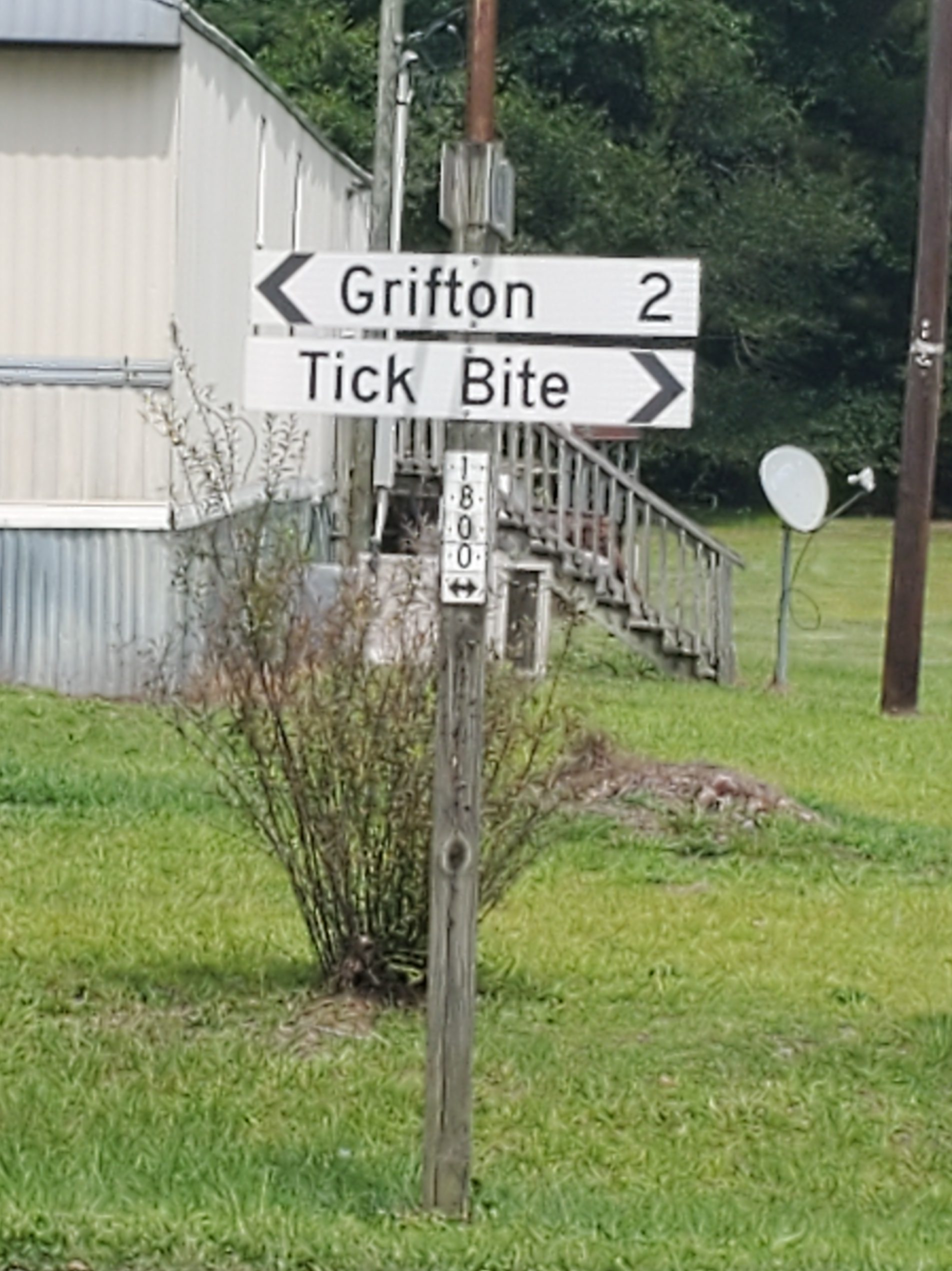
Tick Bite
Tick Bite is an unincorporated community on the Contentnea Creek. Tick Bite was decimated by Hurricane Floyd in 1999. The Contentnea Creek surged to levels that had not been seen in 500 years, setting a new “500 year flood plain” for the area.
Next stop… Wayne County!
 Portable NC